Economy
Johannesburg Stock Exchange Offers Relief to Companies
By Adedapo Adesanya
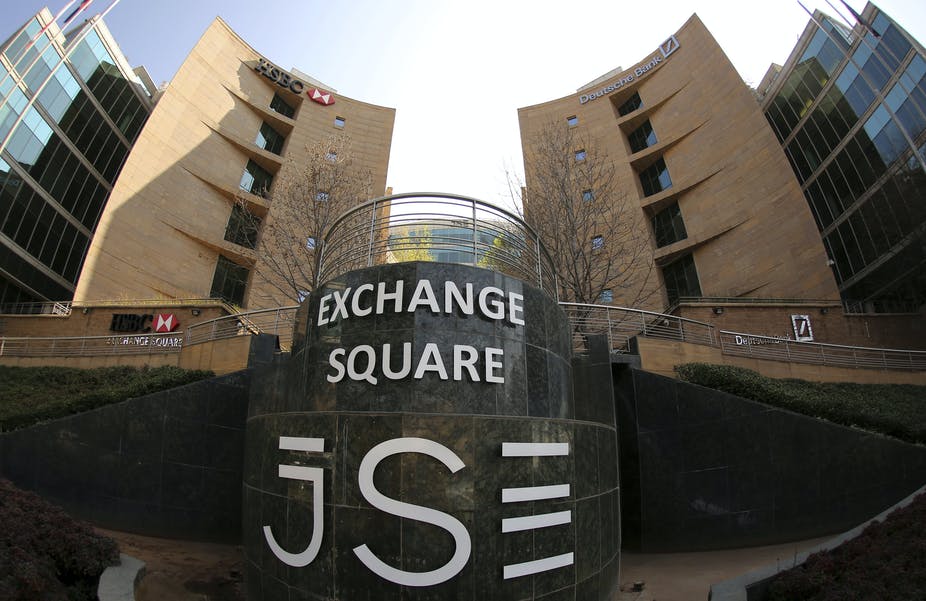
South Africa’s bourse, the Johannesburg Stock Exchange (JSE), has announced that it will offer temporary relief to its listed companies in financial distress because of the impact of the coronavirus crisis.
In a statement released on Monday, it said in addition to the relief, it would also be cutting fees for new listings and providing extended payment terms.
The COVID-19 lockdown measures in the country has put pressure on businesses and has since led to an increase in companies filing for business rescue from the South African Government.
Speaking on the measure put in place by the Africa’s biggest stock exchange, the Group Chief Executive of JSE, Mrs Leila Fourie, said, “The small cap counters are among the most vulnerable in strained markets.
“The discounts we are announcing for these market segments are aimed at stimulating liquidity and supporting this vital growth node of our economy.”
Identifying this, JSE said it will grant distressed companies extended payment terms of between three and six months with no interest charged.
It will also offer a 50 percent fee reduction for trading, clearing, and settlement in all companies listed on the JSE AltX (its alternative board for smaller companies to raise capital and BEE (black economic empowerment) Board for the remainder of 2020,.
The JSE is also reducing listing fees by 25 percent for those small companies and AltX companies looking to tap the market to raise secondary capital.
In addition, the bourse said it will increase the amount of cash disbursements returned to small and medium stockbrokers that are on the JSE’s Enterprise Development Programme.
The scheme was first introduced by the JSE in 2016 to increase participation of black business owners in the exchange.
The JSE is estimated to have over 450 listed companies and a market capitalisation of over $1 trillion.
The exchange provides a market where securities can be traded freely under a regulated procedure. It not only channels funds into the economy, but also provides investors with returns on investments in the form of dividends.
Economy
FrieslandCampina Wamco, Three Others Raise NASD OTC Exchange by 1.41%
By Adedapo Adesanya
The NASD Over-the-Counter (OTC) Securities Exchange closed higher by 1.41 per cent on Friday, May 15, supported by four securities on the platform.
During the session, FrieslandCampina Wamco Plc added N14.24 to its share price to sell for N159.00 per unit, in contrast to the previous day’s N144.76 per unit.
Further, Central Securities and Clearing System (CSCS) Plc appreciated by N1.34 to N72.34 per share from N71.00 per share, Geo-Fluids Plc improved its price by 4 Kobo to N2.94 per unit from N2.90 per unit, and Industrial and General Insurance (IGI) Plc gained 1 Kobo to trade at 61 Kobo per share compared with Thursday’s closing price of 60 Kobo per share.
As a result, the NASD Unlisted Security Index (NSI) rose by 58.20 points to 4,188.41 points from 4,130.21 points, and the market capitalisation soared by N34.82 billion to N2.506 trillion from N2.471 trillion on Thursday.
During the session, the volume of trades went up by 180.8 per cent to 1.2 million units from 417,349 units, and the value of transactions increased by 29.8 per cent to N29.8 million from N23.2 million, while the number of deals fell by 22.6 per cent to 24 deals from 31 deals.
Great Nigeria Insurance (GNI) Plc ended the day as the most traded stock by value on a year-to-date basis with 3.4 billion units sold for N8.4 billion, followed by CSCS Plc with 60.8 million units exchanged for N4.1 billion, and Okitipupa Plc with 27.9 million units valued at N1.9 billion.
GNI Plc also closed the session as the most traded stock by volume on a year-to-date basis with 3.4 billion units worth N8.4 billion, followed by Resourcery Plc with 1.1 billion units transacted for N415.7 million, and Infrastructure Guarantee Credit Plc with 400 million units traded for N1.2 billion.
Economy
Profit-taking Sinks Nigeria’s Equity Market by 0.76% as Bears Take Control
By Dipo Olowookere
The bears overpowered the Nigerian Exchange (NGX) Limited on Friday, sinking it further by 0.76 per cent when the closing gong was struck by 4 pm.
The nation’s flagship equity market was under selling pressure during the session, as investors booked profits after the shares witnessed price appreciation in the past trading sessions.
The energy sector was the most impacted, as it shed 4.43 per cent. The consumer goods index declined by 0.90 per cent, the banking counter decreased by 0.15 per cent, and the industrial goods sector lost 0.08 per cent, while the insurance counter gained 2.42 per cent, which was not enough to salvage the situation.
Consequently, the All-Share Index (ASI) contracted by 1,912.19 points to 250,330.92 points from 252,243.11 points, and the market capitalisation moderated by 1.225 trillion to N160.444 trillion from N161.669 trillion.
Zichis was the worst-performing stock for the session after it gave up 9.97 per cent to close at N29.43, FTN Cocoa slipped by 9.95 per cent to N8.96, The Initiates slumped by 9.90 per cent to N32.30, LivingTrust Mortgage Bank tumbled by 9.88 per cent to N3.83, and International Energy Insurance dropped 9.71 per cent to trade at N2.79.
The best-performing stock was ABC Transport, which grew by 10.00 per cent to N6.27. May and Baker also appreciated by 10.00 per cent to N47.30, SCOA Nigeria surged by 9.98 per cent to N33.05, Trans-Nationwide Express expanded by 9.97 per cent to N7.06, and DAAR Communications jumped 9.76 per cent to N2.25.
Yesterday, investors traded 1.1 billion shares worth N44.3 billion in 65,744 deals compared with the 1.0 billion shares valued at N41.6 billion transacted in 74,822 deals a day earlier. This indicated a dip in the number of deals by 12.13 per cent, and a rise in the trading volume and value by 10.00 per cent and 6.49 per cent, respectively.
Chams was the busiest equity for the day, with 328.5 million units sold for N1.1 billion. UBA traded 61.6 million units worth N2.7 billion, First Holdco transacted 58.7 million units valued at N4.2 billion, Secure Electronic Technology exchanged 51.9 million units worth N45.0 million, and Access Holdings traded 51.8 million units valued at N1.3 billion.
Economy
Naira Weakens to N1,371/$1 at Official Market
By Adedapo Adesanya
The last trading session of the week at the Nigerian Autonomous Foreign Exchange Market (NAFEX) ended on a negative note for the Naira on Friday, May 15, as it lost N15 Kobo or 0.1 per cent against the Dollar to trade at N1,371.04/$1 compared with the previous day’s N1,370.89/$1.
However, it further appreciated against the Pound Sterling in the same market segment yesterday by N20.77 to close at N1,830.61/£1 versus Thursday’s value of N1,851.38/£1, and gained N7.91 against the Euro to settle at N1,595.07/€1 versus N1,602.98/€1.
At the GTBank FX desk, the Naira lost N2 against the US Dollar during the session to sell at N1,383/$1 compared with the preceding session’s N1,381/$1, and at the black market, it remained unchanged at N1,385/$1.
The Naira is forecast to be broadly stable, supported by Dollar sales by the Central Bank of Nigeria (CBN) amid steady, higher oil receipts, with the market settling into a balance.
Policy direction is also expected to give the market some boost as the CBN said the new edition of the FX market guidelines will deepen liquidity, improve transparency and strengthen confidence in the country’s foreign exchange market.
According to the Governor of the CBN, Mr Yemi Cardoso, the update is due to changing global economic realities, domestic reforms and the need for a more coherent and forward-looking regulatory framework. According to him, the last edition of the FX manual was issued in 2018, making the latest review both timely and necessary.
Meanwhile, the cryptocurrency market plunged into the red zone as rising bond yields hit risk assets across markets, while traders are increasingly betting the Federal Reserve may need to raise rates again. Rising energy prices and resurging inflation could force central banks back into tightening mode.
Cardano (ADA) shrank by 4.4 per cent to $0.2557, Dogecoin (DOGE) slid by 3.7 per cent to $0.1104, Ripple (XRP) depreciated by 3.5 per cent to $1.41, Solana (SOL) crashed by 3.5 per cent to $87.81, and Binance Coin (BNB) slumped by 3.4 per cent to $659.64.
Further, Bitcoin (BTC) declined by 2.6 per cent to $78,547.49, Ethereum (ETH) lost 2.1 per cent to quote at $2,209.19, and TRON (TRX) tumbled by 0.7 per cent to $0.3509, while the US Dollar Tether (USDT) and the US Dollar Coin (USDC) traded flat at $1.00 each.
-
Feature/OPED6 years agoDavos was Different this year
-
Travel/Tourism10 years ago
Lagos Seals Western Lodge Hotel In Ikorodu
-
Showbiz3 years agoEstranged Lover Releases Videos of Empress Njamah Bathing
-
Banking8 years agoSort Codes of GTBank Branches in Nigeria
-
Economy3 years agoSubsidy Removal: CNG at N130 Per Litre Cheaper Than Petrol—IPMAN
-
Banking3 years agoSort Codes of UBA Branches in Nigeria
-
Banking3 years agoFirst Bank Announces Planned Downtime
-
Sports3 years agoHighest Paid Nigerian Footballer – How Much Do Nigerian Footballers Earn