Connect with us

Economy

Kwara to Boost Cocoa Beans, Establish Nursery

Published

on

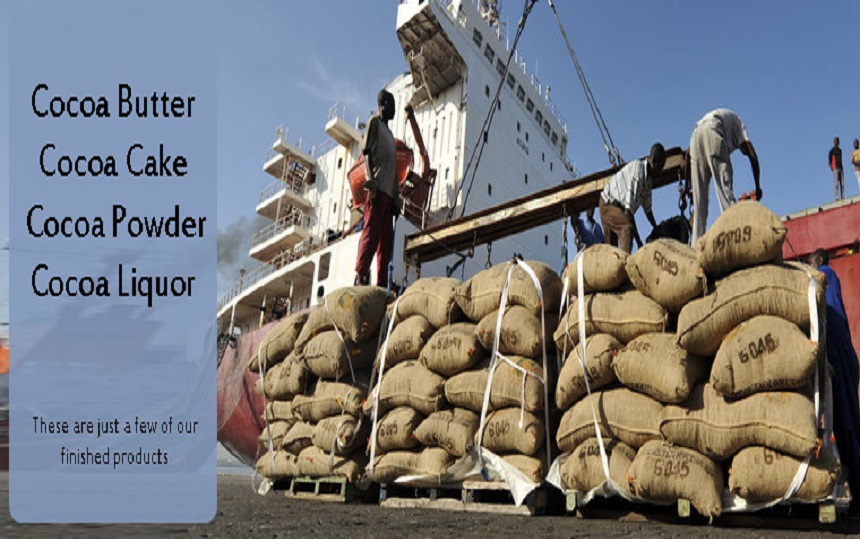
FTN Cocoa Processors

By Dipo Olowookere

The administration of Governor AbdulRahman AbdulRazaq of Kwara State has assured cocoa farmers in the state of adequate support that would make them richer.

At a recent Cocoa Farmers’ Roundtable Conference held at Cocoa House, Oke Onigbin, in Isin Local Government Area of the state, the Governor said his administration has raised 50,000 hybrid Cocoa seedlings, which will be distributed to farmers at affordable prices once they mature in 18 months.

According to him, “This is being done with a view to ensuring the prompt and effective rehabilitation and regeneration of the aged cocoa plantations or farms existing in the state.”

“In this fiscal year, we plan to resuscitate the training and retraining of cocoa farmers on good agricultural practices through the Farmers Field School (FFS) and Farmers Business School (FBS) respectively.

“This is being done with a view to enhancing the quality of the cocoa beans being produced in the state, Mr AbdulRazaq, who was represented at the event by the Commissioner for Agricultural and Rural Development, Mrs Adenike Afolabi-Oshatimehin, stated.

He said, “In addition, we also intend to look into prospects of being able to possibly address extant challenges associated with some of the critical input requirements of cocoa farmers in the state.”

The Governor further said the state government would establish a cocoa nursery in the state to serve as the

genuine source of planting materials for the farmers, noting that the present administration understands that inadequate basic social amenities, physical infrastructure, et al, could constitute disincentives for farming in agrarian communities in the state.

“It is for this reason and more that we are committing significant resources to road construction, healthcare, water and basic education in the 2020 budget, which has just been passed and assented to,” he added.

“Agriculture occupies a vantage position under this administration. We have invested a lot of money to reposition the sector, beginning with the N200 million counterpart fund for RAAMP III and another N49.78 million FADAMA counterpart fund, among others,” he continued.

“We have also made appreciable budgetary provisions for agriculture this year, while also engaging the federal government and private investors on how to grow the sector in the state, Governoir AbdulRazaq revealed,

He assured the farmers that the administration remains firmly committed to rebuilding and reconstructing the state for the good of all and for the benefit of children yet unborn.

“Since we came on board, our administration has given so much attention to cocoa because of its extensive value chain — just as we are doing with sugarcane and other essential crops and agricultural produce that can be successfully cultivated in the state,” he told the farmers, who listened to him with rapt attention.

“Kwara is currently grouped as a minor cocoa state in Nigeria, owing in part to the perennial migration of cocoa farmers to other states and the seemingly unabated trend of rural-urban migration. This is a narrative that we want to change and as soon as possible,” he declared.

Mr AbdulRazaq also congratulated the Cocoa Farmers Association of Nigeria (CFAN) for the event which he said was designed to discuss the way to reposition the cocoa subsector in Kwara State and other parts of Nigeria, where the cash crop could be grown successfully.

He assured the farmers that the administration would work with them to develop the cocoa subsector in the state.


Dipo Olowookere is a journalist based in Nigeria that has passion for reporting business news stories. At his leisure time, he watches football and supports 3SC of Ibadan. Mr Olowookere can be reached via [email protected]

Click to comment

Leave a Reply

Your email address will not be published. Required fields are marked *

Economy

BNB Price Reflects Changing Dynamics in the Digital Asset Market

Published

on

BNB price

Digital asset markets have slowed, though not in a dramatic way. Things are still moving, just not with much urgency. The BNB price reflects that shift, sitting within a tighter range as broader conditions begin to shape behavior more than short bursts of demand.

It can feel uneventful at first. No strong push higher, no sharp drop either. But the movement is still there. It just does not travel far. A rise begins, then fades. A dip forms, then steadies again. It repeats more than you might expect.

That pattern tends to linger. Sometimes longer than people anticipate, especially when there is no clear reason for it to change quickly.

BNB Price Movement Reflects Exchange-Driven Demand

BNB does not behave like assets that rely purely on outside demand. Its connection to the Binance ecosystem changes that.

Usage matters here. Trading activity, transaction volume and general platform engagement all feed into how BNB is used. That connection is not always obvious in the short term, but it sits underneath everything.

Sometimes it shows up clearly. Other times it does not. The relationship is there either way.

When activity holds steady, price often follows that tone. It does not surge, but it does not weaken much either. It stays somewhere in the middle, supported without needing strong momentum. It reflects usage more than speculation in many cases.

Market Conditions Continue to Shape Price Behaviour

There is also the wider market to consider. Binance has pointed out that liquidity remains tight, with capital concentrating in a smaller number of assets.

Bitcoin still holds close to 59% of the market. Ethereum sits much lower, around 11.8%. After that, the drop-off becomes more noticeable. Smaller assets make up far less than they once did. That shift matters. It changes how everything moves.

When capital gathers like this, movement tends to compress. Prices still change, but not as freely. It becomes harder for assets to break away from the general pattern.

BNB is part of that. It does not sit outside these conditions. It moves with them more often than against them.

BNB Utility Remains Central to Its Value

There is also the question of utility, which tends to be discussed but not always fully understood.

BNB is used across the Binance ecosystem in practical ways. Fees, transactions, access to services. These are not abstract use cases. They happen regularly, even when markets feel quiet.

That kind of activity does not always push prices higher. But it does create a base level of demand. Something that holds, rather than drives.

Over time, that can matter more than short bursts of interest. It gives the asset a different kind of stability. Not fixed, but less reactive. That difference tends to show up more clearly over longer periods.

Institutional and Retail Activity Remain Balanced

Participation is mixed. Institutional involvement has increased, but it does not dominate. Retail activity is still there and often more visible in certain phases. Neither side controls the market on its own. That is part of why movement feels less defined.

At times, it can seem like different forces are pulling in slightly different directions. Not enough to create volatility, but enough to prevent a clear trend from forming.

So price moves, then pauses. Moves again, then settles. It continues like that, without fully committing to either direction.

Global Participation Continues to Expand

Outside of price, participation continues to grow. Estimates suggest global cryptocurrency users are now approaching 860 million, reflecting continued expansion across digital asset markets.

That kind of growth does not always appear in charts straight away. It builds slowly. People enter the space, others remain active and usage continues in ways that are not always easy to track day to day.

BNB sits within that broader expansion. As the ecosystem grows, so does the potential for continued use. It is not immediate. It rarely is. But it accumulates over time. That gradual build tends to matter more than short-term spikes.

Local Economic Conditions Add Perspective

Broader economic conditions still play a role. Inflation remains around the mid-teen range, which suggests the environment is stabilizing, though not completely settled.

That kind of backdrop tends to influence behavior. When conditions feel uncertain, decisions become more measured.

It does not directly control how BNB moves. But it helps explain the pace. Why do things feel slower, more contained? Markets do not exist in isolation, even when they seem separate. External factors tend to feed in gradually.

Right now, the market feels balanced more than anything else. The B&B price reflects that. Not pushing higher, not dropping away. Just holding.

There is still activity underneath. Usage continues. Participation grows. Liquidity shifts, even if it is not always visible.

For now, BNB is sitting in that middle space. Not doing too much, but not losing ground either. It might not stand out. But these phases tend to matter more than they first seem. Over time, they often shape what comes next, even if that is not immediately obvious.

Continue Reading

Economy

NASD Unlisted Security Index Crosses 4,000-point Benchmark Again

Published

on

NASD Unlisted Security Index

By Adedapo Adesanya

The NASD Over-the-Counter (OTC) Securities Exchange achieved a milestone on Friday, April 24, 2026, after five securities on the platform helped with a 1.85 per cent growth.

Data showed that the NASD Unlisted Security Index (NSI) again crossed the 4,000-point benchmark yesterday.

The index chalked up 73.64 points during the trading day to close at 4,052.59 points compared with the preceding session’s 3,978.95 points, while the market capitalisation added N5.38 billion to finish at N2.424 trillion versus Thursday’s closing value of N2.380 trillion.

The price gainers were led by Okitipupa Plc, which grew by N25.00 to sell at N305.00 per share compared with the previous price of N280.00 per share. Central Securities Clearing System (CSCS) Plc gained N6.92 to close at N76.26 per unit versus N69.34 per unit, Afriland Properties Plc appreciated by N1.00 to N17.00 per share from N18.00 per share, FrieslandCampina Wamco Nigeria Plc improved by 55 Kobo to N99.55 per unit from N99.00 per unit, and Food Concepts Plc increased by 5 Kobo to N2.70 per share from N2.65 per share.

However, there was a price loser, MRS Oil, which dipped by N21.75 to N195.75 per unit from N217.50 per unit.

During the final session of the week, the value of securities jumped 75.2 per cent to N41.3 million from N23.6 million units, and the number of deals expanded by 62.9 per cent to 44 deals from 27 deals, while the volume of securities declined marginally by 0.9 per cent to 447,403 units from 451,522 units.

At the close of trades, Great Nigeria Insurance (GNI) Plc was the most traded stock by volume (year-to-date) with 3.4 billion units worth N8.4 billion, trailed by Resourcery Plc with 1.1 billion units valued at N415.7 million, and Infrastructure Guarantee Credit Plc with 400 million units traded for N1.2 billion.

GNI was also the most active stock by value (year-to-date) with 3.4 billion units sold for N8.4 billion, followed by CSCS Plc with 59.6 million units transacted for N4.0 billion, and Okitipupa Plc with 27.8 million units exchanged for N1.9 billion.

Continue Reading

Economy

Naira Slips to N1,358/$1 as FX Reserves, Policy Uncertainty Concerns

Published

on

Naira-Yuan Currency Swap Deal

By Adedapo Adesanya

It was not a good day for the Nigerian Naira in the currency market on Friday, April 24, as its value depreciated against the major foreign currencies at the close of transactions.

In the Nigerian Autonomous Foreign Exchange Market (NAFEX), it lost N4.53 or 0.33 per cent against the United States Dollar yesterday to trade at N1,358.44/$1, in contrast to the N1,353.91/$1 it was exchanged on Thursday.

Equally, the domestic currency slipped against the Pound Sterling in the official market during the session by N8.14 to close at N1,834.02/£1, compared with the previous rate of N1,825.88/£1 and dropped N8.01 against the Euro to sell at N1,590.73/€1 versus N1,582.72/€1.

Also, the Naira depreciated against the US Dollar at the GTBank FX desk on Friday by N4 to quote at N1,370/$1 compared with the previous session’s N1,366/$1, and at the parallel market, it depleted by N5 to settle at N1,380/$1 versus the preceding day’s N1,375/$1.

Data published by the Central Bank of Nigeria (CBN) indicated that NFEM interbank turnover surged to N43.562 million across 68 deals, up from N28.117 million the previous day.

Despite the CBN’s reassurance that the recent drop in external reserves is not worrisome, the market remains unsettled by persistent concerns over liquidity constraints, policy transparency, and weakening confidence in Nigeria’s FX market as gross reserves continue to decline to $48.4 billion.

The outlook for the Dollar appears supported by broader macro risks, including elevated oil prices tied to the tanker traffic disruptions in the Strait of Hormuz and a continued US-Iran standoff over ceasefire negotiations.

A look at the digital currency market showed that investors are sitting on the edge as the US Dollar rebounded amid geopolitical and inflation risks despite continued inflows into US spot bitcoin Exchange Traded Funds (ETFs).

Solana (SOL) rose by 1.2 per cent to sell $86.45, Cardano (ADA) appreciated by 1.1 per cent to $0.2517, Dogecoin (DOGE) grew by 0.9 per cent to $0.0989, Ripple (XRP) improved by 0.3 per cent to $1.43, Ethereum (ETH) soared by 0.2 per cent to $2,316.83, and Binance Coin (BNB) chalked up 0.1 per cent to sell for $637.44.

However, TRON (TRX) depreciated by 1.3 per cent to $0.3235, and Bitcoin (BTC) lost 0.2 per cent to close at $77,562.27, while the US Dollar Tether (USDT) and the US Dollar Coin (USDC) closed flat at $1.00 each.

Continue Reading

Trending