

Economy
LCCI e-Commerce Group Seeks Better Regulatory Environment

By Adedoyin Giwa
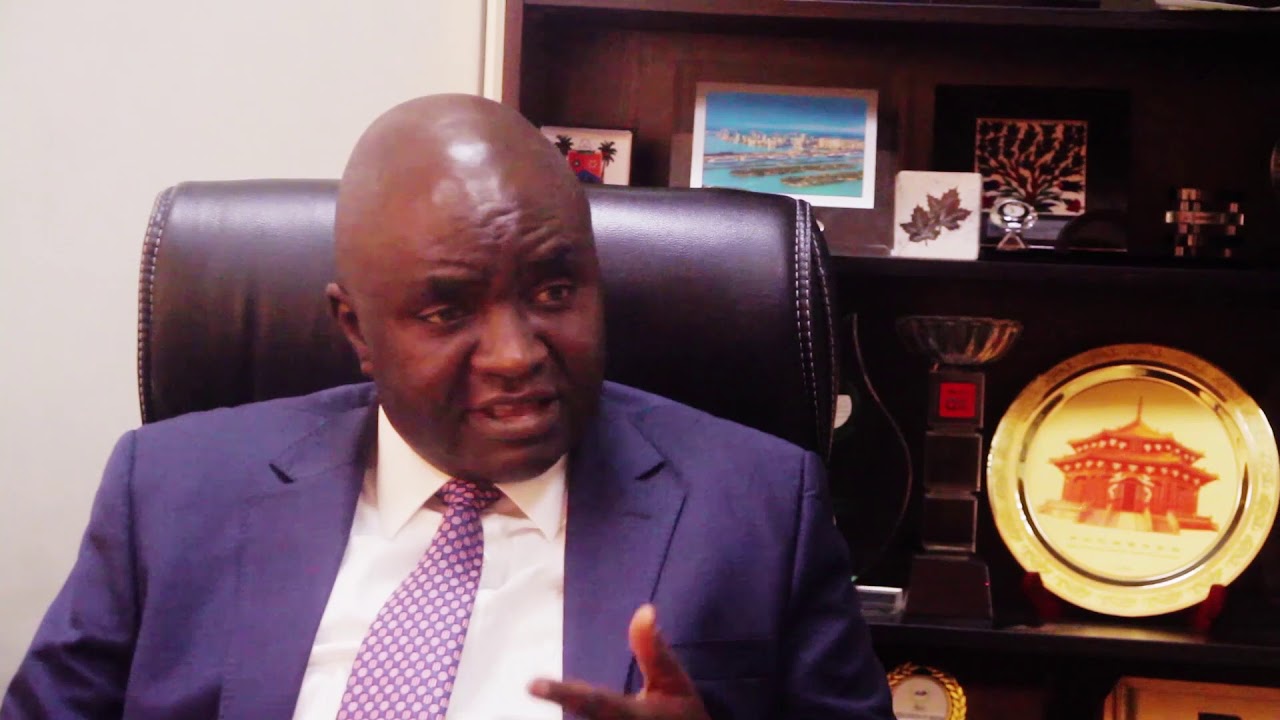
From improving sales volume to facilitating automated processes in business transactions and the application of new technology, there’s no disputing the fact that e-commerce is opening up the Nigerian economy at an impressive rate.
Thriving on a digital economy platform, e-commerce boasts an incredible level of cost-efficiency of connecting sellers with buyers, which makes it a potent tool for business growth, especially for SMEs.
Interestingly, the unfolding relevance and inherent benefit of the e-commerce ecosystem is beginning to attract the interest of relevant stakeholders.
Recently, the Central Bank of Nigeria (CBN) Governor, Mr Godwin Emiefiele, stated that the digital space and its accompanying economic activities will further open up the Nigerian economy, drive financial inclusion and create more jobs.
According to Mr Emiefiele, the impact is obvious for all to see, as the regulatory framework put in place by the apex bank has opened up the digital space for innovation in the Payment Service System thus driving financial inclusion and employment creation.
Few weeks after his comments, the Lagos Chamber of Commerce and Industry (LCCI) announced the inauguration of an e-commerce sectoral group under its banner in conjunction with Jumia and other players in the ecosystem.
Among other things, the group is expected to support the development of private enterprises in various sectors of the Nigerian economy by exposing their products to a larger market.
The LCCI was established for the promotion and protection of trade and industry, and to represent and express the opinion of the business community on matters affecting trade and industry in Lagos, and by extension Nigeria.
Speaking on the essence of the e-commerce group, the Director-General of LCCI, Mr Muda Yusuf, explained that the pivotal role taken up by digital platforms in the Nigerian economy in recent times necessitated the formation of the group.
“Digital platforms have been playing a major role in the issue of trade and commerce in the country. So, this informed the formation of the e-commerce group in LCCI,” he stated.
The ultimate goal is to achieve a robust digital economy that will work to the benefit of all stakeholders, he added, noting that the group will work towards the attainment of a more conducive policy and regulatory environment needed for the industry to thrive for the benefit of all stakeholders.
“The beneficiaries are all the investors in that space; the government and the entire players in the economy because the whole idea is to ensure that we create a better policy and regulatory environment for that segment of the economy to thrive, grow and contribute a lot more to the Nigerian economy,” he stated.
While working with key players in the e-commerce industry was a masterstroke by LCCI, the appointment of the group Chairman was a well thought out process.
At the inauguration of the group, Jumia Chairwoman and Head of Institutional Affairs, Ms Juliet Anammah, was appointed to lead the organisation.
Commenting on the appointment, Mr Yusuf said the group felt that Juliet with her wealth of experience and position in the industry is best suited to drive the affairs of the group towards the attainment of its objectives.
“The choice was informed by the fact that she’s the chair of a major player in the industry. Jumia is a major player in the e-commerce space and we felt that such a person is best positioned to drive this initiative by LCCI,” he stated.
The e-commerce space is gaining more relevance in Nigeria. The recent attention by stakeholders to the sector is a welcome development, and if properly managed and given adequate policy cum legislative support, will go a long way in improving the country’s economic fortunes.










By Aduragbemi Omiyale
The deadline for the recapitalisation of the Nigerian pension industry has been extended by six months to June 2027 from December 2026.
This extension was approved by the National Pension Commission (PenCom), the agency, which regulates the sector in the country.
Addressing newsmen on Thursday in Lagos, the Director-General of PenCom, Ms Omolola Oloworaran, explained that the shift in deadline was to give operators more time to boost the capital base, dismissing speculations that the exercise had been suspended.
“The recapitalisation has not been suspended. We have communicated the requirements to the Pension Fund Administrators (PFAs), and we expect every operator to be compliant by June 2027. Anyone who is not compliant by then will lose their licence,” Ms Oloworaran told journalists.
She added that, “From a regulatory standpoint, our major challenge is ensuring compliance. We are working with ICPC, labour and the TUC to ensure employers remit pension contributions for their employees.”
The DG noted that engagements with industry operators indicated broad acceptance of the policy, with many PFAs already taking steps to raise additional capital or explore mergers and acquisitions.
“You may see some mergers and acquisitions in the industry, but what is clear is that the recapitalisation exercise is on track and the industry agrees with us,” she stated.
PenCom wants the PFAs to increase their capital base and has created three categories, with the first consists operators with Assets Under Management of N500 billion and above. They are expected to have a minimum capital of N20 billion and one per cent of AUM above N500 billion.
The second category has PFAs with AUM below N500 billion, which must have at least N20 billion as capital base.
The last segment comprises special-purpose PFAs such as NPF Pensions Limited, whose minimum capital was pegged at N30 billion, and the Nigerian University Pension Management Company Limited, whose minimum capital was fixed at N20 billion.

By Adedapo Adesanya
Three securities weakened the NASD Over-the-Counter (OTC) Securities Exchange by 0.68 per cent on Thursday, December 18.
According to data, Central Securities Clearing System (CSCS) Plc led the losers’ group after it slipped by N2.87 to N36.78 per share from N39.65 per share, Golden Capital Plc depreciated by 77 Kobo to end at N6.98 per unit versus the previous day’s N7.77 per unit, and FrieslandCampina Wamco Nigeria Plc dropped 19 Kobo to sell at N60.00 per share versus Wednesday’s closing price of N60.19 per share.
At the close of business, the market capitalisation lost N16.81 billion to finish at N2.147 billion compared with the preceding session’s N2.164 trillion, and the NASD Unlisted Security Index (NSI) declined by 24.76 points to 3,589.88 points from 3,614.64 points.
Yesterday, the volume of securities bought and sold increased by 49.3 per cent to 30.5 million units from 20.4 million units, the value of securities surged by 211.8 per cent to N225.1 million from N72.2 million, and the number of deals jumped by 33.3 per cent to 28 deals from 21 deals.
Infrastructure Credit Guarantee Company (InfraCredit) Plc remained the most traded stock by value with a year-to-date sale of 5.8 billion units valued at N16.4 billion, followed by Okitipupa Plc with 178.9 million units transacted for N9.5 billion, and MRS Oil Plc with 36.1 million units worth N4.9 billion.
Similarly, InfraCredit Plc ended as the most traded stock by volume on a year-to-date basis with 5.8 billion units traded for N16.4 billion, trailed by Industrial and General Insurance (IGI) Plc with 1.2 billion units sold for N420.7 million, and Impresit Bakolori Plc with 536.9 million units exchanged for N524.9 million.


By Dipo Olowookere
The All-Share Index (ASI) of the Nigerian Exchange (NGX) Limited has again crossed the 150,000-point threshold on Thursday as the demand of for local intensifies.
The market was up by 0.35 per cent during the session, with the NGX index inching higher by 520.23 points to 150,363.05 points from the previous day’s 149,842.82 points and the market capitalisation climbed by N332 billion to N95.857 trillion from N95.525 trillion.
During the session, the consumer goods index grew by 1.23 per cent, the banking counter expanded by 0.56 per cent, and the energy sector appreciated by 0.05 per cent.
However, the insurance industry went down by 0.23 per cent, while the commodity and the industrial goods sectors closed flat.
Nestle Nigeria gained 10.00 per cent to trade at N1,958.00, Guinness Nigeria improved by 9.98 per cent to N289.70, Aluminium Extrusion Industries rose by 9.76 per cent to N11.25, DAAR Communications soared by 9.20 per cent to 95 Kobo, and Mecure Industries surged by 9.13 per cent to N55.00.
On the flip side, Stanbic IBTC lost 9.33 per cent to settle at N95.20, Lasaco Assurance went down by 9.09 per cent to N2.50, Africa Prudential slipped by 8.82 per cent, Austin Laz depreciated by 8.82 per cent to N12.40, and Sterling Holdings crashed by 6.12 per cent to N6.90.
There were 35 price gainers and 26 price losers yesterday, implying a positive market breadth index and bullish investor sentiment.
During the session, a total of 839.8 million equities valued at N32.8 billion exchanged hands in 23,211 deals compared with the 5.9 billion equities worth N216.2 billion traded in 25,205 deals a day earlier, indicating a decline in the trading volume, value, and number of deals by 85.77 per cent, 84.83 per cent, and 7.91 per cent apiece.
The day’s busiest stock was First Holdco with a turnover of 385.6 million units sold for N15.6 billion, FCMB traded 76.0 million units worth N805.3 million, Lasaco Assurance exchanged 43.6 million units valued at N111.8 million, Access Holdings transacted 29.6 million units worth N616.8 million, and Chams sold 24.8 million units valued at N75.4 million.











-
 Feature/OPED6 years ago
Davos was Different this year
-
Travel/Tourism9 years ago
Lagos Seals Western Lodge Hotel In Ikorodu
-

 Showbiz3 years ago
Estranged Lover Releases Videos of Empress Njamah Bathing
-
 Banking7 years ago
Sort Codes of GTBank Branches in Nigeria
-

 Economy3 years ago
Subsidy Removal: CNG at N130 Per Litre Cheaper Than Petrol—IPMAN
-

 Banking3 years ago
First Bank Announces Planned Downtime
-

 Banking3 years ago
Sort Codes of UBA Branches in Nigeria
-

 Sports3 years ago
Highest Paid Nigerian Footballer – How Much Do Nigerian Footballers Earn