Connect with us

Economy

N40b Debt: MRS Oil, AMCON Agree Out-of-Court Settlement

Published

on

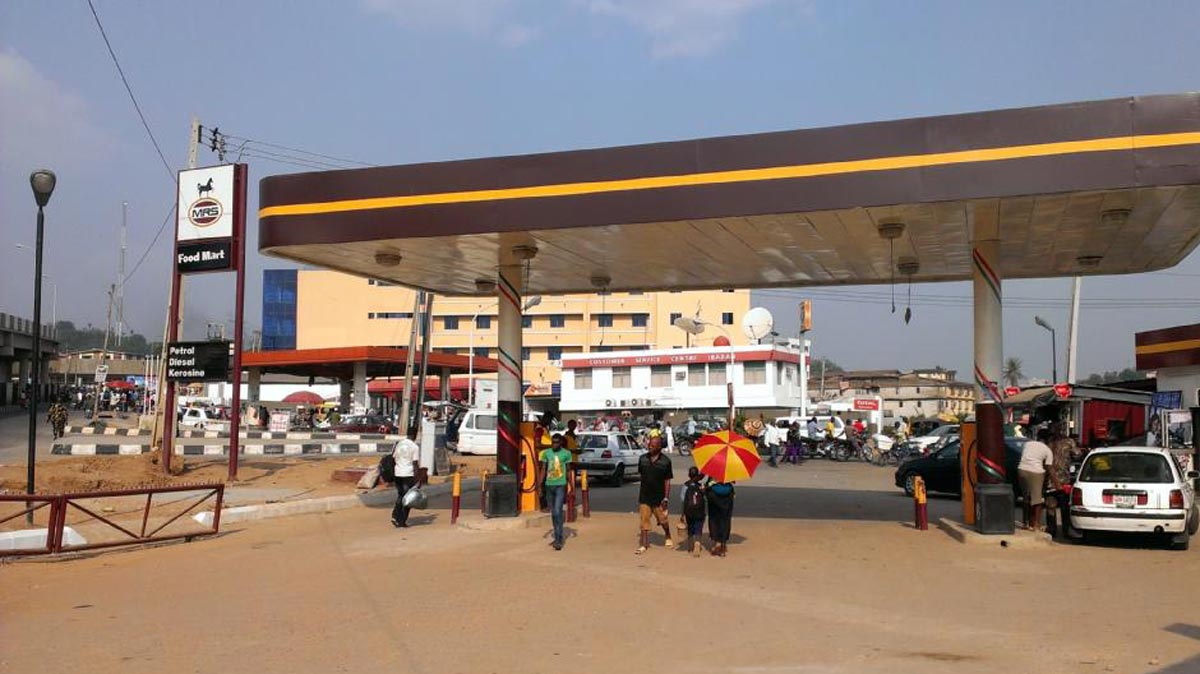
In a bid to settle out of court the debt of N40billion,Asset management Corporation of Nigeria AMCON and MRS Holding limited has filed terms of settlement before a Federal High court in Lagos south west Nigeria.

MRS Oil and Gas Company limited and its subsidiaries are primary obligors under a syndicated loan facility in the sum of $40 million availed to them by a consortium of Nigerian banks pursuant to a bridge facility agreement dated November 18, 2008 and a supplemental bridge facility agreement dated September 18, 2009.

The syndicated loan facility was for the purpose of acquiring Chevron Texaco downstream operations in West Africa.

The security package for the syndicated loan facility included a personal guarantee from the Chairman of MRS Oil and Gas company Mr Sayyu Dantata, as well as a corporate guarantee and indemnity from each of Corlay Global S. A., Ovals Trading S. A. and Societe Nationale D’Operations Petrolieres de Cote D’Ivoire.

The syndicated loan facility was subsequently classified as non-performing loan and acquired by AMCON pursuant to the provisions of the AMCON Act.

In a bid to recover the debt AMCON instituted a suit AMCON versus Petroci and another,. MRS subsequently applied to be joined as a party to the action and filed a counter -claim against Petroci.

In that suit, AMCON and Petroci executed Terms of Settlement on June 16, 2015 in the sum of $90 million, the terms were subsequently entered as the consent judgement on June 29, 2015.

In relation to the proportion of the debt that remains outstanding AMCON commenced suit (winding Up Proceedings) on July 4, 2016 against MRS as the respondent on the ground of MRS inability to pay its debt.

The winding up proceedings seeks an order of the court winding up MRS for being insolvent company.

AMCON also commenced suit number FHC/L/BK/04/2016(the bankruptcy Proceedings against Mr Sayyu Dantata, Chairman of MRS, on the basis of a personal guarantee dated September 17, 2008 to repay the sum of N350 million in the event of a default by MRS to repay the syndicated loan facility.

The parties now agreed to settle fully and finally the dispute concerning the debts

Now it is hereby agreed that:

  1. MRS shall pay to AMCON, the sum of N42 billion in full and final settlement of all sums due and owing to AMCON by MRS pursuant to the syndicated loan facility extended to MRS, and AMCON shall hereby release and forever discharge all claims against MRS, its parent, subsidiaries, assigns, transfees, representatives, principals, agents, officers, and directors subject to the following terms and conditions:

MRS shall between the 1st day of February 2018 and 10th day of April 2018 pay over to AMCON the sum of N2 billion of which the sum of N1 billion is acknowledged as having been paid.

(b)MRS shall pay the balance of N40 billion over a period of four years at an interest rate of 9% per annum on a quarterly basis.

(c)The sum of N2.5 billion plus accrued interest shall be paid by MRS on a quarterly basis, commencing ninety days from the effective date being 1st February 2018.

(d)MRS shall provide an acceptable unconditional bank guarantee with four year tenor from a reputable bank to back up the quarterly payment envisaged under this Terms of Settlement. A maximum period of ninety days shall be afforded to MRS to procure and provide the bank guarantees envisaged under this Terms of Settlement.

(e)MRS agrees to be bounded by the terms and conditions contained in the offer letter dated March 22, 2018 to which a breach of any of these terms would automatically become enforceable.

(f)AMCON shall accept lump sum prepayment without penalty.

2 AMCON shall be entitled to call in the bank Guarantee in the event of a default in making the quarterly payments, without the requirement to give notice.

AMCON shall be entitled to cancel all the concessions granted under this terms of settlement and call in the total balance outstanding in the event of default of any of the terms and conditions undertaken by MRS under the terms of Settlement

  1. Upon full payment of the total sum of N42 billion in full and final settlement of all sums due and owing to AMCON, AMCON agrees to release and discharge MRS, its parent, agents and Directors from liability and obligation to it in connection with the debts.
  2. It is expressly agreed between parties that the terms of settlement herein compromises all prior and existing judgement obtained against MRS and its directors.
  3. Upon execution of this agreement and payment of the sum of N2 billion, as contained in clause 1(a) above, AMCON shall immediately discontinue and withdraw all pending court case between parties in relation to the debt subject mystery of this settlement agreement, the winding up proceeding and the Bankruptcy proceedings and filed and adopt these terms as a consent judgement in the winding up proceedings.
  4. These terms of settlement are expressly without prejudice to MRS’s ability to maintain and pursue the MRS’s Counter Claims in the Petroci Proceedings and/or purse the MRS’s counter claims against Petroci in arbitration or otherwise.
  5. AMCON agrees, on behalf of itself and on behalf of its parent and agents or Directors, not to sue, commence, voluntarily aid in any way prosecute against MRS or it agents or Directors any action or proceedings concerning the release claims, in this jurisdiction or any other
  6. Parties to bear their respective litigation cost.

The terms of Settlement was endorsed on behalf of AMCON by: their counsel Adeniyi Adegbomire SAN, Head, Energy group, Sulaiman Abdul Majeed, Group Head, Credict Joshua Ikioda, and a Director, Secretary, and a lawyer Oladapo Ajayi on behalf of MRS Holding limited.


Dipo Olowookere is a journalist based in Nigeria that has passion for reporting business news stories. At his leisure time, he watches football and supports 3SC of Ibadan. Mr Olowookere can be reached via [email protected]

Click to comment

Leave a Reply

Your email address will not be published. Required fields are marked *

Economy

NUPRC to Reveal Successful Bidders for 50 Oil, Gas Assets July 21

Published

on

NUPRC

By Adedapo Adesanya

The Nigerian Upstream Petroleum Regulatory Commission (NUPRC) will, at the Commercial Bid Conference, announce the successful bidders for 50 oil and gas blocks in the 2025 Licensing Round on July 21, 2026.

The regulator said the conference would conclude an eight-month licence round that began on December 1, 2025, after President Bola Tinubu approved the exercise under the Petroleum Industry Act (PIA) 2021.

The commission said the 50 blocks include 15 onshore, 19 shallow-water, 15 frontier and one deep-offshore block, covering basins such as the Niger Delta, Chad Basin, Benue Trough, Anambra and Bida.

It said the round aims to attract about $10 billion in fresh investment and to unlock discovered but undeveloped fields, fallow assets and gas resources. NUPRC described the 2025 round as the third licensing exercise under the PIA framework and stressed it is designed to prioritise natural gas development.

NUPRC outlined a five-stage process for the round — registration and pre-qualification, data acquisition, technical bid submission and evaluation, and the commercial bid conference — followed by ministerial approval and contracting. The Commission said it notified pre-qualified applicants on March 16, 2026, and closed technical and commercial bids on June 12, 2026.

NUPRC chief executive, Mrs Oritsemeyiwa Eyesan, had said the selection would be merit-based and would exclude weaker applicants.

She said only candidates with strong technical and financial credentials, professionalism and credible development plans would advance, and that winners would be chosen on a weighted combination of technical and commercial scores.

To widen participation, the federal government fixed signature bonuses for the round in a prescribed range of $3 million to $7 million per block, the Commission said, adding that bids outside that range would be non-compliant and excluded.

NUPRC said it would resolve the tied highest bids within the range by conducting a sealed rebid for the signature bonus, adding that successful bidders will receive Petroleum Prospecting Licences (PPLs) and may elect either a Concession or a Production Sharing Contract (PSC) framework, noting that the choice of framework will determine fiscal terms for up to two decades.

The agency noted that bidders were required to present host community development plans and to commit to remit 3 per cent of operating expenditure to Host Community Development Trusts. It said decarbonisation objectives and broader environmental, social and governance (ESG) requirements were mandatory parts of submissions.

It warned that applicants with government debts, those that had previously failed to develop licences “vigorously and in a business-like manner,” or those found non-compliant with applicable laws could be disqualified at any stage.

The regulator said it expects ministerial approval and formal contracting between July and October 2026, after which awardees must execute concession contracts before licences take legal effect.

Recall that during the 25th Nigeria Oil and Gas (NOG) Energy Week in Abuja, the NUPRC issued PPLs to 12 companies across 19 blocks from the 2024 round. The Commission named recipients, including Boron Energy Limited, Energy Marketing and Supply Limited, Sahara Deepwater Resources Limited, Tulkan Energy E&P Company Limited and said that the exercise showed the licensing pipeline was functioning.

Continue Reading

Economy

Nigeria Needs $38.3bn to Meet 2030 Oil, Gas Production Targets—Verheijen

Published

on

Olu Verheijen

By Adedapo Adesanya

The Special Adviser to the President on Energy, Mrs Olu Verheijen, has said Nigeria requires about $38.3 billion in fresh investment to sustain current oil and gas production and achieve its 2030 output targets.

Speaking at the recently concluded 25th NOG Energy Week Conference and Exhibition in Abuja, Mrs Verheijen said global investors are now prioritising countries with predictable policies, competitive fiscal terms and credible regulatory systems.

“For Africa, that question is urgent. And for Nigeria, the scale of the task is equally clear: to sustain the current base and grow toward our 2030 production target, analysis shows a financing gap of about $38.3 billion,” she said.

According to her, the era when countries relied solely on resource endowment to attract capital has ended.

“Capital has no passport. It is rational. It prices risk. It follows credibility. It asks one question: can this country turn resources into bankable projects, and bankable projects into reliable returns?”

She said Nigeria had deliberately repositioned itself through reforms aimed at improving investor confidence and accelerating project execution.

“We recalibrated fiscal terms, clarified regulation and streamlined oversight. We introduced targeted incentives and cut contracting timelines by more than half. We made a clear statement to the world: Nigeria is no longer asking to be trusted; Nigeria is working to be bankable.”

Highlighting progress recorded under the reforms, Verheijen said Nigeria now has more than $50 billion worth of upstream projects in its visible investment pipeline.

“We now have more than 50 billion dollars of upstream projects in the visible pipeline. In the last three years, more than 10 billion dollars of long-awaited final investment decisions have come through.”

She added that crude oil and condensate production has increased by about 400,000 barrels per day since 2023, while onshore production is at its highest level in two decades.

“Crude oil and condensate production has risen by about 400,000 barrels per day since 2023. Onshore production is at its strongest level in twenty years.”

Mrs Verheijen said the Federal Government remains committed to achieving its target of producing three million barrels of oil per day and 10 billion standard cubic feet of gas daily by 2030, while strengthening Nigeria’s competitiveness in the global energy market.

She also highlighted ongoing reforms in the power sector, including the N4 trillion Presidential Power Sector Financial Reforms Programme, which she described as critical to restoring confidence across Nigeria’s electricity value chain.

On gas development, she said the government was expanding domestic LPG supply, improving affordability and supporting investments through tax and import duty incentives.

“A gas-rich nation cannot be comfortable when families are priced back to firewood, charcoal or kerosene,” she said.

Mrs Verheijen stressed that Nigeria’s ambition extends beyond exporting crude oil to building an industrial economy anchored on value addition.

“We have chosen not merely to produce molecules, but to convert molecules into megawatts, fertiliser, petrochemicals, mobility, manufacturing, jobs and exports.”

She concluded that the country’s reforms were laying the foundation for long-term growth despite lingering challenges.

“The age of Nigerian hesitation is ending. The age of Nigerian ambition has begun. Our task now is to turn reform into relief, capital into projects, projects into jobs, and energy into national greatness.”

Continue Reading

Economy

Nigeria’s Headline Inflation Slows Marginally to 15.91% in June

Published

on

Nigeria’s Headline Inflation

By Adedapo Adesanya

Nigeria’s headline inflation rate in June 2026 moderated to 15.91 per cent from 15.93 per cent in May, as pressure from the Iran war mildly eased, though it largely remained in focus during the review month.

In the report on Wednesday, the statistical office showed that the headline inflation rate for June on a month-on-month basis was 1.66 per cent, 0.09 per cent lower than the 1.75 per cent recorded in May 2026.

On an annualised basis, the print was down from 25.29 per cent in the same month of the preceding year (June 2025). This was due to the rebasing of the calculation year from 2009 to 2024.

The rise in prices, which stemmed from the continued conflict in the Middle East, continued to stoke food prices and energy costs, which account for a huge chunk of average spending.

The food inflation rate in May 2026 on a month-on-month basis was 3.75 per cent, up by 0.77 percentage points from May 2026 (2.98 per cent), while on a year-on-year basis, it was 17.52 per cent and stood at 25.41 per cent in the same month of the preceding year (June 2025).

At 15.91 per cent print, the inflation marginally beat expectations by Meristem Research, predicted at 15.95 per cent.

There had been expectations that the ceasefire between the United States and Iran would help drive oil prices lower, raising expectations of some relief on the inflation front. However, with conflicts now flaring up again, oil prices are likely to increase again, and the anticipated easing in energy-driven inflation may not materialise as broadly as earlier envisaged.

Meristem Research said it expects inflationary pressures to re-emerge across key economies in the near term, as the re-escalation of the US-Iran conflict has reignited upward pressure on global oil prices.

This will be a core factor that the Monetary Policy Committee (MPC) of the Central Bank of Nigeria (CBN) will be looking at when it meets for the next policy meeting. At its last meeting, the committee left benchmarked interest rates at 26.5 per cent.

Continue Reading