Connect with us

Economy

Naira Gains 0.09% on 53% Ease in Forex Demand at I&E Window

Published

on

Forex Demand

By Adedapo Adesanya

After four straight sessions of depreciation, the Naira recovered about 32 kobo on the United States Dollar at the Investors and Exporters (I&E) segment of the foreign exchange (forex) market on Friday, March 6, 2020.

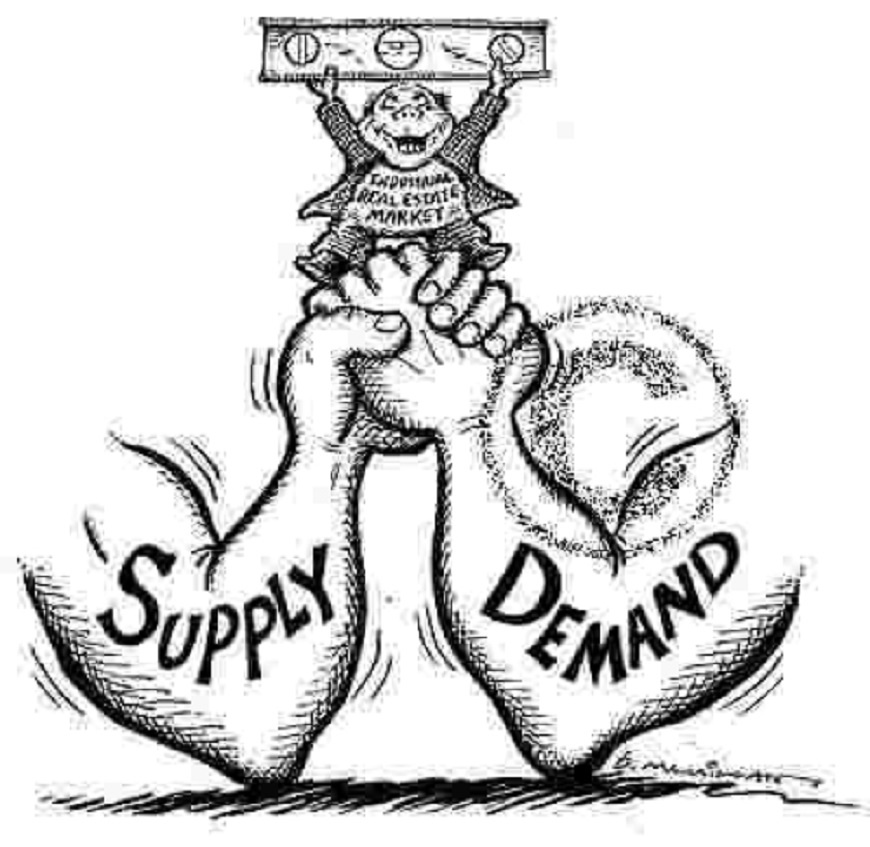
Business Post reports that the gains achieved by the domestic currency yesterday was influenced by an ease in the demand for forex at the market segment.

According to data obtained from FMDQ, the demand for FX moderated by 53 percent or $386.19 million on Friday as transactions worth $346.21 million happened at the session compared with $732.40 billion on Thursday.

At the close of business, the local currency settled at N366.25 against the American currency in contrast to N366.57 to a Dollar it was traded the previous trading day, indicating a 0.09 percent growth.

A look at another segment of the market, the Bureaux De Change (BDC) window, showed that the Nigerian currency gained 10 kobo against the Dollar at the Lagos BDC market to sell at N358/$1 compared with N358.10/$1 it traded previously. However, it traded flat against both the Euro and the British Pound at N395/€1 and N469/£1 respectively.

In Abuja, BDC operators exchanged the Naira to the Dollar at the previous rate of N357.80/$1. The domestic currency also remained unchanged in the city against the Pound at N470/£1 and against the Euro at N395/€1.

In Kano, the Naira/USD rate closed flat at N358/$1. It further remained unchanged against the Pound Sterling and the Euro at N472/£1 and N395/€1 respectively.

The case was not different at the Port Harcourt BDC market, where authorised forex dealers sold the Naira to a Dollar at Thursday’s closing price of N358/$1. This was extended to the two other major foreign currencies at the market, the Pound and Euro, where quoted at N475/£1 and N397/€1 respectively.

At the parallel market, the domestic currency remained unchanged against the US Dollar at N360/$1. The Nigerian currency also traded flat against the British currency at N473/£1, but lost N1 on the Euro to sell at N398/€1 in contrast to N397/€1 it previously traded.

Business Post reports that the official exchange rate of the Central Bank of Nigeria (CBN) also referred to the interbank segment remained at N307/$1.


Adedapo Adesanya is a journalist, polymath, and connoisseur of everything art. When he is not writing, he has his nose buried in one of the many books or articles he has bookmarked or simply listening to good music with a bottle of beer or wine. He supports the greatest club in the world, Manchester United F.C.

Click to comment

Leave a Reply

Your email address will not be published. Required fields are marked *

Economy

Oil Prices Slip Despite Fresh Iran-Houthi Threat on Markets

Published

on

Crude Oil Prices

By Adedapo Adesanya

Oil prices settled about 1 per cent lower on Thursday ‌even as the Iran war escalated, with the Middle East oil producer asking Yemen’s Houthi movement to be prepared to close the Red Sea oil export route.

Brent crude futures fell by 72 cents or about 0.9 per cent to trade at $84.23 a barrel, while the US West Texas Intermediate (WTI) futures depreciated by ​65 cents or 0.8 per cent to close at $78.95 a barrel.

Iran has instructed Yemen’s Houthi movement to stand ready to close the Bab el-Mandeb strait, the vital gateway to the Red Sea, if the US follows through on threats to strike Iranian power infrastructure.

Market analysts warned that with the Strait of Hormuz already closed, the latest threat raises the serious risk of both of the Middle East’s primary oil export routes being disrupted at the same time.

About 7.4 million barrels of petroleum transited Bab el-Mandeb per day in June, about 7 per cent of global oil output, according to Kpler data, up ​from 4.2 million barrels per day last year.

This week, US President Donald Trump repeated oft-stated threats to strike ‌Iranian power plants and bridges.

According to senior Iranian ‌sources, the Islamic Republic’s leadership has discussed the idea with Iran’s Houthi allies, with the rebel forces now awaiting definitive orders to begin targeting maritime traffic.

In a sign of escalating tensions in the region, the Houthis fired missiles at Saudi Arabia after accusing the kingdom of bombing an airport under ​their control on Monday, breaking a four-year truce in the conflict between the kingdom and the group.

This comes as Saudi Arabia is currently evaluating a massive infrastructure expansion to permanently upgrade the capacity of its western pipeline and terminal networks.

Any additional disruptions could force international shipping firms to redirect vessels around Africa, inflating transit costs and worsening the global energy crisis.

On Wednesday, the US struck Iran’s coastal defences and missile ​sites after reimposing a naval blockade of its ports, while the two countries exchanged intensified fire on Thursday, which kept pressure on prices upward.

However, weighing on prices was Iran’s release of a US citizen, which could point toward a path to avert the resumption of all-out war.

Continue Reading

Economy

CBN Launches FX Tracker to Monitor Every BDC Dollar Purchase

Published

on

bdc operator

By Adedapo Adesanya

The Central Bank of Nigeria (CBN) has launched a new digital platform to track every foreign exchange transaction involving Bureaux De Change (BDC) operators, marking a major step in its efforts to improve transparency and strengthen oversight of the country’s retail forex market.

In an operational guidance issued on July 15 to authorised dealer banks and licensed BDCs, the apex bank introduced the FX BDC Purchase Tracker (FXBT), a centralised electronic portal designed to monitor foreign exchange purchases by BDCs from the point of request through approval, settlement and eventual sale.

The CBN said the portal will require BDCs to upload real-time or same-day data on all FX purchases made through the Nigerian Foreign Exchange Market (NFEM), giving the regulator transaction-level visibility across the retail FX market.

According to the bank, the platform is designed to prevent abuse by making it easier to detect operators attempting to exceed the weekly purchase limit of $150,000, obtain allocations from multiple banks or divert foreign exchange outside approved channels.

The launch of the tracker builds on the CBN’s February policy that restored direct access for licensed BDCs to purchase foreign exchange from authorised dealer banks through the NFEM. While that policy improved access to official FX, the new platform provides the digital infrastructure to monitor how the funds are used.

Under the new framework, authorised dealer banks must conduct comprehensive Know-Your-Customer (KYC) and customer due diligence checks before selling foreign exchange to any BDC.

The new guideline also says banks must verify beneficial ownership information, retain incorporation documents and carry out enhanced due diligence for higher-risk operators. Any BDC that fails these checks will not be allowed to access official foreign exchange.

The guidance also requires banks to acknowledge BDC purchase requests submitted through the FXBT portal within two business hours and immediately notify operators whether their requests have been approved or rejected.

To discourage speculation, the CBN directed that any forex purchased through the NFEM but left unused must be sold back into the market within 24 hours after the expiration of the utilisation period. BDCs are also required to disclose any previously unused balances when submitting fresh requests.

In addition, all foreign exchange transactions between banks, BDCs and customers must be settled through registered accounts with licensed financial institutions. Third-party transactions are prohibited, and any transfer outside a BDC’s registered settlement account will be treated as a regulatory violation.

The apex bank also said all authorised dealer banks and licensed BDCs are expected to comply with the new regulatory guidance and operational procedures with immediate effect.

Continue Reading

Economy

HBM Nigeria Eyes Stronger Market Share With Extra Output by January 2027

Published

on

HBM Nigeria

By Adedapo Adesanya

The chief executive of HBM Nigeria Plc (formerly Lafarge Africa), Mr Lolu Alade-Akinyemi, said the cement producer is expected to add 4.5 million tonnes to its production capacity by January 2027.

HBM Nigeria Plc is positioning itself for stronger long-term competitiveness, market leadership and job creation as it accelerates expansion projects.

The transition to HBM Nigeria marks a new phase of growth, driven by operational excellence, sustainability, innovation, and infrastructure development, while maintaining its long-standing commitment to Nigeria’s construction sector.

Mr Alade-Akinyemi, speaking recently in Lagos, said the ongoing expansion of the company’s Ashaka and Sagamu plants would significantly boost local production, create employment opportunities, and support businesses across its value chain.

“We recently announced the expansion of the Sagamu plant in Ogun State and the Ashaka plant in Gombe State. Hopefully, in January 2027, we will commission both plants, adding 4.5 million tonnes to our capacity. Traditionally, building a new plant takes about three years, but this is one of the benefits of belonging to the Huaxin Group,” he said.

According to him, the projects will generate employment, create opportunities for young people and women, strengthen local suppliers and contractors, and contribute further to Nigeria’s economic growth.

“There are many vacancies we are trying to fill in Sagamu and Ashaka. Beyond direct employment, we are creating opportunities for small businesses, developing suppliers and supporting local contractors. This is an exciting period because it will deliver significant benefits to Nigeria,” he said.

Mr Alade-Akinyemi noted that while the company’s corporate identity had changed following its acquisition by Huaxin Building Materials Group, its core values and commitment to customers, host communities, employees and shareholders remain unchanged.

He said HBM Nigeria traces its roots to 1959 as West African Portland Cement Company (WAPCO), with its first cement plant commencing operations in Ewekoro, Ogun State, in 1961.

Since then, he said, the company has grown into one of Nigeria’s leading building solutions providers with integrated plants in Ewekoro, Sagamu, Ashaka and Mfamosing.

He added that the company, which became publicly listed in 1979, has continued to expand through acquisitions and transformation while maintaining high product quality, innovation and responsible operations.

Highlighting the strengths of its parent company, Alade-Akinyemi described Huaxin Building Materials as a globally recognised building materials manufacturer founded in 1907 and headquartered in Wuhan, China, with operations across 16 regions in China and 14 countries worldwide.

He said Huaxin’s engineering expertise and focus on research and development would strengthen HBM Nigeria’s operations and help close engineering skills gaps in the country.

“As HBM Nigeria, we are strategically positioned for long-term competitiveness and stronger market leadership while reinforcing our commitment to supporting Nigeria’s infrastructure development and economic progress after more than six decades of industry leadership,” he said.

He also said sustainability would remain central to the company’s operations, noting that it had introduced lower-carbon products and continued to invest in environmentally friendly production processes.

Continue Reading