Connect with us

Economy

Naira Trades at N381/$1 at Interbank Forex Segment

Published

on

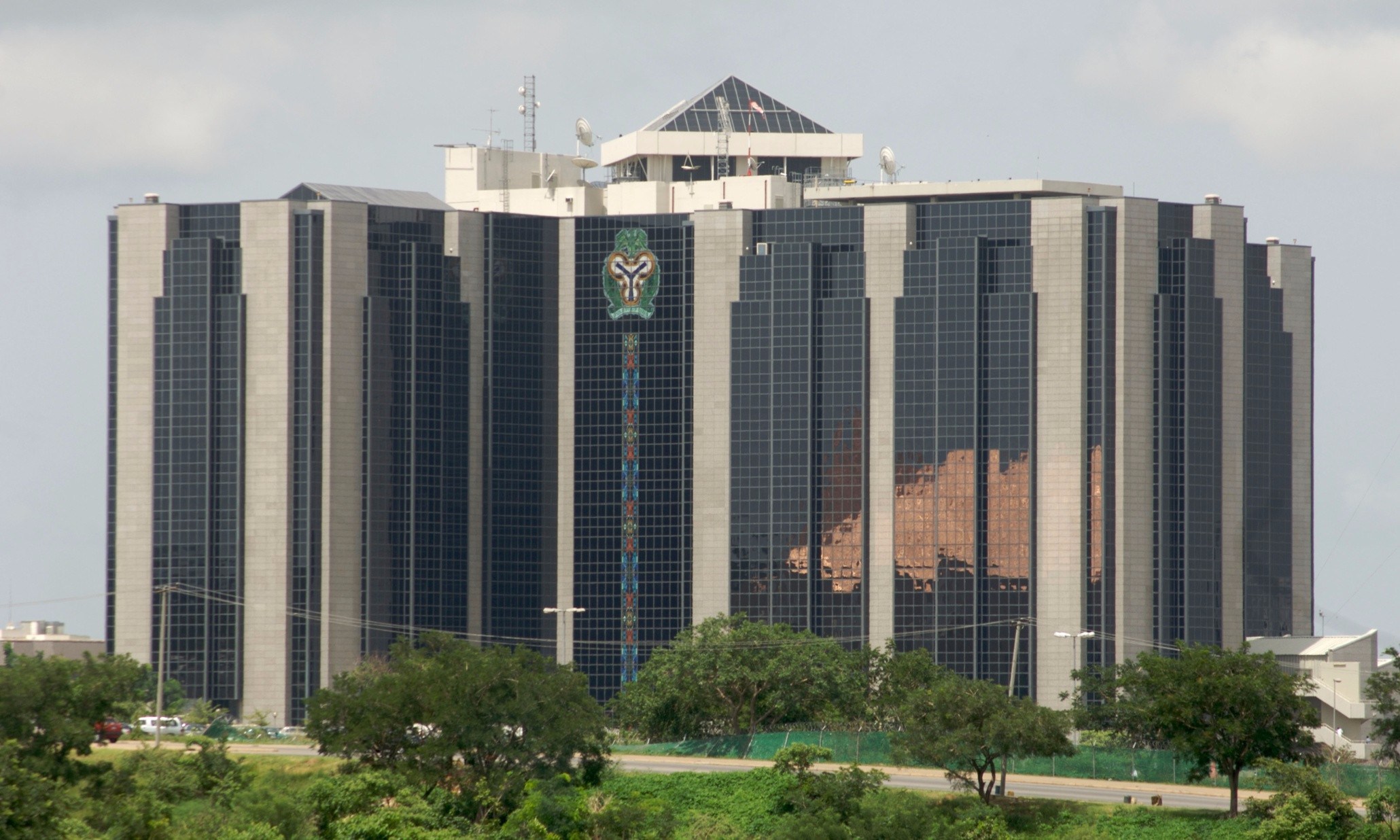
CBN interbank forex market

By Adedapo Adesanya

The Central Bank of Nigeria (CBN) auctioned the Dollar at N381 at the interbank segment of the foreign exchange (forex) market on Tuesday.

This indicated a depreciation by 5.54 percent or N20 when compared with the rate it traded on Monday, N361/$1, at the same segment.

This came as the CBN raised the rate at the Secondary Market Intervention Sales (SMIS), a window where importers access foreign currencies, from N360/$1 to N380/$1 with an instruction to bidders to comply accordingly.

Business Post also gathered from the FMDQ portal that the exchange rate of the naira/dollar remained at N380.50/$1 at the Investors and Exporters (I&E) market.

At the market segment on Tuesday, it was observed that the demand for the American dollar rose by 918.4 percent or $93.22 million to $103.37 million from $10.15 million.

At another segment of the foreign exchange market, the Bureau de Change  (BDC), operators in Lagos sold the dollar for N459/$1 in contrast to the previous day’s N458.2/$1, indicating that the local currency lost 80 kobo against the greenback.

Against the Pound, the local currency lost N1 against the Dollar at the same location to sell at N567/£1 versus N566/$1 it sold previously, while on the Euro, it lost N2 to trade at N502/€1 in contrast to the previous N500/€1.

In Abuja, the local currency gained N2 against the American currency to close at N457/$1 compared to N459/$1. Against the Pound, it appreciated by N3 to sell at N547/£1 versus N550/£1 and gained by N8 against the Euro to N492/€1 from N500/€1.

At the Port Harcourt BDC market, the domestic currency dropped 50 kobo against the dollar to sell at N457.50/$1 in contrast to the previous N457/$1. Against the Pound, the Naira rose by N2 to close at N550/£1 compared with N552/£1 and against the Euro, it depreciated by N2 to close at N497/€1 versus N495/€1.

In Kano, the local currency gained 50 kobo on the Dollar at N457/$1 versus N457.50/$1, while it traded flat against the Pound and Euro at N540/£1 and N490/€1 respectively.

At the black market, operators traded the local currency at N461/$1, the same rate it was traded at the previous session rate on Monday.

At the same segment, the domestic currency shed N3 against the Pound at N558/£1 versus N555/$1, while against the Euro, it retained its previous rate of N502/€1.


Adedapo Adesanya is a journalist, polymath, and connoisseur of everything art. When he is not writing, he has his nose buried in one of the many books or articles he has bookmarked or simply listening to good music with a bottle of beer or wine. He supports the greatest club in the world, Manchester United F.C.

Click to comment

Leave a Reply

Your email address will not be published. Required fields are marked *

Economy

Crude Oil Prices Fall as Fears of US-Iran Conflict Ease

Published

on

crude oil prices

By Adedapo Adesanya

Crude oil ​prices fell on Friday as traders gained confidence that renewed conflict between the United States and Iran ‌was growing less likely.

The price of Brent crude futures settled at $93.09 a barrel, down $1.94 or 2.04 per cent, and the US West Texas Intermediate (WTI) crude futures finished at $90.54 a barrel, down $2.50 or 2.69 per cent.

President Donald Trump said the US will win the conflict with Iran either “militarily or on paper,” referring to the fitful negotiations with the Iranian government, and he suggested he could meet with Iran’s reclusive supreme leader “if it was to make a deal.”

He also said he had no desire to meet with Iranian Supreme Leader Mojtaba Khamenei, who has not been seen since the outbreak of violence on February 28 and was reportedly seriously injured in US-Israeli air strikes. He, however, added that if the two sides reached a deal, it was possible the two leaders would meet.

Meanwhile, Hezbollah leader Naim Qassem rejected on Thursday a US-brokered agreement between Israel and the Lebanese government to halt the fighting. Iran has made a ceasefire in Lebanon a ​condition for any peace deal ​with America.

Oman said ⁠operations at Mina al Fahal port were unaffected after it was reported that oil loading had been ​suspended following an explosion near its mooring berths. Oman exports 800,000 to 900,000 barrels per day of crude from the ​terminal.

As the US-Iran war peace talks dragged on, traffic in the Strait of Hormuz, where a fifth of the world’s oil passes, remained limited. Gains have been capped by oil inventories lasting longer than expected, rerouted exports and falling demand.

The Organisation of the Petroleum Exporting Countries and its allies (OPEC) is ⁠sticking to its oil demand growth forecast of 1.2 million barrels per day for this year, its Secretary General Haitham Al Ghais said, despite the Middle East conflict and closure of the Strait of Hormuz.

OPEC crude output fell last month, hitting its lowest level in decades as the US blockade of Iran and disruption in the Persian Gulf continued to curb production.

Output from its 11 current members dropped by 1.22 million barrels per day to 16.33 million a day in May, with Iran accounting for more than half of the decline, according to a Bloomberg survey. That was the lowest in at least 37 years. The data excludes the United Arab Emirates, which left the organisation last month after six decades.

Key members of the OPEC+ are expected to nudge up targets by a modest 188,000 barrels again in July during a video conference on Sunday. The session is one of four online meetings OPEC and its allies are due to hold that day.

Continue Reading

Economy

OPEC Crude Output Falls to 37-Year Low Amid Iran Disruptions

Published

on

OPEC output cut

By Adedapo Adesanya

Crude production under the collective Organisation of the Petroleum Exporting Countries (OPEC ) fell in May to its lowest level in at least 37 years as the blockade of Iran by the United States and disruptions in the Persian Gulf, continued to limit output.

According to a Bloomberg survey released on Friday, output from the organisation’s 11 current members, including Nigeria, dropped by 1.22 million barrels per day to 16.33 million barrels per day last month.

Iran accounted for more than half of the decline. The data excludes the United Arab Emirates (UAE), which departed the cartel last month after six decades of membership.

War between a US-Israeli alliance and Iran has reduced oil supplies from the Middle East, largely closing the Strait of Hormuz waterway. Saudi Arabia, Iraq, the UAE and Kuwait have been forced to cut crude production. Iranian shipments face additional pressure following a US blockade of its ports imposed in mid-April.

Iranian output fell by 710,000 barrels per day to a five-year low of 2.34 million barrels per day in May, the survey showed. Central Command reported that US forces have redirected 127 commercial vessels to enforce the blockade of all maritime traffic entering and exiting Iranian ports.

Kuwait recorded the second-largest decline last month, with production falling by 310,000 barrels per day to 490,000 barrels per day, less than one-fifth of pre-war levels. Saudi Arabia, the group’s leader, saw output decrease by 240,000 barrels per day to 6.57 million barrels per day.

The production reductions have not prevented OPEC and its allies from raising quotas over recent months, continuing a year-long process of restoring output halted several years ago.

This comes ahead of a meeting scheduled to be held on Sunday, June 7, where a sub-group of seven members is expected to increase targets by 188,000 barrels again in July. The session is one of four online meetings OPEC and its partners plan to hold that day.

Delegates indicated the alliance has plans for two additional monthly quota increases in August and September. UAE output rose by 300,000 barrels per day to 2.44 million barrels per day in May, according to the survey.

Continue Reading

Economy

Debt Repayments: FG Overshoots Budget Allocation by 18%

Published

on

total debt stock

By Aduragbemi Omiyale

The 2025 third quarter Budget Implementation Report from the Budget Office of the Federation has shown that the federal government exceeded the funds allocation for repayment of debts for the first nine months of the fiscal year by about 18 per cent.

In a report by Punch, the sum of N10.74 trillion was budgeted for debt servicing between January and September 2025, but the government used N12.63 trillion for the purpose, N1.90 trillion or 17.65 per cent more than the allocation for the year.

The funds were spent on domestic debts, foreign debts and sinking fund by the central government in nine months.

Business Post reports that for the whole year, the amount approved by the National Assembly and signed by President Bola Tinubu for debt repayments was N14.31 trillion.

Looking at the nine-month figures, domestic debt service gulped N6.23 trillion, exceeding its N5.39 trillion provision, while foreign debt service was N6.30 trillion versus the budget provision of N5.06 trillion.

According to the report, the figures indicated that 67.2 per cent of the federal government’s retained revenue of N18.63 trillion was spent on debt service in the first nine months of 2025. When the sinking fund is included, debt-related payments consumed about 67.8 per cent of revenue.

It was also observed that aggregate federal government revenue underperformed the budget by N12.03 trillion or 39.24 per cent, as actual revenue of N18.63 trillion fell short of the N30.67 trillion projected for the first three quarters.

In the third quarter alone, the government generated N7.70 trillion versus the quarterly target of N10.22 trillion as a result of persistent oil revenue shortfalls, despite stronger non-oil collections.

The debt burden also crowded out capital spending, as total capital expenditure was N3.10 trillion in the first nine months compared with the N17.58 trillion budgeted for the period, indicating that actual debt-related payments were more than four times capital expenditure.

Continue Reading

Trending