Economy
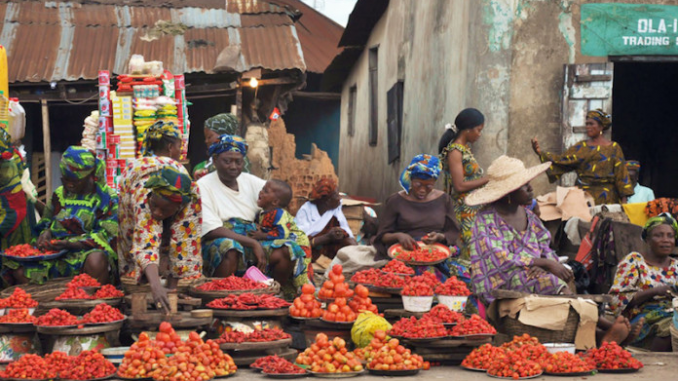
NBS Says Inflation in Nigeria Hit 20.77% in September 2022
By Aduragbemi Omiyale
In September 2022, inflation in Nigeria increased by 20.77 per cent from 20.52 per cent in August 2022 and 16.63 per cent in September 2021.
In a report released on Monday, the National Bureau of Statistics (NBS) said the jump in the consumer price index (CPI) was triggered by an increase in food inflation due to higher prices paid by Nigerians to purchase bread and cereals, potatoes, yam, oil, and fat.
It was stated that the food inflation rate in September 2022 was 23.34 per cent compared with the 19.57 per cent recorded in September 2021 and 23.12 per cent in August 2022.
It is believed that inflation will continue to remain high this year as a result of the flood in some states, which has destroyed crops and farmlands.
In the report released today, the NBS said the percentage change in the average CPI for the 12-month period ending September 2022 over the average of the CPI for the previous 12-month period was 17.43 per cent, showing a 0.60% increase compared with the 16.83 per cent recorded in September 2021.
It was observed that urban inflation, on a year-on-year basis, stood at 21.25 per cent last month compared with 17.19 per cent in the same period of last year.
On a month-on-month basis, the urban inflation rate was 1.46 per cent in September 2022, lower than the 1.76 per cent reported in August 2022. The corresponding 12-month average for the urban inflation rate was 17.94 per cent, higher than the 17.41 per cent in September 2021.
As for the rural inflation rate, it was 20.32 per cent in September 2022 compared with 16.08 per cent in September 2021. On a month-on-month basis, it stood at 1.27 per cent, lower than 1.75 per cent a month earlier and for the 12-month average, the rate was 16.94 per cent in contrast to 16.26 per cent a year earlier.
The stats office said all items inflation rate on a year-on-year basis was highest in Kogi State at 23.82 per cent, Rivers State at 23.49 per cent, Benue State at 22.78 per cent, while Abuja at 17.87 per cent, Borno at 18.12 per cent, and Adamawa at 18.42 per cent recorded the slowest rise in headline year-on-year inflation.
On a month-on-month basis, however, September 2022 recorded the highest increases in Jigawa at 2.58 per cent, Yobe at 2.22 per cent, Benue at 2.05 per cent, while Abuja at -0.72 per cent, Sokoto at -0.19 per cent and Adamawa at 0.25 per cent recorded the slowest rise on month-on-month inflation.
In September 2022, food inflation on a year-on-year basis was highest in Kwara at 33.09 per cent, Kogi at 28.46 per cent, and Ebonyi at 27.41 per cent, while Kaduna at 18.84 per cent, Jigawa at 19.20 per cent and Sokoto at 19.44 per cent recorded the slowest rise on year-on-year food inflation.
On a month-on-month basis, however, September 2022 food inflation was highest in Enugu at 2.61 per cent, Ogun at 2.50 per cent, and Oyo at 2.43 per cent, while Sokoto at -0.88 per cent, Ondo at 0.38 per cent and Niger at 0.62 per cent recorded the slowest rise on month-on-month inflation.
Economy
Peter Obi Raises Eyebrows Over Tinubu’s $11.6bn Debt Servicing Plan
By Aduragbemi Omiyale
The presidential candidate of the Labour Party in the 2023 general elections, Mr Peter Obi, has expressed worry over plans by the administration of President Bola Tinubu to spend about $11.6 billion on debt servicing.
In a post on his social media platform on Monday, the opposition politician criticised this move, saying it is not good for the country.
He also said this action “should concern anyone interested in the country’s economic future and long-term development.”
The former Governor of Anambra State kicked against the penchant of the government to borrow from various sources without anything to show for it.
“There is nothing inherently wrong with borrowing when it is guided by prudence and directed toward productive investment, he noted, stressing that countries such as Japan, the United Kingdom, the United States, the United Arab Emirates, Singapore, and Indonesia are all heavily indebted, yet their borrowings are largely channelled into education, healthcare, infrastructure, and innovation – sectors that generate long-term economic returns and sustain repayment capacity.”
According to him, “despite high debt levels, their obligations remain more manageable because they are tied to measurable productivity.”
He said, “Nigeria’s situation, however, is markedly different. A huge proportion of past borrowing has been directed toward consumption, with limited visible or sustainable developmental outcomes to justify the scale of indebtedness.”
“It is also important to note that a huge portion of the debt currently being serviced was accumulated under the Tinubu administration itself, while borrowing has continued at a significant pace. The administration’s recent external borrowing alone includes about $6 billion (from First Abu Dhabi Bank in the UAE—$5 billion, and UK Export Finance via Citibank London—$1 billion), a further $1.25 billion under consideration from the World Bank, and an additional $516 million arranged through Deutsche Bank, bringing the latest known external loan commitments to roughly $7.8 billion. In addition, domestic borrowing through monthly bond issuances continues to add to the overall debt stock,” the businessman also stated.
“Against this backdrop, Nigeria’s 2026 budget shows that health is N2.46 trillion, education is N2.56 trillion, and poverty alleviation is N865 billion, giving a combined total of about N5.885 trillion for these three critical sectors.
“By comparison, debt servicing at about $11.6 billion (approximately N17–N18 trillion, depending on exchange rate assumptions) is almost three times higher than the total allocation to health, education, and social protection combined. This imbalance highlights a troubling fiscal reality in which debt obligations increasingly crowd out investment in human capital and poverty reduction.
“Moreover, even within the limited allocations to these sectors, funds may not be fully released, and a significant portion of what is eventually released could be misappropriated,” he further stated.
Mr Obi said, “The central issue is not borrowing itself, but whether borrowed funds are being converted into measurable productivity, inclusive growth, and improved living standards. Without this, debt servicing shifts from being a temporary fiscal obligation to a long-term structural burden that constrains development and deepens economic vulnerability.”
Economy
Pathway Advisors Closes Fresh N16.76bn Oversubscribed Veritasi Homes CP
By Adedapo Adesanya
Pathway Advisors Limited, an issuing house and financial advisory firm, has announced the successful completion of the Series 2 Commercial Paper issuance for Veritasi Homes & Properties Plc.
The Series 2 offer, issued under Veritasi Homes’ newly registered N20.00 billion Commercial Paper Programme, raised N16.76 billion, significantly above its initial N12.00 billion target on the back of strong institutional demand.
This issuance builds on the company’s track record in the Nigerian debt capital market and follows the recently concluded N10 billion 3-year 20 per cent Series 1 Fixed Rate Bond Issuance, further reinforcing investor confidence in Veritasi Homes’ strong credit profile.
The 364-day tenor instrument attracted robust participation from a diverse pool of institutional investors, underscoring sustained confidence in the Company’s financial strength, operating model, and governance standards.
Commenting on the deal, the Founder/CEO of Pathway Advisors Limited, Mr Adekunle Alade (MBA, FCA, M.CIod), noted that the outcome further validates investor appetite for well-structured transactions in the Nigerian capital market.
“The strong oversubscription speaks to the market’s confidence in Veritasi Homes’ performance, governance, and repayment track record. We are pleased to continue supporting issuers with strong fundamentals in accessing efficient funding.’’
He further highlighted that Veritasi Homes’ consistent market activities since 2022, including successful issuances and full redemption of matured obligations, continue to strengthen its reputation among institutional investors.
“Pathway Advisors Limited remains committed to maintaining its leadership position within Nigeria’s capital markets through the origination and execution of transformative, value-driven, and commercially viable transactions by deploying innovative financial solutions and facilitating strategic capital formation across critical sectors.
“We are committed to supporting credible corporates in accessing efficient short-term and long-term financing solutions within the Nigerian capital market,” he said in a statement on Monday.
Speaking on the transaction, the Managing Director/CEO of Veritasi Homes & Properties Plc, Mr Nola Adetola, described the outcome as a strong endorsement of the company’s fundamentals.
“This result reflects the resilience of our business model, our growing market reputation, and the continued trust of the investment community. We are grateful to all institutional investors for their confidence in Veritasi Homes.”
He added that the proceeds from the issuance will be deployed to support the company’s working capital requirements, enhance liquidity, and complete the ongoing development activities across its real estate portfolio.
Mr Adetola also commended Pathway Advisors Limited for its advisory and arranging role in the successful execution of the transaction.
Economy
SEC Okays Migration to T+1 Settlement Cycle for Capital Market Transactions
By Aduragbemi Omiyale
The Securities and Exchange Commission (SEC) has approved the transition to the T+1 settlement cycle for capital market transactions from June 1, 2026.
This is coming some months after Nigeria moved from the T+3 settlement cycle to the T+2 settlement cycle.
The T+ settlement cycle is the number of working days required to complete a capital market transaction, such as the trading of securities, shares, and others, from the first day the trade was executed by an investor.
In a notice on Monday, the SEC, which is the apex capital market regulator in Nigeria, said it was authorising the new system to “promote an efficient, fair, and transparent capital market.”
Under the new arrangement, equities and commodities traded by investors at the market would be cleared and settled by the Central Securities Clearing System (CSCS) within one day.
The agency noted that the migration to a T+1 settlement cycle forms part of its ongoing market modernisation initiatives aimed at enhancing market efficiency and strengthening risk management. reducing counterparty exposure, improving liquidity, and aligning the Nigerian capital market with international standards and global best practices.
“Accordingly, all eligible trades executed in the Nigerian capital market shall settle one business day after the trade date (T+1),” a part of the statement noted.
It was stressed that “Friday, May 29, 2026, shall be the final trading day under the existing T+2 settlement cycle. Trades executed on Friday, May 29, 2026, and Monday, June 1, 2026, shall both settle on Tuesday, June 2, 2026. All trades executed from Monday, June 1, 2026, onward shall be subject to the T+1 settlement cycle.”
SEC tasked all capital market operators, securities exchanges, clearing and settlement infrastructure providers, custodians, registrars, issuers, and other relevant stakeholders to take all necessary measures to ensure full operational readiness and compliance with the new settlement framework.
“Market participants are expected to review and align their systems, processes, controls, and operational workflows ahead of the implementation date,” it further stated, promising to continue to engage stakeholders and monitor the implementation process to ensure an orderly and seamless transition.
The regulator said it remains committed to strengthening market integrity, enhancing investor confidence, and fostering the development of a modern. resilient and globally competitive Nigerian capital market.
-
Feature/OPED6 years agoDavos was Different this year
-
Travel/Tourism10 years ago
Lagos Seals Western Lodge Hotel In Ikorodu
-
Showbiz3 years agoEstranged Lover Releases Videos of Empress Njamah Bathing
-
Banking8 years agoSort Codes of GTBank Branches in Nigeria
-
Economy3 years agoSubsidy Removal: CNG at N130 Per Litre Cheaper Than Petrol—IPMAN
-
Banking3 years agoSort Codes of UBA Branches in Nigeria
-
Banking3 years agoFirst Bank Announces Planned Downtime
-
Sports3 years agoHighest Paid Nigerian Footballer – How Much Do Nigerian Footballers Earn