
Economy
Nestle Exits NGX Lotus Islamic Index as MTN Joins Afrinvest Div Yield Index

By Dipo Olowookere
The Nigerian Exchange (NGX) Limited has announced changes to its indices, with some companies leaving and others joining.
In the latest reorganisation released on Tuesday, January 2, 2024, MTN Nigeria, and three others joined the Afrinvest Div Yield Index and GlaxoSmithKline (GSK) exiting the group.
Business Post reports that the Afrinvest Bank Value, corporate governance, oil and gas index, industrial goods, consumer goods, and NGX 30 indices were unchanged, with no exit or addition.
The banking index saw the inclusion of FBN Holdings, FCMB Group, GTCO and Stanbic IBTC Holdings, while Jaiz Bank, Union Bank, Wema Bank, and Unity Bank are quitting the group.
The insurance space is welcoming Universal Insurance and saying goodbye to International Energy Insurance.
Further, the NGX added Transcorp Hotels, Fidson Healthcare, Nigerian Aviation Handling Company (NAHCO) and Conoil to the pension index and removed PZ Cussons, NASCON and Unilever Nigeria from the index.
It was observed that Nestle Nigeria is leaving the Lotus Islamic Index, which had no addition, while Geregu Power is joining the pension broad index and GSK quitting the group.
The Afrinvest Div Yield Index has MTN Nigeria, Vitafoam Nigeria, Stanbic IBTC holdings and NPF Microfinance Bank as new members, while Dangote Sugar, FCMB Group, Cutix and GSK are leaving.
Access Holdings, Fidelity Bank, UBA, United Capital, Lafarge Africa and Zenith Bank were added to the Meristem Growth Index, while CAP, Julius Berger, Presco, PZ Cussons, and Vitafoam were removed.
Meristem Value Index had the inclusion of AIICO Insurance, CAP, Caverton, Julius Berger, MRS Oil, Nigerian Breweries, NPF Microfinance Bank, and Red Star Express and the exit of Dangote Sugar, Access Holdings, Ecobank, FCMB, Fidelity Bank, Livestock Feeds, UBA, Lafarge Africa, and Zenith Bank.
The stock exchange reviews the market indices two times a year, with the first carried out in the first week of January and the second in the first week of July.








By Adedapo Adesanya
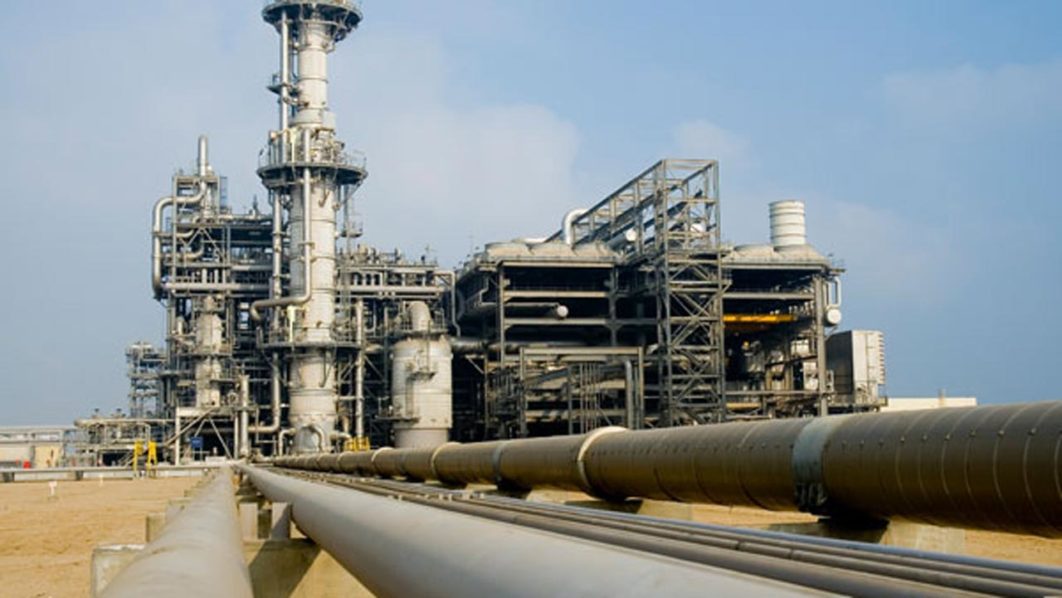
The Nigerian Midstream and Downstream Petroleum Regulatory Authority (NMDPRA) has raised the natural gas price for power generation companies (GenCos) to $2.18 per million metric British thermal units (MMBTU).
This marks a $0.05/MMBTU hike from the earlier rate of $2.13 per MMBTU.
In a circular released on Tuesday, the regulator outlined the updated domestic base price (DBP) and wholesale natural gas prices for 2025.
The DBP represents the lowest price at which natural gas can be offered in the domestic market.
The document states that the adjustment will begin today (April 1, 2026).
“Taking into account the Petroleum Industry Act (PIA) provisions, current market conditions, and the official Gas Pricing and Domestic Demand Regulations, the NMDPRA sets the new Domestic Base Price at USD 2.18/MMBtu, along with wholesale prices for the strategic sector, starting April 1, 2026,” the circular stated.
In the directive signed by NMDPRA CEO, Mr Saidu Mohammed, the regulator also indicates that commercial buyers will now pay $2.68 per MMBTU, up from $2.63 per MMBTU previously.
Additionally, the authority fixed prices for gas-based industries (such as ammonia, urea, methanol, and low-sulphur diesel) at a floor of $0.90 per MMBTU and a ceiling of $2.18 per MMBTU.
NMDPRA explained that the domestic base price at the marketable gas delivery point—per section 167(1) of the PIA—follows regulations based on key principles:
“a) A rate sufficient to encourage upstream producers to voluntarily supply enough gas to the domestic market.
“b) No higher than the average natural gas prices in major emerging producer nations.
“c) Based on the lowest supply costs under a three-tier framework.
“d) Aligned with market rates and international benchmarks.”
This change could affect the country’s power sector, already strained by massive debt and a lack of gas supply.
Last month, the Association of Power Generation Companies (APGC), an umbrella body for power generation companies, warned that gas suppliers might halt deliveries to thermal plants due to debt of around N6.5 trillion.
The federal government disclosed plans in December to raise N1.23 trillion by the first quarter (Q1) of 2026 to settle verified arrears owed to generation companies and gas suppliers. On January 27, the government said it had successfully issued a N501 billion inaugural bond under the presidential power sector debt reduction programme (PPSDRP).
However, the APGC has said that this is inadequate, comparing the debt to “garri soaked in water.”
By Adedapo Adesanya
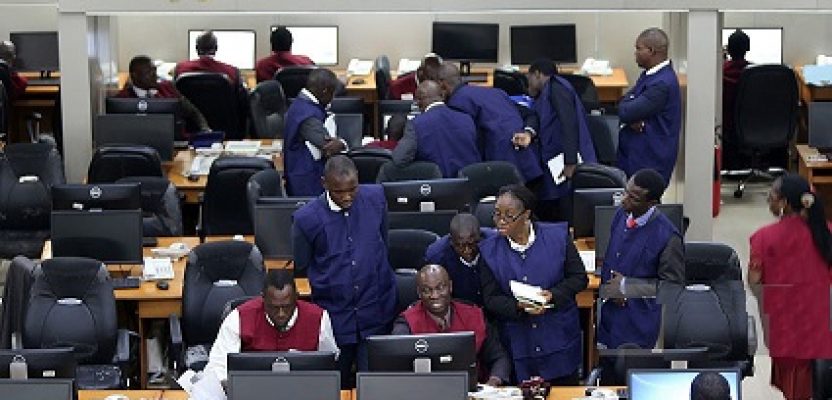
The NASD Over-the-Counter (OTC) Securities Exchange further declined by 0.23 per cent, with the Unlisted Security Index (NSI) down by 9.63 points on Tuesday, March 31, to 4,100.11 points from 4,109.74 points.
In the same vein, the market capitalisation went down by N5.76 billion to finish at N2.453 trillion from the N2.458 trillion it closed a day earlier.
The mood of the market was flat yesterday as there were three price losers and three price gainers, led by Central Securities Clearing System (CSCS) Plc, which gained N1.51 to sell at N78.68 per unit compared with the previous day’s N77.17 per unit. UBN Property Plc appreciated by 15 Kobo to N2.20 per share from N2.05 per share, and Geo-Fluids Plc improved by 3 Kobo to N3.25 per unit from N3.22 per unit.
On the flip side, 11 Plc lost N31.05 to close at N285.00 per share versus Monday’s closing price of N316.50 per share, FrieslandCampina Wamco Nigeria Plc dropped 95 Kobo to trade at N98.05 per unit versus N99.00 per unit, and Industrial and General Insurance (IGI) Plc went down by 2 Kobo to 52 Kobo per share from 57 Kobo per share.
During the trading day, the volume of securities jumped by 137.9 per cent to 50.8 million units from 21.3 million units, the number of deals rose 28.9 per cent to 49 deals from the preceding session’s 38 deals, while the value of securities went down by 65.2 per cent to N226.9 million from N651.1 million.
CSCS Plc remained the most traded stock by value (year-to-date) with 56.8 million units worth N3.8 billion, followed by Okitipupa Plc with 27.5 million units valued at N1.8 billion, and Infrastructure Guarantee Credit Plc with 400 million units traded for N1.2 billion.
Resourcery Plc was the most traded stock by volume (year-to-date) with 1.1 billion units sold for N415.7 million, followed by Infrastructure Guarantee Credit Plc with 400 million units transacted for N1.2 billion, and Geo-Fluids Plc with 183.0 million units exchanged for N673.8 million.
By Adedapo Adesanya
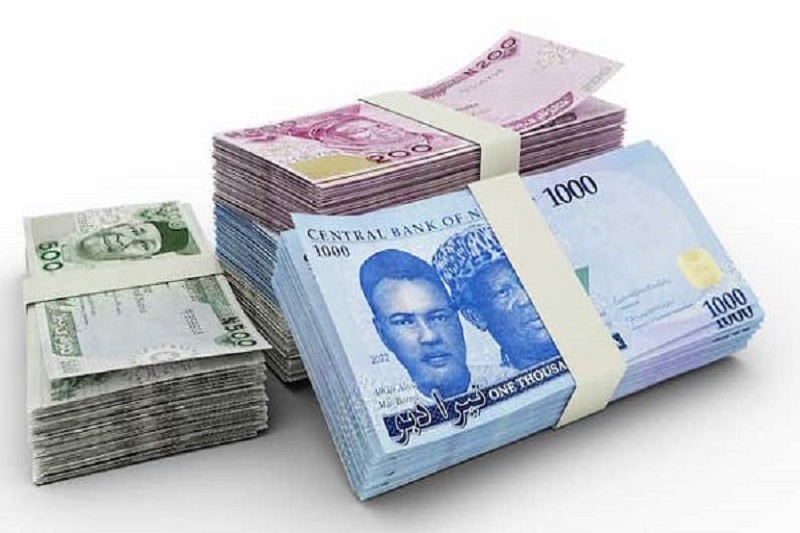
The Naira weakened against the US Dollar in the Nigerian Autonomous Foreign Exchange Market (NAFEX) on Tuesday, March 31, by 0.23 per cent or N3.14 to N1,386.72/$1 from the N1,383.58/$1 it was traded on Monday.
Similarly, the Nigerian currency depreciated against the Pound Sterling in the same market window by N14.40 to close at N1,839.34/£1 compared with the previous day’s N1,824.94/£1, and against the Euro, it lost N12.88 to settle at N1,599.16/€1 versus N1,586.28/€1.
In the same vein, the Naira stumbled against the Dollar yesterday by N1 to quote at N1,395/$1 versus N1,394/$1, and in the black market, it remained unchanged at N1,410/$1.
The Naira remains under pressure as FX liquidity shrank, as evidenced by the number of interbank FX deals published by the Central Bank of Nigeria (CBN).
Last week, forex intervention operations saw the apex bank inject $95 million into the supply side, but as high demand for the Dollar as a safe-haven asset continues, it strengthened the Dollar index, while the Euro, British Pound and other major trading partners weakened.
The country’s external reserves recorded a marginal decline, falling by 0.7 per cent to $49.48 billion, reflecting a depletion of about $350 million and signalling continued pressure on Nigeria’s FX buffer.
In the cryptocurrency market, reports of comments by Iran’s President Masoud Pezeshkian hinted at eased geopolitical tensions, which triggered gains across some assets.
Mr Pezeshkian reportedly signalled Iran would be willing to end the conflict in exchange for security guarantees, raising hopes for a diplomatic off-ramp and reducing fears of a wider regional war.
Ethereum (ETH) gained 4.4 per cent to trade at $2,150.11, Ripple (XRP) jumped 2.8 per cent to $1.36, Bitcoin (BTC) added 2.5 per cent to sell at $69,079.14, Cardano (ADA) which also rose by 2.5 per cent to $0.2518, Dogecoin (DOGE) improved by 2.4 per cent to $0.0941, Solana (SOL) grew by 1.3 per cent to $84.43, and Binance Coin (BNB) increased by 1.2 per cent to $618.86, while TRON (TRX) dipped 1.8 per cent to $0.3153, with the US Dollar Tether (USDT) and the US Dollar Coin (USDC) flat at $1.00 apiece.









-
 Feature/OPED6 years ago
Davos was Different this year
-
Travel/Tourism10 years ago
Lagos Seals Western Lodge Hotel In Ikorodu
-

 Showbiz3 years ago
Estranged Lover Releases Videos of Empress Njamah Bathing
-
 Banking8 years ago
Sort Codes of GTBank Branches in Nigeria
-

 Economy3 years ago
Subsidy Removal: CNG at N130 Per Litre Cheaper Than Petrol—IPMAN
-

 Banking3 years ago
Sort Codes of UBA Branches in Nigeria
-

 Banking3 years ago
First Bank Announces Planned Downtime
-

 Sports3 years ago
Highest Paid Nigerian Footballer – How Much Do Nigerian Footballers Earn