Connect with us

Economy

Nigeria Changes Base Year of GDP Data to 2019

Published

on

0.51% GDP Growth

By Adedapo Adesanya

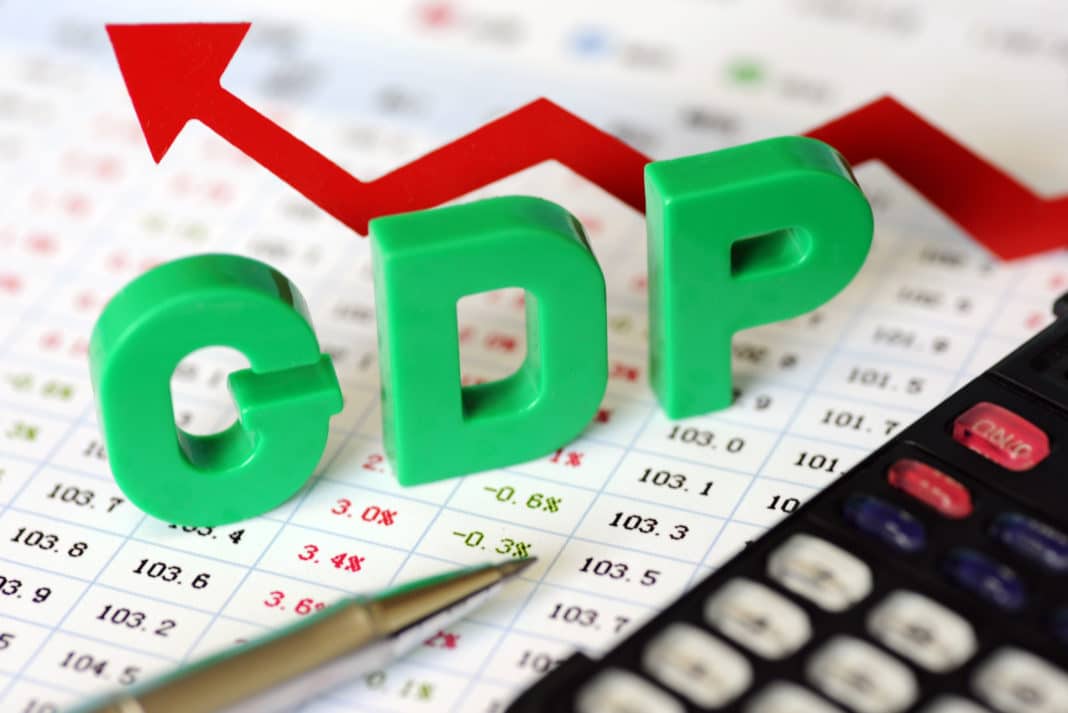
The National Bureau of Statistics (NBS) has announced the rebasing of Nigeria’s Gross Domestic Product (GDP) data, with 2019 selected as the new base year from the previous 2010.

The GDP is used to gauge the size of the Nigerian economy.

This decision, according to the NBS, was driven by the year’s status as a period of “relative economic stability” compared to other recent years, which were marked by significant economic shocks.

This was disclosed on Thursday during a sensitisation workshop on GDP and the Consumer Price Index (CPI) rebasing, organised by the Nigerian Economic Summit Group and the stats office in Lagos.

Speaking during his presentation, Mr Moses Waniko, the Technical Assistant to the Statistician General also said “Some major surveys that served as inputs into the rebasing covered this period. 2020, 2021 and 2022 were avoided as base years due to economic instabilities – this follows IMF guidelines.”

The agency noted further that 2019 was chosen because “other sector-specific administrative data for this period were collected.”

He noted further that the newly rebased GDP figures would be unveiled by the end of January.

In October 2024, the NBS revealed its plans to rebase both the GDP and CPI to reflect current economic realities and account for structural changes in the economy.

Mr Waniko explained that the data collection process is nearing completion.

However, he said the results will still need to undergo validation before the official launch at the end of the month.

“We’re currently concluding the rebasing. We need to validate the results, and then we have to do a launch; we are looking at the end of January to do that launch, to disseminate the numbers, and then, usually, there are post-rebasing activities that will happen.”

He noted several key benefits the rebased GDP would have on the national economy.

He also emphasised that the GDP rebasing should be viewed not only in terms of aggregate numbers but also in terms of their distribution, weights, and contributions across different sectors.

“It is good to look at the rebasing from different angles, not just the aggregate numbers, but to look at what those numbers are supposed to tell us, in terms of the distribution, the aggregate numbers, in terms of their weights, contributions and the rest.

“Beyond that, there are other implications for the national economy, which we have tried to put in this slide. The first is rebasing will provide or allow for an Economic and Development Plan.

“The second is that the rebasing will really help to provide a good trajectory for the economy. So beyond this, it’s important to also state that after the rebasing, there are certain things that we expect that might change, such as changes in the size of the structure of the economy.

“We expect that the size of the economy will be bigger.”

“The tax-to-GDP ratio is something that people may want to see what the numbers would look like. Debt to GDP ratio of 18.5 per cent as of September 2019 could also reduce with the bigger size of the GDP, and then per-capita income will increase after the rebasing,” he added.


Adedapo Adesanya is a journalist, polymath, and connoisseur of everything art. When he is not writing, he has his nose buried in one of the many books or articles he has bookmarked or simply listening to good music with a bottle of beer or wine. He supports the greatest club in the world, Manchester United F.C.

Economy

NB Plc’s Strong Recovery, Improved Profitability Excite Shareholders

Published

on

Nigerian Breweries NB Plc shareholders

By Aduragbemi Omiyale

The resilience shown by Nigerian Breweries Plc in the 2025 fiscal year, despite a volatile macroeconomic environment, which consumed several businesses, has not got without notice.

Shareholders of the brewery giant applauded the board and management for the strong recovery and improved profitability recorded in the year.

At the company’s 80th Annual General Meeting (AGM) on Wednesday, April 22, 2026, in Lagos, they attributed these achievements to disciplined cost management and a significant reduction in finance expenses.

“We are proud of how the company has withstood the ups and downs of a challenging environment. The return to profitability and the reversal of the negative cash position recorded in the previous two financial years are commendable,” a member of the Noble Shareholders Association, Mr Owolabi Opeyemi, said at the gathering.

Also, the immediate past Secretary of the Independent Shareholders Association of Nigeria (ISAN), Mr Eke Emmanuel, noted that the company’s resilience reflects strong leadership and a sound strategic direction.

“It is good news that we have been here for 80 years. There is no reason why we will not be here for the next 80 years with what we have achieved. To return to this level of profitability and cash position shows the Board has done an enormous amount of work,” he said.

Addressing investors at the AGM, the board chairman, Mrs Juliet Anammah, expressed confidence that the company is firmly on a recovery path following the net losses recorded in the past two years due to macroeconomic pressures and fiscal reforms.

She thanked shareholders for their continued support and reaffirmed that the company will build on its 2025 performance as it accelerates growth ambitions.

 “We have a solid foundation built over eight decades, anchored on a strong portfolio of brands, an extensive nationwide sales and supply chain network, ongoing digital transformation, and most importantly, our people. These strengths remain critical to sustaining our leadership position,” the former chief executive of Jumia Nigeria said.

Ms Anammah also addressed the company’s dividend position, noting that the decision not to declare a dividend reflects the need to rebuild retained earnings impacted by prior macroeconomic shocks, particularly foreign exchange-related losses.

“We recognise the importance of dividend payments to our shareholders and sincerely appreciate your continued understanding. While we are not declaring a dividend at this time due to negative retained earnings, we are working diligently to restore the company’s financial position and return to dividend payments as soon as it is sustainable to do so,” she added.

She further noted that the board remains vigilant to external risks, including the Middle East crisis and broader macroeconomic challenges, which may impact the pace of improvement in the 2026 financial year.

Continue Reading

Economy

Crude Oil Prices Jump Over $3 on Escalating Hormuz Tensions

Published

on

crude oil prices

By Adedapo Adesanya

Crude oil prices spiked by about $3 a barrel on Thursday as Iran tightened its grip on the Strait of Hormuz, with peace talks with the United States remaining distant.

Brent crude futures ‌settled at $105.07 a barrel after gaining $3.16 or 3.1 per cent, while the West Texas Intermediate futures finished at $95.85 a barrel, up $2.89 or 3.11 per cent.

Progress toward reopening the passage remains stalled as Iran’s parliament speaker said the US blockade was “bullying” and a “flagrant breach of the ceasefire,” adding that negotiations would not resume with it in place.

US President Donald Trump said the blockade would continue. An American can wage war without Congressional approval for 60 days, a deadline which expires May 1.

Ahead of that, Reuters reported that air defences were engaging targets ​over Tehran. That followed reports of drone attacks ​on Iranian Kurdish opponents of the Iranian government at a base in Iraq.

President Trump also said in a social media post that he had ordered the US Navy “to ​shoot and kill any boat” mining the strait.

While he extended a ceasefire between the countries after a request by Pakistani mediators, Iran and the US are still restricting transit of ‌ships ⁠through the strait, which carried about 20 per cent of daily global oil supplies until the start of the war on February 28.

This week, one ship passed through the waterway on Tuesday. However, by Wednesday, more ships tried, but Iran attacked two and reportedly seized two more.

The US also blockaded traffic to and from Iranian ports in the Persian Gulf, but it appears that the blockade has not stopped traffic completely. It was reported that as many as 34 sanctioned and Iranian-linked tankers moved in and out of the waterway between April 13 and 21.

The US military has intercepted at least three Iranian-flagged tankers in Asian waters and is redirecting them away from positions near India, Malaysia and Sri Lanka.

Meanwhile, the executive director of the International Energy Agency (IEA), Mr Fatih Birol, said the war in the Middle East and the closure of the Strait of Hormuz have created the largest energy security threat the world has ever faced.

“As of today, we’ve lost 13 million barrels per day of oil … and there are major disruptions in vital commodities,” Mr Birol said in an interview, adding that the IEA-coordinated record emergency release of 400 million barrels of oil stocks last month cannot offset the massive supply loss.

Continue Reading

Economy

Customs Street Gains 1.48% as Year-to-Date Return Hits 43.20%

Published

on

Customs Street Nigerian Stock Exchange

By Dipo Olowookere

The year-to-date return of the Nigerian Exchange (NGX) Limited stretched to 43.20 per cent after a 1.48 per cent rise on Thursday.

Demand pressure on the consumer goods, banking and industrial goods stocks contributed to the surge recorded during the session.

Data showed that the consumer goods counter expanded by 4.67 per cent, the banking index rose by 1.53 per cent, and the industrial goods segment improved by 1.03 per cent. They offset the 0.91 per cent loss suffered by the insurance space and the 0.06 per cent cut posted by the energy industry.

When the closing gong was struck, the All-Share Index (ASI) of Customs Street increased by 3,251.48 points to 222,837.68 points from 219,586.20 points, and the market capitalisation moved up by N2.093 trillion to N143.477 trillion from N141.384 trillion.

The duo of Unilever Nigeria and UAC Nigeria led the advancers’ log after growing by 10.00 per cent each to sell for N121.00 and N133.10, respectively. Trans-Nationwide Express jumped 9.97 per cent to N8.71, Tantalizers appreciated by 9.80 per cent to N3.81, and Dangote Sugar expanded by 9.78 per cent to N73.50.

On the flip side, McNichols lost 9.93 per cent to close at N6.44, Multiverse depreciated by 9.85 per cent to N23.35, Coronation Insurance retreated by 9.26 per cent to N2.45, Abbey Mortgage Bank moderated by 9.24 per cent to N5.40, and Japaul slipped by 5.94 per cent to N3.01.

Business Post reports that there were 35 price gainers and 37 price losers during the session, representing a negative market breadth index and weak investor sentiment.

Access Holdings was the busiest equity for the day with 39.5 million units worth N1.3 billion, UBA traded 37.5 million units valued at N2.0 billion, Zenith Bank exchanged 36.3 million units for N4.8 billion, Fidelity Bank sold 32.1 million units valued at N700.8 million, and GTCO transacted 27.6 million units worth N3.6 billion.

At the close of transactions, investors bought and sold 667.9 million units valued at N38.1 billion in 53,062 deals compared with the 683.7 million units worth N36.2 billion traded in 51,694 deals at midweek.

This showed that the trading volume shrank by 2.28 per cent, and the trading value and number of deals soared by 5.25 per cent and 2.65 per cent apiece.

Continue Reading

Trending