Connect with us

Economy

Nigerian Economy Grows 3.46% in Q3 2024

Published

on

GDP

By Adedapo Adesanya

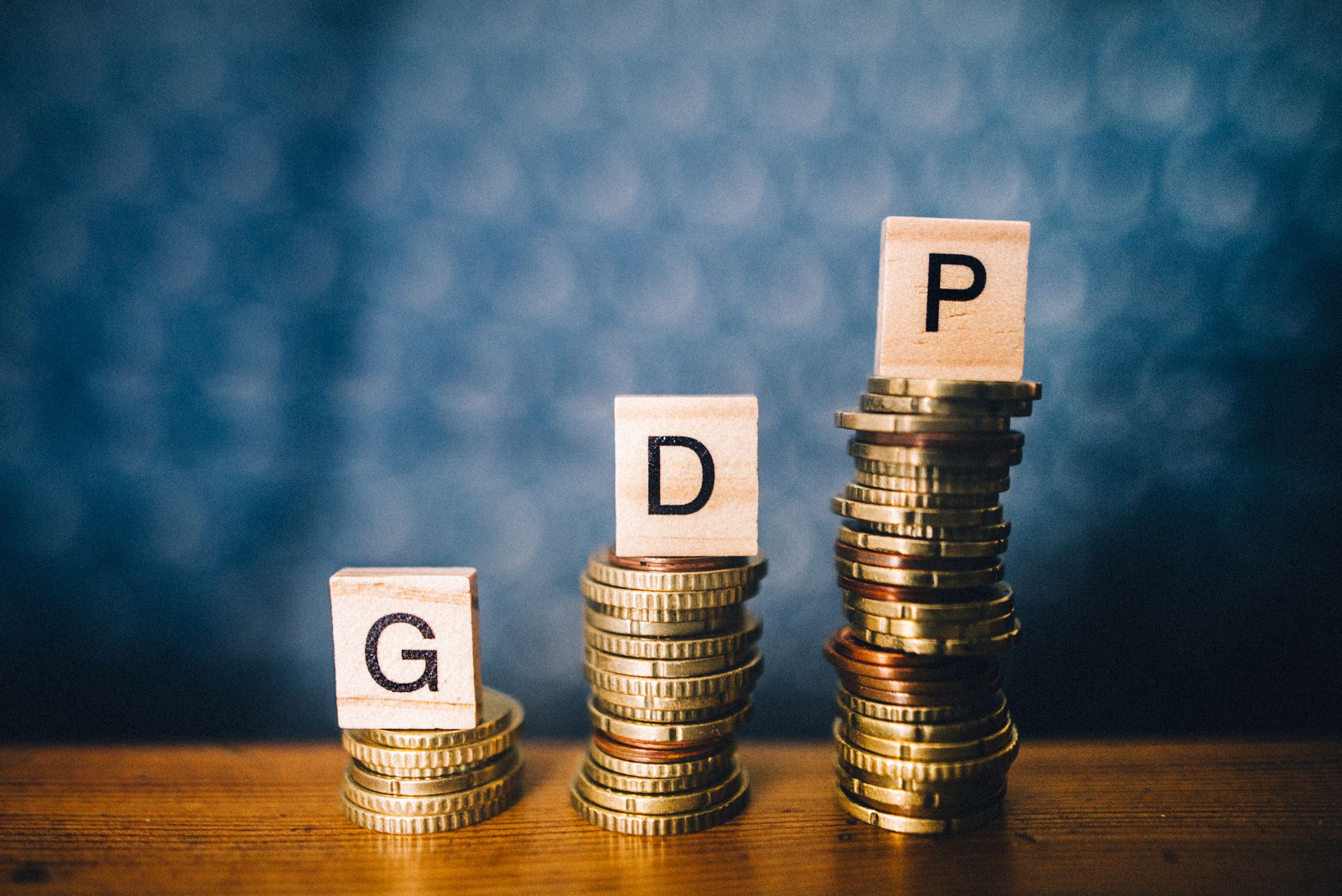
Nigeria’s economy, measured by Gross Domestic Product (GDP), grew by 3.46 per cent in real terms in the third quarter of 2024, according to the National Bureau of Statistics (NBS).

This growth rate is higher than the 2.54 per cent recorded in the third quarter of 2023 and higher than the second quarter of 2024 growth of 3.19 per cent.

The performance of the GDP in the third quarter of 2024 was driven mainly by the Services sector, which recorded a growth of 5.19 per cent and contributed 53.58 per cent to the aggregate GDP.

The agriculture sector grew by 1.14 per cent, from the growth of 1.30 per cent recorded in the third quarter of 2023. The growth of the industry sector was 2.18 per cent, an improvement from 0.46% recorded in the third quarter of 2023.

In terms of share of the GDP, the services sector contributed more to the aggregate GDP in the third quarter of 2024 compared to the corresponding quarter of 2023.

In the quarter under review, aggregate GDP at basic price stood at N71.13 trillion in nominal terms. This performance is higher when compared to the third quarter of 2023 which recorded aggregate GDP of N60.66 trillion, indicating a year-on-year nominal growth of 17.26 per cent.

The oil sector contributed 5.57 per cent to the total real GDP while the non-oil sector contributed 94.43 per cent to the nation’s GDP in the third quarter of 2024.

Nigeria in the third quarter of 2024 recorded an average daily oil production of 1.47 million barrels per day, higher than the daily average production of 1.45 million barrels per day recorded in the same quarter of 2023 by 0.02 million barrels per day and higher than the second quarter of 2024 production volume of 1.41 million barrels per day by 0.07 million barrels per day.

The real growth of the oil sector was 5.17 per cent (year-on-year) in Q3 2024, indicating an increase of 6.02 per cent points relative to the rate recorded in the corresponding quarter of 2023 (-0.85 per cent). Growth decreased by 4.98 per cent points when compared to Q2 2024 which was 10.15 per cent. On a quarter-on-quarter basis, the oil sector recorded a growth rate of 7.39 per cent in Q3 2024.

Meanwhile, the non-oil sector grew by 3.37 per cent in real terms during the reference quarter (Q3 2024). This rate was higher by 0.62 per cent points compared to the rate recorded in the same quarter of 2023 which was 2.75 per cent and higher than the 2.80 per cent recorded in the second quarter of 2024.

This sector was driven in the third quarter of 2024 mainly by Financial and Insurance (Financial Institutions); Information and Communication (Telecommunications); Agriculture (Crop production); Transportation and Storage (Road Transport); Trade; and Construction, accounting for positive GDP growth.


Adedapo Adesanya is a journalist, polymath, and connoisseur of everything art. When he is not writing, he has his nose buried in one of the many books or articles he has bookmarked or simply listening to good music with a bottle of beer or wine. He supports the greatest club in the world, Manchester United F.C.

Economy

Russia-Ukraine Peace Talks, Trim in Expected Surplus Weaken Oil Prices

Published

on

oil prices fall

By Adedapo Adesanya

Oil prices fell on Thursday as investors focused on Russia-Ukraine peace talks and trimming in the projected 2026 oil surplus, with Brent crude trading at $61.28 a barrel after losing 93 cents or 1.49 per cent and the US West Texas Intermediate (WTI) crude at $57.60 a barrel, down by 86 cents or 1.47 per cent.

The prospect of a possible peace agreement between Russia and Ukraine also appeared to be driving the market lower. Such a deal would likely increase the supply of Russian oil that is currently off the market for most of the world.

Despite attacks, market analysts noted that there seems to be some movement on a possible path to peace between Russia and Ukraine.

The leaders of Britain, France and Germany held a call on Wednesday with US President Donald Trump to discuss the US’ latest peace efforts to end the war in Ukraine, in what they said was a “critical moment” in the process.

Russian Foreign Minister Sergei Lavrov said on Thursday that a recent visit to Moscow by US envoy Steve Witkoff had resolved misunderstandings between the two countries.

Ukraine’s security services (SBU) executed a long-range drone strike on the Vladimir Filanovsky offshore oil field in the Caspian Sea, a key Lukoil facility, forcing a suspension of oil and gas production.

The attack is significant as it marks the first time Kyiv has targeted hydrocarbon extraction assets in the distant Caspian region, demonstrating a growing capability to hit critical upstream assets far from the frontline.

On Wednesday, the US said it seized an oil tanker off the coast of Venezuela, as escalating tensions between the two countries raised concerns about supply disruptions.

The Organisation of the Petroleum Exporting Countries (OPEC) in its latest monthly report maintained a firm demand outlook for 2025-2026, pointing to resilient consumption in China, India, and the Middle East while reiterating that non-OPEC supply growth is set to moderate after 2025.

The group also noted that OPEC+ supply management continues to anchor market stability, a markedly more optimistic stance than the International Energy Agency (IEA’s) earlier glut-heavy narrative.

In its latest update, the agency trimmed the projected 2026 surplus for the first time since May, cutting its glut forecast from 4.09 million barrels per day to 3.84 million barrels per day as sanctions on Russia and Venezuela curb supply and as global demand proves stronger than previously assumed. Improved macro conditions and easing tariff concerns also prompted the IEA to revise 2026 demand growth upward by 90,000 barrels per day.

Continue Reading

Economy

Lagos Ranks Best State for Business Operations in Nigeria

Published

on

Sanwo-Olu minimum wage

By Adedapo Adesanya

Lagos remains Nigeria’s top-performing state for ease of doing business, according to a new report by the Presidential Enabling Business Environment Council (PEBEC).

PEBEC in its Subnational Ease Of Doing Business Report 2025, which analyses the business environment across Nigeria’s 36 states and the Federal Capital Territory (FCT), noted that five states stood out as the strongest performers: Lagos, Kaduna, Oyo, the FCT and Ogun.

Lagos with 85.6 per cent stood out particularly for infrastructure such as roads and logistics, land administration, regulatory digital transformation, and digital literacy. It also continues to serve as the country’s tech hub and logistics gateway. Others include Kaduna (65.1 per cent), Oyo (62.7 per cent), the FCT (61.0 per cent) and Ogun (59.9 per cent).

Meanwhile, states such as Benue, Borno, and Zamfara remain at the bottom of the ranking as years of prolonged conflict and terrorism continue to make business operations challenging.

“Lagos state demonstrates strong market access, supported by efficient one-stop shops and clearly published incentives. Streamlined regulatory procedures and coordinated institutional support enable businesses to enter and expand operations with minimal delays, fostering investor confidence and enhancing the state’s attractiveness for new investment,” it said.

While Lagos ranks ahead of its peers, critical gaps include touting and loitering, investor aftercare, and digital connectivity.

PEBEC warned that “the presence of unauthorized individuals loitering around key business and logistics touchpoints creates an environmental nuisance and introduces significant security and safety concerns for commercial operators and the public.”

On digital connectivity, PEBEC said with network coverage concentrated in urban centres, limiting businesses to city clusters and restricting e-commerce adoption in inner towns and communities, and curtailing digital economic gains, adding that poor performance in investor aftercare signals gaps in post-entry support.

“The absence of a dedicated desk or poorly functioning departments results in delayed responses, inconsistent engagement, and limited guidance for investors, reducing Lagos state’s ability to retain existing investments and attract new capital.”

PEBEC noted that the Lagos State government must launch a high-capacity, dedicated Investor Aftercare Service to provide white-glove support for existing investors.

In the medium term, it advised that the state to prioritize enhanced security measures and regulatory enforcement by integrating real-time surveillance at key street corners and business corridors, coupled with deploying dedicated special task forces to physically remove loitering individuals.

“Crucially, the state should also pass an anti-loitering law to provide the legal framework necessary for sustained enforcement.”

On tackling its long term challenges, Lagos needs to upgrade digital infrastructure by extending fiber optic networks and incentivising last-mile connectivity.

“This will make high-speed internet more reliable, cut operational friction, and help businesses access markets easier,” PEBEC said.

Continue Reading

Economy

Nigeria’s Trade Surplus Falls 10.4% to N6.7trn in Q3 as Import Jumps

Published

on

trade surplus

By Adedapo Adesanya

Nigeria’s trade surplus, which measures the difference between export and imports, fell 10.4 per cent to N6.7 trillion in the third quarter of 2025 as import increased, the latest data by the National Bureau of Statistics (NBS) shows.

The Foreign Trade in Goods Statistics (Q3 2025) Report showed that Nigeria’s total merchandise trade stood at N38.94 trillion in Q3 2025, representing an increase by 2.4 per cent compared to the value recorded in Q2 2025 (N38.04 trillion).

Total exports in the period under-review were valued at N22.81 trillion, reflecting a 11.1 per cent rise compared to N20.54 trillion in the corresponding quarter of 2024 and a 0.3 per cent increase when compared to N22.75 trillion in Q2 2025. The value of total imports stood at N16.12 trillion in the same period, representing a 5.5 per cent increase from the value recorded in the corresponding quarter of 2024 (N15.28 trillion) and a 5.5 per cent increase compared to the value recorded in Q2, 2025 (N15.29 trillion).

This happened even after Nigeria launched a Nigeria First Policy initiative, which seeks to prioritize Nigerian companies, goods, and services in procurement with the aims to reduce import dependency.

Exports accounted for 58.59 per cent of total trade while imports accounted for 41.41 per cent of total trade in the third quarter of 2025.

Analysis shows that crude oil remained Nigeria’s major exported commodity in the third quarter of 2025 with a value of N12.81 trillion,  representing 56.1 per cent of total exports. A further breakdown reveals that the value of non-crude oil exports stood at N10.01 trillion accounting for 43.9 per cent of total exports; of which non-oil products contributed N29.96 trillion or 13.1 per cent of total exports.

In Q3 2025, Nigeria’s top five trading export partners were India, Spain, France, The Netherlands, and Italy. The most exported commodities were crude oil, natural gas, other petroleum gases in a gaseous state, Kerosene type jet fuel, and Urea, whether or not in aqueous solution.

China continued to dominate as Nigeria’s top import partner followed by the United States of America, India, the United Arab Emirates (UAE), and the Belgium. The most traded commodities imported during the quarter were Petroleum oils and oils obtained from bituminous minerals crude, Gas oil, Motor spirit ordinary, Durum wheat, Cane sugar meant for sugar refinery.

The value of exports to African countries stood at N4.9 trillion, while imports amounted to N595.00 billion. Nigeria’s exports to Africa were mainly to Ivory Coast with N1.44 trillion, Ghana with goods valued at N714.03 billion, South Africa with N710.33 billion, Togo followed with N531.06 billion, and Senegal with N418.64 billion altogether representing 77.8 per cent of exports to Africa.

On the other hand, Nigeria’s major import partners within Africa in Q3 2025 were South Africa with N163.44 billion, Ghana with goods valued at N110.42 billion, Egypt with N72.04 billion, Morocco with N59.99 billion, and Ivory Coast with N41.87 billion.

Continue Reading

Trending