Economy
Nigeria, Others Can Tap From $900m Cross-Border e-Commerce Sector—DHL
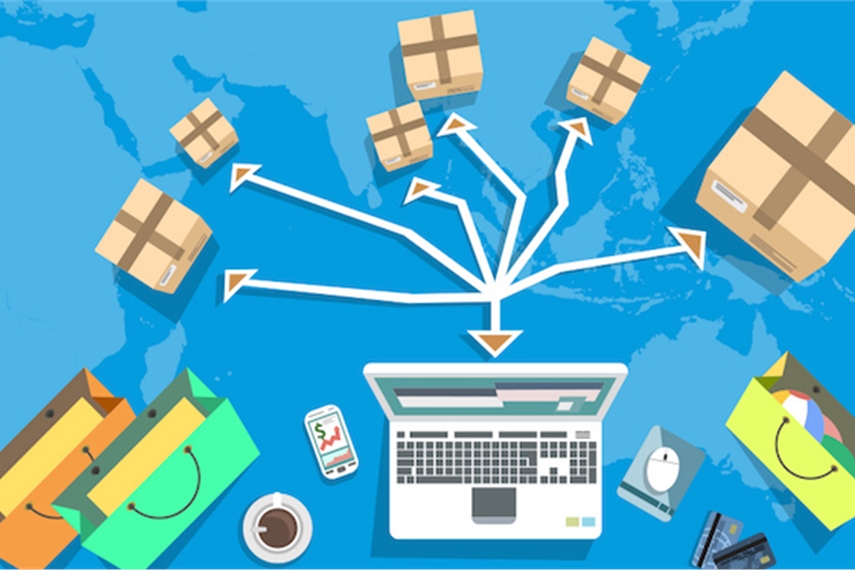
Owners of businesses in Africa, including Nigeria, have been advised to embrace cross-border e-commerce because it provides significant growth opportunities for retailers and manufacturers with an international online product offering.
According to a 2017 DHL report, cross-border retail volumes are predicted to increase at an annual average rate of 25 percent between 2015 and 2020 (from $300 billion to $900 billion) – twice the pace of domestic e-commerce growth.
Vice President of Sales for DHL Express Sub-Saharan Africa, Mr Steve Burd, says that this highlights a boundless opportunity for African businesses looking to take a piece of the cross border e-commerce pie.
Mr Burd said as the market leader in express logistics, DHL Express works with thousands of e-commerce customers around the world, with a lot of them at start-up phase.
“We are therefore well aware of the perceived hurdles involved when considering to trade across borders,” the DHL chief said.
He highlighted five common areas which domestic e-commerce customers consider to be a challenge when deciding where to trade internationally.
According to him, the first is the cost of express shipping, which he explained that there is no risk at offering customers an express delivery option. “Customers want choice, not only in their product selection, but also when and how they receive it. In our experience, customers are willing to pay a fair price for a faster, more efficient service.”
For the second point, he said it gives good returns rates. “We’ve found that the return rates are actually much lower on international shipping. Businesses could always do it on a trial basis and measure the benefits over losses and adjust their strategies accordingly.”
Also, he said the process gives basket values, noting that, “We have found that basket values often increase with the introduction of express shipping. Customers tend to buy more to justify the premium shipping costs.”
For the fourth point, Mr Burd said evidence shows that international customers will spend significantly more than local ones. “So, even if international traffic to your website is small, it can be worth a lot for limited effort. There are free online tools available which will give you an indication of your international traffic on your website – this will provide an idea of which countries to focus your efforts on. There is no risk in opening doors to the international market – only the risk of getting left behind.”
For the last point, which he called unfamiliarity with customs procedures and processes, Mr Burd explained that, “This is where your choice of delivery partner comes in. If your paperwork has been done correctly, there shouldn’t be any customs delays or worries. Collaborating with an experienced partner that has extensive knowledge and know-how of customs procedures on the African continent will assist the business’ e-commerce offering to evolve.”
To further connect and support the e-commerce industry in Africa, DHL Express recently signed on as title sponsor for the 2018 DHL eCommerce MoneyAfrica Conference & Exhibition (Confex), taking place on 14 and 15 of March this year.
“The DHL eCommerce MoneyAfrica Confex has established itself as one of Africa’s biggest opportunities to bring stakeholders in the fintech and e-commerce sectors together. This year’s event features presentations and knowledge sharing from an array of African and international thought leaders, geared at enabling participants to formulate innovative strategies to unlock more opportunities on the continent,” concludes Mr Burd.
Economy
Crude Oil Prices Climb on Fears of Prolonged Iran War Disruptions
By Adedapo Adesanya
Crude oil prices climbed about 3 per cent on Monday as worries over supply disruption from the Iran war offset a report that the US had agreed to waive sanctions on Iranian crude during talks.
Brent futures rose $2.84 or 2.6 per cent to $112.10 a barrel, while the US West Texas Intermediate (WTI) crude for June delivery jumped $3.24 or 3.1 per cent to $108.66 per barrel.
Drone attacks on both the United Arab Emirates (UAE) and Saudi Arabia further dimmed hopes of any de-escalation in the region.
The drone strikes included an attack that led to a fire near the Barakah nuclear power plant in the UAE, with the country’s defence ministry saying two other drones had been successfully dealt with. Meanwhile, Saudi Arabia said it had intercepted three drones that entered its airspace from Iraq.
These attacks are just the latest in a string of attacks on US allies in the region after President Donald Trump launched Project Freedom, his latest attempt to reopen the Strait of Hormuz for trade.
The lack of a breakthrough on an Iran agreement during President Trump’s visit to China also added to upward pressure for oil prices, with fears of major global shortages now rising rapidly.
Also, the International Energy Agency (IEA) said commercial oil inventories were depleting rapidly, with only a few weeks’ worth left due to the conflict and the closure of the strait to shipping.
The head of the Paris-based agency, Mr Fatih Birol, said the release of strategic reserves had added 2.5 million barrels of oil per day to the market, but they were “not endless”.
Reuters cited an Iranian media report that the US had accepted in the new text to waive Iran’s oil sanctions during the period of talks, also reporting that Pakistan has shared with the US a revised proposal from Iran to end the war in the Middle East.
According to the Financial Times, Scotland-based economists are now examining a scenario where Brent crude surges to $180 per barrel if traffic through the Strait of Hormuz remains constrained for an extended period.
In China, growth lost momentum in April, with industrial output cooling and retail sales sinking to more than three-year lows as the world’s second-biggest economy faced higher energy costs from the Iran war and persistently weak domestic demand.
Economy
FG Unveils Tax Ombud Office’s Website, Toll-Free Call Centre
By Adedapo Adesanya
The federal government has reaffirmed its commitment to building a transparent, accountable and citizen-focused tax administration system, with the unveiling of the official website and launch of the toll-free call centre of the Tax Ombud Office.
The Minister of Information and National Orientation, Mr Mohammed Idris, on Monday described the development as a major step toward improving public confidence in the country’s tax system and enhancing access to complaint-resolution services for taxpayers.
“This is a major milestone in strengthening public trust, improving accessibility, and promoting fairness in Nigeria’s tax administration system. Effective communication and citizen engagement remain central to the success of ongoing economic reforms such as this,” the minister said.
He noted that the Mr Bola Tinubu-led administration was focused on implementing reforms aimed at strengthening revenue generation, ensuring fiscal sustainability and driving national development.
According to him, “Under the visionary leadership of President Bola Tinubu, the federal government remains steadfast in its commitment to building a stronger, more resilient, and prosperous economy through bold and strategic reforms.”
The minister stressed the importance of taxation in national development, saying it provides resources needed for investments in critical sectors such as infrastructure, healthcare, education, transportation and security.
He, however, maintained that tax administration must be built on trust, transparency and fairness rather than enforcement alone.
“Tax administration cannot succeed on enforcement alone. It must be supported by public trust, transparency, fairness, and effective communication,” Mr Idris stated.
He explained that the Tax Ombud Office was created to serve as a bridge between taxpayers and tax authorities by providing a fair and professional platform for handling complaints and resolving disputes.
The minister also commended the introduction of the toll-free call centre and official website, describing them as important tools for improving public access to information and removing communication barriers.
“The launch of the Toll-Free Call Centre demonstrates a commitment to removing communication barriers and ensuring that Nigerians can easily seek information, make enquiries, and resolve complaints without unnecessary difficulties or financial burden,” he added.
Mr Idris further emphasised the need for sustained civic education and public enlightenment to encourage voluntary tax compliance and responsible citizenship.
“Tax education is not just about revenue generation; it is about building a culture of national participation and shared responsibility,” he said.
The minister warned that misinformation and poor communication often weaken public trust in reforms, calling for stronger collaboration among government institutions, the media, civil society groups and other stakeholders.
“Misinformation and inadequate communication often contribute to distrust and resistance to reforms. This underscores the importance of strategic media engagement and sustained public communication,” he noted.
He pledged the continued support of the Federal Ministry of Information and National Orientation in sensitising Nigerians on tax reforms, taxpayers’ rights and available complaint-resolution mechanisms.
Economy
Peter Obi Raises Eyebrows Over Tinubu’s $11.6bn Debt Servicing Plan
By Aduragbemi Omiyale
The presidential candidate of the Labour Party in the 2023 general elections, Mr Peter Obi, has expressed worry over plans by the administration of President Bola Tinubu to spend about $11.6 billion on debt servicing.
In a post on his social media platform on Monday, the opposition politician criticised this move, saying it is not good for the country.
He also said this action “should concern anyone interested in the country’s economic future and long-term development.”
The former Governor of Anambra State kicked against the penchant of the government to borrow from various sources without anything to show for it.
“There is nothing inherently wrong with borrowing when it is guided by prudence and directed toward productive investment, he noted, stressing that countries such as Japan, the United Kingdom, the United States, the United Arab Emirates, Singapore, and Indonesia are all heavily indebted, yet their borrowings are largely channelled into education, healthcare, infrastructure, and innovation – sectors that generate long-term economic returns and sustain repayment capacity.”
According to him, “despite high debt levels, their obligations remain more manageable because they are tied to measurable productivity.”
He said, “Nigeria’s situation, however, is markedly different. A huge proportion of past borrowing has been directed toward consumption, with limited visible or sustainable developmental outcomes to justify the scale of indebtedness.”
“It is also important to note that a huge portion of the debt currently being serviced was accumulated under the Tinubu administration itself, while borrowing has continued at a significant pace. The administration’s recent external borrowing alone includes about $6 billion (from First Abu Dhabi Bank in the UAE—$5 billion, and UK Export Finance via Citibank London—$1 billion), a further $1.25 billion under consideration from the World Bank, and an additional $516 million arranged through Deutsche Bank, bringing the latest known external loan commitments to roughly $7.8 billion. In addition, domestic borrowing through monthly bond issuances continues to add to the overall debt stock,” the businessman also stated.
“Against this backdrop, Nigeria’s 2026 budget shows that health is N2.46 trillion, education is N2.56 trillion, and poverty alleviation is N865 billion, giving a combined total of about N5.885 trillion for these three critical sectors.
“By comparison, debt servicing at about $11.6 billion (approximately N17–N18 trillion, depending on exchange rate assumptions) is almost three times higher than the total allocation to health, education, and social protection combined. This imbalance highlights a troubling fiscal reality in which debt obligations increasingly crowd out investment in human capital and poverty reduction.
“Moreover, even within the limited allocations to these sectors, funds may not be fully released, and a significant portion of what is eventually released could be misappropriated,” he further stated.
Mr Obi said, “The central issue is not borrowing itself, but whether borrowed funds are being converted into measurable productivity, inclusive growth, and improved living standards. Without this, debt servicing shifts from being a temporary fiscal obligation to a long-term structural burden that constrains development and deepens economic vulnerability.”
-
Feature/OPED6 years agoDavos was Different this year
-
Travel/Tourism10 years ago
Lagos Seals Western Lodge Hotel In Ikorodu
-
Showbiz3 years agoEstranged Lover Releases Videos of Empress Njamah Bathing
-
Banking8 years agoSort Codes of GTBank Branches in Nigeria
-
Economy3 years agoSubsidy Removal: CNG at N130 Per Litre Cheaper Than Petrol—IPMAN
-
Banking3 years agoSort Codes of UBA Branches in Nigeria
-
Banking3 years agoFirst Bank Announces Planned Downtime
-
Sports3 years agoHighest Paid Nigerian Footballer – How Much Do Nigerian Footballers Earn