Connect with us

Economy

Nigeria to Raise Output as OPEC+ Okays Increase in Supply

Published

on

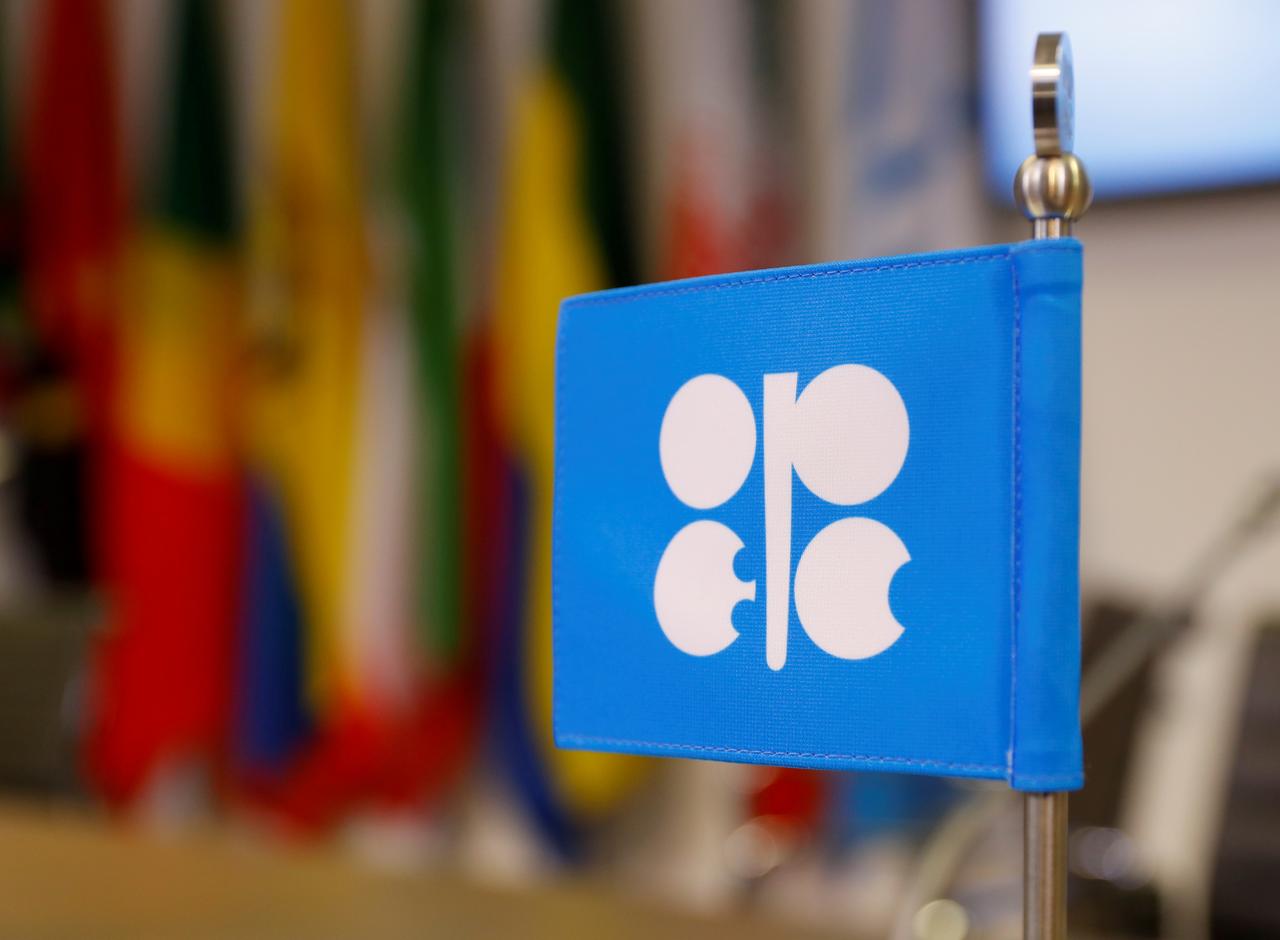
opec oil output

By Adedapo Adesanya

Nigeria, a member of the oil-producing countries under the Organisation of the Petroleum Exporting Countries and its allies (OPEC+) led by Saudi Arabia and Russia, will increase its output for the next three months.

The country, which is Africa’s largest crude producing nation, will join the 23-nation alliance to boost supply by not more than 500,000 barrels per day in May, June and July 2021.

The decision comes amid expectations before the meeting that the bloc would err on the side of caution as fear over the third wave of COVID-19 pandemic spread across Europe.

On Thursday, April 1, members of the group had a meeting to discuss the market and how supply can be monitored.

Under its current agreement, the OPEC+ alliance is enforcing drastic cuts in production, meaning seven million barrels that could be shipped to markets every day are being left in the ground.

Market analysts had widely tipped OPEC+ to roll over the production cuts for another month, especially as more nations are experiencing an upswing in coronavirus cases.

Saudi Arabia and Russia Views

Addressing reporters after the meeting, Saudi Energy Minister Prince Abdelaziz bin Salman stressed that the decision could still be “tweaked” in the alliance’s monthly meetings.

Before the meeting, Prince Abdelaziz said that “the reality remains that the global picture is far from even, and the recovery is far from complete”.

Prince Salman praised the OPEC+ alliance nations for more than fulfilling their commitments to restrain output.

In addition, Saudi Arabia has volunteered to cut its own output by one million barrels per day to help avoid oversupplying a market suffering from a collapse in demand due to the coronavirus pandemic.

The cuts were aimed at avoiding limited storage capacity and to help support prices that crossed the $60 per barrel mark last month.

Russia’s Deputy Prime Minister, Mr Alexander Novak was more optimistic in his opening comments.

“The evolution of the vaccination campaign is making progress and allows us to look towards the future with optimism, even if, of course, we shouldn’t forget that there remain many uncertainties ahead.

“We also note that the economy continues to improve,” he added.

However, with Europe returning to lockdown and infections sweeping through India, a country that until the pandemic was an important source of demand growth, experts are now seeing a slower recovery for the crude market.

The International Energy Agency (IEA) reflected this more downbeat outlook in forecasts contained in its last report this month.

It estimated that global demand could take another two years to get back to its pre-crisis levels.

Latest OPEC+ Compliance for February 2021

Overall OPEC+ compliance stood at 113 per cent in February, up from 103 per cent in January, the highest compliance that the group has delivered since the start of the current output restraint agreement in May 2020.

The group’s 10 participating OPEC countries, including Nigeria and excluding Iran, Venezuela, and Libya, were 124 per cent compliant in February, also the highest level since the start of the agreement, up from 108 per cent in January, while the nine Non-OPEC participants were 94 per cent compliant, down from 95 per cent in the previous month.

Non-OPEC members’ collective compliance has hovered just a little below 100 per cent in each month since the start of the agreement. They got closest to full compliance in August when they delivered 99 per cent of their pledged cuts.


Adedapo Adesanya is a journalist, polymath, and connoisseur of everything art. When he is not writing, he has his nose buried in one of the many books or articles he has bookmarked or simply listening to good music with a bottle of beer or wine. He supports the greatest club in the world, Manchester United F.C.

Economy

CBN at 27.5% is Forcing a Major Reset in Forex Trading Strategies Across Nigeria

Published

on

HFM forex trading app

Nigeria’s trading environment has changed sharply since the Central Bank of Nigeria pushed rates to 27.5%, and the impact is being felt across the currency market. A rate that high does more than tighten financial conditions. It changes how traders read momentum, how they manage risk, and how they think about the naira against the dollar. Reuters reported that the CBN raised the policy rate to 27.50% in November 2024 after a string of hikes, and later kept it there as inflation and exchange rate pressures remained central concerns.

For anyone active in Nigeria’s currency space, forex trading now requires a very different mindset. What worked in a looser money environment does not always work when rates stay this high. Liquidity behaves differently, sentiment shifts faster, and market participants become much more sensitive to inflation data, policy guidance, and reserve trends. Reuters also reported that the CBN has tied its tight stance to the need to control inflation and stabilize the market, while reforms have improved reserves and confidence in the foreign exchange system.

Why a 27.5% rate changes the market mood

A rate this high affects more than borrowing costs. It resets expectations. Traders start looking at the naira through a different lens because such an aggressive stance tells the market that policymakers are serious about defending stability, even if growth conditions become tougher. In Lagos and Abuja, where many traders track both official policy signals and real market pricing, that shift has become impossible to ignore.

Higher rates reshape risk appetite

When rates rise to this level, speculative behavior often becomes more cautious. Some traders reduce position sizes. Others stop chasing moves and wait for stronger confirmation before entering. Why does that happen? Because a tight policy environment tends to punish weak conviction and reward discipline.

There is also a psychological effect. A market with a 27.5% policy rate feels heavier. It is like driving on a road where every turn demands more care than before. That change in mood forces traders to become more selective, especially in a country like Nigeria where inflation and currency sentiment still move together closely. Reuters said inflation eased after a statistical rebase, but the central bank still held rates high because broader pressure had not disappeared.

The naira story is no longer just about panic

Nigeria’s currency narrative has also become more layered. Earlier fears were largely about shortages and disorder, but now traders are also watching reforms, reserves, and policy credibility. Reuters reported that net foreign exchange reserves rose strongly in 2025 and that the CBN said clearer rules and reforms had reduced distortions and volatility.

That matters because strategy changes when the market starts trusting policy a little more. Traders can no longer rely only on the old playbook of assuming one direction and staying there.

How trading strategies are being reset

The biggest reset is in time horizon. In a market shaped by tight policy, many traders become less comfortable with broad, lazy positioning. They look for cleaner setups and faster reactions instead. A currency market under heavy policy influence often rewards timing more than stubborn conviction.

Shorter setups are becoming more practical

Many Nigeria focused traders now pay closer attention to event driven opportunities. Central bank comments, inflation releases, reserve updates, and reform announcements matter more than they used to. Reuters reported in March 2026 that the CBN eased some foreign exchange rules for oil companies to improve market liquidity and confidence, another sign that policy decisions are still actively shaping the currency landscape.

That makes short and medium term strategy more relevant. You might see a naira move that looks technical on the surface, but underneath it is often responding to policy changes, liquidity shifts, or fresh confidence in reserves. In Nigeria, the chart and the macro story now feel more connected than before.

Risk management matters more than prediction

This is where serious traders separate themselves from hopeful ones. A high rate environment does not just reward the right view. It rewards survival. Traders in Port Harcourt or Lagos who stay too attached to a single bias can get caught when policy or liquidity changes suddenly alter the mood.

I have seen markets like this before. They look calm until they do not. Then the move comes fast. That is why many traders are adjusting stop placement, reducing leverage, and focusing more on capital protection than on chasing every opportunity.

The reset, in other words, is not only strategic. It is behavioral.

Why Nigeria’s market may keep evolving

The CBN’s policy stance has already pushed traders to adapt, but the story is still developing. Reuters reported in April 2025 that the central bank sold nearly $200 million to support the naira after tariff related market shocks, showing that officials remain willing to act when volatility becomes disruptive. Reuters also reported this month that the naira had been relatively stable, supported by dollar liquidity from bond investments and exporter repatriations.

Stability can create a different kind of opportunity

A more orderly market does not mean fewer opportunities. It means different ones. Instead of trading pure panic, participants may increasingly trade around policy credibility, flow trends, and relative stability. For Nigeria, that could mark an important shift.

That is why the 27.5% rate matters so much. It has forced traders to stop relying on old assumptions and start working with a market that is slowly becoming more policy driven, more selective, and in some ways more professional.

Conclusion

The CBN’s 27.5% policy rate is forcing a major reset because it changes how traders approach risk, timing, and market structure in Nigeria. High rates, stronger reserves, and ongoing reforms have made the naira story more complex than it was before, and that means strategy has to evolve as well.

For traders in Nigeria, the message is clear. This is no longer a market where old habits are enough. Tight policy has raised the standard, and the traders who adjust their methods are more likely to stay effective as the next phase of the currency story unfolds.

Continue Reading

Economy

NASD Exchange Falls 0.22% After Investors Lose N4.8bn

Published

on

NASD securities exchange

By Adedapo Adesanya

The NASD Over-the-Counter (OTC) Securities Exchange weakened by 0.22 per cent on Tuesday, April 28, with the market capitalisation down by N4.8 billion to N2.420 trillion from N2.425 trillion, and the NASD Unlisted Security Index (NSI) down by 9.01 points to 4,044.96 points from 4,053.97 points.

During the session, the price of Central Securities Clearing System (CSCS) Plc went down by N1.82 to N767.05 per share from N78.87 per share, while FrieslandCampina Wamco Nigeria Plc appreciated by N1.90 to N100.00 per unit from N98.10 per unit.

According to data, the value of trades increased by 265.7 per cent to N27.1 million from N7.4 million units, and the volume of transactions surged by 305.2 per cent to 1.3 million units from 319,831 units, while the number of deals decreased by 6.9 per cent to 27 deals from 29 deals.

Great Nigeria Insurance (GNI) Plc remained the most traded stock by value on a year-to-date basis, with the sale of 3.4 billion units valued at N8.4 billion, followed by CSCS Plc with 59.8 million units exchanged for N4.0 billion, and Okitipupa Plc with 27.8 million units traded for N1.9 billion.

GNI Plc also finished as the most traded stock by volume on a year-to-date basis, with a turnover of 3.4 billion units worth N8.4 billion, trailed by Resourcery Plc with 1.1 billion units transacted for N415.7 million, and Infrastructure Guarantee Credit Plc with 400 million units sold for N1.2 billion.

Continue Reading

Economy

Naira Crashes to N1,380/$ at Official Market, N1,390/$1 at Black Market

Published

on

forex black market

By Adedapo Adesanya

Pressure is beginning to mount on the Nigerian Naira in the different segments of the foreign exchange (FX) market despite an oil windfall triggered by the Middle East crisis.

On Monday, April 27, the domestic currency further weakened against the United States Dollar in the Nigerian Autonomous Foreign Exchange Market (NAFEX) by N16.47 or 1.2 per cent to N1,380.71/$1 from the previous day’s N1,364.24/$1.

It was not different against the Pound Sterling in the same market window, as it lost N16.04 to trade at N1,863.76/£1 versus Monday’s closing rate of N1,847.72/£1, and against the Euro, it slipped by N12.72 to close at N1,615.01/€1 versus N1,602.29/€1.

The Naira also depreciated against the Dollar at the black market yesterday by N5 to quote at N1,390/$1 compared with the previous price of N1,385, and at the GTBank forex counter, it further crashed by N9 to settle at N1,379/$1 compared with the preceding session’s N1,370/$1.

The continued decline of the Naira comes as traders increasingly seek other safe-haven currencies amid continued global disruptions.

The benefit awash in the global market is making foreign portfolio investors stay short in Nigerian markets. Despite this, the daily FX publication released showed that interbank turnover rose to $98.829 million across 78 deals, up from $76.65 million.

Meanwhile, the cryptocurrency market remained cautious, with Bitcoin (BTC) trading at $77,216.66 despite surging oil prices and geopolitical tensions over a potential extended US naval blockade of the Strait of Hormuz.

Analysts say the supply overhang has finally dried up, and the sellers who were spooked by macro shifts or quantum fears have already exited, leaving the market much thinner on the sell-side.

Investors will await decisions made by central banks this week. The US Federal Reserve will announce its rate decision later on Wednesday, while the European Central Bank (ECB) follows on Thursday.

Ethereum (ETH) gained 1.5 per cent to trade at $2,324.59, Dogecoin (DOGE) chalked up 1.4 per cent to sell for $0.1016, Solana (SOL) appreciated by 0.6 per cent to $84.85, Cardano (ADA) grew by 0.5 per cent to $0.2483, and Binance Coin (BNB) advanced by 0.2 per cent to $627.15.

However, TRON (TRX) depreciated by 0.6 per cent to $0.3224, and Ripple (XRP) lost 0.03 per cent to sell at $1.39, while the US Dollar Tether (USDT) and the US Dollar Coin (USDC) were unchanged at $1.00 each.

Continue Reading

Trending