Economy
Nigeria Will be in Deep Mess if Oil Sells at $22 Per Barrel—NNPC
By Adedapo Adesanya
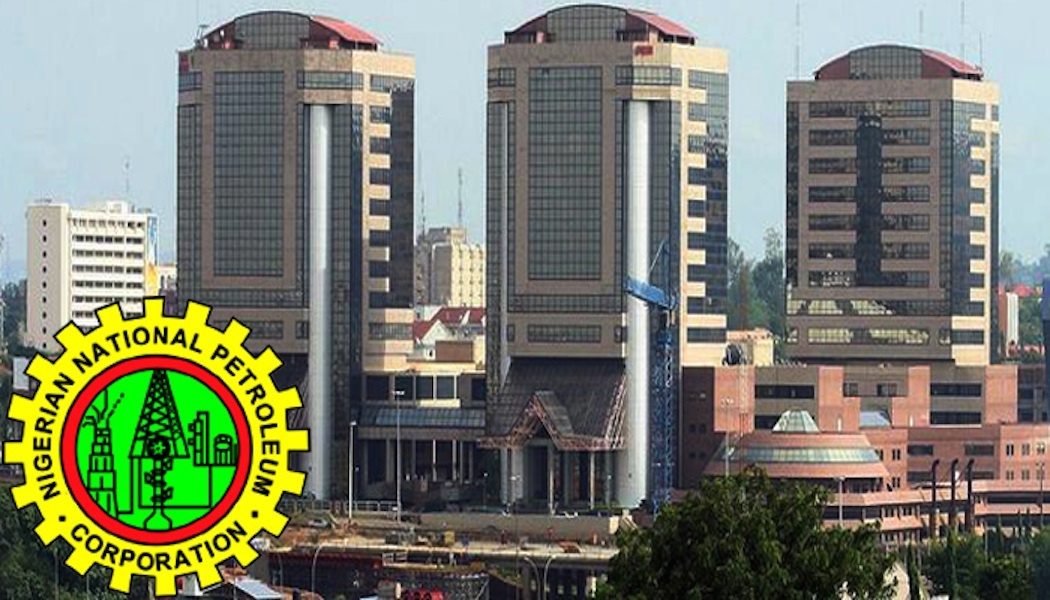
Group Managing Director of the Nigerian National Petroleum Corporation (NNPC), Mr Mele Kyari, has warned that the country could get into trouble if the price of crude oil at the international market sells at $22 per barrel.
Speaking on Wednesday at a consultative roundtable meeting organised by the Central Bank of Nigeria (CBN) in Abuja, the oil expert said about 50 cargoes carrying the commodity have not found landing.
“As at today with the Nigerian crude, we have 50 cargoes that have not found landing; it means the traders have purchased it but they don’t know how to take it,” Mr Kyari at the event themed Going for Growth 2.0.”
Speaking further, the head of the national oil company said, “Iraq dropped its price by $5 and Saudi Arabia by $8 in some locations.
“So, when your crude oil sells at $30 and you’re dropping it by $8, it means that in the market, you’re selling it at $22.
“This is a huge problem that can be accommodated in some production environment like in Saudi Arabia.
“Today, the best of our production system is $15 to $17 a barrel, there are many countries whose cost of production is $30 and we’re one of them. So, when the price now goes to $22 and we’re producing at $30, that means we’re out of business.”
Mr Kyari further explained that about 12 cargoes of liquefied petroleum gas (LPG) cargoes from Nigeria were stranded globally because they had no hub due to abrupt collapse in demand associated specifically with coronavirus.
“It has also hit other sectors from the production stage which is the liquid crude,” he said.
Mr Kyari noted that after the oil market slump on Monday, a lot of worries became reality, saying that when the oil market collapsed, everything would collapse completely. He added that oil was the only commodity whereby when the price goes up, beneficiaries would panic.
In her remarks, Mrs Zainab Ahmed, the Minister for Finance, Budget and National Planning, said the market slump is a wake-up call for the country to look towards a life without oil.
Oil prices is registering one of the most volatile weeks in history when it crashed on Monday to around $35 per barrel, made some recovery on Tuesday, and returned below $35 on Wednesday.
As at the time of this report, the International benchmark futures, Brent Crude is trading negative at $33.60 per barrel, further adding worry to the country’s oil proceeds of which a $57 per barrel benchmark price was expected to support.
Economy
Decades-Long Ogoni Shutdown Costs Nigeria $226bn in Oil Revenue—PINL
By Adedapo Adesanya
Pipeline Infrastructure Nigeria Limited (PINL) says Nigeria has lost an estimated $226.734 billion in revenue from stalled crude oil production in Ogoniland over the past 32 years.
The group at the company’s monthly stakeholders’ meeting in Port Harcourt called for an urgent, structured restart of operations in the region.
PINL described the resumption of oil production in Ogoniland as a “strategic national priority,” stressing that the process must be driven by host communities and grounded in environmental sustainability.
Speaking at the event, Mr Akpos Mezeh, General Manager, Community and Stakeholder Relations at PINL, said the scale of losses highlights both the cost of inaction and the opportunity ahead.
“Available data shows that over $226.734 billion has been lost due to the suspension of crude oil production from 96 oil wells in Ogoniland over the past 32 years. This clearly underscores both the economic cost of inaction and the immense opportunity that lies ahead,” he said.
Ogoniland, covered under Oil Mining Lease (OML) 11, has the capacity to produce over 500,000 barrels of crude oil per day. Production was halted in 1993 following unrest and environmental concerns linked to oil exploration activities.
PINL outlined key conditions for restarting operations, including active community participation, sustained environmental remediation, adoption of community-based security models, and prioritisation of economic inclusion.
“The position of PINL aligns with growing calls from stakeholders in the Niger Delta for the Federal Government to restart oil production in Ogoniland in a manner that balances economic benefits with environmental justice and community interests,” Mr Mezeh added.
He further affirmed the company’s readiness to support the process, stating: “At PINL, we stand ready to support this process by applying our experience in stakeholder engagement and infrastructure protection to ensure a peaceful, secure, and sustainable resumption.”
PINL maintained that with the right framework, resuming production in Ogoniland could significantly boost Nigeria’s crude output, increase government revenues, and support broader economic growth.
Economy
Champion Breweries Lists Additional Shares on Stock Exchange
By Aduragbemi Omiyale
Additional shares of Champion Breweries Plc have been listed on the Nigerian Exchange (NGX) Limited.
A circular from the NGX Regulation Limited confirmed this development on Wednesday, April 15, 2026.
The new stocks of the brewery company came from its hybrid offer comprising rights issue and offer for subscription.
Through the two exercises, Champion Breweries issued fresh 2,375,615,342 ordinary shares of 50 Kobo each to subscribers, which were brought to the stock exchange for listing.
Business Post reports that 931,712,324 units arose from the rights issue of 994,221,766 ordinary shares of 50 Kobo each at N16.00 per unit, indicating a subscription rate of 93.71 per cent; and 1,443,903,018 units from the offer for subscription of 2,625,000,000 ordinary shares of 50 Kobo each at N16.00 per unit, reflecting a subscription rate of 55.01 per cent.
The listing of the new shares of the organisation has increased the total issued and fully paid-up shares to 11,323,611,234 ordinary shares of 50 Kobo each from 8,947,995,892 ordinary shares of 50 Kobo each.
“With this listing of the additional 2,375,615,342 ordinary shares of 50 Kobo each, the total issued and fully paid-up shares of Champion Breweries Plc have now increased from 8,947,995,892 to 11,323,611,234 ordinary shares of 50 Kobo each,” a part of the circular signed by the Head of Issuer Regulation Department of NGX RegCo, Mr Godstime Iwenekhai, stated.
Economy
Nigeria’s Finance Minister Rules Out Seeking IMF Loan
By Adedapo Adesanya
The Minister of Finance, Mr Wale Edun, says Nigeria has no immediate plans to approach the International Monetary Fund (IMF) for financial assistance.
Mr Edun made this known at the African Finance Ministers’ briefing during the IMF and World Bank Annual Meetings on Thursday in Washington, D.C. United States.
He said reliance on ongoing domestic economic reforms was yielding positive results.
According to him, Nigeria’s reforms over the past two years have restored policy credibility and strengthened resilience against global economic shocks affecting many African economies, adding that the country has prioritised market-based adjustments, avoiding administrative controls, particularly in foreign exchange and petroleum pricing mechanisms.
Mr Edun reaffirmed that Nigeria would continue to rely on internal policy measures rather than seeking multilateral lending support at this time.
However, he urged faster and more coordinated financial assistance for African countries amid discussions on a proposed $50 billion global support package.
The Minister said Nigeria had built buffers through reforms, but noted that several African nations remained highly exposed and required urgent external financial support.
He said Nigeria’s reliance on market mechanisms had enabled smoother economic adjustments, reduced disruptions, and sustained the country’s macroeconomic trajectory amid global uncertainties.
However, on Monday, the |Minister said Nigeria would seek stronger international financial support at this week’s IMF-World Bank Spring Meetings as the Iran war lifts fuel costs at home and complicates reforms.
He said ahead of the meeting that surging crude prices had some clear benefits for the country, which is Africa’s top oil producer, boosting foreign exchange earnings.
“But the shock comes at a critical transition point, intensifying inflationary pressures and raising living costs for households,” he added.
-
Feature/OPED6 years agoDavos was Different this year
-
Travel/Tourism10 years ago
Lagos Seals Western Lodge Hotel In Ikorodu
-
Showbiz3 years agoEstranged Lover Releases Videos of Empress Njamah Bathing
-
Banking8 years agoSort Codes of GTBank Branches in Nigeria
-
Economy3 years agoSubsidy Removal: CNG at N130 Per Litre Cheaper Than Petrol—IPMAN
-
Banking3 years agoSort Codes of UBA Branches in Nigeria
-
Banking3 years agoFirst Bank Announces Planned Downtime
-
Sports3 years agoHighest Paid Nigerian Footballer – How Much Do Nigerian Footballers Earn