Economy
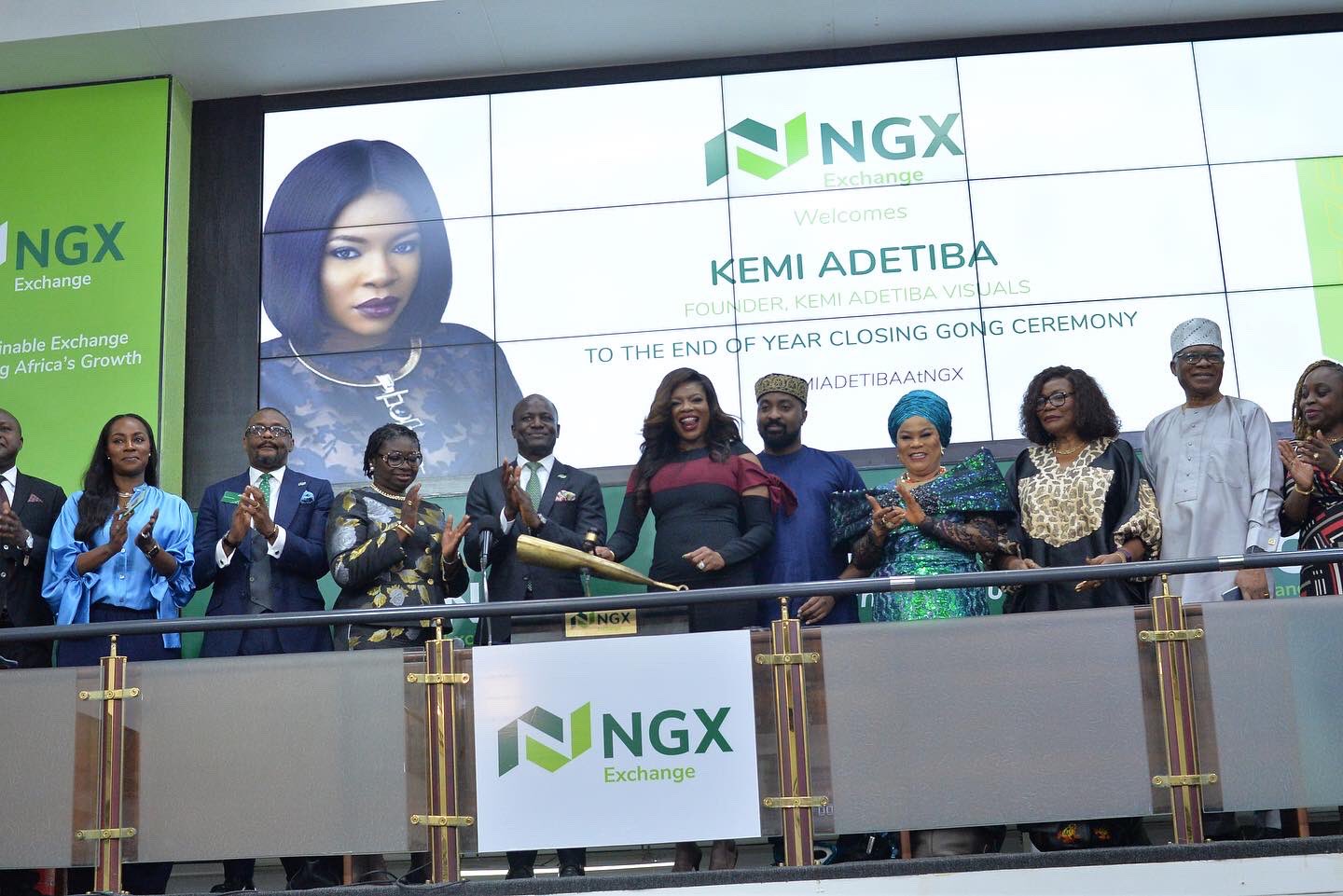
Nigerian Exchange Witnesses N318.52bn Listings in Q1 2023
By Aduragbemi Omiyale
The Nigerian Exchange (NGX) Limited witnessed the listing of N318.52 billion worth of securities in the first quarter of 2023, data from the X-Compliance report of the bourse has revealed.
This cut across equities, fixed income, mutual funds and derivatives categories.
The X-Compliance report is a transparency initiative of NGX designed to maintain market integrity and protect investors by providing compliance-related information on all listed companies.
Through the report, NGX ensures that it provides timely information to investors to aid their capital allocation decisions and enable a properly functioning capital market.
According to the report, NGX saw N11.23 billion in Federal Government of Nigeria bond listings which constituted FGN Savings Bonds with maturities ranging between 2024 and 2026.
Lagos State Government issued the only bond by a sub-sovereign entity with its N137.33 billion series 1V, 10-year 13%, Fixed Rate Bonds due 2031 under its N500 billion debt issuance program.
The corporate bond segment recorded N112.42 billion senior unsecured bond listing from Dangote Industries Funding Plc and N31.36 billion in Sukuk Issuances from Taj Bank and Family Homes under their respective Sukuk Issuance programmes.
FTN Cocoa Processors Plc and Neimeth International Pharmaceuticals Plc both did supplementary listings of N850 million and N3.68 billion of shares, respectively.
Africa Plus Partners Nigeria Limited also listed its mutual fund, Africa Infra Plus 1, the first Carbon Plus naira-denominated fund to be listed on the Exchange, at a market value of N21.65 billion.
NGX also continued to drive participation in its derivatives market with the listing of the NGX Pension index Futures Contract and NGX30 Index Futures Contract.
Recall that the Chief Executive Officer of NGX, Mr Temi Popoola, had noted that the Exchange had a renewed focus on listings for the year 2023.
“We will be using listings as a vehicle for meeting strategic aspirations as the new dispensation comes in through increased advocacy and engagements,” he had said.
Economy
FG Encourages Businesses to Tap $1bn AfCFTA Financing Scheme
By Adedapo Adesanya
The federal government says Nigerian businesses now have access to a $1 billion financing facility under the African Continental Free Trade Area (AfCFTA), designed to strengthen production and improve export competitiveness across African markets.
Speaking at the 2nd Quarter 2026 meeting of the AfCFTA Central Coordination Committee in Abuja, the Minister of Industry, Trade and Investment, Mrs Jumoke Oduwole, described the financing window as a major opportunity for businesses looking to scale operations and deepen regional trade.
“This financing facility presents a significant opportunity for Nigerian companies seeking to expand operations, modernise production, and increase exports across African markets,” she said.
Mrs Oduwole noted that despite progress in AfCFTA implementation, Nigerian exporters still face challenges such as documentation bottlenecks, certification requirements, and standards compliance issues.
She said the government is addressing these gaps through trade facilitation reforms and stronger collaboration with agencies, including the Nigeria Customs Service (NCS) and the Nigerian Export Promotion Council (NEPC).
The trade minister also stressed the importance of strengthening Nigeria’s legal and regulatory framework, particularly through the domestication of the AfCFTA Digital Trade Protocol.
At the meeting, the National Coordinator and CEO of the Nigeria AfCFTA Coordination Office, Mrs Patience Okala, said the $1 billion AfCFTA Adjustment Fund Credit Facility is targeted at large-scale businesses with a minimum financing threshold of US$10 million.
“The facility will support business expansion, modernisation, working capital requirements, project development, industrialisation efforts, and regional value chain integration,” she explained.
Mrs Okala added that the coordination office is working with fund managers to ensure qualified Nigerian firms can access the facility, while also assembling a pilot group of businesses to maximise participation.
She further highlighted growing private sector engagement, noting that recent sensitisation events in Kano attracted more than 470 businesses, including women-led enterprises.
On his part, a representative of the Federal Ministry of Industry, Trade and Investment, Mr Simon Om-Ezomo, commended stakeholders for their collaboration and urged sustained commitment to policy implementation.
Economy
Senate Pushes for Ban on Textile Imports
By Aduragbemi Omiyale
To revive the local industry and create jobs to boost the economy, the Senate has advised the federal government to ban textile imports.
The upper chamber of the federal parliament made this suggestion on Tuesday at the plenary presided over by the Deputy Senate President, Mr Jibrin Barau.
They noted that to resuscitate textile industries in the country, the Federal Ministry of Industry, Trade and Investment, and the Federal Ministry of Agriculture should immediately implement investment-friendly policies.
The red chamber of the National Assembly recalled when Nigeria used to have a vibrant textile industry, but lamented that the influx of foreign fabrics destroyed the sector.
The Senate emphasised that to stimulate economic growth and tackle insecurity in the country, there must be a total ban on the importation of textile materials into Nigeria.
“With the lifting of the ban on textile importation in 2010, Nigeria now has almost 80 per cent of its textiles imported from China, Indonesia, Taiwan and other countries.
“This trend is definitely not helping the Nigerian economy in terms of employment generation and the conservation of foreign exchange,” Mr Katung Marshall, who co-sponsored a motion on the Urgent Need to Revive the Textile Industries in Nigeria, said on the floor of the Senate yesterday.
The Senator informed his colleagues that the government protection policies in the 1960s and 1970s, particularly the restrictions on textile imports, attracted investors and helped the sector to flourish.
According to him, during the period, Nigeria’s textile industry accommodated about 167 mills and directly employed over 500,000 people, making it the nation’s second-largest employer after the federal government.
But he said this went south in the late 1990s due to obsolete machinery, inadequate capital and persistent power supply challenges, adding that by 2007, major companies, including Kaduna Textile Limited, Arewa Textiles and United Nigerian Textiles Limited, had shut down operations, leading to the loss of over 7,000 jobs.
Economy
FrieslandCampina, Nitrox, Others Further Weaken NASD Index by 0.48%
By Adedapo Adesanya
Six securities led by FrieslandCampina Wamco Nigeria Plc further weakened the NASD Over-the-Counter (OTC) Securities Exchange by 0.48 per cent on Tuesday, June 9.
The notable dairy firm lost N7.87 during the trading day to close at N173.81 per unit compared with the previous session’s N181.68 per unit, Nitrox Industrial Gases Plc depreciated by N2.42 to N21.88 per share from N24.30 per share, Afriland Properties Plc dipped by N1.25 to N15.55 per unit from N16.80 per unit, Food Concepts Plc stumbled by 27 Kobo to N2.48 per share from N2.75 per share, UBN Property Plc dropped 9 Kobo to settle at N2.11 per unit versus N2.20 per unit, and Industrial and General Insurance (IGI) Plc crashed by 4 Kobo to 50 Kobo per share from 54 Kobo per share.
As a result of these losses, the market capitalisation went down by N12.50 billion to N2.593 trillion from N2.606 trillion, and the NASD Unlisted Security Index (NSI) declined by 20.89 points to 4,335.31 points from 4,356.20 points.
Business Post reports that there was a price gainer yesterday, and this was Central Securities Clearing System (CSCS) Plc, which improved its value by N2.65 to N81.13 per unit from N78.48 per unit.
The volume of transactions soared on Tuesday by 644.3 per cent to 1.6 million units from 213,188 units, the value of trades increased by 208.6 per cent to N62.3 million from N20.2 million, and the number of deals surged by 64 per cent to 41 deals from 25 deals.
The most active stock by value on a year-to-date basis remained Great Nigeria Insurance (GNI) Plc, with 3.4 billion units worth N8.4 billion, trailed by Infrastructure Credit Guarantee (Infracredit) Plc with 2.3 billion units transacted for N6.5 billion, and CSCS Plc with 65.1 million units sold for N4.4 billion.
GNI Plc was also the most traded stock by volume on a year-to-date basis, with 3.4 billion units valued at N8.4 billion, followed by Infracredit Plc with 2.3 billion units exchanged for N6.5 billion, and Resourcery Plc with 1.1 billion units traded for N415.7 million.
-
Feature/OPED6 years agoDavos was Different this year
-
Travel/Tourism10 years ago
Lagos Seals Western Lodge Hotel In Ikorodu
-
Showbiz3 years agoEstranged Lover Releases Videos of Empress Njamah Bathing
-
Banking8 years agoSort Codes of GTBank Branches in Nigeria
-
Economy3 years agoSubsidy Removal: CNG at N130 Per Litre Cheaper Than Petrol—IPMAN
-
Banking3 years agoSort Codes of UBA Branches in Nigeria
-
Banking3 years agoFirst Bank Announces Planned Downtime
-
Sports3 years agoHighest Paid Nigerian Footballer – How Much Do Nigerian Footballers Earn