Economy
Nigerian Stocks Struggle on Low Investor Confidence
By Dipo Olowookere
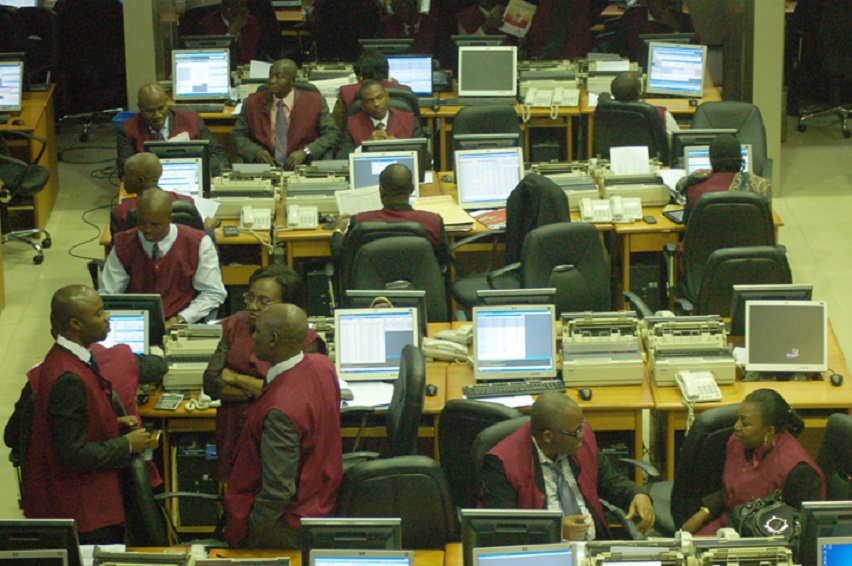
It is not a good time for Nigerian stocks at the moment as investor sentiment remains negative as the market awaits a positive trigger to propel another round of buying interest.
On Thursday, the Nigerian Exchange (NGX) Limited slightly went down by 0.01 per cent to extend its stay at the negative territory for the fourth straight session. It means the stock market has not recorded a single growth this trading week, though it closed flat on Tuesday with a red.
The decline reported yesterday was majorly influenced by selloffs in some value stocks and investors did not have the opportunity to chew the much-awaited half-year results of GTCO and the financial statements were filed after the close of business.
Business Post reports that the All-Share Index (ASI) reduced at the session by 3.19 points to settle at 39,201.33 points compared with the preceding session’s 39,204.52 points, while the market capitalisation went down by N1 billion to finish at N20.425 trillion in contrast to N20.426 trillion of Wednesday.
Unlike the previous day, the performance of the key sectors of the exchange was better, though it remained mixed, with the energy, consumer goods and banking indices closing higher by 0.55 per cent, 0.14 per cent and 0.03 per cent apiece, while the insurance and industrial goods counters depreciated by 1.65 per cent and 0.02 per cent respectively.
At the exchange on Thursday, there were more price losers than gainers. A total of nine stocks appreciated during the trading day, while 21 equities depreciated in price.
Cornerstone Insurance suffered the heaviest loss with a 7.69 per cent decline, closing at 48 kobo. AIICO Insurance went down by 6.86 per cent to 95 kobo, Learn Africa lost 5.56 per cent to sell for N1.36, Livestock Feeds depreciated by 5.45 per cent to N2.08, while Honeywell Flour Mills shed 5.13 per cent to trade at N3.88.
Conversely, Chams ended the session as the best-performing stock with a price increase of 4.76 per cent to quote at 22 kobo and was followed by UBA, which gained 4.67 per cent to settle at N7.85.
Cutix appreciated by 4.60 per cent to sell at N5.00, Oando rose by 3.08 per cent to trade at N4.68, while Nigerian Breweries improved by 1.25 per cent to N48.65.
In terms of the trades, the volume of shares went down by 1.00 per cent to 350.5 million units from 354.1 million units, the number of deals declined by 13.97 per cent to 3,523 deals from 4,095 deals, while the value of stocks increased by 4.52 per cent to N3.4 billion from N3.2 billion.
For another trading session, FBN Holdings finished as the most transacted stock with the sale of 97.7 million units valued at N729.6 million and was trailed by Wema Bank with 74.8 million units worth N58.5 million.
Access Bank transacted 47.8 million equities valued at N451.2 million, Livestock Feeds sold 12.9 million shares worth N26.7 million, while Nigerian Breweries exchanged 10.0 million stocks for N486.8 million.
Economy
Oil Prices Rise 2% as Middle East Hostilities Escalate
By Adedapo Adesanya
Oil prices rose around 2 per cent on Wednesday as hostilities in the Middle East erupted anew and talks between Iran and the United States showed little progress.
Brent futures grew by $1.81 or 1.89 per cent to $97.81 per barrel, and the US West Texas Intermediate (WTI) crude climbed $2.26 or 2.41 per cent to $96.02 a barrel.
According to reports, Iran launched ballistic missiles toward regional neighbours Kuwait and Bahrain, killing one person and injuring dozens, while the US forces conducted strikes on Iran’s Qeshm Island.
Iranian drones and missiles struck Kuwait International Airport overnight, causing the country to immediately suspend air traffic, activate emergency procedures, and divert flights to alternative airports.
Iran’s Revolutionary Guard said the operation was retaliation for recent US military actions and warned that regional states supporting American operations could face further consequences. Kuwait hosts major US military facilities and serves as a key logistics hub for American operations across the Middle East, but until then had largely avoided becoming a direct target.
Following the overnight attack, the United Arab Emirates (UAE) called for a united Gulf stance.
Meanwhile, President Donald Trump said Iran had agreed not to have a nuclear weapon and that Supreme Leader Ayatollah Mojtaba Khamenei was involved in negotiations. He has insisted this week that discussions remain active and said a broader agreement could emerge within days, while Iranian officials have delivered contradictory messages.
Iranian Foreign Minister Abbas Araqchi said contacts with American representatives have not been cut off, but no progress has been made in the negotiations.
The prolonged closure of the Strait of Hormuz continues to bottleneck global energy supplies, driving sustained upward pressure on oil markets.
The International Energy Agency (IEA) has warned that global oil inventories could hit critical levels ahead of peak summer demand if stock draws continue at their current pace.
Crude oil inventories in the US decreased by 8.0 million barrels during the week ending May 29, according to data from the Energy Information Administration (EIA) released on Wednesday. The EIA’s data release follows figures by the American Petroleum Institute (API) that were released a day earlier, which reported that crude oil inventories saw a draw of 6.75 million barrels in the period.
Economy
CSCS Boss Shantali Says T+1 Settlement Targets Long-Term Capital Market Growth
By Adedapo Adesanya
The chief executive of the Central Securities Clearing System (CSCS) Plc, Mr Shehu Yahaya Shantali, says Nigeria’s shift to a T+1 settlement cycle goes beyond faster transactions and is intended to deepen long-term growth in the capital market.
Speaking at a ceremony marking the commencement of T+1 settlement in Lagos, Mr Shantali described the development as a strategic milestone that goes beyond faster transaction timelines to reinforce the market’s structural strength and future readiness.
According to him, the shortened settlement cycle reflects years of investment in infrastructure, technology, and stakeholder collaboration aimed at transforming Nigeria into a globally competitive investment destination.
Nigeria recently became the first market in Africa to adopt the T+1 framework, reducing the settlement period for securities transactions from two days to one.
According to the boss of the securities depository firm, the shortened settlement cycle reflects years of investment in infrastructure, technology, and stakeholder collaboration aimed at transforming Nigeria into a globally competitive investment destination.
“These investments are not solely for T+1 settlement but to position Nigeria’s capital market for sustained growth and longterm competitiveness,” he said.
The migration from T+1 settlement is expected to enhance liquidity, improve capital efficiency, and reduce counterparty risk across the market.
Mr Shantali explained that the T+1 transition represents the culmination of a decades-long evolution from a manual, paper-based system to a fully automated, technology-driven post-trade environment.
He recalled that investors previously waited several months to complete transactions under the old system, but successive reforms, including transitions to T+5, T+3, and T+2, steadily improved efficiency and market integrity.
The latest upgrade, he said, builds on extensive preparations undertaken over the past three years, including system enhancements, process optimisation, and market-wide readiness assessments coordinated by the SEC and industry stakeholders.
On his part, the Director-General of the Securities and Exchange Commission (SEC), Mr Emomotimi Agama, said the reform signals Nigeria’s readiness to compete at the highest levels of global finance, noting that the country transitioned from T+2 to T+1 within six months.
“The era of T+1 has begun,” Mr Agama said, adding that shorter settlement cycles are critical to attracting global capital and strengthening investor confidence.
He noted that leading markets such as the United States, Canada, and India have already adopted T+1 settlement, while several European markets are preparing to migrate, making Nigeria’s transition a crucial step in maintaining international relevance.
Economy
Businesses Not Feeling Full Benefits of Tinubu’s Reforms—NECA
By Adedapo Adesanya
Many private sector operators have yet to experience the anticipated gains of President Bola Tinubu’s reforms as they continue to grapple with inflation, energy costs and exchange rate volatility, the Director-General of the Nigeria Employers’ Consultative Association (NECA), Mr Adewale-Smatt Oyerinde, has said.
Mr Oyerinde acknowledged that the removal of fuel subsidy and liberalisation of the foreign exchange market reflected the government’s commitment to market-driven economic policies and improved transparency across sectors.
He said the reforms had enhanced fuel availability, reduced recurring supply disruptions and signalled policy consistency to both local and foreign investors, but noted that while there are indications of improved investor confidence, many domestic businesses, particularly Micro, Small and Medium Enterprises (MSMEs), continue to contend with operational challenges.
The NEC chief said the depreciation of the Naira had increased production costs, affected competitiveness and heightened operational risks for many businesses.
“Many private sector operators are yet to experience the anticipated gains of the reforms as they continue to grapple with inflation, energy costs and exchange rate volatility,” he said in a recent interview with the News Agency of Nigeria (NAN) while assessing the administration’s economic performance.
Mr Oyerinde said declining consumer purchasing power and increasing production expenses had placed pressure on businesses, with some firms adjusting investment plans and operations in response to prevailing economic conditions.
On infrastructure and refining, the NECA DG said developments in housing, industrial investments and local petroleum refining had created opportunities and contributed to improved fuel supply.
He, however, identified power supply as a major challenge facing businesses, citing persistent grid instability and reliance on alternative energy sources.
“In spite of the ongoing reforms in the power sector, insufficient electricity supply remains the number one constraint to business productivity and competitiveness across the country,” he said.
Mr Oyerinde said that although some macroeconomic indicators, including foreign reserves and government revenues, had shown improvement, the gains were yet to be broadly reflected in business operations and household welfare.
“Inflation, high energy costs, multiple taxation, logistics challenges and weak consumer spending continue to constrain productivity and limit business expansion,” he said.
He said employers remained cautious about large-scale recruitment amid high borrowing costs, foreign exchange volatility and rising operating expenses.
According to him, sustainable job creation will depend on deeper structural reforms that reduce the cost of doing business and improve access to affordable finance.
He urged the government to prioritise stable power supply, lower energy costs, tax harmonisation, policy consistency and foreign exchange stability to accelerate economic recovery and strengthen investor confidence.
-
Feature/OPED6 years agoDavos was Different this year
-
Travel/Tourism10 years ago
Lagos Seals Western Lodge Hotel In Ikorodu
-
Showbiz3 years agoEstranged Lover Releases Videos of Empress Njamah Bathing
-
Banking8 years agoSort Codes of GTBank Branches in Nigeria
-
Economy3 years agoSubsidy Removal: CNG at N130 Per Litre Cheaper Than Petrol—IPMAN
-
Banking3 years agoSort Codes of UBA Branches in Nigeria
-
Banking3 years agoFirst Bank Announces Planned Downtime
-
Sports3 years agoHighest Paid Nigerian Footballer – How Much Do Nigerian Footballers Earn