
Economy
NMDPRA Issues 20 Licenses to Boost Local Refining Capacity

By Adedapo Adesanya
The Nigerian Midstream and Downstream Petroleum Regulatory Authority (NMDPRA) has issued 20 new licenses as part of efforts to boost the country’s refining capacity.
The regulator granted nine Licenses to Establish (LTEs), seven Licenses to Construct (LTCs), and four Licenses to Operate (LTOs) modular refineries, indicating a strong push toward increased domestic refining capacity, according to NMDPRA Chief Executive, Mr Farouk Ahmed.
He made this disclosure during his keynote address at the ongoing 18th OTL Africa Downstream Energy Week in Lagos.
Mr Ahmed emphasized the country’s target of achieving three million barrels per day in crude oil production and an increase in domestic gas utilization to 10 billion standard cubic feet per day.
He noted that expanding domestic refining would position Nigeria as a net exporter of petroleum products.
“In the past year, the NMDPRA has engaged stakeholders to revise and consolidate regulations, streamlining the regulatory framework to enhance compliance,” Ahmed stated.
He further highlighted efforts to automate processes for improved regulatory clarity.
Mr Ahmed also disclosed that the development of the West African Gas Pipeline (WAGP) project extending to Morocco, will help facilitate the movement of natural gas across West Africa.
He suggested a potential partnership with East and Southern African regional regulators to establish a pan-African Energy Regulators Association, which would streamline regulations across the continent.
Mr Ahmed also emphasised the promotion of Compressed Natural Gas (CNG) as an alternative to Premium Motor Spirit (PMS) and Automotive Gas Oil (AGO), with plans to expand CNG infrastructure under the Pi-CNG, the Decade of Gas Program, and the MDGIF.
“Our goal is to accelerate CNG infrastructure expansion at most retail outlets, supporting the growing number of CNG vehicles nationwide,” he said.
On his part, Mr Adetunji Oyebanji, Chairman of the OTL Africa Downstream Energy Week Advisory Board, lauded recent developments in the Nigerian energy sector especially the recent deregulation of Nigeria’s downstream sector and the commissioning of the Dangote Refinery.
He noted that the refinery, with a capacity of 650,000 barrels per day, represents a significant milestone for Nigeria and the entire West African region, setting a foundation for greater competition, transparency, and stability within the sector.








By Aduragbemi Omiyale
The Frontier Market status of Nigeria, earlier yanked off by FTSE Russell, has now been fully restored.
The platform earlier reclassified the country’s status to Unclassified following several uncertainties and economic issues.
But after recommendations from its Equity Country Classification Advisory Committee and Policy Advisory Board, the Frontier Market status has been restored by FTSE Russell, marking a significant milestone in the country’s reintegration into global investment indices and signalling renewed opportunity for international investors.
However, this will take effect from September 2026, with the outcome announced as part of the March 2026 interim review and communicated to investors across key global markets.
The decision reflects sustained improvements in Nigeria’s market infrastructure, accessibility, and overall investability, driven in large part by enhancements to the Nigerian Exchange (NGX) platform. These include strengthened trading systems, improved settlement processes, and increased transparency, all of which have contributed to a more efficient and accessible market environment for domestic and international investors.
According to the FTSE Quality of Markets assessment, Nigeria recorded Pass ratings across several core criteria, including regulatory oversight, capital repatriation, brokerage competitiveness, tax framework, and settlement efficiency, with a T+2 settlement cycle in operation. These gains reflect deliberate efforts to align market operations with global standards and improve the investor experience.
While acknowledging this progress, the review also highlighted areas for further development, including foreign exchange market depth, transaction cost efficiency, derivatives market availability, and certain custody and clearing mechanisms. Addressing these gaps will require continued coordination across regulators, market operators, and the broader financial ecosystem.
FTSE Russell noted that its country classification process combines detailed technical assessment with input from global institutional investors, ensuring that both structural conditions and real-world investor experience are reflected. The organisation also commended Nigerian market authorities for their continued engagement.
“This milestone reflects the strength of collaboration across Nigeria’s capital market ecosystem, but importantly, the deliberate efforts to strengthen the underlying market infrastructure that supports efficient trading, transparency, and investor access,” the chief executive of NGX Group Plc, Mr Temi Popoola, said.
“At NGX Group, we have remained focused on building a more resilient, accessible, and globally competitive platform, and this reclassification affirms the progress made.
“We will continue to work closely with regulators, market operators and stakeholders to deepen reforms, address identified gaps, and sustain momentum towards higher market classifications,” he added.
The Frontier Market designation is expected to enhance Nigeria’s visibility among global asset managers and index-tracking funds, potentially unlocking new capital inflows and broadening participation in the market.
As global investors increasingly prioritise markets with strong infrastructure, transparency, and accessibility, Nigeria’s re-entry into the FTSE Frontier Market universe underscores the critical role of market infrastructure in enabling capital formation and connecting local opportunities to global capital.
By Adedapo Adesanya
A 1.61 per cent fall was recorded by the NASD Over-the-Counter (OTC) Securities Exchange on Tuesday, April 7, on the back of selling pressure.
The profit-taking chopped off N38.87 from the market capitalisation of the trading platform, leaving it at N2.378 trillion compared with the N2.417 trillion it ended last Thursday, when the bourse last witnessed trading activity.
Similarly, the NASD Unlisted Security Index (NSI) dropped 22.57 points to close the session at 3,975.34 points, in contrast to the preceding session’s 4,040.30 points.
The market breadth index was at equilibrium yesterday after recording three price gainers and three price losers, led by Okitipupa Plc, which depleted by N15.00 to N260.00 per share from N275.00 per share. Central Securities Clearing System (CSCS) Plc dipped by N6.31 to N71.69 per unit from N78.00 per unit, and FrieslandCampina Wamco Nigeria Plc went down by N1.00 to N92.00 per share from N93.00 per share.
Conversely, First Trust Mortgage Bank Plc appreciated by 20 Kobo to N2.28 per unit from N2.08 per unit, UBN Property Plc also improved by 20 Kobo to N2.18 per share from N1.98 per share, and Impresit Bakalori Plc gained 19 Kobo to sell at N2.20 per unit versus N2.01 per unit.
During the session, the volume of securities dipped by 99.7 per cent to 797,264 units from 260.2 million units, the value of securities went down by 83.1 per cent to N26.1 million from N154.2 million, and the number of deals decreased by 28.3 per cent to 33 deals from 46 deals.
Great Nigeria Insurance (GNI) Plc remained the most traded stock by value (year-to-date) with 3.4 billion units worth N8.4 billion, trailed by CSCS Plc with 57.1 million units sold for N3.9 billion, and Okitipupa Plc with 27.5 million units valued at N1.8 billion.
GNI Plc was also the most traded stock by volume (year-to-date) with 3.4 billion units traded for N8.4 billion, followed by Resourcery Plc with 1.1 billion units exchanged for N415.7 million, and Infrastructure Guarantee Credit Plc with 400 million units transacted for N1.2 billion.
By Adedapo Adesanya
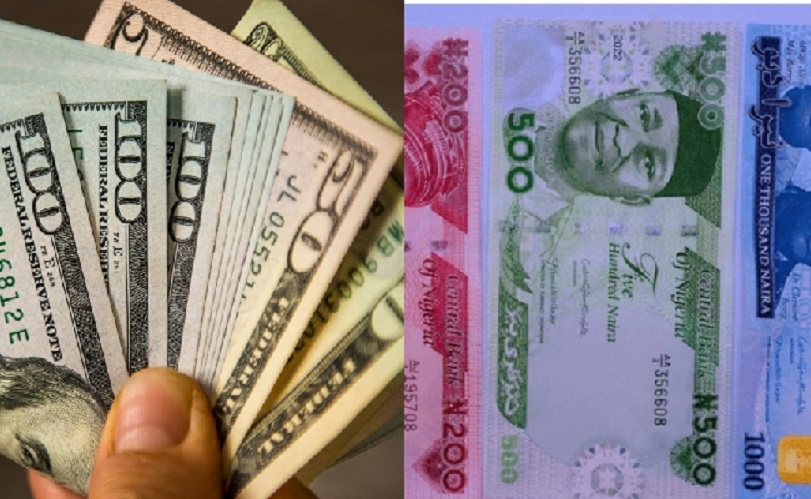
The Naira suffered a decline of N5.87 or 0.43 per cent against the US Dollar in the Nigerian Autonomous Foreign Exchange Market (NAFEX) on Tuesday, April 7, to trade at N1,386.66/$1 compared with the previous value of N1,380.79/$1.
It was the first trading day in the local currency market after it closed last Friday and Monday for the Easter holiday.
In the same market window, the Nigerian Naira also depreciated against the Pound Sterling during the session by N13.71 to sell for N1,838.57/£1 versus N1,824.86/£1, and lost N13.69 on the Euro to quote at N1,605.61/€1 versus N1,591.92/€1.
In the black market, the Nigerian currency maintained stability against the Dollar yesterday to remain unchanged at N1,4010/$1.
Despite the recent movement, analysts remain optimistic about the outlook of the currency in 2026, citing ongoing reforms by the Central Bank of Nigeria (CBN).
The Centre for the Promotion of Private Enterprise (CPPE) said Naira stability in the first quarter of the year boosted business confidence, noting that the currency remains relatively stable during the period, trading within the N1,340 to N1,430 per Dollar band.
It attributed the stability to improved foreign exchange liquidity, stronger oil earnings, and rising external reserves, which had climbed above 50 billion dollars.
In the cryptocurrency market, prices rose after US President Donald Trump announced a two-week cease-fire with Iran, abruptly reversing days of bearish positioning.
The spike triggered roughly $595 million in crypto liquidations, with short positions making up about $427 million, marking the most aggressive short squeeze since early March. Short positions occur when investors profit from a decline in the price of an asset, so when prices rise, losses occur for the shorts.
Cardano (ADA) rose by 8.3 per cent to $0.2629, Ethereum (ETH) appreciated by 7.3 per cent to $2,249.69, Solana (SOL) added 6.6 per cent to sell for $84.67, Ripple (XRP) jumped 5.8 per cent to $1.38, Dogecoin (DOGE) expanded by 5.1 per cent to $0.0949, Bitcoin (BTC) grew by 5.0 per cent to $71,897.41, Binance Coin (BNB) increased by 3.3 per cent to $616.35, and TRON (TRX) gained 0.1 per cent to trade at $0.3160, while the US Dollar Tether (USDT) and the US Dollar Coin (USDC) traded flat at $1.00 apiece.
-
 Feature/OPED6 years ago
Davos was Different this year
-
Travel/Tourism10 years ago
Lagos Seals Western Lodge Hotel In Ikorodu
-

 Showbiz3 years ago
Estranged Lover Releases Videos of Empress Njamah Bathing
-
 Banking8 years ago
Sort Codes of GTBank Branches in Nigeria
-

 Economy3 years ago
Subsidy Removal: CNG at N130 Per Litre Cheaper Than Petrol—IPMAN
-

 Banking3 years ago
Sort Codes of UBA Branches in Nigeria
-

 Banking3 years ago
First Bank Announces Planned Downtime
-

 Sports3 years ago
Highest Paid Nigerian Footballer – How Much Do Nigerian Footballers Earn