Economy
NNPC Achieves 71% Savings in Deep Offshore Rig-rate

By Modupe Gbadeyanka
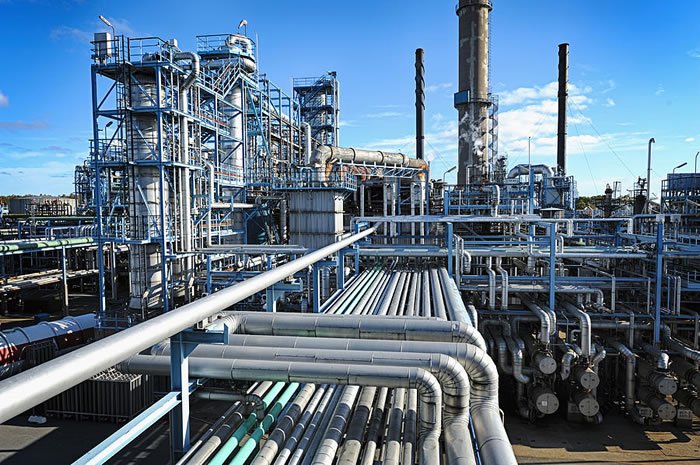
The Nigerian National Petroleum Corporation (NNPC) has renegotiated its deep offshore rig-rate from a staggering $580,000 to $164,000 per day, saving the country a 71.7 per cent cost of executing a similar operation in the past.
Similarly, the corporation has achieved a 35 percent downward review of rig rates per day for both swamp and land operations in its portfolios.
A rig rate is a major cost element incurred by an Exploration and Production (E&P) company in the course of drilling for oil or gas in deep offshore, shallow offshore, swamp, land areas or basins.
Speaking today in Lagos at the 14th Annual Aret Adams Memorial Lecture, Dr Maikanti Baru, who was represented by the Chief Operating Officer, Gas & Power, Engr. Saidu Mohammed, said these reductions were also effected in NNPC’s Unit Technical Cost (UTC) over the period.
Dr Baru declared that the various reductions serve as an incentive for investors to grow reserves, increase profitability and improve Return On Investment (ROI), adding that they also boost government revenue, thus improving government’s commitment to developmental projects across the country.
“I am proud to announce that our UTC has significantly dropped from above USD70 per barrel in 2014, to about USD27 per barrel, as at year end 2016. Indeed, NNPC is committed to further driving down the UTC”, Dr Baru stated in a lecture titled: “Find More, Produce More” at the one-day event.
The NNPC GMD solicited the support of all industry stakeholders to achieve more of these lofty aspirations, as according to him, there was an urgent need to link the Industry with other sectors of the Nigerian economy.
Dr. Baru said although the increased oil production involved the cost factor and the commodity price, the Corporation had produced oil within the year with much efficiency.
He said: “Price may not be readily under our control, but we need to manage cost of production within the Industry. Within the period we took over the reign of leadership in the Corporation, we have been able to drive down cost to a very commendable level.”
The GMD explained that to achieve the 40 billion barrels of crude oil reserves and a production of 4Million barrels per day government’s aspiration by 2020, the country needs an incremental of at least 1billion barrels in reserves year-on-year till 2020, and at minimum, half a million barrels in incremental production capacity per day within the same timeframe.
“Considering our quest for revenue generation as a nation, it is a given that we need to increase our exploration efforts in order to sustain our reserve base and grow production,” he noted.
He charged industry stakeholders to invest in exploration activities, especially now that crude oil price is low “so that when the tide turns, all we would need to do is to turn on the taps.”
Dr Baru said NNPC would continue to make investments that are geared towards increasing the national hydrocarbon reserves and daily crude oil & gas production, adding that in this respect, the Corporation was committed to propelling power, industrial and agricultural sectors, through an adequate provision of gas to power and sustainable feedstock to fertilizer and petrochemical industries.
In his opening remarks, the Chairman of the occasion and former Minister of State for Petroleum, Mr Odein Ajumogobia, said there was no better time to discuss increased oil production than now.
Economy
CBN Retains Interest Rate at 26.5% as MPC Holds All Policy Parameters
By Adedapo Adesanya
The Monetary Policy Committee (MPC) of the Central Bank of Nigeria (CBN) has retained all key monetary policy parameters following the conclusion of its two-day meeting on July 21, 2026, on Tuesday, maintaining its tight monetary policy stance to curb inflation and support macroeconomic stability.
According to the Governor of the apex bank, Mr Yemi Cardoso, who chaired the committee, the Monetary Policy Rate (MPR), which serves as the benchmark interest rate, remains at 26.50 per cent. The MPC also retained the asymmetric corridor around the MPR at +50 basis points and -450 basis points.
In addition, the Cash Reserve Ratio (CRR) for commercial banks was left unchanged at 45.00 per cent, while the CRR for merchant banks remains at 16.00 per cent. The committee also retained the CRR on non-Treasury Single Account (Non-TSA) public sector deposits at 75.00 per cent, with the liquidity ratio at 30.00 per cent.
The decision reflects the apex bank’s continued commitment to containing inflationary pressures through a restrictive monetary policy while safeguarding the resilience of Nigeria’s financial system amid ongoing macroeconomic adjustments.
By keeping all policy tools unchanged, the MPC signalled its intention to continue managing excess liquidity in the banking sector and maintain stability in financial markets.
The move is also expected to provide greater policy certainty for investors and businesses monitoring the country’s monetary policy direction.
The latest decision also means borrowing costs are likely to remain elevated in the near term as the central bank continues to prioritise price stability over monetary easing.
Analysts had expected the CBN committee to retain the rate after Nigeria’s headline inflation came in at 15.91 per cent as of June 2026, marking a slight decline from 15.93 per cent in May.
However, even as overall price growth has moderated significantly compared to previous periods, food inflation remains a persistent challenge, accelerating to 17.52 per cent in June.
Economy
Unilever Nigeria Declares Interim Dividend of N2
By Aduragbemi Omiyale
Shareholders of Unilever Nigeria Plc will receive an interim dividend of N2 per share, the board of the organisation has said.
The cash reward was announced after the company released its financial statements for the first half of the year ended June 30, 2026.
The payment will be made on Friday, August 14, 2026, only to investors whose names appear on the Register of Members at the close of business on Friday, July 31, 2026.
A quick look at the financial performance of the firm in the first six months of this year showed that revenue improved by 22.22 per cent to N119.9 billion from the N98.1 billion achieved in the corresponding period of last year.
A rise in earnings also resulted in a 16.43 per cent surge in cost of sales, though this did not shrink the gross profit, which rose by 29.93 per cent to N54.7 billion from N42.1 billion. The operating profit stood at N24.4 billion in the period under review, higher than N18.8 billion in the same period of 2025, while the net finance income contracted by 9.43 per cent to N4.8 billion from N5.3 billion due to elevated borrowing costs.
Business Post reports that despite higher taxes paid in the first six months of 2026, the net profit grew by 8.33 per cent to N15.6 billion from N14.4 billion, enabling the board to pass on value to shareholders for their faith in the firm.
Economy
Renewed Buying Interest Lifts NASD OTC Market by 0.52%
By Adedapo Adesanya
The NASD Over-the-Counter (OTC) Securities Exchange opened the week with a 0.52 per cent rise on Monday, July 20, driven by renewed buying interest.
The volume of securities traded during the opening session surged by 6,663.3 per cent to 52.6 million units from the previous 777,002 units, and the value of securities rose by 200.9 per cent to N191.2 million from the preceding session’s N104.2 million, while the number of deals depreciated by 15.2 per cent to 28 deals compared to the preceding session’s 33 deals.
Great Nigeria Insurance (GNI) Plc remained the most active stock by value on a year-to-date basis, with 3.4 billion units sold for N8.4 billion, followed by Infrastructure Credit Guarantee (Infracredit) Plc with 2.3 billion units valued at N6.5 billion in trades, and Central Securities Clearing System (CSCS) Plc with 75.4 million units exchanged for N5.3 billion.
GNI Plc also closed the day as the most traded stock by volume on a year-to-date basis, with 3.4 billion units worth N8.4 billion, followed by Infracredit Plc with 2.3 billion units transacted for N6.5 billion, and Resourcery Plc with 1.1 billion units traded for N415.7 million.
Yesterday, there were two price gainers and three price losers, led by FrieslandCampina Wamco Nigeria Plc, which slid by 66 Kobo to end at N141.15 per unit versus last Friday’s N141.81 per unit, Food Concepts Plc lost 24 Kobo to close at N2.31 per share versus N2.55 per share, and Geo-Fluids Plc declined by 17 Kobo to settle at N2.25 per unit compared with the previous closing price of N2.42 per unit.
Conversely, CSCS Plc chalked up N5.19 to close at N99.33 per share versus N94.14 per share, and Mass Telecoms Plc appreciated by 3 Kobo to sell at 35 Kobo per unit from 32 Kobo per unit.
As a result, the market capitalisation increased by N13.57 billion to N2.606 trillion from N2.593 trillion, and the NASD Security Index (NSI) gained 22.6 points to quote at 4,343.27 points, in contrast to the previous 4,320.67 points.