Connect with us

Economy

NNPC Ready To Grow Nigeria’s Oil & Gas Reserves

Published

on

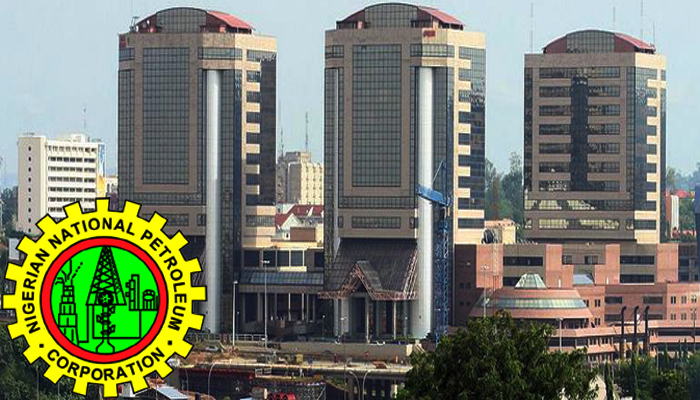
nnpc-tower

By Modupe Gbadeyanka

Group Managing Director of the Nigerian National Petroleum Corporation (NNPC), Dr Maikanti Baru, has disclosed that the Corporation was ready to grow the nation’s oil and gas reserves.

Mr Baru, speaking in Lagos on Tuesday, noted that the NNPC was taking advantage of the lower cost opportunities of crude oil prices in identifying additional reserves of the expected boom years that would definitely come due to the cyclical nature of the petroleum industry.

The NNPC boss maintained that his agency would continue to ring-fence exploration budgets in both Joint Venture and Production Sharing Contract arrangements to ensure there was work for all service providers in order to provide the needed impetus to grow the nation’s oil and gas reserves.

Dr Baru made these assertions while delivering a keynote address at the 34th Annual International Conference and Exhibition of the Nigerian Association of Petroleum Explorationists (NAPE) with the theme ‘Nigerian Oil and Gas Industry: Tackling Our Realities’.

“There is no need re-inventing the wheel. We are now progressing with the use of exploratory techniques that have worked on our neighbour’s side of the Basin to achieve similar results on our side.

“This will also provide a vista for NAPE and its professionals to further analyse the concept of oil generation, expulsion and entrapment in rift basins which we now know is different from the Niger Delta Basin that we are used to,” Mr Baru posited.

He declared that, “The NNPC will aggressively pursue domestic refining to take advantage of improved refining margin during periods of low oil prices.”

The NNPC boss explained that, “To address the current sub-optimal performance of the domestic refineries, a new rehabilitation strategy which includes the rehabilitation of refineries, modification of the refinery business model and governance structures that tie capital investment performance to actual refinery output are being pursued.”

In terms of security challenges, the NNPC helmsman appealed to those behind indiscriminate acts of infrastructure vandalism to put an end to the despicable acts forthwith, stressing that the destruction of critical energy infrastructure is a great threat to the economy, environment and energy security.

Conferring the highest NAPE Honorary Award on the GMD, the President of the Association, Mr Nosa Omorodion, described Mr Baru as a thorough bred professional who has impacted the industry positively assuring of NAPE’s readiness to continue to provide professional support for the Oil and Gas Industry.


Modupe Gbadeyanka is a fast-rising journalist with Business Post Nigeria. Her passion for journalism is amazing. She is willing to learn more with a view to becoming one of the best pen-pushers in Nigeria. Her role models are the duo of CNN's Richard Quest and Christiane Amanpour.

Click to comment

Leave a Reply

Your email address will not be published. Required fields are marked *

Economy

Naira Falls to N1,375/$1 at Official Market, N1,395/$1 at Parallel Market

Published

on

Naira parallel market

By Adedapo Adesanya

The Naira weakened by N7.48 or 0.55 per cent against the United States Dollar in the Nigerian Autonomous Foreign Exchange Market (NAFEX) on Tuesday, July 7, to N1,375.75/$1, in contrast to the previous day’s N1,368.27/$1.

Equally, the local currency fell against the Pound Sterling in the same official FX market yesterday by N14.66 to trade at N1,841.57/£1 versus Monday’s closing price of N1,826.91/£1, and against the Euro, it depreciated by N10.61 to close at N1,573.30/€1 compared with the preceding session’s N1,562.69/€1.

In the parallel market, the Nigerian currency lost N5 against the US Dollar during the trading day to settle at N1,395/$1 compared with the previous day’s N1,390/$1, and at the GTBank forex desk, it remained unchanged at N1,831/$1.

Liquidity fluctuations amidst sustained FX inflows from foreign portfolio investors, exporters, non-bank corporates and other sources weakened the Naira despite rising external reserves. Updated data showed that gross external reserves increased to $ 51.525 billion from $51.549 billion.

Daily interbank FX turnover stood at $54.180 million across 70 deals, from $70.430 million.

The Central Bank of Nigeria (CBN) signalled its intention in the first half of the year to slow the Naira rally and avoid capital flight by purchasing US Dollars from the market.

As for the cryptocurrency market, benchmarked tokens dipped following renewed strikes on Iran by the US after an attack on commercial ships in the Strait of Hormuz. The US Central Command forces said it began launching a series of powerful strikes against Iran to impose high costs for targeting and attacking commercial shipping crewed by innocent civilians in an international waterway.

The latest exchange of fire will test the fragile ceasefire as Iran struck back by targeting US bases in Bahrain and Kuwait. The renewed attacks in the Middle East have doused the flames of the recent rally, with markets losing $50 billion over the past 12 hours.

Cardano (ADA) fell by 5.8 per cent to $0.1695, Solana (SOL) dropped 3.4 per cent to sell at $78.24, Ripple (XRP) depreciated by 3.3 per cent to $1.08, Dogecoin (DOGE) declined by 3.2 per cent to $0.0724, and Binance Coin (BNB) slid by 1.9 per cent to $567.58.

Further, Ethereum (ETH) went down by 1.1 per cent to $1,751.40, Bitcoin (BTC) lost 0.8 per cent to quote at $62,538.88, and TRON (TRX) decreased by 0.4 per cent to $0.3289, while the US Dollar Tether (USDT) and the US Dollar Coin (USDC) traded flat at $1.00 each.

Continue Reading

Economy

FG Backs NNPC’s Move to Revamp Refineries

Published

on

bayo ojulari nnpc

By Adedapo Adesanya

The federal government has expressed support and commitment to the new efforts by the Nigerian National Petroleum Company (NNPC) Limited to rehabilitate the nation’s refineries.

The state oil company recently signed a Memorandum of Understanding (MoU) with two Chinese companies, Sanjiang Chemical Company Limited and Xinganchen (Fuzhou) Industrial Park Operation and Management Co. Limited, for collaboration through a potential Technical Equity Partnership in support of the completion and operation of the Port Harcourt and Warri Refineries.

The Minister of State for Petroleum Resources (Oil), Mr Heineken Lokpobiri, spoke at the official opening of the 2026 Nigeria Oil and Gas (NOG) Energy Week on Tuesday in Abuja.

“I was excited recently when I saw NNPC Bayo going to Warri with partners who are coming to help Nigeria rehabilitate the refineries in Warri and Port Harcourt.

“That is the right way to go. As for me, as Minister who is the chairman of the steering committee of refineries rehabilitation, I told Bayo you have my fullest support. You may not see me going to those refineries, but I am with you in spirit,” he said.

The minister also disclosed ongoing efforts to address one of the biggest complaints of investors in Nigeria’s oil and gas industry, announcing plans to streamline over 270 taxes, levies and regulatory charges blamed for driving up the cost of doing business and undermining investments.

The move came as indigenous oil producers warned that the multiplicity of charges has become a major threat to project viability and could force operators to abandon assets if left unchecked.

Mr Lokpobiri stated that the government had commissioned PricewaterhouseCoopers (PwC), in collaboration with the Nigerian Upstream Petroleum Regulatory Commission (NUPRC), to undertake a global benchmarking of Nigeria’s fiscal charges against those of competing oil-producing countries.

According to him, the exercise was part of efforts by the Tinubu administration to make Nigeria’s petroleum industry globally competitive and attract fresh investments.

“We have commissioned PwC to do a global benchmarking. Nigeria is committed to being globally competitive, so let us benchmark our fees and rates against other jurisdictions,” he said.

Mr Lokpobiri explained that operators currently contend with about 270 different taxes, fees and regulatory charges, many of which yield little revenue but create huge administrative bottlenecks.

“Sometimes when you hear that we have about 270 taxes, some of them are just a few cents. Instead of making companies process about 270 invoices, why don’t we aggregate them? The report will soon be ready, and I believe it will solve that problem once and for all.”

The minister said the initiative forms part of broader reforms aimed at improving the ease of doing business, noting that the government had consistently responded to concerns raised by industry stakeholders.

Also speaking at the event, the Minister of State, Petroleum Resources (Gas), Mr Ekperikpe Ekpo, reiterated that Nigeria was open for business, saying sweeping reforms, fiscal incentives and major infrastructure projects were positioning the country as a globally competitive destination for gas investment.

Mr Ekpo said the federal government was transforming Nigeria from a nation that merely possesses vast gas reserves into one powered by gas to drive industrialisation, energy security and economic growth.

“Our message to the global investment community is unified and resolute: Nigeria is open for business, and we have established a stable, competitive and highly predictable investment environment.”

Mr Ekpo noted that Nigeria’s 215 trillion cubic feet of proven gas reserves, the largest in Africa, would be leveraged not only for exports but also to power domestic industries, fertiliser and petrochemical plants, transportation and clean cooking initiatives under the government’s Decade of Gas programme.

He highlighted ongoing strategic infrastructure projects, including the Ajaokuta-Kaduna-Kano (AKK) and OB3 gas pipelines, as well as new gas processing facilities aimed at expanding domestic supply, reducing gas flaring and increasing the availability of liquefied petroleum gas (LPG).

The minister also reaffirmed the government’s commitment to expanding Nigeria’s liquefied natural gas export capacity through the NLNG Train 7 project, which will increase production capacity from 22 million tonnes per annum to 30 million tonnes annually upon completion.

He added that the government was accelerating the National Clean Cooking Programme, which targets five million households by 2030, and the Presidential Compressed Natural Gas (CNG) Initiative aimed at reducing transportation costs and expanding domestic gas utilisation.

Reinforcing the reform agenda, the Special Adviser to the President on Energy, Mrs Olu Verheijen, said Nigeria was now competing for investments on the strength of policy credibility rather than the size of its hydrocarbon reserves.

“The competition is no longer geology against geology. It is government against government. It is rules against rules. It is delivery against delivery,” she said.

Mrs Verheijen disclosed that reforms introduced by the Tinubu administration had already attracted more than $10 billion in Final Investment Decisions (FIDs), while investment projects worth over $50 billion were currently in the pipeline.

She added that Nigeria’s crude oil and condensate production had increased by more than 400,000 barrels per day, while external reserves had exceeded $50 billion.

“Capital is no longer sentimental. It asks one question: Can this country turn resources into bankable projects, and bankable projects into reliable returns?” she asked.

Continue Reading

Economy

Investors Gain N1,865trn as All-Share Index Rises 1.24%

Published

on

All-Share Index NGX

By Dipo Olowookere

Positive momentum was sustained on the floor of the Nigerian Exchange (NGX) Limited on Tuesday on the back of selling pressure by investors, keeping the bourse afloat by 1.24 per cent at the close of business.

It was observed that all the key sectors of Customs Street closed higher during the trading session, with the industrial goods index being the outperformer after it chalked up 3.36 per cent. The insurance counter appreciated by 1.18 per cent, the energy segment jumped 0.60 per cent, the consumer goods sector grew by 0.49 per cent, and the banking space improved by 0.07 per cent.

Consequently, the All-Share Index (ASI) went up by 2,905.05 points to 237,083.28 points from 234,178.23 points, and the market capitalisation added N1.865 trillion to close at N152.136 trillion compared with the previous day’s N150.271 trillion.

Zichis and Cadbury Nigeria gained 10.00 per cent each yesterday to sell for N26.62 and N61.60, respectively, NAHCO appreciated by 9.99 per cent to N147.00, DAAR Communications increased by 9.94 per cent to N1.99, and Caverton soared by 9.90 per cent to N5.55.

On the flip side, Critical Minerals Financing Corp (formerly Deap Capital) lost 10.00 per cent to trade at N3.33, Trans-Nationwide Express declined by 10.00 per cent to N2.70, Fortis Global Insurance also weakened by 10.00 per cent to N2.61, Ecobank crashed by 9.98 per cent to N85.70, and Mecure fell by 9.96 per cent to N85.45.

The activity level was down during the trading day after market participants traded 493.7 million equities valued at N28.0 billion in 49,969 deals compared with 538.6 million equities worth N38.7 billion completed in 64,065 deals on Monday, showing a decline in the trading volume, value, and number of deals by 8.34 per cent, 27.65 per cent, and 22.00 per cent, respectively.

Zenith Bank was the busiest stock yesterday, trading 94.3 million units worth N9.9 billion. Fidelity Bank transacted 32.6 million units valued at N587.4 million, Sterling Holdings exchanged 28.6 million units for N218.1 million, Linkage Assurance sold 18.9 million units worth N28.6 million, and Jaiz Bank traded 15.3 million units valued at N123.6 million.

Continue Reading

Trending