Economy
Normalcy Returns as Petrol Tanker Drivers Suspend Planned Strike
By Adedapo Adesanya
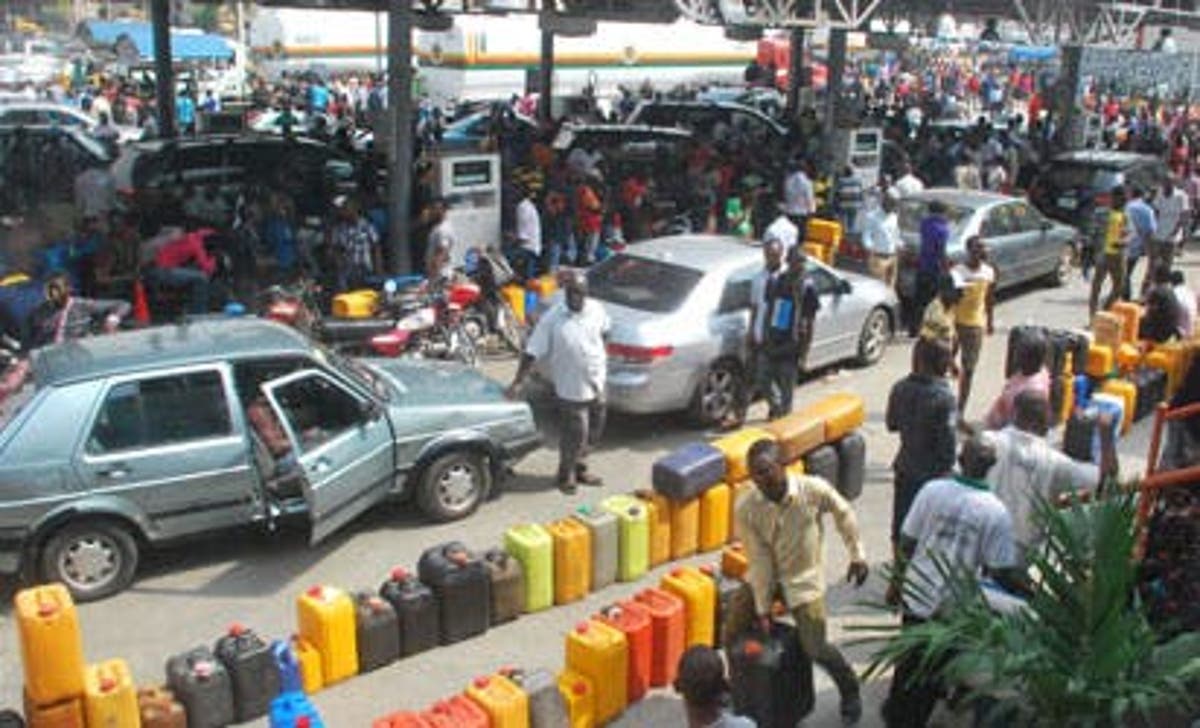
Relative ease has returned to some parts of Nigeria already witnessing queues at petrol stations as the National Union of Petroleum and Gas Workers (NUPENG) suspended the planned strike by its affiliate member, Petroleum Tanker Drivers (PTD).
Business Post had reported that the strike, which would have kicked off this morning, was shelved because of the intervention by the federal government.
The South-West Zonal Chairman of NUPENG, Mr Tayo Aboyeji, said in Lagos that the suspension was to allow the union’s representatives and that of the government to address the issues at stake.
He said, “The leadership of the union after a brief meeting with representatives of government decided to suspend the strike in the interest of the nation.
“The meeting with the government continues during the week with the assurance that the union grievances will be positively addressed.”
NUPENG had said last week that the tanker drivers would commence strike on Monday over the deplorable state of the nation’s highways and other issues.
Mr Aboyeji said the union has lost many lives and property due to bad roads.
“This is not the first time that we will signify our intention to go on strike but we have to call it off because it will generally affect the majority of Nigerians but now our hands are tied,” he said.
The first call was from the Nigerian National Petroleum Corporation (NNPC) on Sunday, which appealed to the drivers to immediately shelve their planned strike in order not to further hurt the economy and Nigerians in general.
Mr Garba Deen, the NNPC spokesman, made the appeal in a statement in Abuja.
“While it is not the responsibility of the NNPC to build or rehabilitate roads, the national oil company reckons that any disruption in the distribution of petroleum products to different parts of Nigeria will adversely affect the business of the NNPC.
“It will also endanger energy security, which the country has enjoyed in recent times.
“In recognition of this, the NNPC wishes to assure the petroleum tanker drivers that in addition to the ongoing efforts by other agencies of government, the NNPC has initiated a process that will provide a quick and effective solution to the road network challenges as expressed by the PTD.
“We urge PTD to immediately call off the (planned) strike and give the current efforts by the government and its agencies a chance to solve the challenges in the interest of all.
“We also wish to strongly advise Nigerians not to engage in panic buying of petroleum products as the NNPC has sufficient stock to last through this festive season and beyond,” he said.
Economy
Dangote Refinery Targets Congo in Regional Expansion Push
By Adedapo Adesanya
Dangote Petroleum Refinery & Petrochemicals has advanced talks with the Société Nationale des Pétroles du Congo (SNPC) on a strategic partnership to supply refined petroleum products to the Republic of the Congo, in a move aimed at expanding its regional footprint.
The talks followed a visit by an SNPC delegation to the Dangote Refinery in Lekki, Lagos, led by the Congo state oil company’s Managing Director, Mr Maixent Raoul Ominga.
During the visit, Mr Ominga described the refinery as one of Africa’s most significant industrial achievements and said the Congolese national oil company was interested in building a long-term partnership with Dangote.
According to Mr Ominga, discussions centred on opportunities for collaboration in crude refining, petroleum products supply, energy security, industrial development and technical knowledge exchange. He noted that although the Republic of the Congo has its own refining capacity, working with Dangote would strengthen fuel supply, improve value creation and deepen cooperation between the two organisations.
The SNPC chief also praised the Dangote Group for demonstrating that African companies can finance, build and operate world-class industrial infrastructure.
He further commended the group’s investments in Congo’s cement industry, saying they have expanded local production capacity and improved the availability of construction materials.
On his part, the chief executive of Dangote Industries Limited, Mr Aliko Dangote, reaffirmed the company’s commitment to Africa’s industrialisation agenda through regional partnerships and value addition.
“We are for Africa, not just Nigeria. Tell us what you need, and we will see how we can work together,” Mr Dangote said.
He added that the Dangote Refinery has established a new benchmark for fuel quality on the continent by producing petroleum products that meet international specifications, while helping African countries reduce dependence on imported refined fuels from outside the continent.
Group Vice President, Oil and Gas, Dangote Industries Limited, Mr Devakumar Edwin, outlined the company’s long-term expansion strategy, revealing plans to increase its total refining capacity to 2.1 million barrels per day. The expansion will comprise 1.4 million barrels per day in Nigeria and a proposed 700,000-barrel-per-day refinery in Kenya to serve East African markets.
Mr Edwin also disclosed that the Dangote Group plans to invest an additional $46 billion between 2026 and 2028 across its refining, cement and fertiliser businesses as part of its broader strategy to accelerate industrialisation across Africa.
Economy
Unilever, NASCON Join NGX 30 Index as Oando, Transcorp Exit
By Aduragbemi Omiyale
The duo of Oando Plc and Transcorp Plc have been evicted from the NGX 30 Index by the Nigerian Exchange (NGX) Limited in the 2026 half-year review of market indices.
In a statement from Customs Street on Wednesday, it was disclosed that Unilever Nigeria Plc and NASCON Plc are the new members of the elite index.
Designed using the market capitalisation methodology, NGX indices are reviewed semi-annually on the first business day of January and July to ensure they remain aligned with evolving market dynamics and international best practices.
The exchange reserves the right to make further adjustments where necessary in the event of mergers, acquisitions, trading suspensions, resumptions or other corporate actions prior to the effective date of an index review.
Business Post reports that the consumer goods, banking, insurance, industrial goods, energy, pension, and pension broad indices did not witness any entry or exit.
However, the Lotus Islamic index saw the inclusion of Nestle Nigeria and Cadbury Nigeria and the exit of NASCON. Stanbic IBTC Holdings was added to the Afrinvest Bank Value index, with Access Holdings leaving the Afrinvest Div Yield index after the inclusion of Seplat Energy, Fidelity Bank, Stanbic IBTC Holdings, Custodian Investment, and NAHCO.
Further, the Meristem Growth index welcomed Eterna and PZ Cussons and bid farewell to BUA Cement, GTCO, AXA Mansard Insurance, NAHCO, NASCON, Okomu Oil, HBM Nigeria (Lafarge Africa) and Wema Bank.
As for the Meristem Value index, the NGX added Chemical and Allied Products, Honeywell Flour Mills, Dangote Cement, Linkage Assurance, Livestock Feeds, NASCON, Okomu Oil, and TotalEnergies, but removed Ecobank, Guinness Nigeria, and Zenith Bank.
Economy
IMF Says Nigeria Omitted Public Spending Worth 2% of GDP From Budgets
By Adedapo Adesanya
The International Monetary Fund (IMF) has revealed that Nigeria had about 2 per cent of GDP worth of public spending not recorded in recent official budgets, creating a gap between its reported deficit and actual financing needs.
IMF resident representative in Nigeria, Mr Christian Ebeke, said on Wednesday, during a session with business executives in Lagos, the country’s commercial capital.
The discrepancy means the country’s fiscal deficit appears smaller than the level of borrowing, because some capital spending was not included in budget documents or implementation reports.
Mr Ebeke said these unreported expenditures are linked, in part, to large government projects carried out off-budget, distorting assessments of Nigeria’s fiscal stance and public investment levels.
“So far, we think that there are about 2 per cent of GDP of expenditure that were not reported that should be reported and should be recorded, so that this statistical discrepancy will disappear,” said Mr Ebeke.
The lack of full reporting can also complicate coordination between fiscal and monetary policy, as policymakers may not have a clear picture of the true deficit, he added.
Mr Ebeke also clarified that the Nigerian government has begun addressing the issue by repealing and revising recent budget laws to incorporate previously unrecorded spending, though updated implementation reports are still needed.
He added that improving transparency is critical, noting that off-budget spending raises concerns about procurement processes and oversight.
In its latest Article IV review, the IMF praised Nigeria’s sweeping reforms, saying they had strengthened economic stability and investor confidence, but warned that the benefits had yet to reach millions of citizens and could be undermined by global shocks, including the Middle East conflict.
According to the Bretton Woods institution, the implementation of Nigeria’s new tax laws should gradually increase revenue collection, while the use of digital tools to track, verify and collect revenues could reduce leakages and corruption vulnerabilities.
The IMF said higher revenues would create fiscal space for development projects and social spending, but warned that the timing of any additional taxes should take into account the country’s worsening social conditions.
-
Feature/OPED6 years agoDavos was Different this year
-
Travel/Tourism10 years ago
Lagos Seals Western Lodge Hotel In Ikorodu
-
Showbiz3 years agoEstranged Lover Releases Videos of Empress Njamah Bathing
-
Banking8 years agoSort Codes of GTBank Branches in Nigeria
-
Economy3 years agoSubsidy Removal: CNG at N130 Per Litre Cheaper Than Petrol—IPMAN
-
Banking3 years agoSort Codes of UBA Branches in Nigeria
-
Banking3 years agoFirst Bank Announces Planned Downtime
-
Sports3 years agoHighest Paid Nigerian Footballer – How Much Do Nigerian Footballers Earn