
Economy
NSE Hosts Real Estate Investment Trust Summit



By Modupe Gbadeyanka
On Tuesday, May 23, 2017, the Nigerian Stock Exchange (NSE) will host the maiden edition of its Real Estate Investment (REIT) Conference at the NSE Event Centre, Stock Exchange House in Lagos.
Executive Director, Capital Markets of the NSE, Mr Haruna Jalo-Waziri, noted that the REIT Conference is an important meeting of stakeholders to dimension the current state of the real estate sector and to be acquainted with relevant emerging trends, strategies and policies.
The conference themed ‘Real Estate Investment Trust in sub-Sahara Africa: The role of The Capital Market’ will bring together key decision-makers, policy-makers, government officials, private sector players, property developers, asset managers, dealing members, investors and thought leaders to share experiences and explore growth potentials and opportunities inherent in the REITs market in Nigeria and Sub–Sahara Africa.
According to Mr Jalo-Waziri, “One of our aims with the conference is to discuss topical and regulatory issues affecting the REITs within the capital markets and real estate ecosystem as well as proffer strategic solutions for follow up implementation by the NSE in its capital market advocacy role.
“The thought provoking agenda to be discussed at the conference will give participants greater insights and information to the latest industry and global best practices trends in Real Estate investment and its value chain.”
The conference will provide participants an opportunity to listen and engage key industry experts, key regulators, renowned international and local market operators and thought leaders in the real estate sector.
The format will consist of keynote addresses, panel discussions and select topical presentations by industry experts.
The guest speakers and panel discussants include Mr Mounir Haliru Gwarzo, Director General of SEC; Mr Babatunde Fowler, Executive Chairman, Federal Inland Revenue Service (FIRS); Professor Charles Inyangete, CEO, Nigerian Mortgage Refinancing Company; Ahmed Lawan Kuru, Managing Director, AMCON; and Haruna Jalo – Waziri, Executive Director, Capital Markets, NSE.
Others are Tinuade Awe, General Counsel & Head Regulation, NSE; Ehimeme Ohioma, Head Investment Supervision, PENCOM; Kenneth Masika Chief Executive Officer STANLIB Fahari I-REIT, Nairobi, Kenya; Olumayowa Ogunwemimo, Managing Director, FSDH Asset Management; Adeniyi Adeleye Head, Real Estate Finance (West Africa) for the Standard Bank; Taiwo Oyedele Partner, PwC West Africa Tax Leader; and Yinka Edu, Partner, Udo Udoma & Belo-Osagie.
Also expected are Tolu Sokenu, Investment Principal, Actis; Mr Hakeem Ogunniran, Managing Director/Chief Executive, UPDC PLC; Aishetu Dozie, Head Investment Banking Division, Rand Merchant Bank Nigeria; Mr Kola Ashiru-Balogun, Managing Director, MIXTA Nigeria; and Tola Akinhanmi, Real Estate Debt Structuring and Advisory Stanbic IBTC Capital.
In 2007, SEC issued the first set of guidelines for the registration and issuance of requirements for the operation of REITs in Nigeria as detailed in the Investment and Securities Act (ISA).
This has led to the listing of three REITs companies with a market capitalization of about 40 billion naira as May 10, 2017.
Currently one REITs offer is about to be concluded and should be listed on the NSE this year.
REITs are investment vehicles that can be traded on a stock exchange and are primarily involved in investing and owning income-generating real estate assets.
They allow both small and large investors to invest in portfolios of large-scale properties without actually having to go through the rigors of buying or financing property.
The 2017 REITs conference is sponsored by Stanbic IBTC Holdings Plc, FSDH Asset Management Limited, PricewaterhouseCoopers (PWC), United Property Development Company (UPDC) Plc, Rand Merchant Bank (RMB) Nigeria Limited, Udo Udoma & Belo-Osagie and Mixta Nigeria.
Interested participants can register online for this non-fee paying conference at http://www.nse.com.ng/NSE-REITs-Conference.




By Adedapo Adesanya
The Central Bank of Nigeria (CBN) has moved to tighten credit discipline across the banking sector, directing all financial institutions to deny additional loans and banking facilities to large borrowers whose existing loan obligations are classified as non-performing.
The directive, issued in a circular dated March 12, 2026, was signed by Mrs Olubukola Akinwunmi, Director of Banking Supervision, and addressed to all deposit money banks operating in the country.
Under the new policy, any borrower whose loan facility is recorded as non-performing in the Credit Risk Management System (CRMS), the CBN’s centralised credit database, or flagged by any licensed private credit bureau, will be immediately ineligible for new credit.
The measure takes effect without transition, applying across all banks simultaneously.
The apex bank’s restrictions extend beyond direct lending. Affected borrowers will also be denied access to contingent banking facilities, including bankers’ confirmations, letters of credit, performance bonds, and advance payment guarantees, instruments commonly used in trade finance and large-scale commercial transactions.
Banks have additionally been directed to obtain further realisable collateral from affected obligors to adequately secure their existing exposures.
The apex bank did not specify a timeline within which this additional collateral must be obtained.
The CBN defines large-ticket obligors as borrowers whose combined exposures across all banks exceed the Single Obligor Limit, or whose outstanding obligations materially affect a bank’s Capital Adequacy Ratio (CAR) or otherwise pose systemic risks to the broader financial system.
The policy is grounded in Clause 3.2(d) of the Prudential Guidelines for Deposit Money Banks.
The identification of such obligors will be based on data captured in the CRMS and reports from licensed private credit bureaus, according to the circular.
In issuing the directive, the CBN cited the heightened risk that large non-performing obligors pose to individual banks and the wider financial system.
The regulator stated that the new framework is designed to limit contagion risks and reinforce responsible lending practices across the sector.
The move reflects a broader regulatory effort to address the rise in non-performing loans (NPLs) within Nigeria’s banking sector and to ensure that institutions with significant credit exposures to distressed borrowers are not further endangered by extending new facilities to the same counterparties.
Compliance is expected from all deposit money banks with immediate effect.
The CBN did not outline specific sanctions for non-compliance in the circular, though supervisory penalties under the Banks and Other Financial Institutions Act (BOFIA) 2020 would ordinarily apply.
By Aduragbemi Omiyale
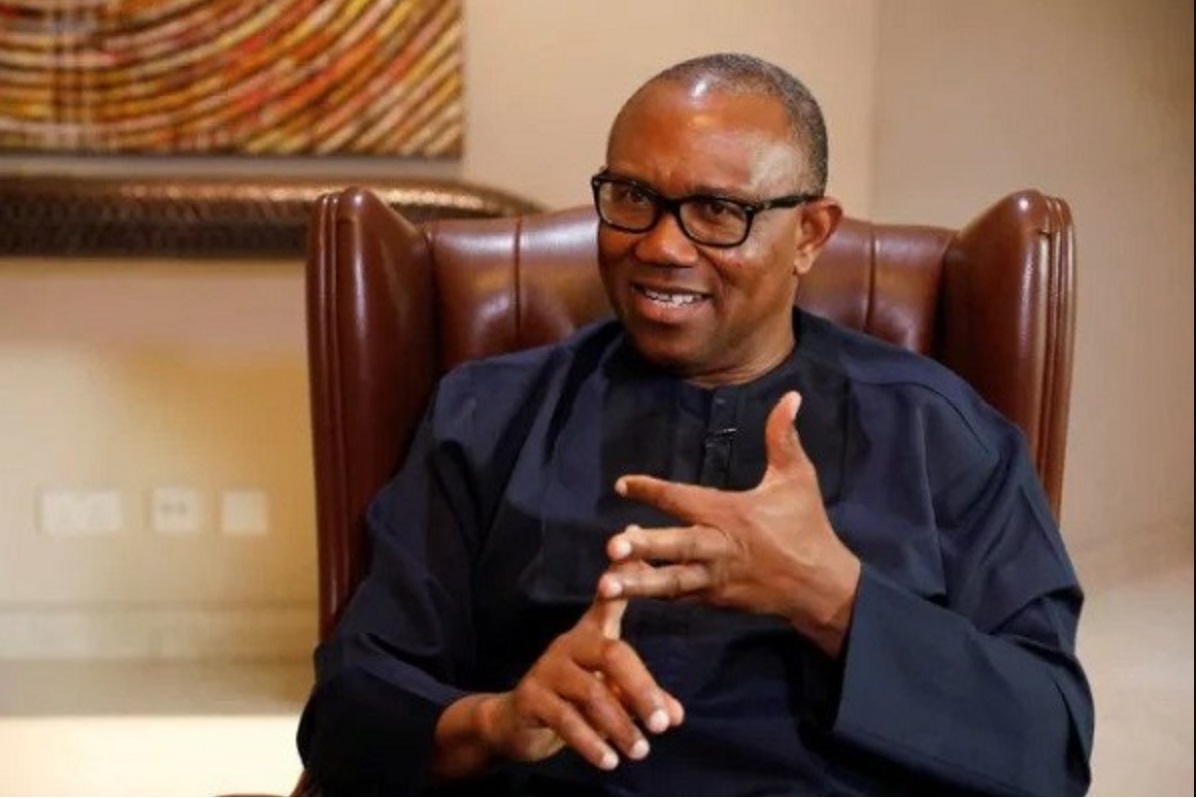
The presidential candidate of the Labour Party (LP) in the 2023 general elections, Mr Peter Obi, has blamed the federal government for the high energy costs in Nigeria.
In a post, the former Anambra State Governor said if the central government, led by President Bola Tinubu, had planned for the future, Nigerians would not be paying through their nose for premium motor spirit (PMS), otherwise known as petrol, and Automotive Gas Oil (AGO), also known as diesel.
Disruption in the supply of crude oil on the global market has caused consumers to pay more for petrol and diesel in the country.
The United States and Israel waged war against Iran, killing its Supreme Leader, Ayatollah Ali Khamenei, about two weeks ago in airstrikes.
This has triggered tension in the Middle East, with Iran firing missiles at its neighbours, and closing the Strait of Hormuz, a small water path between Iran and Oman, where one-fifth of global crude oil supply passes through.
Before the crisis, PMS was selling at N835 per litre and crude oil was below $90 per barrel. But oil rose above $100 per barrel, causing the price of petrol in Nigeria to hit over N1,200 per litre.
Reacting to the development, Mr Obi said Nigeria felt the shock despite not being attacked because the government failed to plan.
“Many people wonder why any adverse development in the global economy quickly impacts Nigeria. A recent example is the tension involving Iran, which led to an increase in global oil prices and, subsequently, a rise in petroleum prices in Nigeria.
“A few weeks ago, petrol was selling for less than N1,000 per litre, but today it costs over N1,200 per litre. Diesel, which was also priced below N1,000 per litre, is now over N1,500 per litre. These rapid increases illustrate how quickly external shocks can affect the Nigerian economy.
“The reason for this is straightforward: most countries, whether they are oil-producing or non-oil-producing, maintain strategic petroleum reserves to cushion against supply or price shocks. This means that when there is a disruption in the global oil market, they can release part of these reserves to stabilise supply. However, Nigeria lacks such a buffer, so the impact is felt almost immediately.
“The underlying issue is a lack of planning. Countries that engage in planning create buffers against shocks, while those that do not remain vulnerable to them. The old maxim remains true: when a country fails to plan, it has already planned to fail,” he wrote.
Earlier this week, the Minister of Finance, Mr Wale Edun, said the country’s economy was strong enough to absorb external shocks, saying the over 4 per cent growth in the gross domestic product (GDP) in the fourth quarter of last year was a testament to that.

By Adedapo Adesanya
The Chairman of the National Tax Policy Implementation Committee (NTPIC), Mr Joseph Tegbe, has reiterated that Nigeria’s new tax regime is designed to ease the burden on workers and small businesses while strengthening the country’s fiscal sustainability and economic competitiveness.
Speaking at the BusinessDay Tax Reform Conference 2026, themed “Navigating the New Tax Regime: What It Means for Your Wallet,” Mr Tegbe described the reforms as the most comprehensive overhaul of Nigeria’s tax architecture in decades, aimed at simplifying taxation, improving fairness, and encouraging economic growth.
According to him, the reforms, anchored on four landmark legislations: the Nigeria Tax Act, 2025, Nigeria Tax Administration Act, 2025, Nigeria Revenue Service (Establishment) Act, 2025, and the Joint Revenue Board of Nigeria (Establishment) Act, 2025, introduce targeted reliefs for individuals and small businesses.
Under the new framework, individuals earning less than N800,000 annually will pay no personal income tax, while workers can claim rent relief of up to 20 per cent, capped at N500,000, among other reliefs.
He also said small businesses will benefit significantly, with companies earning below N100 million in annual revenue and with assets under N250 million exempted from Company Income Tax (CIT), while nano-enterprises earning below N12 million annually are exempted from income tax.
He, however, underscored the importance of proper documentation of earnings and subsequent filing of returns, even for those who fall within the threshold exempted from income tax.
“These reforms are designed to make taxation simpler, fairer, and more predictable for Nigerians,” he said, adding that “For most workers and small businesses, the new regime means paying the same or even lower taxes while operating within a more transparent system.”
The reforms also strengthen Nigeria’s tax administration through improved coordination among key institutions, including the Nigeria Revenue Service, the Joint Revenue Board of Nigeria, the Tax Appeal Tribunal, and the Office of the Tax Ombudsman, while accelerating the digitalisation of tax processes.
Mr Tegbe noted that beyond improving revenue efficiency, the reforms aim to create a tax system that supports enterprise, investment, and long-term economic growth.
“The ultimate objective is to build a tax system that works for both government and citizens, one that supports development while protecting the pockets of ordinary Nigerians,” he concluded











-
 Feature/OPED6 years ago
Davos was Different this year
-
Travel/Tourism10 years ago
Lagos Seals Western Lodge Hotel In Ikorodu
-

 Showbiz3 years ago
Estranged Lover Releases Videos of Empress Njamah Bathing
-
 Banking8 years ago
Sort Codes of GTBank Branches in Nigeria
-

 Economy3 years ago
Subsidy Removal: CNG at N130 Per Litre Cheaper Than Petrol—IPMAN
-

 Banking3 years ago
Sort Codes of UBA Branches in Nigeria
-

 Banking3 years ago
First Bank Announces Planned Downtime
-

 Sports3 years ago
Highest Paid Nigerian Footballer – How Much Do Nigerian Footballers Earn