
Economy
Oil Prices Jump 5% as Hormuz Attacks Intensify Supply Fears

By Adedapo Adesanya
Oil prices appreciated by nearly 5 per cent on Wednesday as fresh attacks on ships in the Strait of Hormuz worsened supply disruption fears.
Brent futures gained $4.18 or 4.8 per cent to settle at $91.98 a barrel, while the US West Texas Intermediate (WTI) futures increased by $3.80 or 4.6 per cent to $87.25 a barrel.
Three more vessels have been hit by projectiles in the Strait of Hormuz, maritime security and risk firms said on Wednesday. That brought the number of ships struck in the region to at least 14 since the Iran war began.
Iran warned that no oil shipments will be allowed to pass through the Strait of Hormuz until the attacks stop, placing the world’s most critical oil trade point at the centre of the escalating conflict. The narrow waterway between Iran and Oman normally handles roughly 20 per cent of global oil supply and a large share of liquified natural gas (LNG) trade, making any sustained disruption a major threat to global energy markets.
Tanker movements through the region have already begun slowing as insurers and ship operators reassess the risks of transiting the corridor.
The country, which is one of the largest producers in the Organisation of the Petroleum Exporting Countries, on Wednesday said that crude could surge to $200 per barrel if the war involving the US and Israel continues to destabilise the Middle East’s energy corridors.
Crude briefly surged to around three digits earlier this week before retreating toward the $90 range after US President Donald Trump suggested the conflict might end soon. However, renewed attacks on shipping and infrastructure have quickly revived fears of supply disruptions.
Meanwhile, the International Energy Agency (IEA) recommended the release of 400 million barrels of oil, the largest such move in its history, to try to rein in energy prices, which are now up more than 25 per cent since the war began. The energy watchdog said the time frame for the release will be decided in due course.
The proposed volume is more than double the 182 million barrels released in 2022 following Russia’s invasion of Ukraine. Analysts, however, said it was ultimately insufficient to resolve supply losses from a prolonged war in the Middle East.
Member countries collectively hold roughly 1.2 billion barrels of strategic reserves, which can be tapped during supply emergencies.
Crude oil inventories in the US increased by 3.8 million barrels during the week ending March 6, according to data from the US Energy Information Administration (EIA). The EIA’s data release follows figures from the American Petroleum Institute (API) that were released a day earlier, which reported that crude oil inventories fell by 1.7 million barrels in the period.



By Adedapo Adesanya
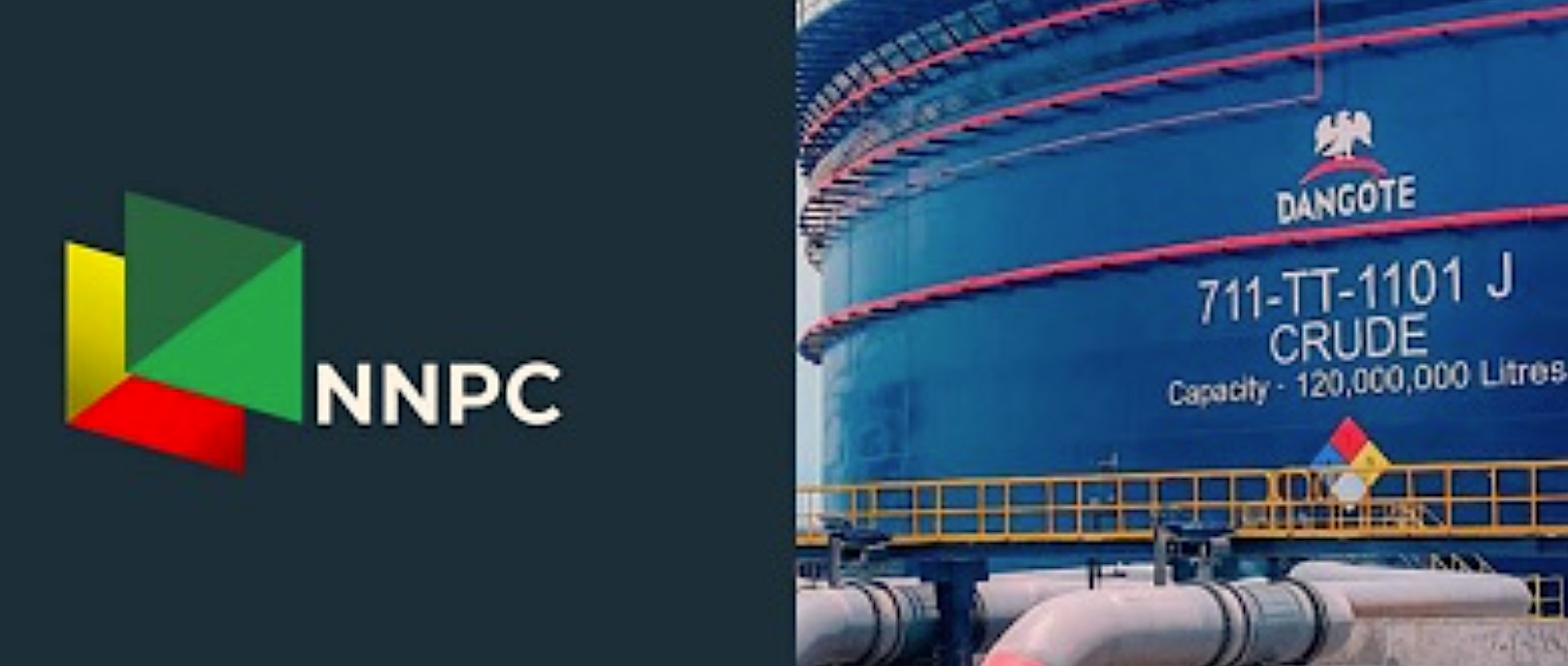
The Nigerian National Petroleum Company (NNPC) Limited has allocated seven cargoes to the Dangote Refinery and Petrochemicals for May 2026, up from five in previous months, to boost fuel production and ease rising costs.
The 650,000 barrels per day Dangote Refinery, which is responsible for over 60 per cent of domestic supply, has not been able to get its expected feedstock from the national oil company under the Crude-for-Naira initiative. It has received about 40 per cent of local feedstock in recent months, according to the chief executive of the oil refinery, Mr David Bird.
He said the refinery currently gets only about five cargoes of crude monthly, against an expected 13 to 15 cargoes, noting that this was below its agreed crude oil supply under the federal government’s Crude-for-Naira arrangement.
Business Post reports that the majority of Nigeria’s crude production is tied to Joint Venture (JV) contracts, which constrain the optimal supply of crude oil to the Dangote Refinery.
According to Reuters, an unnamed senior Dangote official said, “NNPC has allocated more cargoes to Dangote for May,” adding that, “While this will not completely meet our demands, it can help. We are also in negotiation with NNPC for more volumes.”
The increase in crude allocations to the 650,000 barrel per day refinery could also curb volumes of Nigerian crude available for export at a time when the Iran war has drastically cut supply from the Middle East.
Due to the shortfall in the crude-for-Naira policy, the company will still have to purchase crude at international benchmark prices. The company sources crude from Brazil, Equatorial Guinea, Angola, Algeria, and the US, among others.
The official said Dangote recently had to pay premiums as high as $18 a barrel over the Brent crude benchmark to secure cargoes from the international market.
Since NNPC cargoes are cheaper for the refinery because of lower shipping costs. This could translate to higher fuel prices with Nigerians buying as high as N1,300 – N1,400 at the pump.
Fuel prices in Nigeria have reached record highs as Dangote has had to increase petrol depot prices by about 13 per cent in the last month.


By Aduragbemi Omiyale
The Nigerian private sector witnessed a contraction in growth in March 2026, as higher fuel costs triggered by the war in Iran, instigated by the United States and Israel, led to a steep intensification of inflationary pressures.
According to the Stanbic IBTC Purchasing Managers’ Index (PMI) for the month, it stood at 51.9 points compared with 53.2 points recorded in February 2026.
In the period under review, output growth was only modest, but underlying demand reportedly remained resilient, leading to a further sharp rise in new orders. In turn, firms continued to expand their employment and purchasing activity.
The PMI numbers in the first quarter of this year have been consistent with an estimated 3.99 per cent y/y GDP growth for the quarter, after also accounting for the crude oil sector’s performance.
The Nigerian economy is now growing by 4.22 per cent y/y in 2026, from 3.87 per cent y/y in 2025, with the oil sector growth slowing to 3.01 per cent y/y from 8.50 per cent y/y in the preceding year. The non-oil sector’s growth is expected at 4.24 per cent y/y in 2026, from 3.71 per cent y/y in 2025, likely driven primarily by services, which we see growing by 5.64 per cent y/y in 2026 versus 4.14 per cent y/y in 2025.
“While higher fuel costs and power supply issues contributed to a slowdown in the growth of Nigeria’s private sector activity, underlying demand remains strong. This is reflected in an increase in customer demand and the associated impact of new product launches, both of which supported an improvement in new orders.
“Businesses also remained optimistic about increases in future output amid their plans to invest in business expansions and boost promotional efforts. Nonetheless, input prices rose markedly at the sharpest pace since January 2025, with all four monitored sectors seeing sharper rates of inflation,” the Head of Equity Research West Africa at Stanbic IBTC Bank, Muyiwa Oni, commented.
By Adedapo Adesanya
The Minister of Finance and Coordinating Minister of the Economy, Mr Wale Edun, has raised concern over Africa’s mounting revenue losses, warning that the continent forfeits an estimated $88 billion annually to illicit financial flows (IFFs), a development he described as a critical threat to sustainable growth.
Speaking at the 5th Session of the Sub-Committee on Tax and Illicit Financial Flows of the African Union on Tuesday in Abuja, Mr Edun said the persistent outflows continue to deprive African countries of vital resources required for infrastructure, healthcare, and overall economic development.
The high-level meeting, held at Transcorp Hilton Abuja, brought together policymakers, tax administrators, and development partners to examine strategies for strengthening fiscal systems amid evolving global economic uncertainties.
Mr Edun stressed the need for African countries to reduce reliance on external financing sources such as debt, aid, and foreign investment, noting that these options are becoming increasingly unpredictable. He maintained that domestic resource mobilisation must serve as the foundation for long-term economic sustainability.
“Our ambition is to finance up to 90 per cent of Africa’s development needs from domestic resources,” he said, referencing the continent’s Agenda 2063 development framework.
He identified structural challenges, including tax evasion, weak institutional capacity, and limited economic diversification, as key impediments, while emphasising that curbing illicit financial flows remains central to unlocking Africa’s fiscal potential.
Highlighting ongoing reforms under President Bola Tinubu, Mr Edun noted that measures such as tax system reforms, fuel subsidy removal, and exchange rate unification are beginning to improve revenue performance and boost investor confidence.
He added that initiatives like the National Single Window are helping to reduce trade-related leakages, while enhanced international tax cooperation is supporting efforts to recover lost revenues. He also cited Executive Order 9 as a key policy aimed at strengthening transparency in the oil and gas sector.
Calling for broader continental action, Mr Edun urged African nations to expand their tax base, strengthen public financial management systems, and deepen financial inclusion. He listed institutional strengthening, digital infrastructure investment, and cross-border collaboration as critical reform priorities.
“The question is no longer whether we must reform, but how urgently and how boldly we act,” he said, warning that failure to act could leave African economies exposed to external shocks.
On his part, the Executive Chairman of the Nigeria Revenue Service, Mr Zacch Adedeji, called for urgent steps to safeguard domestic resources and address widening financing gaps across the continent.
Mr Adedeji noted that illicit financial flows ranging from tax evasion and trade mispricing to aggressive tax avoidance continue to weaken Africa’s capacity to fund critical sectors such as infrastructure, healthcare, and education.
“Every year, billions meant for development are lost through illegal financial transfers. These are lost hospitals, lost schools, and lost opportunities,” he said.
He stressed that the cross-border nature of illicit flows requires coordinated responses at both national and continental levels, adding that Nigeria is pursuing reforms to modernise revenue administration through expanded tax coverage, improved compliance, and digital innovation.
According to him, efficient and transparent tax systems are essential not only for revenue generation but also for strengthening public trust in government institutions.











-
 Feature/OPED6 years ago
Davos was Different this year
-
Travel/Tourism10 years ago
Lagos Seals Western Lodge Hotel In Ikorodu
-

 Showbiz3 years ago
Estranged Lover Releases Videos of Empress Njamah Bathing
-
 Banking8 years ago
Sort Codes of GTBank Branches in Nigeria
-

 Economy3 years ago
Subsidy Removal: CNG at N130 Per Litre Cheaper Than Petrol—IPMAN
-

 Banking3 years ago
Sort Codes of UBA Branches in Nigeria
-

 Banking3 years ago
First Bank Announces Planned Downtime
-

 Sports3 years ago
Highest Paid Nigerian Footballer – How Much Do Nigerian Footballers Earn