Connect with us

Economy

Petrol Pricing: CNPP Accuses NNPC of Economic Sabotage

Published

on

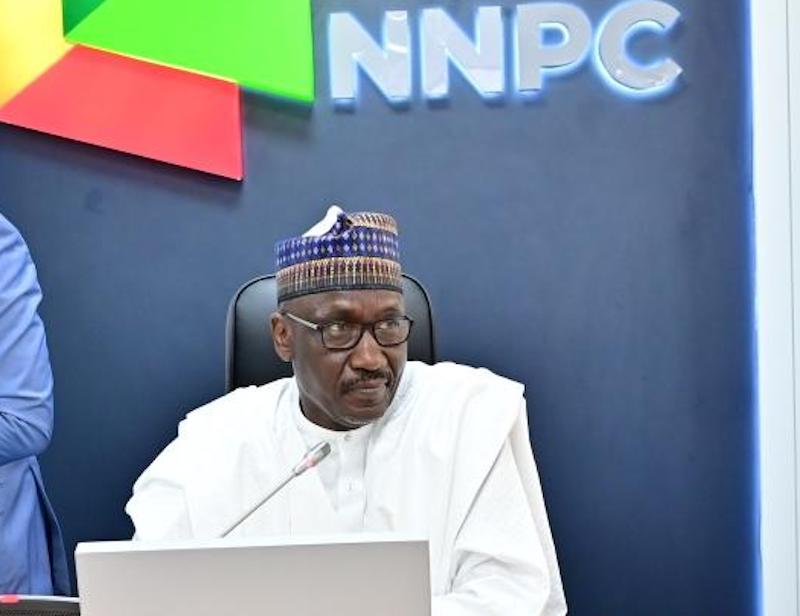
Mele Kyari NNPC ceo

By Aduragbemi Omiyale

The Conference of Nigeria Political Parties (CNPP) has again hit hard at the Nigerian National Petroleum Company (NNPC) Limited, accusing it of economic sabotage.

In a statement signed by its Deputy National Publicity Secretary, Mr James Ezema, the group claimed the state-owned oil agency has continued to hold the nation to ransom over its interference in the distribution of locally refined petroleum products.

CNPP, in the statement made available to Business Post, expressed deep concern about the lingering controversy surrounding the pricing of petrol from the Dangote Refinery and the role of the NNPC in the matter, stressing that the unresolved issue has far-reaching implications for the economy, livelihoods, and democracy in Nigeria and Africa.

The association warned that, “The failure to address this crisis may lead to catastrophic consequences for democracy in Nigeria and Africa, stating that it will continue to stand in solidarity with the Nigerian people as we demand immediate action to avert a looming danger and save our democracy.

It pointed out that the “recent revelation that NNPCL purchased fuel from Dangote Refinery at N898 per litre, contradicting earlier claims of N760 per litre, has sparked outrage. This discrepancy raises questions about transparency, accountability, and the potential for exploitation of the ordinary citizens.”

“We urge the federal government to intervene immediately and ensure that the pricing of petrol from Dangote Refinery is fair, reflective of production costs, and aligned with global standards,” the organisation stated.

The CNPP warned that the high pump price of petrol in Nigeria has a “direct impact on the cost of living, exacerbating hunger and hardship among the masses.”

“With fuel queues a common sight and prices tripling since the subsidy removal in May 2023, citizens are bearing the brunt of the inefficient energy policies of the President Bola Ahmed Tinubu administration.

“The CNPP therefore warns that if this crisis is not addressed within the next seven days, it may lead to a national outcry, threatening democracy in Nigeria and Africa,” it noted.

Speaking on the role of NNPCL and querying if it constitutes economic sabotage or protectionism, the CNPP stated that, “NNPCL’s interference in the distribution of locally refined petroleum products is nothing but national economic sabotage in an effort to conceal information and prevent Dangote Refinery from directly selling its petroleum products to marketers.

“NNPCL constituting itself as a middleman in the distribution of locally refined products undermines the oil refining companies’ potential to provide relief to Nigerians.

“We demand that the Federal Government of Nigeria, through its company, the NNPCL, ceases its meddling and allows Dangote Refinery to operate freely, ensuring competitive pricing and supply.”

Insisting the matter has impacts on democracy and accountability, the CNPP called on “the international community to hold the Federal Government and NNPCL accountable for their actions if this crisis escalates and breeds anarchy that threatens democracy in Nigeria and Africa.

“The concealment of information and lack of transparency in NNPCL’s operations are unacceptable.

For instance, NNPCL is said to be using crude oil for debt repayments either on its behalf or on behalf of the Nigerian federal government.

“But this has remained a secret or a mere speculation. If it is true, did the National Assembly approve such extra-budgetary expenditures? What are the processes and procedures adopted by the NNPCL leading to any agreement on loan repayment with our crude oil? Does the NNPCL under the Petroleum Industry Act own Nigeria’s crude oil to decide to do with it as it wishes? The CNPP strongly demands that the Federal Government categorically answer these questions as Nigerians deserve to know.

“The CNPP equally demands that President Tinubu officially directs that Dangote Refinery and other local refineries, as private businesses, operate without undue interference from the NNPCL,” CNPP stated.

While calling for immediate action, the CNPP said, “We also urge the Federal Government to immediately resolve the pricing controversy surrounding Dangote Refinery, ensure transparent and competitive pricing of petrol, allow Dangote Refinery and other local refineries to sell their products directly to petroleum marketers in Nigeria, address the high cost of living and alleviate hunger and hardship among the masses, and enforce presidential directive on an adequate supply of crude oil for domestic consumptions to Dangote Refinery and other local refineries in naira.


Economy

Nigeria Approves Fiscal Plan Proposing N54.5trn 2026 Budget

Published

on

Finance 35% of 2024 Budget

By Adedapo Adesanya

The Federal Executive Council (FEC) has signed off on a medium-term fiscal plan that projects spending of around N54.5 trillion in 2026, as it approved the 2026-2028 medium-term expenditure framework (MTEF), outlining Nigeria’s economic outlook, revenue targets, and spending priorities for the next three years.

The Minister of Budget and National Planning, Mr Atiku Bagudu, said oil price was pegged at $64 per barrel, while the exchange rate assumption for the budget year is N1,512/$1.

He said while the council set an oil production benchmark of 2.06 million barrels per day for 2026, the fiscal planning is based on a cautious 1.8 million barrels per day.

Mr Bagudu stated the exchange rate projection reflects the fact that 2026 precedes a general election year, adding that all the assumptions were drawn from detailed macroeconomic and fiscal analyses by the budget office and its partner agencies.

According to the minister, inflation is projected to average 18 per cent in 2026.

Mr Bagudu said based on the assumptions, the total revenue accruing to the federation in 2026 was estimated at N50.74 trillion, to be shared among the three tiers of government.

“From this projection, the federal government is expected to receive N22.6 trillion, states N16.3 trillion, and local governments N11.85 trillion,” he said.

“When revenues from all federal sources are consolidated, including N4.98 trillion from government-owned enterprises, total Federal Government revenue for 2026 is projected at N34.33 trillion —representing a N6.55 trillion or 16 per cent decline compared to the 2025 budget estimate.”

The minister said statutory transfers are expected to amount to roughly N3 trillion, while debt servicing was projected at N10.91 trillion.

He said non-debt recurrent spending — covering personnel costs and overheads — was put at N15.27 trillion, while the fiscal deficit for 2026 is estimated at N20.1 trillion, representing 3.61 per cent of gross domestic product (GDP).

The MTEF also projected that nominal GDP will reach over N690 trillion in 2026 and climb to N890.6 trillion by 2028, with the GDP growth rate projected at 4.6 per cent in 2026.

The non-oil GDP is also expected to grow from N550.7 trillion in 2026 to N871.3 trillion in 2028, while oil GDP is estimated to rise from N557.4 trillion to N893.5 trillion over the same period.

Continue Reading

Economy

Operators Exploit Loopholes in PIA to Frustrate Domestic Crude Oil Supply—Dangote

Published

on

crude oil supply disruption

By Aduragbemi Omiyale

There seems to be a deliberate effort to starve local crude oil refiners from getting supply, foremost African businessman, Mr Aliko Dangote, has said.

He said loopholes in the Petroleum Industry Act (PIA) are being exploited to ensure private refiners like the Dangote Petroleum Refinery import the commodity, making consumers pay more for petroleum products.

Mr Dangote insisted that Nigeria has no justification for importing crude or refined petroleum products if existing laws were properly enforced.

Speaking during a visit by the South South Development Commission (SSDC) to the Dangote Petroleum Refinery and Fertiliser Complex in Lagos, he noted that the PIA already establishes a framework that prioritises domestic crude supply.

According to him, several oil companies routinely divert Nigerian crude to their trading subsidiaries abroad, particularly in Switzerland, forcing domestic refineries to buy from these offshore entities at a premium of four to five dollars per barrel.

“The crude is available. It is not a matter of shortage. But the companies move everything to their trading arms, and we are forced to buy at a premium. Meanwhile, we do not receive any premium for our own products,” he said.

He disclosed that he has formally written to the Federal Government, urging it to charge royalties and taxes based on the actual price paid for crude, to prevent revenue losses and to discourage practices that disadvantage local refiners.

Mr Dangote said the Nigerian National Petroleum Company (NNPC) remains the primary supplier honouring domestic supply obligations, providing five to six cargoes monthly. However, the refinery requires as many as twenty cargoes per month from January to operate optimally.

Describing the situation as “unsustainable for a country intent on genuine industrial growth,” Mr Dangote argued that Africa’s economic future depends on value addition rather than perpetual raw material export.

“It is shameful that while we exported one point five million tonnes of gasoline in June and July, imported products were flooding the country. That is dumping,” he said.

On report by the Nigerian Midstream and Downstream Petroleum Regulatory Authority (NMDPRA), that the refinery supplied only 17.08 million litres of the 56.74 million litres consumed in October 2025, Mr Dangote said that the refinery exports its products if regulators continue to permit dumping by marketers.

Addressing Nigeria’s ambition to achieve a $1 trillion economy, Mr Dangote said the target is attainable through disciplined policy execution, improved power generation and a revival of the steel sector.

“You cannot build a great nation without power and steel. Every bolt and nut used here was imported. That should not be the case. Nigeria should be supplying steel to smaller African countries,” he said.

He also underscored opportunities for partnership with the SSDC in agriculture, particularly in soil testing and customised fertiliser formulation, noting that misuse of fertiliser remains a major reason Nigerian farmers experience limited productivity gains.

“We are setting up advanced soil testing laboratories. From next year, we want to work with the SSDC to empower farmers by providing accurate soil assessments and customised fertiliser blends,” Mr Dangote said.

Continue Reading

Economy

Flex Raises $60m to Scale Finance Platform

Published

on

flex fintech $60m

By Aduragbemi Omiyale

A $60 million Series B equity round has been completed by a financial technology (fontech) company, Flex, to scale its all-in-one business and personal finance platform for high-net-worth middle-market business owners.

The funding round was led by Portage, with participation from CrossLink Capital, Spice Expedition, Titanium Ventures, Wellington, Companyon Ventures, Florida Funders, FirstLook Partners, Tusk Venture Partners and others, bringing its total equity funding to $105 million.

The company is building Artificial Intelligence (AI) agents across every product pillar to streamline both its internal operations and customer experiences—like credit underwriting agents to deeply understand every business, expense agents, payment workflows, cash management agents, and back-office ERP agents into a single “motherboard” for business owners.

Flex’s vision is to provide every business owner a team of high quality finance agents to run their backoffice like an enterprise. This AI-driven architecture not only improves customer experience but also drives a structurally lower cost base for Flex, enabling it to operate with a lean headcount.

In turn, Flex delivers AI-powered Owner Insights, transforming the data generated from customer activity into a beautiful, intuitive experience that positions Flex as their “AI CFO.”

“Our mission is to build the private bank ambitious business owners have always deserved.

“Middle-market business owners employ 40% of Americans, but the financial system has never been designed around their complex needs.

“Flex is the first platform that supports every step of their financial lives, from the moment they earn revenue to the moment they spend it personally.

“Unlike many of our FinTech peers who focus on saving large enterprises money, we focus on helping ambitious owners make more money,” the chief executive of Flex, Mr Zaid Rahman, said.

A Partner at Portage, Jake Bodanis, said, “Flex is building a category-defining financial institution. The company has proven that middle-market business owners are both massively underserved and extremely valuable customers when given the right financial infrastructure. Flex’s hypergrowth and best in class capital efficiency speaks to how powerful this model is.”

Flex was created to give these high net worth owners a single place to run both their business and personal finances.

Continue Reading

Trending