Economy
Renewed Trade Concerns May Lead to Pullback on Wall Street
By Investors Hub
The major U.S. index futures are pointing to a sharply lower opening on Wednesday, with stocks likely to give back ground after trending higher in recent sessions.
Concerns about the economic impact of a global trade war are likely to weigh on the markets after President Donald Trump?s administration proposed new tariffs on China.
Trump has ordered U.S. Trade Representative Robert Lighthizer to begin the process of imposing tariffs of 10 percent on an additional $200 billion of Chinese imports.
The move comes after the U.S. imposed a 25 percent tariff on $34 billion worth of Chinese imports last Friday, leading China to retaliate by imposing tariffs on $34 billion worth of U.S. exports.
?For over a year, the Trump Administration has patiently urged China to stop its unfair practices, open its market, and engage in true market competition,? Lighthizer said. ?We have been very clear and detailed regarding the specific changes China should undertake.?
?Unfortunately, China has not changed its behavior ? behavior that puts the future of the U.S. economy at risk,? he added. ?Rather than address our legitimate concerns, China has begun to retaliate against U.S. products. There is no justification for such action.?
China has vowed to take countermeasures in response to the new tariffs, which will not effect until after a two-month review process.
Following the rally seen on Monday, stocks saw some further upside during trading on Tuesday. With the upward move on the day, the S&P 500 reached its best closing level in five months.
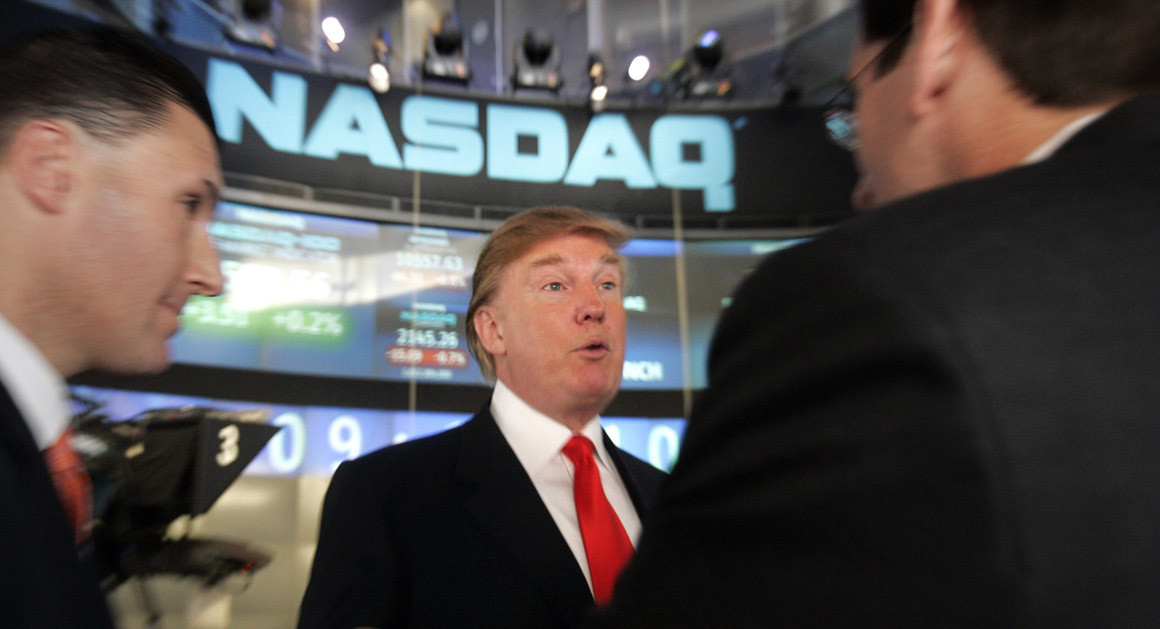
The major averages all closed in positive territory, although the Nasdaq inched up just 3.00 points or less than a tenth of a percent to 7,759.20. The Dow climbed 143.07 points or 0.6 percent to 24,919.66 and the S&P 500 rose 9.67 points or 0.4 percent to 2,793.84.
The continued strength on Wall Street came as optimism about the upcoming earnings season overshadowed recent trade concerns.
Snack food and beverage giant PepsiCo (PEP) released its second quarter results before the start of trading, reporting earnings that exceeded analyst estimates.
Financial giants Citigroup (C), JPMorgan Chase (JPM) and Wells Fargo (WFC) are due to report their quarterly results before the start of trading on Friday.
Another light day on the U.S. economic front kept some traders on the sidelines, however, with closely watched reports on producer and consumer price inflation due to be released in the coming days.
Oil service stocks showed a strong move to the upside on the day, driving the Philadelphia Oil Service Index up by 1.1 percent. The strength among oil service stocks came amid an increase by the price of crude oil.
Chemical, semiconductor, and utilities stocks also turned in strong performances, while most of the other major sectors showed more modest moves.
Economy
High Borrowing Costs, Inflation Threaten Nigeria’s Recovery—OPEC
By Adedapo Adesanya
The Organisation of the Petroleum Exporting Countries (OPEC) has warned that Nigeria’s economic recovery could come under renewed pressure from persistently high borrowing costs and inflation despite stronger crude oil production and ongoing economic reforms.
In its July Monthly Oil Market Report, OPEC said Nigeria’s near-term economic outlook remains positive, supported by higher oil production, improving macroeconomic stability, stronger business activity and continued reform efforts, but cautioned that inflationary pressures and expensive credit continue to pose significant risks to sustained growth.
According to the report, Nigeria’s economy expanded by 3.9 per cent year-on-year in the first quarter of 2026, marginally below the 4.0 per cent recorded in the final quarter of 2025, indicating that growth has remained close to recent highs.
“Overall, Nigeria’s near-term outlook remains positive, supported by oil production, reform progress, infrastructure investment and stronger business activity, but high inflation, elevated borrowing costs and the need to preserve exchange-rate stability remain important challenges,” OPEC stated.
The organisation noted that the non-oil sector remained the principal driver of economic expansion, with agriculture, manufacturing, construction, trade, finance and insurance contributing significantly to growth.
It added that improved crude oil production had strengthened government revenues, boosted foreign exchange inflows and reinforced the country’s external reserves.
“The non-oil economy continues to provide the main support, with activity driven by agriculture, manufacturing, construction, trade, and finance and insurance, while higher oil output has improved fiscal revenues, foreign-exchange inflows and external buffers. Survey indicators also point to continued near-term momentum,” the report added.
OPEC also pointed to private sector data showing continued expansion in business activity. It said the Stanbic IBTC Bank Nigeria Purchasing Managers’ Index (PMI) moderated slightly to 53.4 in June from 54.1 in May but remained above the 50-point threshold, indicating sustained growth in economic activity.
According to the report, stronger output, increased new orders and resilient consumer demand continued to support business expansion, although manufacturing activity softened slightly during the review period.
The oil producers’ group further noted that increased domestic refining capacity, particularly the improved fuel supply from the Dangote Refinery, is expected to strengthen energy availability and ease pressure on imports.
“Higher domestic refining capacity, including improved fuel supply from the Dangote refinery, should continue to support energy availability and reduce some import-related pressures,” OPEC said.
Despite the positive outlook, the organisation expressed concern over rising consumer prices, noting that Nigeria’s inflation rate increased to 15.9 per cent in May from 15.7 per cent in April as food prices continued to weaken household purchasing power.
“Inflation rose further to 15.9 per cent year-on-year in May, up from 15.7 per cent in April, with food prices still putting pressure on household purchasing power. This means that monetary policy is likely to remain cautious, despite improved exchange-rate stability and stronger oil-related inflows,” the report stated.
OPEC said the persistence of inflation is likely to keep monetary policy tight, meaning borrowing costs may remain elevated even as improved oil earnings continue to strengthen Nigeria’s fiscal position and external reserves, adding that balancing price stability with economic growth will remain a key challenge for policymakers in the months ahead.
Economy
NASD Exchange Edges Up by 0.05% as CSCS Outweighs Three Losers
By Adedapo Adesanya
Central Securities Clearing System (CSCS) Plc bested three price decliners to lift the NASD Over-the-Counter (OTC) Securities Exchange by 0.05 per cent on Thursday, July 16.
The securities depository company gained N2.29 during the trading day to close at N92.64 per share compared with the previous day’s price of N90.35 per share.
As a result, the market capitalisation of the bourse grew by N1.42 billion to N2.592 trillion from N2.590 trillion, while the NASD Security Index (NSI) improved by 2.36 points to 4,318.87 points from 4,316.51 points.
The three price losers yesterday were led by 11 Plc, which shed N10.00 to end at N240.00 per unit versus Wednesday’s closing value of N250.00 per unit, FrieslandCampina Wamco Nigeria Plc lost N2.34 to finish at N147.66 per share compared with the N150.00 per share it closed at midweek, and Food Concepts Plc depleted by 7 Kobo to settle at N2.42 per unit, in contrast to the preceding day’s N2.49 per unit.
A look at the activity chart showed that during the session, the value of transactions soared by 43.3 per cent to N104.1 million from the preceding session’s N65.2 million, and the number of deals jumped by 39.3 per cent to 39 deals from the 28 deals completed a day earlier, while the volume of trades contracted by 75.7 per cent to 1.2 million units from 4.8 million units.
When trading activities ended for the day, Great Nigeria Insurance (GNI) Plc led the activity chart as the most active stock by value on a year-to-date basis, with 3.4 billion units sold for N8.4 billion, followed by Infrastructure Credit Guarantee (Infracredit) Plc with 2.3 billion units valued at N6.5 billion, and CSCS Plc with 74.9 million units exchanged for N5.3 billion.
GNI Plc also closed the session as the most traded stock by volume on a year-to-date basis, with 3.4 billion units worth N8.4 billion, followed by Infracredit Plc with 2.3 billion units traded for N6.5 billion, and Resourcery Plc with 1.1 billion units transacted for N415.7 million.
Economy
Naira Strengthens to N1,381/$ at Official Market
By Adedapo Adesanya
The Naira further appreciated against the US Dollar in the Nigerian Autonomous Foreign Exchange Market (NAFEX) on Thursday, July 16, by 65 Kobo or 0.04 per cent to sell for N1,381.53/$1, in contrast to Wednesday’s closing value of N1,382.18/$1.
This was buoyed by improved FX liquidity to absorb the high demand for Dollars during the trading session.
However, the local currency depreciated against the Pound Sterling in the official market yesterday by N9.48 to close at N1,866.17/£1 versus the preceding day’s N1,856.69/£1, and lost N2.99 against the Euro to quote at N1,582.68/€1 compared with the midweek rate of N1,576.69/€1.
At the parallel market, the Nigerian currency maintained stability against its United States counterpart at N1,405/$1, and at the GTBank FX desk, it remained unchanged at N1,389/$1.
On Thursday, data from the Central Bank of Nigeria (CBN) showed a surge in interbank FX turnover and deal count. Interbank FX activities at the NFEM window increased sharply by 69 per cent to $205.366 million from $121.727 million reported the previous day.
Nigeria’s gross external reserves continue to rise, supported by steady foreign exchange inflows from hydrocarbon receipts, remittances and foreign portfolio investments, boosting market confidence. It settled at $51.893 billion from $51.867 billion the previous day.
The apex bank has also launched a new digital platform that will track every foreign exchange transaction involving Bureau De Change (BDC) operators, marking a major step in its efforts to improve transparency and strengthen oversight of Nigeria’s retail forex market.
In an operational guidance issued on July 15 to authorised dealer banks and licensed BDCs, the CBN introduced the FX BDC Purchase Tracker (FXBT), a centralised electronic portal that will monitor foreign exchange purchases by BDCs from the point of request through approval, settlement and eventual sale.
As for the crypto market, prices were down as the markets weighed fresh US airstrikes on Iran that boosted risk sentiment, with Ethereum (ETH) down by 4.7 per cent to $1,829.37.
Solana (SOL) decreased by 3.6 per cent to $77.49, Dogecoin (DOGE) depreciated by 3.1 per cent to $0.0718, Cardano (ADA) also crashed by 3.1 per cent to $0.1588, Bitcoin (BTC) slumped by 2.9 per cent to $62,820.21, Ripple (XRP) dipped by 2.6 per cent to $1.08, Binance Coin (BNB) fell by 2.3 per cent to $569.02, and TRON (TRX) shrank by 0.8 per cent to $0.3219, while the US Dollar Tether (USDT) and the US Dollar Coin (USDC) traded flat at $1.00 each.