
Economy
Riskmap 2017: A Year of Acute Uncertainty for Business



By Modupe Gbadeyanka
Control Risks, the specialist risk consultancy, has published its annual RiskMap forecast, the leading guide to political and business risk and an important reference for policy makers and business leaders.
Richard Fenning, CEO, Control Risks, said: “The unexpected US election and Brexit referendum results that caught the world by surprise have tipped the balance to make 2017 one of the most difficult years for business’ strategic decision making since the end of the Cold War.
The catalysts to international business – geopolitical stability, trade and investment liberalisation and democratisation – are facing erosion. The commercial landscape among government, private sector and non-state actors is getting more complex.”
By the end of 2017 we will know whether or not the global economy withstood the shocks and turbulence of 2016, if the US opted for a new definition of how to exercise its power and if the great experiment in globalisation remains on track.”
The high levels of complexity and uncertainty attached to the key political and security issues for the year, highlighted by RiskMap, mean that boards will need to undertake comprehensive reviews of their approaches to risk management.
Control Risks has identified the following key business risks for 2017:
Increased policy and political uncertainty as a result of heightened olitical populism pexemplified by President-elect Trump and Brexit. The era of greater national control of economic and security policy ushered in by the US election and Brexit provides increased uncertainty for business leaders. Caution prevails because of the lack of political policy clarity from the USA and UK and the impacts on the global trading and economic environment, as well as geopolitics. Political sparks will fly as the new presidency places pressure on the economic relationship between the US and China, vital for the stability of the global economy; and the US withdrawal from the Trans-Pacific Partnership threatens to redraw trans-Pacific commerce. The calls across Europe for further referendums on EU membership is causing nervousness and populism in other parts of the world such as sub-Saharan Africa is adding fuel to investor risk.
Persistent terrorist threats driven by the weakening of the Islamic State. The threat of terrorism will remain high in 2017 but become more fragmented. The eventual collapse of Islamic State’s territorial control in Syria and Iraq will lead to an exodus of experienced militants across the world. Responding to terrorism is becoming ever more difficult for businesses; risk adjustment is critical, including big data solutions and reviews of potential insider radicalisation, physical security and scenario planning.
Increasing complexity of cyber security and associated attempts by governments to regulate data transfers. 2017 will see the rise of conflicting data legislation: US and EU data protection regulations remain at odds; the EU’s Single Digital Market is isolationist; and China and Russia are introducing new cyber security laws. This will lead to data nationalism, forcing companies to store data locally, at increased cost, as they are unable to meet regulatory requirements in international data transfer. E-commerce will be stifled. Fears of terrorism and state sponsored cyber-attacks will exacerbate national legislation, adding burden to businesses.
Intensifying geopolitical pressures driven by nationalism, global power vacuums and proxy conflicts. Syria, Libya, Yemen and Ukraine are likely to remain intractable conflicts and the Middle East will continue to be shaped by friction between Saudi Arabia and Iran; China’s increased focus on diplomacy and military influence will extend from Central Asia and the Indian Ocean to sub-Saharan Africa; and North Korea’s systematic nuclear capability development is upending a relatively static regional and global nuclear status quo.
The militarisation of strategic confrontations by accident or miscalculation. While major conflicts remain unlikely in the South or East China Seas, for example, further militarisation of disputes among China, its neighbours and the US, is likely; Saudi Arabia and Iran continue to jockey for position in the Hormuz and Bab el-Mandeb straits; Iran’s nuclear deal has emboldened the country to challenge the US-Saudi security infrastructure; and Russia is likely to maintain substantial air patrols in or near European airspace and will continue bolstering its Black Sea and Mediterranean naval fleets to secure its positions in Crimea and Syria.
Richard Fenning continued: “Digitalisation and the internet of everything takes risk everywhere and the distinction between safe home markets and dangerous foreign ones has largely gone. The sheer mass of stored data, teetering on a fulcrum between asset and liability, has shifted the gravitational centre of risk.
Terrorist attacks across continents in 2016 made possible in large part by the internet have shown that Islamist inspired violence can be planned and carried out anywhere in the world.”
With the seismic shift in risk scenario planning now required by businesses, we can expect the competitive playing field in many industries to see significant change as organisations respond in different ways to the multitude of complexities facing them.”
Companies will pursue different strategies to protect value and seize opportunity in 2017. Many organisations will be defined as Arks, Sharks or Whales by their response.
Arks will be defensive and focus on core businesses and markets. They will shed non-performing assets, reverse unsuccessful mergers, cut costs, and delay expansion. While particularly associated with mining and oil and gas due to the collapse in commodity prices, the Ark strategy also characterises retrenchment by retailers and re-shoring by manufacturers.
Sharks are less risk-averse and will hunt for opportunities in new activities and locations. Financial services, facing regulatory uncertainty and the rise of competing power centres in the emerging world, is likely to take on risk to capture first-mover advantages in frontier markets or disruptive sectors such as fintech.
Whales will take advantage of their deep pockets and cheap financing to engineer mega-mergers and monopolise markets. Their main risks are economic nationalists and competition regulators. Consolidation strongly characterises the technology sector, pharmaceuticals, and agribusiness, which have often arbitraged regulatory environments to gain dominant market positions.
Executive summary by select regions:
The EU after Brexit. Brexit will not be transformative for the remaining 27 EU countries. The UK’s departure from the union will encourage some member states to be more assertive but it will not lead to mass popular uprisings against the EU’s institutions. If the British decision to leave the EU makes the bloc stronger, it will be via marginal gains, rather than the dawning of a bold new era.
Middle East: The politics and pitfalls of privatisation. A privatisation push across the Middle East and North Africa in 2017, including in Algeria, Egypt, Pakistan and Saudi Arabia, will act as a siren call to investors around the world. As foreign companies prepare bids for new projects and tune into public debates about the benefits that privatisation offers, they should closely inspect what is on offer – and from whom.
Looking for Africa’s Dubai. A growing number of African governments want to replicate the economic success of Dubai and Singapore and become commercial gateways into the continent. They must do more than follow the rush to create shiny new infrastructure. Investors expect long-term political stability, basic services to work, skilled workforces and a promising market. With so many countries looking to become new African hubs, competition will bring over capacity; some players will fall by the wayside.
Russia and the US President-elect. Donald Trump’s leadership is likely to herald a more pragmatic relationship between the US and Russia in 2017, at least in the short-term; it may include an effort to ease sanctions and dampen cyber hostilities. But in the longer term, a transactional, business partner style approach is unlikely to survive the reality of the diplomatic complexities and deep-rooted animosity in the US-Russia relationship.
Mexico and the new US administration. Will the US President-elect deliver on his campaign rhetoric and build a border wall with Mexico, deport an estimated 5.7 million illegal Mexican migrants, add tariffs of up to 35% on goods manufactured in Mexico by US companies and renegotiate or pull out of the North American Free Trade Agreement (NAFTA)? Early signals indicate a willingness to be more moderate. Statements on deportations now focus mainly on convicted felons, while the talk is of using fences instead of a wall along the border. Mexico may also be on the cusp of becoming a far more stable place for business because of its clamp down on corruption. In June 2016 Congress passed legislation to implement a new National Anti-Corruption System (NAS) which starts in 2017 and will be a key issue when Mexico goes to the polls in 2018.
Brazil and Argentina opening to trade. Brazil and Argentina will welcome 2017 as a fresh start. Both look poised to leave economic recession and following recent leadership changes they expect to bolster their economies with foreign trade. They are negotiating (with Paraguay and Uruguay) a bilateral trade agreement with the EU, and are likely to approve an initiative that allows members of the Southern Common Market (Mercosur) trade bloc to pursue similar talks independently. But trade openness is being challenged in many parts of the world, including the US and the EU.
Five more years of Xi Jinping’s China. The Communist Party of China (CPC) will hold its five-yearly national congress in late 2017, marking the end of President Xi Jinping’s first term in power and almost certainly the start of his second. The broader transition beneath him is very important, especially as China enters a more difficult and uncertain era of its development – one where growth is slowing and must be driven less by sheer mobilisation of resources, and more by their efficient use. In spite of the challenges, the outlook for foreign companies remains quite strong relative to many countries.
Thailand: Royal succession problems. Political instability in Thailand will increase in 2017 following the death of revered King Bhumibol Adulyadej in October 2016, the succession of Crown Prince Vajiralongkorn, a deeply polarising figure, and general elections scheduled late in the year. The contest for power, the security environment and the regulatory landscape has the potential to disrupt business operations on many fronts.
MENA: Top five drivers of risk in 2017
The big black swan of 2017 for the Middle East region will be a potential unravelling of the nuclear deal with Iran as a result of changes in US foreign policy under President Trump. While we consider that to remain unlikely, this would have significant security and business implications for the region by pushing Iran back into aggressive foreign policy and into commercial isolation.
Under our main scenario which provides for continuity of the nuclear deal beyond 2017, the top five likely drivers of risks to international businesses in the Middle East are:
Geopolitics: Shifting global geopolitical relationships will be mirrored by a realignment of foreign policy alliances and priorities of major players in the Middle East. Countries such as Saudi Arabia, Egypt, Qatar and Iran will look to build or consolidate bridges with China, Japan, India and/or Russia to hedge against the uncertainty surrounding US’ and Europe’s engagement in the region. Such policy realignments are likely to play out in the commercial sphere when it comes to major project awards and bilateral trade agreements.
Fiscal consolidation: Efforts to reduce government spending in response to low oil prices will continue to affect economic growth and dampen public investment levels across the region. They will also drive regulatory risk – particularly rises in local taxes and changes to local content regulations, as well as risks of non-payment and contract frustration. Reform efforts are also likely to trigger localised labour and/or social unrest against governments and businesses in North Africa, particularly in Algeria, Tunisia and Morocco.
Push for FDI: Most countries in the region are putting in place plans and strategic visions to increase their attractiveness to foreign investors in an effort to diversify their economies and secure growth in sectors other than oil and gas. While these efforts may be successful in non-strategic sectors such as education, healthcare and e-commerce might, they are unlikely to succeed in other major sectors, such as energy or telecommunications, where prevailing statists trends and a desire for government interference will likely limit the extent of privatisation and liberalisation.
Weakening of Islamic State: The collapse of IS territory is likely to prompt a global exodus of foreign fighters. As IS falls, many will be killed in battle, some captured trying to escape and others recruited into other groups – including rival al-Qaida affiliate Jabhat Fatah al-Sham (JFS) or continuing to operate in weak governance areas, such as the Sinai in Egypt, as well as parts of Libya, Syria and Iraq. The rest will most likely return to their home countries in Western Europe, Russia, North Africa or the GCC and will try to imbue local extremist networks in their home countries with their experience and capability. While in Iran and the GCC this trend is unlikely to trigger any significant increase in the threat of attacks, countries such as Tunisia, Morocco, Lebanon and Jordan may face higher challenges to contain returning IS fighters.
Cyber: The conflict in Syria and the broader complex gepolitical situation in the Middle East is likely to have a significant impact on the regional cyber threat landscape in the coming year. In particular, Iran has continued to develop its capabilities and lags behind only Israel in the region in terms of its ability to conduct disruptive cyber attacks on geopolitical rivals, though other states are also seeking to develop these tools for their own arsenals. In 2017, Iran and these emerging actors are likely to use their capabilities to conduct plausibly deniable data-wiping attacks in its rivals, using activist groups to claim credit for the incidents so as to complicate the victims’ response. These attacks are particularly likely to target governmental bodies, symbolic targets and elements of critical national infrastructure in rival states.










By Adedapo Adesanya
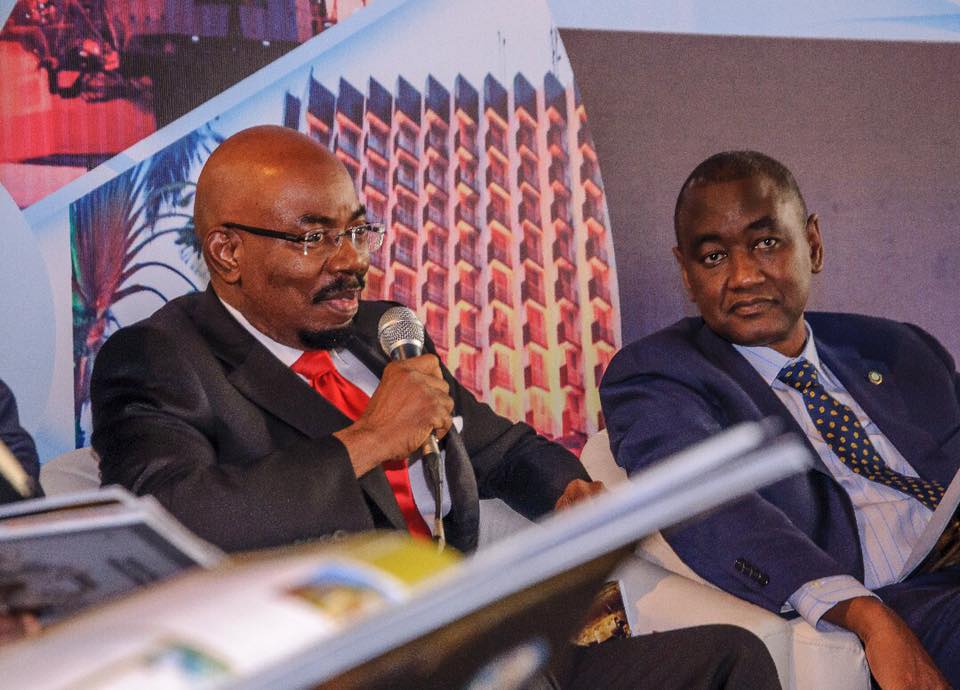
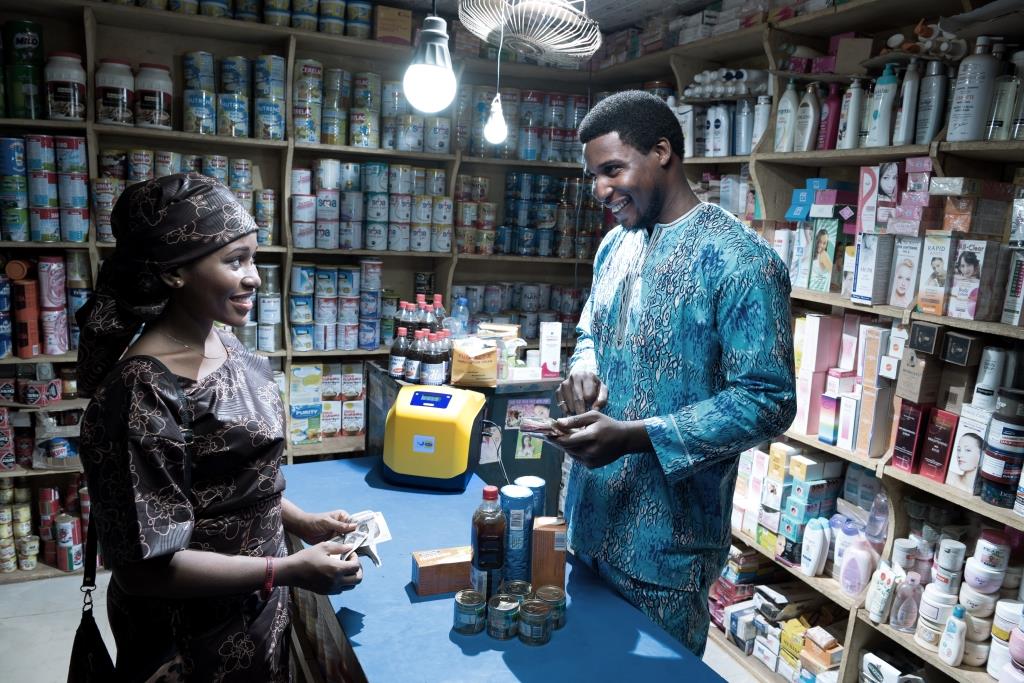
The National Insurance Commission has issued new guidelines for the collection, management, and administration of the Insurance Policyholders’ Protection Fund.
In a circular issued to all insurance institutions on Tuesday, the regulator also set May 31, 2026, as the deadline for insurers to submit their assessment returns for the 2025 financial year.
Recall that on August 5, 2025, President Bola Tinubu signed into law the Nigerian Insurance Industry Reform Act ( NIIRA 2025).
This landmark legislation repeals the Insurance Act 2003, and consolidates related provisions, ushering in a modern regulatory framework. It lays a strong foundation for sustainable growth and increased investment in the country’s insurance sector.
The commission said the guidelines were issued in exercise of its powers under the 2025 Act and other existing insurance laws and regulations to provide regulatory clarity, improve guidance, and ensure ease of compliance across the industry.
According to NAICOM, the guidelines establish a comprehensive structure for the operation of the IPPF, which serves as a statutory safety net to protect insurance policyholders in the event of distress or insolvency of a licensed insurer or reinsurer. The framework also provides direction on the reimbursement of loans by insurers and reinsurers.
NAICOM stated, “The guidelines ensure regulatory clarity, guidance and ease of compliance, as it provides a comprehensive regulatory framework for the collection, management, and administration of the Fund, which serves as a statutory safety net designed to protect insurance policyholders against distress and insolvency of a licensed insurer or reinsurer, including guidance for the reimbursement of loans by an insurer or reinsurer.
“Please be informed that the IPPF Assessment Returns in respect of the year 2025 shall be submitted to the Commission not later than 31st May 2026, while subsequent submissions shall be in line with Section 4.3 of the Guideline on Insurance Policyholders Protection Fund.”
By Adedapo Adesanya
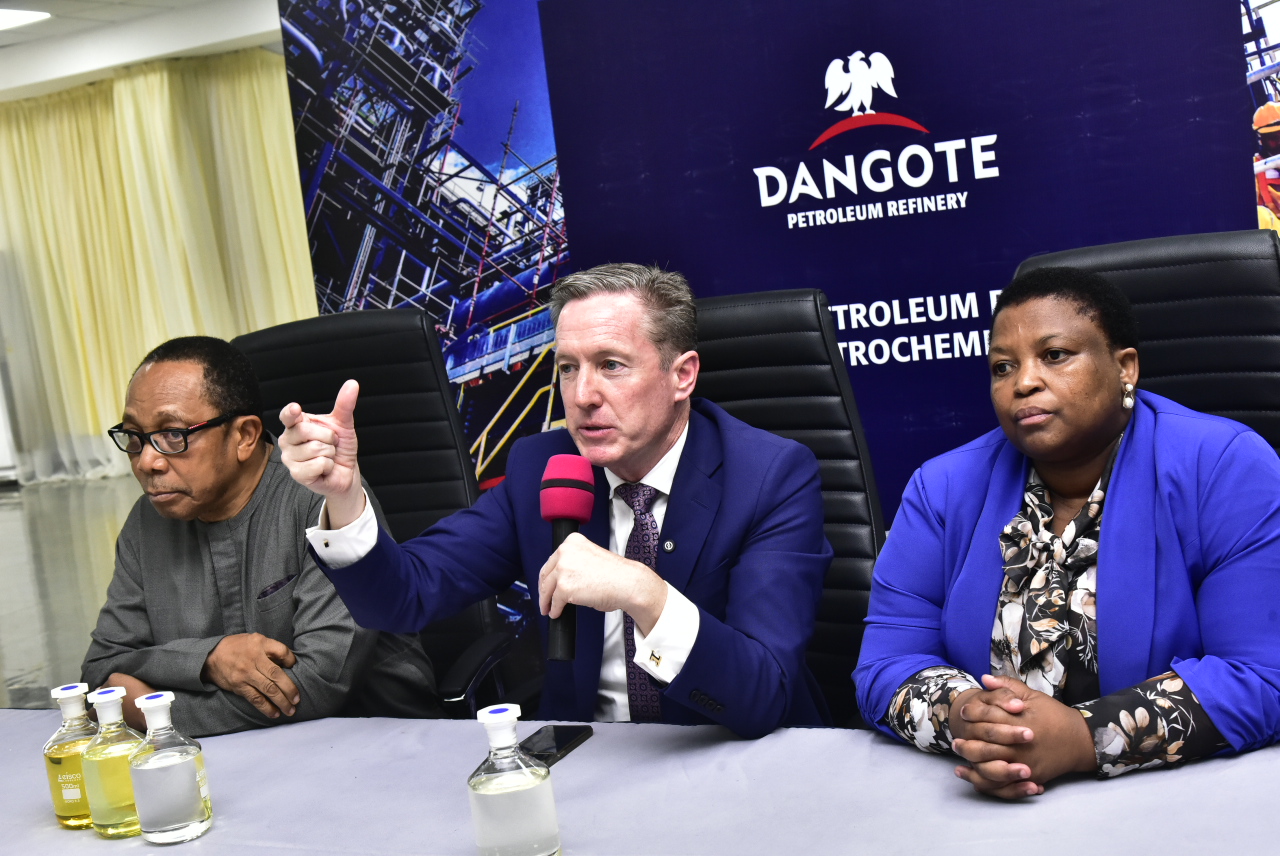
The Dangote Refinery on Wednesday returned the petrol price to N1,200 per litre, less than 24 hours after it increased it by 5 per cent.
The private refinery had raised the ex-depot price by N75 on Tuesday, citing pressure from volatile global oil markets, but quickly brought it back to N1,200 per litre from N1,275 per litre.
The swift downward review is directly linked to a sharp drop in international crude prices. Brent crude has plunged to $95.05 per barrel, after a 13 per cent decline, while the US West Texas Intermediate (WTI) crude closed at $97.18, recording nearly a 14 per cent drop.
This development comes after US President Donald Trump announced a conditional two-week ceasefire with Iran, which eased fears of immediate supply disruptions in the global oil market.
“This will be a double-sided CEASEFIRE!” Trump said on social media, marking a sharp reversal from his earlier warning that “a whole civilisation will die tonight” if Iran failed to comply with US demands.
Iran’s Foreign Minister, Mr Abbas Araqchi, confirmed that the country would halt attacks provided strikes against Iran cease and transit through the Strait of Hormuz is coordinated by Iranian forces.
Despite the breakthrough, tensions remain elevated across the region, with several Gulf states reporting missile launches, drone activity, or issuing civil defence warnings.
While oil prices have fallen back below $100, they remain significantly elevated after surging by a record amount in March. Market analysts noted that regardless of how successful the ceasefire is, geopolitical risk related to the Strait of Hormuz is likely to remain elevated for the foreseeable future under the control of Iran.
By Adedapo Adesanya
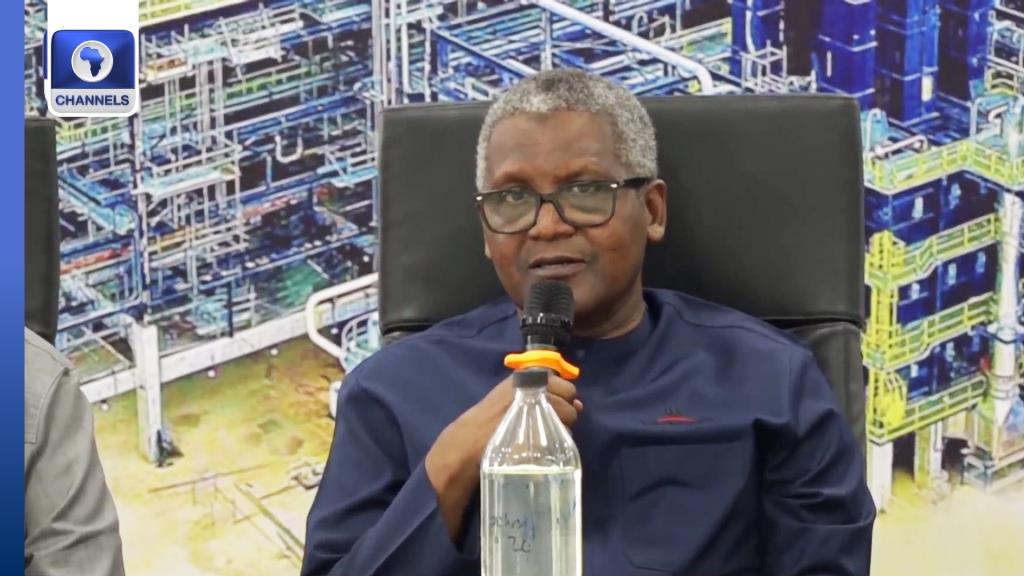
Crude oil deliveries from the Nigerian National Petroleum Company (NNPC) Limited to the Dangote Petroleum Refinery doubled in March, boosting prospects for improved fuel availability.
This was revealed by the chief executive of Dangote Industries Limited, Mr Aliko Dangote, on Tuesday, when he received the Deputy Secretary-General of the United Nations, Mrs Amina Mohammed, at the industrial complex in Ibeju-Lekki, Lagos.
While speaking on feedstock supply, Mr Dangote commended the NNPC for increasing crude deliveries to the refinery in March, noting that volumes rose to 10 cargoes—six supplied in Naira and four in Dollars—to support domestic fuel availability, according to a statement by the Refinery.
“Last month, they gave us six cargoes for Naira and four cargoes for Dollars,” he said.
Despite the improvement, Mr Dangote noted that the supply remains below the 19 cargoes required for optimal operations, with the refinery continuing to bridge the gap through imports from the United States and other African producers.
He also expressed concern over the unwillingness of international oil companies operating in Nigeria to sell to the refinery, stating that their preference for selling crude to traders forces it to repurchase at higher costs, with broader implications for the economy.
Mr Dangote added that the refinery is seeking increased access to domestically priced crude under local currency arrangements as part of efforts to moderate fuel costs and enhance long-term energy and food security across the continent.
On her part, Mrs Mohammed underscored the strategic importance of Dangote Industries Limited -particularly Dangote Fertiliser Limited—in addressing Africa’s mounting food security challenges, while calling for stronger global partnerships to scale its impact.
Mrs Mohammed said the United Nations would prioritise amplifying scalable solutions capable of mitigating the continent’s food crisis, describing Dangote’s integrated industrial model as a critical pathway.
“I think the UN’s job here is to amplify and to put visibility on the possibilities of mitigating a food security crisis, and this is one of them,” she said. “I hope that when we go back, we can continue to engage partners and countries that should collaborate with Dangote Industries.”
-
 Feature/OPED6 years ago
Davos was Different this year
-
Travel/Tourism10 years ago
Lagos Seals Western Lodge Hotel In Ikorodu
-

 Showbiz3 years ago
Estranged Lover Releases Videos of Empress Njamah Bathing
-
 Banking8 years ago
Sort Codes of GTBank Branches in Nigeria
-

 Economy3 years ago
Subsidy Removal: CNG at N130 Per Litre Cheaper Than Petrol—IPMAN
-

 Banking3 years ago
Sort Codes of UBA Branches in Nigeria
-

 Banking3 years ago
First Bank Announces Planned Downtime
-

 Sports3 years ago
Highest Paid Nigerian Footballer – How Much Do Nigerian Footballers Earn