
Economy
Russia-Ukraine Conflict Changing African Business with Europe

By Kester Kenn Klomegah
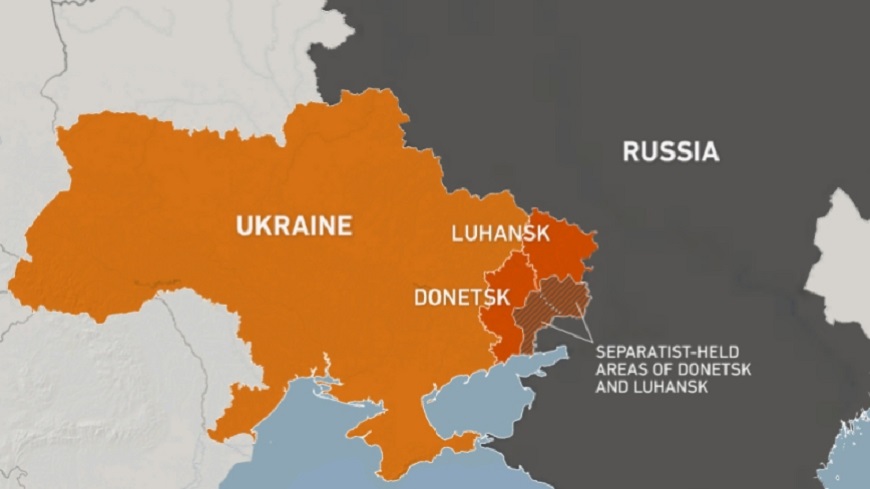
Russia has evaded neighbouring Ukraine located in Eastern Europe. As one of the former Soviet republics looking to climb onto the global stage and steadfastly develop the future, it, therefore, sets ambition to join the North Atlantic Treaty Organization (NATO) and the European Union (EU).
On the other hand, these two directions of its ambitions have angered Russia. As already known, Ukraine is in Eastern Europe and shares a border with Russia. It used to be part of the Soviet Union but became an independent country in 1991.
Under the directorship of Russian President Vladimir Putin, and approved by the both Federal Council and the State Duma, the Russian collective made the decision to hold a special military operation in response to the address of leaders of Donbass and Luhansk republics, both in eastern Ukraine.
Putin launched the “special military operation” repeating a number of unfounded claims, alleging that Ukraine’s democratically elected government had been responsible for eight years of genocide.
Putin feverishly seeks to demilitarize and denazify Ukraine. As a result of the waging war on Ukraine, Russia has to suffer from a raft of sanctions imposed by various foreign countries including the United States, Canada, Britain, the European Union and down to Australia. The results of the waging war on Ukraine.
The longer-term economic consequences for the rest of the world will be far less severe than they are for Russia, but they will still be a persistent challenge for policymakers, noted Jason Furman, a former chair of U.S. President Barack Obama’s Council of Economic Advisers.
He wrote in his opinion article published by Project Syndicate: “The medium- and long-term consequences for the global economy of Russia’s military operation in Ukraine will depend on choices. By launching the operation, Russia has already made one terrible choice.”
While the sanctions take their bites and associated snow-balling effects, it has opened huge significant potential opportunities for a number of African countries. In the first place, researchers at Oxford Economics Africa believe that Russia’s invasion of Ukraine could increase wheat prices in Angola and Mozambique, but the rise in oil and gas prices benefits the finances of these two African countries.
“Both Angola and Mozambique have a very limited level of trade with Russia and Ukraine; Angola imports wheat and yeast from Russia, while Mozambique imports a significant amount of wheat and a small amount of refined oil from Russia,” Oxford Economics Africa analyst who follows these two African economies told Mozambique News Agency.
“It appears that, at least for now, Angola is generally benefiting from higher oil and gas prices, which are partially driven by the conflict,” Gerrit van Rooyen said in remarks from Paarl, South Africa. Higher oil prices are positive for government revenues,” the analyst added. If the rise is sustained, “this could increase investment in Angola and lower debt levels faster than previously anticipated.”
“If gas prices remain high due to the conflict, this will be positive for investments in Mozambique’s liquefied natural gas [LNG],” his analysis continues, since “the profits from the natural gas in the Rovuma basin could be greater than the risk of armed extremist insurgency in the region.”
Despite the benefits for the public accounts of the two Portuguese-speaking states, van Rooyen points out that, for the average citizen, the disadvantages outweigh the advantages. Higher oil and wheat prices could be bad news for consumers, as inflation, which is already high in these countries, particularly in Angola and it is, however, expected to increase more than initially expected.
Monitoring media reports have indicated that a few oil and gas producing African countries have the possibility, if well-exploited, to supply Europe. For example, Algeria’s state energy firm is ready to supply Europe with more gas in view of a possible decline due to the Russian invasion of Ukraine.
Sonatrach CEO Toufik Hakkar said the firm was ready to pump additional gas to the EU from its surplus via the Transmed pipeline linking Algeria to Italy. Sonatrach is “a reliable gas supplier for the European market and is willing to support its long-term partners in the event of difficult situations,” Hakkar said and was reported by the daily Liberte.
Hakkar nonetheless said this would be contingent on the availability of a surplus of gas or liquified natural gas [LNG], but have to fix its “contractual engagements” with the importing partner for the supplies to the European market.
Nonetheless, Algeria could only compensate for the decline in Russian gas supply by offering a maximum of two or three million additional cubic meters. Algeria plans to develop new reserves of shale gas. In January, Sonatrach said it would invest US$40 billion into oil exploration, production and refinement, as well as gas prospecting and extraction, between 2022 and 2026.
Arguments whether Africans can take advantage to increase their business, especially in oil and gas, are still varied. “For Africa, it’s again, it’s an opportunity, it presents that window of opportunity for African countries to see how they can increase their production capacity and meet the need of global demands of crude oil,” says Isaac Botti, a public finance expert told Voice of America.
However, Africa’s production combined accounts for less than a tenth of total global output. Nigeria is Africa’s largest producer of oil followed by Libya. Other notable producers are Algeria and Angola.
Algerian state-owned oil and gas giant said it would supply Europe if Russian exports dwindled as a result of the crisis, Botti noted and added that it’s a good example for other African nations. “We need to develop our capacity to produce locally, we need to look at various trade agreements that are existing,” he said.
For years African oil producers including Nigeria have been struggling to meet required daily output levels. Many experts, including Botti, worry strongly that African producers may struggle to fit into the big market with increasing global demands for crude oil.
Instead of African business to the United States and Europe, some researchers and experts have shown concern about the level of impact of the Russia-Ukraine conflict on Africa. Admittedly, they noted in their separate discussions that the war in Ukraine could further push oil prices up and increase inflation in Africa.
From an African agriculture perspective, the impact of the war will be felt in the near term through the global agriculture commodity prices channel. A rise in prices will be beneficial for farmers, especially for grain and oilseed farmers, the surge in prices presents an opportunity for financial gains.
In his research analysis, Wandile Sihlobo, Senior Fellow at the Department of Agricultural Economics, Stellenbosch University, wrote that some countries on the continent, such as South Africa, benefit from exporting fruit to Russia. In 2020 Russia accounted for 7% of South Africa’s citrus exports in value terms. And it accounted for 12% of South Africa’s apples and pears exports in the same year – the countries’ second-largest market.
But from Africa’s perspective, Russia and Ukraine’s agricultural imports from the continent are marginal – averaging only US$1,6 billion – in the past three years. The dominant products are fruits, tobacco, coffee, and beverages in both countries. Every agricultural role-player is keeping an eye on the developments in the Black Sea region. The impact will be felt in other regions, such as the Middle East and Asia, which also import a substantial volume of grains and oilseeds from Ukraine and Russia. They too will be directly affected by the disruption in trade, according to Sihlobo.
There is still a lot that’s not known about the geopolitical challenges that lie ahead. But for African countries, there are reasons to be worried given their dependency on grains imports. In the near term, countries are likely to see the impact through a surge in prices, rather than an actual shortage of the commodities. Other wheat exporting countries such as Canada, Australia and the US stand to benefit from any potential near term surge in demand.
“The last time we had a windfall from oil prices related to war was in 1991, during the Gulf War. We know it will directly impact the price of crude oil. The revenue may increase, but since we have shifted oil investment to multinational companies, they are more likely to reap greater revenues than the country itself.” Professor Abdul-Ganiyu Garba of the Department of Economics Ahmadu Bello University Zaria said.
“If there is an increase in crude oil prices, it means inflation will grow globally, the cost of most of our imports will also rise, which will transfer to the domestic crisis,” the Nigerian economist added. Commodity prices have skyrocketed in many African countries, making life more challenging for millions of people.
“People start starving once these countries fight because they [global powers] presented themselves to African countries as mother countries,” Dox Deezol, a South African entrepreneur and artist in Johannesburg, told DW.
As a member of BRICS [Brazil, Russia, India, China, South Africa] — the world’s five emerging economies — South Africa was relatively silent when Russia annexed Crimea in 2014. However, the South African government has urged restraint this time.
“South Africa is integrated into the global economy. So the war’s impact on the global economy, as we have seen in the soaring prices of oil and energy generally, will affect South Africa because when the world sneezes, South Africa catches a cold,” Professor Siphamandla Zondi, an international relations expert and head of BRICS studies at the University of Johannesburg, told DW.
It’s not just the oil prices that could impact Africa. For example, there is significant agricultural trade between African countries and Russia and Ukraine. Some say Africa’s trade with Russia and Ukraine could also be at stake. In 2020, African countries imported agricultural products worth US$4 billion from Russia. Wheat accounted for approximately 90% of these imports. Egypt was the largest importer, followed by Sudan, Nigeria, Tanzania, Algeria, Kenya, and South Africa.
Similarly, Ukraine exported agricultural products worth US$2.9 billion to Africa in 2020. Wheat accounted for roughly 48% of this, maize 31%, and sunflower oil, barley, and soybeans accounted for the remainder. The ongoing war could affect supply chains and raise the cost of imports. It is also unclear what effect the sanctions imposed by the US and its allies on Russia will have on Africa-Russia trade relations.
The repercussions of the conflict are readily felt in other economic sectors. Media reports indicated tourism and aviation business are also negatively affected. In terms of education and training, many African governments, ministries and departments struggle to evacuate their students and nationals from war-torn Ukraine. From basic research for this article, Ukraine has emerged as a choice destination for African students, especially in the fields of medicine and engineering.
According to Ukraine’s Ministry of Education and Science, some 180,000 international students study in Ukraine with the largest number from India, followed by Morocco, Azerbaijan, Turkmenistan, Egypt, Nigeria, South Africa, Tanzania, Zimbabwe and Ghana. The fact is that Africa remains deeply concerned over the escalation of the conflict in Ukraine. Nearly all African foreign ministries have expressed their deepest displeasure over the violation of the territorial integrity of Ukraine and categorically blamed Russia for creating instability in the world.
While looking the future African business to the United States, Europe and Asia, the current Chair of the African Union and President of Senegal, Macky Sall, and the Chairperson of the African Union Commission, Moussa Faki Mahamat, have expressed their extreme concern at the dangerous situation created in Ukraine. They called on the Russian Federation and any other regional or international actor to respect international law, the territorial integrity and the national sovereignty of Ukraine.
The Chair of the African Union and the Chairperson of the African Union Commission urged Russia and Ukraine to establish an immediate ceasefire and to open political negotiations without much delay. It should be under the auspices of the United Nations, in order to preserve the world from the consequences of planetary conflict, and in the interests of peace and stability in international relations in service of all the peoples of the world. Some tough actions are still expected from the Security Council of the United Nations.





By Adedapo Adesanya
Nigeria’s economy is projected to remain resilient in the face of mounting global uncertainties, with the World Bank forecasting a 4.2 per cent growth rate in 2026.
However, the global lender has warned that rising fuel costs and persistent inflation, worsened by geopolitical tensions in the Middle East, could undermine household incomes and slow poverty reduction.
Speaking in Abuja, the bank’s lead economist for Nigeria, Mr Fiseha Haile, noted that while the ongoing US-Israel-Iran conflict has pushed up prices, overall economic activity has remained largely intact.
“Overall business activity has been expanding over the past few months, suggesting the impact on growth has been relatively contained. But the shock is still being felt through higher inflation,” Mr Haile said.
According to him, business activity has continued to expand in recent months, indicating that the broader impact on growth has been “relatively contained,” even as inflationary pressures intensify.
Nigeria’s inflation rate, though significantly reduced from around 33 per cent in December 2024 to 15.06 per cent in February 2026, remains elevated compared to regional peers.
“Inflation is still elevated and under increasing pressure, and that poses risks to incomes and poverty reduction,” Mr Haile said.
The renewed surge in fuel prices, reportedly rising by over 50 per cent during the Iran conflict, has had a ripple effect on transportation, food, and production costs, amplifying the cost-of-living crisis.
The World Bank urged Nigerian authorities to adopt prudent macroeconomic measures, including tightening monetary policy, avoiding blanket subsidies, and saving windfalls from higher oil prices to strengthen fiscal buffers.
It also recommended reconsidering restrictions on fuel imports as a potential tool to ease inflationary pressures.
The economic reforms under President Bola Tinubu — including the removal of fuel subsidies, exchange rate unification, and tax restructuring — were acknowledged as ambitious steps aimed at stabilising the economy.
These reforms have contributed to improved external buffers, with rising foreign exchange reserves and reduced volatility.
Additionally, Nigeria’s fiscal deficit stood at 3.1 per cent of GDP in 2025, while the debt-to-GDP ratio declined for the first time in a decade.
Yet, the World Bank cautioned that tighter global financial conditions could still pose risks to capital inflows, borrowing costs, and remittances.

By Aduragbemi Omiyale
The Frontier Market status of Nigeria, earlier yanked off by FTSE Russell, has now been fully restored.
The platform earlier reclassified the country’s status to Unclassified following several uncertainties and economic issues.
But after recommendations from its Equity Country Classification Advisory Committee and Policy Advisory Board, the Frontier Market status has been restored by FTSE Russell, marking a significant milestone in the country’s reintegration into global investment indices and signalling renewed opportunity for international investors.
However, this will take effect from September 2026, with the outcome announced as part of the March 2026 interim review and communicated to investors across key global markets.
The decision reflects sustained improvements in Nigeria’s market infrastructure, accessibility, and overall investability, driven in large part by enhancements to the Nigerian Exchange (NGX) platform. These include strengthened trading systems, improved settlement processes, and increased transparency, all of which have contributed to a more efficient and accessible market environment for domestic and international investors.
According to the FTSE Quality of Markets assessment, Nigeria recorded Pass ratings across several core criteria, including regulatory oversight, capital repatriation, brokerage competitiveness, tax framework, and settlement efficiency, with a T+2 settlement cycle in operation. These gains reflect deliberate efforts to align market operations with global standards and improve the investor experience.
While acknowledging this progress, the review also highlighted areas for further development, including foreign exchange market depth, transaction cost efficiency, derivatives market availability, and certain custody and clearing mechanisms. Addressing these gaps will require continued coordination across regulators, market operators, and the broader financial ecosystem.
FTSE Russell noted that its country classification process combines detailed technical assessment with input from global institutional investors, ensuring that both structural conditions and real-world investor experience are reflected. The organisation also commended Nigerian market authorities for their continued engagement.
“This milestone reflects the strength of collaboration across Nigeria’s capital market ecosystem, but importantly, the deliberate efforts to strengthen the underlying market infrastructure that supports efficient trading, transparency, and investor access,” the chief executive of NGX Group Plc, Mr Temi Popoola, said.
“At NGX Group, we have remained focused on building a more resilient, accessible, and globally competitive platform, and this reclassification affirms the progress made.
“We will continue to work closely with regulators, market operators and stakeholders to deepen reforms, address identified gaps, and sustain momentum towards higher market classifications,” he added.
The Frontier Market designation is expected to enhance Nigeria’s visibility among global asset managers and index-tracking funds, potentially unlocking new capital inflows and broadening participation in the market.
As global investors increasingly prioritise markets with strong infrastructure, transparency, and accessibility, Nigeria’s re-entry into the FTSE Frontier Market universe underscores the critical role of market infrastructure in enabling capital formation and connecting local opportunities to global capital.

By Adedapo Adesanya
A 1.61 per cent fall was recorded by the NASD Over-the-Counter (OTC) Securities Exchange on Tuesday, April 7, on the back of selling pressure.
The profit-taking chopped off N38.87 from the market capitalisation of the trading platform, leaving it at N2.378 trillion compared with the N2.417 trillion it ended last Thursday, when the bourse last witnessed trading activity.
Similarly, the NASD Unlisted Security Index (NSI) dropped 22.57 points to close the session at 3,975.34 points, in contrast to the preceding session’s 4,040.30 points.
The market breadth index was at equilibrium yesterday after recording three price gainers and three price losers, led by Okitipupa Plc, which depleted by N15.00 to N260.00 per share from N275.00 per share. Central Securities Clearing System (CSCS) Plc dipped by N6.31 to N71.69 per unit from N78.00 per unit, and FrieslandCampina Wamco Nigeria Plc went down by N1.00 to N92.00 per share from N93.00 per share.
Conversely, First Trust Mortgage Bank Plc appreciated by 20 Kobo to N2.28 per unit from N2.08 per unit, UBN Property Plc also improved by 20 Kobo to N2.18 per share from N1.98 per share, and Impresit Bakalori Plc gained 19 Kobo to sell at N2.20 per unit versus N2.01 per unit.
During the session, the volume of securities dipped by 99.7 per cent to 797,264 units from 260.2 million units, the value of securities went down by 83.1 per cent to N26.1 million from N154.2 million, and the number of deals decreased by 28.3 per cent to 33 deals from 46 deals.
Great Nigeria Insurance (GNI) Plc remained the most traded stock by value (year-to-date) with 3.4 billion units worth N8.4 billion, trailed by CSCS Plc with 57.1 million units sold for N3.9 billion, and Okitipupa Plc with 27.5 million units valued at N1.8 billion.
GNI Plc was also the most traded stock by volume (year-to-date) with 3.4 billion units traded for N8.4 billion, followed by Resourcery Plc with 1.1 billion units exchanged for N415.7 million, and Infrastructure Guarantee Credit Plc with 400 million units transacted for N1.2 billion.
-
 Feature/OPED6 years ago
Davos was Different this year
-
Travel/Tourism10 years ago
Lagos Seals Western Lodge Hotel In Ikorodu
-

 Showbiz3 years ago
Estranged Lover Releases Videos of Empress Njamah Bathing
-
 Banking8 years ago
Sort Codes of GTBank Branches in Nigeria
-

 Economy3 years ago
Subsidy Removal: CNG at N130 Per Litre Cheaper Than Petrol—IPMAN
-

 Banking3 years ago
Sort Codes of UBA Branches in Nigeria
-

 Banking3 years ago
First Bank Announces Planned Downtime
-

 Sports3 years ago
Highest Paid Nigerian Footballer – How Much Do Nigerian Footballers Earn