Connect with us

Economy

Skills Acquisition Key to Rapid Industrialisation—Experts

Published

on

By Dipo Olowookere     

Some experts have disclosed that one of the most effective ways to fight poverty and boost economic development of any nation is through job creation. They have identified skilled manpower as the main driver of rapid industrialisation and economic development of any nation.

The pointed out that in the case of Nigeria, the absence of skilled manpower has led to the loss of millions of naira in capital flight to experts from other countries.

The gap in skills has constrained economic and social development, limiting the ability of individuals to get jobs and improve their living standard; of companies to improve productivity, competitiveness, and growth; and of countries to reach their potential, particularly in developing countries.

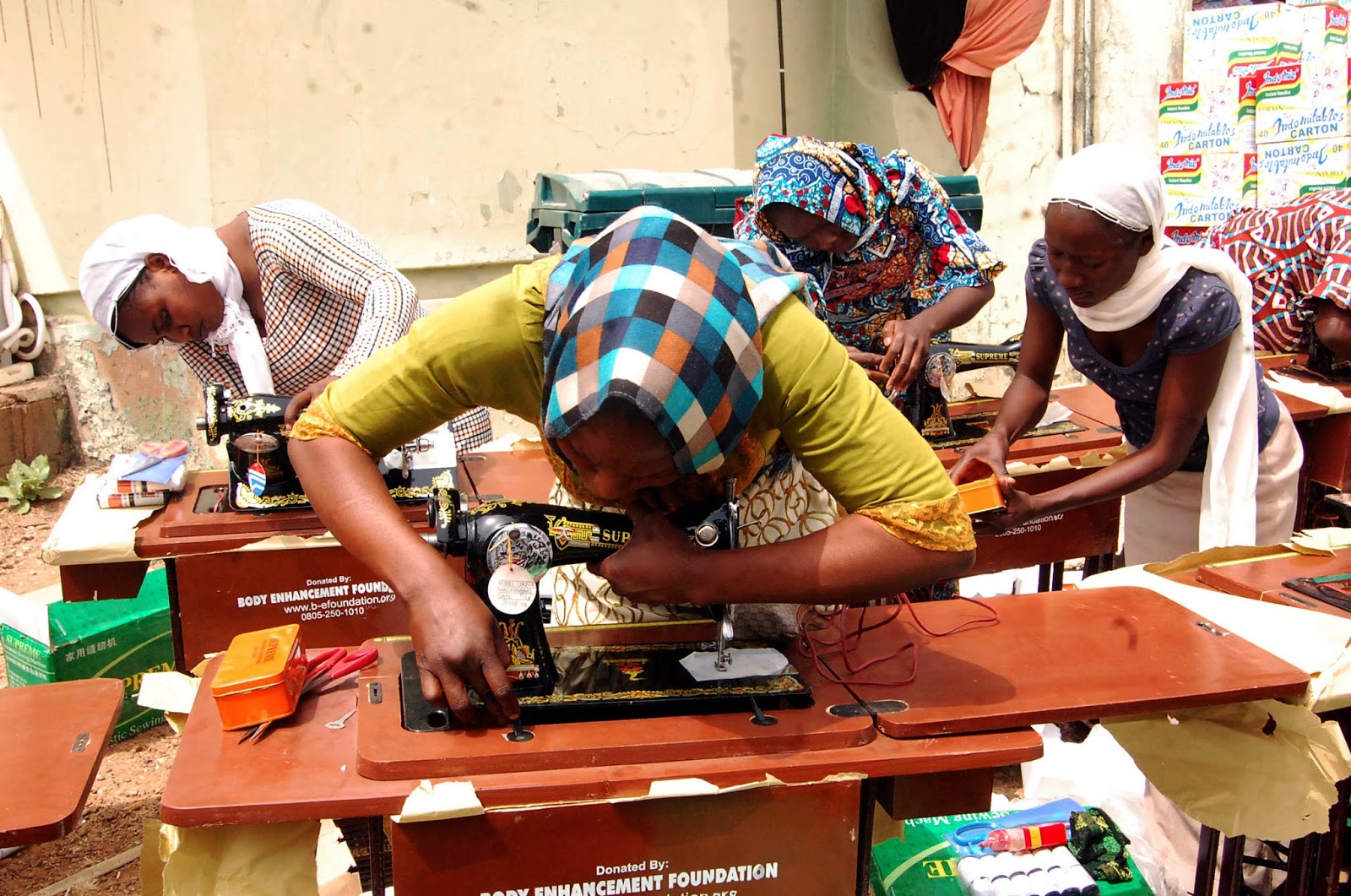
Speaking at the sixth graduation ceremony of 300 vocational skills trainees of a non-governmental organisation, the Mother and Child Care Enhancement Foundation (McCEF), registered by the first lady of Nasarawa State, Mrs Salamatu Umaru Tanko Al-Makura in Lafia, the executive vice chairman of the National Agency for Science and Engineering Infrastructure (NASENI), Prof. Sani Haruna, said human capacity and capability for production are key to the industrial development and self-reliance of any nation.

Prof Haruna, who was the chairman of the occasion, noted that the industrial development and self-reliance of any nation stands on a pyramid whose components include craftsmen and women; technologists and technicians; engineers and scientists and the experts and academia.

He said, “The largest and most important aspect of this component is craftsmen and women. They are the foundation of the pyramid and they know what to do. The second components are technologists and technicians. Their own mandate in the pyramid is that they know how to do. The third components are engineers and scientists who know why it is done. At the peak of the pyramid are game changers, those with advanced degrees who live in the virtual world. They live in tomorrow; they create jobs for this category.”

He lamented the dearth in skills acquisition in Nigeria, noting, however, government’s firm commitment to bridging the gap. He said the graduation signified government’s effort at bridging the gap.

“Unfortunately the foundation of this pyramid, which is skill acquisition is lacking in Nigeria and for that reason, today, the best plumbers, artisan, masons, tillers are coming from Togo or China. So, what MCCEF is doing today is to demonstrate the level it has gone in bridging this gap,” he stated.

Wife of President Muhammadu Buhari, Mrs Aisha Buhari, in her speech, thanked the state Governor, Mr Umaru Tanko Al-Makura, for his support in promoting the course of women and children in the state, describing the empowering of women and children with vocational skills as encouraging.

She said, “This event is significant in many ways as you are graduating 300 women and youths and you are sending them back into their communities with new skills, knowledge and mindset to better themselves and help their communities.”

The First Lady, represented by a former Minister of State for Science and Technology, Mrs Pauline Tallen, congratulated the graduates and urged them to use the skills they had acquired to change their lives and their communities.

In his remarks, Mr Al-Makura said activities of NGOs such as McCEF in filling the gaps and supporting the developmental efforts of government at all levels were worthy of emulation.

He restated the state government’s commitment to empowering and bettering the lots of the masses through relevant skills acquisition projects, saying the state signed a memorandum of understanding with NASENI on skills acquisition.

“This graduation is coming at a very special period for us in Nasarawa State, and more so because we have invited someone who is part and parcel of skills acquisition not only in Nasarawa State but also in Nigeria.

“Someone whose agency has partnered with this administration way back for years in ensuring that we feel the tandem effect of skills acquisition in the nook and cranny of the state by giving our youths the opportunity to earn a living through entrepreneurial skills.

“We have signed a memorandum of understanding with NASENI and we’ve seen the value of it. This time around we have now been given another boost to collaborate with NASENI in what they are doing in different types of vocation,” the Governor said.

He further said his government planned to expand the scope of skills acquisition across the state, adding the drive informed the procurement of some equipment from Singapore three years ago with a view to impacting technology to the youth in various attractive vocations.

“I have said it times without number that the kind of clamour we are doing to get youths to do some certain jobs is good enough but we have to get such jobs to attract them. So we have now gone beyond ordinary farming, carpentry, hairdo and others, we have even gone to secondary skills like plumbing, electrical. At this time of diversification any kind of vocation you will be able to impact to the youths will not only reduce restiveness but will increase prosperity and reduce poverty,”he added.

Highlighting the motivation for McCEF, the Nasarawa State First Lady said the NGO was formed to provide innovative and competent support to needy communities, women and children including organisations aimed at stimulating local development initiatives especially among the disadvantaged as well as developing harmonious relations among people of different backgrounds and culture.

Addressing the graduates, she reminded them that the skilled garnered during the training is their tool for survival.

“It is your torchlight to the world. It is your pillar and your umbrella in the sun and under the rain. If you properly utilise your handiwork, you will not only care for your immediate family, you will also employ others thereby making you an employer of labour,” she added.


Dipo Olowookere is a journalist based in Nigeria that has passion for reporting business news stories. At his leisure time, he watches football and supports 3SC of Ibadan. Mr Olowookere can be reached via [email protected]

Click to comment

Leave a Reply

Your email address will not be published. Required fields are marked *

Economy

South Korea Commits $12bn to SMEDAN’s Entrepreneurship Drive

Published

on

MSMEs Minimum Wage Payment

By Adedapo Adesanya

The Small and Medium Enterprises Development Agency of Nigeria (SMEDAN) has secured a $12 billion commitment from South Korea to establish a Skills Acquisition Centre in Abuja, as part of efforts to strengthen entrepreneurship and boost small businesses across Nigeria.

The chief executive of SMEDAN, Mr Charles Odii, disclosed this over the weekend during a road walk and sensitisation campaign at Utako Market in Abuja to commemorate the 2026 World MSME Day.

According to Mr Odii, the proposed facility will provide vocational and entrepreneurial training to young Nigerians and enhance the capacity of Micro, Small and Medium Enterprises (MSMEs).

He said the agency is awaiting the allocation of land by the Federal Capital Territory (FCT) Administration for the project.

“We need land in the FCT to build the Skills Acquisition Centre. If the FCT Administration is unable to provide one, we will use our office premises in Idu, Abuja, because we do not want Nigeria to miss this opportunity offered by the Korean Government to support skills and vocational training,” he said.

As part of activities marking the World MSME Day, Mr Odii also announced the launch of SMEDAN’s N500 million GROW Fund, a zero-interest financing intervention designed to support small businesses across the country.

He explained that the fund would be disbursed to members of registered cooperative societies and business associations to strengthen their enterprises.

According to him, beneficiaries are expected to utilise the funds strictly for business purposes, including expanding working capital, acquiring workspaces and purchasing equipment.

“The funding is meant to support and improve their businesses. It should be used for working capital, workspaces, tools and other productive business needs. Any use outside these objectives will not be encouraged,” he said.

Mr Odii further disclosed that entrepreneurs trained by SMEDAN in Abuja would receive vocational equipment, including washing machines, barbing kits, shoemaking tools and sewing machines, to enable them to become self-reliant.

“We have identified these tools as essential to the businesses of our trainees based on the skills programmes they have undergone,” he added.

The SMEDAN boss stressed that the agency’s interventions are driven by the critical role MSMEs play in Nigeria’s economy.

“Small businesses are the heartbeat of Nigeria’s economy. By providing infrastructure, skills and financing, we are creating an enabling environment for them to grow, thrive and contribute meaningfully to national development,” he said.

Odii also revealed that the National MSME Policy would be reviewed and relaunched in November 2026 to strengthen the sector and improve its contribution to economic growth.

He called on state governments to collaborate with SMEDAN in expanding skills acquisition programmes, creating jobs, reducing poverty and supporting the economic development agenda of President Bola Tinubu’s administration.

Continue Reading

Economy

Dangote Refinery Broadens Feedstock Base With UAE Crude Purchase

Published

on

dangote refinery trucks

By Adedapo Adesanya

The Dangote Petroleum Refinery has purchased two cargoes of crude oil from the United Arab Emirates (UAE), marking its first-ever procurement of Middle Eastern crude as it diversifies its feedstock sources ahead of continuous expansion.

According to a report by S&P Global Commodity Insights, the two cargoes will be the first sourced by the 700,000-barrels-per-day refinery from any Middle Eastern supplier, signalling a shift from its traditional reliance on Nigerian, African, and United States crude grades.

The report said the purchases followed the resumption of oil exports from the Middle East after the United States and Iran reached an interim peace agreement that restored confidence in shipping through the Strait of Hormuz.

The refinery, designed primarily to process Nigeria’s light sweet crude, has increasingly diversified its crude slate as operations ramp up. The company sources crude from Brazil, Equatorial Guinea, Angola, Algeria, and the US, among others.

The refinery and the Nigerian National Petroleum Company (NNPC) Plc had agreed on the supply of between 13 and 15 cargoes of Nigerian crude monthly in Naira, but the volumes often fluctuate. In May, the state oil company allocated seven cargoes to the plant, up from five in previous months.

The chief executive of the Dangote Refinery, Mr David Bird, had previously disclosed that these constraints had compelled the company to seek additional crude sources outside Nigeria.

According to S&P Global, the refinery has been broadening the range of crude grades it processes as part of its ambition to operate as a fully merchant refinery. The report noted that in 2025, about 70 per cent of the refinery’s crude imports came from Nigeria, while 24 per cent originated from the United States.

The report added that the refinery’s expansion plans would further increase its crude requirements. Dangote plans to double the refinery’s processing capacity to 1.4 million barrels per day by the end of 2028, a level that would enable it to process about 80 per cent of Nigeria’s recent crude oil production in a single day.

Business Post understands that since NNPC cargoes are cheaper for the ​refinery because of lower ​shipping costs, importation of crude could translate to higher fuel prices, with Nigerians possibly buying as high as N1,300 – N1,400 at the pump.

Continue Reading

Economy

FCCPC Laments Lack of Price Relief Despite Falling Global Oil Prices

Published

on

Petrol Prices

By Adedapo Adesanya

The Federal Competition and Consumer Protection Commission (FCCPC) has expressed concern that Nigerian consumers have yet to benefit from lower prices despite the recent sharp decline in global crude oil prices.

Business Post reports that crude prices currently trade around $69 and $71 per barrel in the international market.

The commission stated on Sunday that following a market surveillance exercise, the review of gantry prices from local refiners, marketers, depot operators and retail outlets showed only token reductions, not aligned with the steep drop in international crude prices.

The chief executive of the agency, Mr Tunji Bello, said that though the FCCPC does not set petroleum prices in a deregulated market, it is mandated by the Federal Competition and Consumer Protection Act, 2018, to promote competition and protect consumers from unfair business practices.

“To be clear, the commission does not regulate or approve petroleum prices in a deregulated downstream market. Our responsibility under the Federal Competition and Consumer Protection Act, 2018, is to promote competitive markets, prevent anti-competitive conduct, and protect consumers from unfair, deceptive and exploitative business practices,” Mr Bello said.

“We are concerned that while dealers often respond swiftly by hiking pump prices whenever crude prices rise, it is curious that it is taking forever for consumers to benefit significantly when crude prices fall. Competitive markets must work fairly in both directions,” he added.

The organisation noted that crude prices fell to about $73 per barrel after a recent ceasefire between the United States and Iran and the reopening of the Strait of Hormuz, down from a peak near $120 per barrel in April.

During the April–May price spike, petrol prices rose to between N1,350 and N1,500 while diesel traded around N2,000. In February, PMS averaged between N800 and N900. Presently, average retail PMS nationwide is about N1,200, with some local refiners listing gantry prices between N1,025 and N1,075.

The FCCPC acknowledged that domestic fuel prices are affected by multiple commercial factors, including refining costs, foreign-exchange movements, logistics, financing and distribution expenses, but said competitive market dynamics should have passed more of the recent international cost declines to consumers.

“Market liberalisation does not diminish businesses’ obligations to compete fairly or consumers’ right to fair treatment,” Mr Bello added. “Where credible evidence indicates conduct that undermines competition, exploits consumers or otherwise contravenes the Federal Competition and Consumer Protection Act, the Commission will investigate and take appropriate enforcement action,” urging consumers to report suspected anti-competitive conduct, misleading pricing or other unfair market behaviour via its established complaint channels.

Continue Reading

Trending