
Economy
SMEs Suffer as Banks, Investors Focus on Bonds, T-Bills

By The Nation
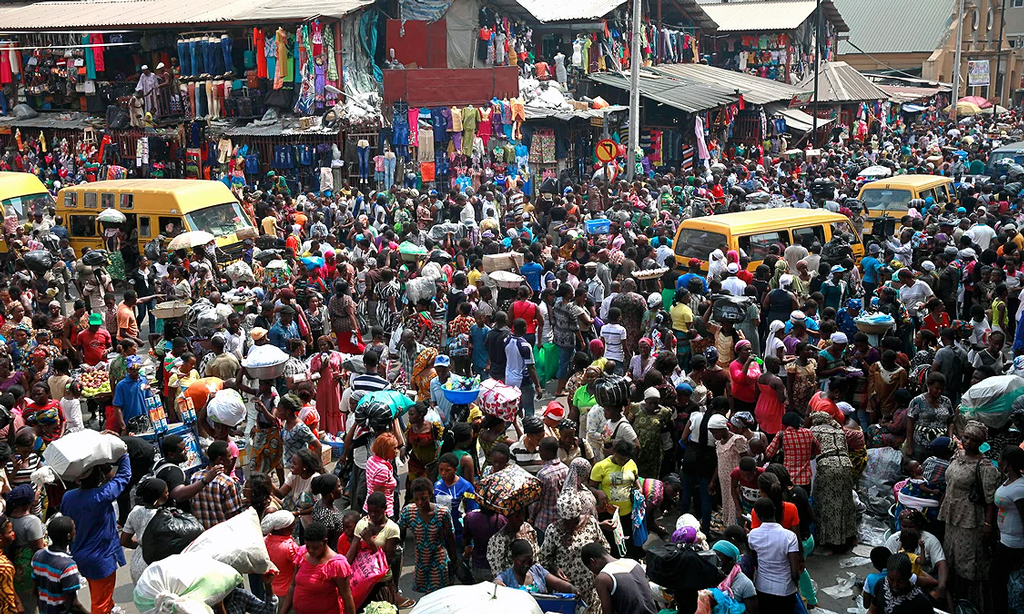
Majority of Small and Medium Enterprises (SMEs) have no access to bank loans for their operations – no thanks to the Federal Government’s preference for Bonds and Treasury Bills (T-Bills) issuances in funding key projects to keep inflation and exchange rate stable. Bank deposits are now invested in government securities that are fast becoming a goldmine for savvy investors. Banks’ loanable funds have dropped, and so are credits to the private sector.
COLLINS NWEZE of The Nation writes that managers of the economy are expected to prioritise private sector borrowing, not government, for sustained economic turnaround.
It was a busy Friday morning in Lagos. Everyone was rushing to beat the usual Third Mainland Bridge traffic. For Emmanuel Odion, Managing Director/CEO, Mactey Nigeria Limited, an Information Technology (IT) firm, making it to Victoria Island before 8am was important for two reasons.
Firstly, it would enable him attend a 9am board meeting where a decision on a N20 million inflow into the company’s account would be taken. Secondly, it will enable him keep a 10am scheduled appointment with a top client.
It was at that board meeting that Odion and other top management staff agreed to invest 50 percent of the fund in Treasury Bills (T-Bills), and the rest in Federal Government of Nigeria (FGN) Savings Bonds (FGNSB) being promoted by the Debt Management Office (DMO).
Besides, N15 million in the company’s fixed deposit account with a commercial lender, placed at 10 percent interest rate, will be liquidated and re-invested in T-Bills.
The T-bills are short-term securities that help the government to raise funds and support monetary policy management of the Central Bank of Nigeria (CBN). Bonds are long-term debt obligations issued by private or public corporations to fund key projects.
As at September 30, T-Bills accounted for 30.23 percent of the Federal Government of Nigeria’s (FGN’s) domestic debt of N12.5 trillion as against the DMO’s maximum target of 25 percent.
The board meeting was crucial because its minutes were needed by Afrinvest Asset Management Limited, as required by regulation, for it to invest the funds for the firm at 18 percent interest rate for the T-Bills and 14 percent for the FGNSB.
It is not just Mactey Nigeria Limited that is moving huge cash from the banks’ vaults to government securities. Many civil servants, private sector employees, and even commercial banks, now invest in T-Bills. The attraction is interest rate that is far higher than what any bank could offer.
But, the rush for government securities has reduced banks’ lending to the private sector. Data from the CBN showed that banks granted only 0.1 percent of their total loans to SMEs in the last five years. Of the aggregate N135.9 trillion loans disbursed between 2011 and 2015, only N159.75 billion went to the SMEs.
An SME operator in the Fast Moving Consumer Goods (FMCG) segment, Michael Stephens, said his application to a bank for N400,000 loan to enable him increase sales volume at the end-of-the-year season was declined without any explanation. He said the lender only called to inform him that the request did not sail through.
Another bank customer, Kingsley Obi, said he gave up his request for N100,000 loan after six months of application and his bank kept asking him to be patient.
“I think it takes long time for banks to approve SMEs’ loans and in many cases, the loans are declined after several months of waiting,” Obi disclosed.
The National Association of Small Scale Industrialists (NASSI), Nigerian Association of Small and Medium Enterprises (NASME) and Association of Small Business Owners of Nigeria (ASBON) all complained that despite the availability of special funds for SMEs, most of their members do not have access to such funds.
Although, majority of banks acknowledged the strategic roles played by the SMEs in driving economic development their involvement in financing this segment remains low.
Banks have attributed their limited funding to the sector to the risk involved in lending to the segment but the biggest impediment has been government’s rising borrowing, which is crowding out private sector from accessing needed credit.
Head, Currencies Unit, Ecobank Nigeria Limited, Olakunle Ezun, said the Federal Government knew the implications of regular T-Bills issuances on the real sectors’ and SMEs’ ability to access loans.
According to him, the government was creating lucrative investment options for the lenders and other investors by issuing its securities at attractive rates.
“Shareholders in banks are looking forward to their end-of-year dividends which can only come from good investments. If you click the financials of Zenith Bank, GTBank, Access Bank, and United Bank for Africa, and all other high earning banks, majority of their revenues come from government securities. They get as high as 21 percent returns from T-Bills without even doing anything,” he disclosed.
The government uses the funds to meet short-term obligations as revenue agencies are not remitting enough funds needed to fully finance its operations.
Ezun advised the government to crash T-Bills and bonds rates to discourage banks from investing in such securities, and make more funds available to private sectors at lower rates. This, he noted, will boost income, consumption and job creation in the economy.
He explained that term deposits, which are the only long term funds available for lending, are costly, and such funds are equally given out by the banks at very high rates.
Ezun said: “The government has to bring down its bonds and T-Bills rates even though such decision is monetary policy in nature. Besides, when interest rate is low, the naira becomes volatile and the CBN’s exchange rate stability role will be threatened.
“It is equally believed that private sector operators always want to borrow at low interest rate and access dollars at cheap rates. But, both are hardly achieved simultaneously.”
Explaining further, former Keystone Bank Executive Director Richard Obire said that as a banker to the Federal Government, the CBN has a mandate to keep the inflation rate low, achieve stable exchange rate and ensure that interest rate is positive (above inflation rate) to encourage more people to save and enhance banks’ drive to grow the economy.
“The CBN’s role is to deliver price, financial system stability and sustainable economic development using effective, efficient and transparent implementation of monetary exchange rate policy and management of the financial sector,” he said.
Obire explained that once the CBN thinks that inflation will rise, it will begin to reduce money supply in the hands of economic agents such as the SMEs and manufacturers.
This it does by mopping up liquidity in the system through T-Bills, bond issuances, making dollar expensive and raising the Cash Reserve Ratio (CRR) for banks.
The CRR, now at 22.5 percent, is the amount banks keep with the CBN for every deposit received. CBN data showed that as at last month, commercial banks’ reserves with the CBN stood at N4.8 trillion.
Obire said the CBN has continued to carry on with the old ways of dealing with price stability, rather than allow inflation to rise, so as to activate growth. He did not only called for a single digit interest rate, but agreed with Ezun that the CBN should stop issuing T-Bills and bonds at attractive rates, mostly from 18 and 21 percent.
Obire said: “Right now, the banks just gather deposits from customers and channel them into T-Bills and bonds instead of lending the funds to SMEs and real sector operators.
“We need the Federal Government and the CBN to trade-off something – like inflation rate or exchange rate stability to promote growth through increased lending to private sector which will boost production.”
He, however, disclosed that bond issuances are better than T-Bills as funds from bonds are project-based while T-Bills’ funds are simply quarantined in the CBN.
Obire counselled the financial regulator to make policies that encourage lending to the private sector, a practice that will in the long-run, check rising inflation and promote exchange rate stability.
Also speaking, the Director-General, Lagos Chamber of Commerce and Industry (LCCI), Muda Yusuf, said investments in T-Bills and Federal Government bonds have become more attractive than investments in the real economy such as manufacturing, agriculture and solid minerals.
Yusuf said: “It has created a serious crowding out effect on private sector credit. Even the financial institutions would rather invest in T-Bills and bonds rather than lend money to entrepreneurs.
“This condition has been created by the high cost at which the government borrows – the high yield on treasury bills and Federal Government bonds which are in the 20 percent threshold.”
The income from the investments in these government securities are tax free, hence, not many investments can match this kind of returns.
To him, the dynamics of the debt market has become a constraining factor on the financial intermediation role of the banking industry, a practice that hurts wealth creation and employment generation within the economy.
According to Yusuf, the biggest burden of debt is from the domestic debt.
He said: “This is as a result of the high cost at which government borrows. We submit that borrowing should be restricted to concessionary loans with good moratorium and tied to specific projects. This is a better debt management structure.”
Another major implication of the high yield on T-Bills and government bonds is the burden of debt servicing.
In this year’s Appropriation Bill for instance, the sum of N1.8 trillion was earmarked for debt service, which was 85 percent of capital budget. The allocation in the 2018 Budget is N2 trillion, which is 74 percent of capital expenditure proposal. These are huge sums. It is a trend that is clearly not sustainable.
On his part, Wema Bank Plc Deputy Managing Director Adebola Adebiose said he wants improvement in the economy by lending to the SMEs.
He said: “One key aspect to achieving that is being able to support SMEs. And SMEs must also be able to access loans at very reasonable rate. If at this point in time, government is borrowing from the system which means that the private sector has been crowded out.
“Imagine, if you want to invest in T-Bills at 18 percent. How do you expect to borrow from a bank at the same rate? And given that banks are not paying T-Bills’ rates as interest on deposits, you may pull out your funds from the banks and invest in T-Bills.”
According to Adebiose, the government is doing a lot to bring down interest rate, but there is also the aspect that has to do with managing exchange rate, which solely lies with the CBN.
“Yes, interest rate must come down, but we are beginning to see that foreign exchange stability in the system, which makes it possible to be achieved.”
The Managing Director of Afrinvest Asset Management Limited, Ola Belgore, said activities in the investment environment largely depend on whether one is raising equity or debt. For debt, the environment is rather stiff, and with Monetary Policy Rate (MPR) currently at 14 percent, may not change soon.
There have, however, been one or two bond issuances, including the recent Lagos State Government bond issued at 16.5 percent which was competing against Federal Government’s T-Bills at 18 percent.
“The average rate for T-Bills is 18 percent. However, once you mark it up with risk premium, you are approaching 20 to 22 percent, which is a challenge within the operating environment, especially when you consider what cost manufacturers will borrow,” he disclosed.
In line with this experience, players have recognised the need to widen the clients’ base, with even the Federal Government going for cheaper funds, with the FGNSB offering less than 14 percent to investors, as against T-Bills rate of around 18 percent.
Belgore urged the banks to target the grassroots for cheaper funds, explaining that a large part of the investment is at the grassroots.
He said: “Currently, we have what is called investor apathy. When we design a mutual fund, we approach a group of people and encourage them to invest. At the same time, Bank ‘A’ conducts a public offer, targeting the same group of people.
“It gets rather tiresome. However, with retail customers, all players can market different products comfortably, and because the market is so huge, we can both take a market share that is completely exclusive.”
Belgore disclosed that many banks have realised that High Net-worth Individuals require more resources to manage. For instance, with deposits as high as N300 million, customers demand for 18 to 20 percent interest rate on their funds, whereas, the retail customer will accept five percent happily.
He said that with more retail accounts, the banks can give out loans lower interest rates and make higher profits.
“When you put this side by side, the manpower required to service high net worth individuals, who typically demand one-on-one service, the retail customer generally seems more attractive. I would, however, state that high net-worth customers should be highly valued and should receive the deserved attention, while technology is deployed to capture the millions of unbanked in the society,” he said.
Overseas’ borrowing on the increase
The government borrowing has gone global despite many Nigerians kicking against foreign borrowing. The Federal Government has demystified borrowing, with its regular visits to the International Capital Market (ICM) in search of dollar-denominated loans.
Nigeria has consistently borrowed from the ICM where it has raised $7 billion through Eurobonds in the last one year.
It borrowed $1.5 billion through Eurobonds in two tranches of $1 billion and $500 million plus another $5.5 billion in the last quarter of this year.
The DMO has issued Sovereign Green Bond (SGB) worth N10.69 billion, $300 million diaspora bond and N100 billion non-interest bonds (Sukuk bonds), within the year.
The positive outlook for crude oil prices in 2018 and attractive yield curve for emerging market papers have made the offers attractive to investors. Nigeria’s debt stock stood at N20 trillion as at September 30.
The floating of the Eurobond was part of the Federal Government’s Medium Term Note (FGMTN) Programme (2016 to 2018) expected to help it bridge budget deficits.
The DMO said the FGMTN programme gives government flexibility to take advantage of favourable market conditions in the ICM to raise funds, if and only when the need arises.
DMO’s Head of Policy Strategy & Risk Management Joe Ugolala captured the benefits of using debts to fund infrastructure more succinctly.
His explanation: “If you want to build a railway from Lagos to Aba, there are two options. Firstly, you can save up the money for 10 years, before starting the project. The other option is to borrow and build the railway immediately, and within 10 years, generate enough revenues to offset the debt.”
He described the second option as more plausible adding that for one to borrow, there must be that inherent capacity to repay, whether the debt came from internal or external sources. He explained that the Federal Government has the capacity to borrow from outside to fund budget, and support specific projects including infrastructure.
The Director-General of West African Institute for Financial and Economic Management (WAIFEM), Prof. Akpan Ekpo, explained that with the declining revenue from oil, budgetary allocations alone may not be enough to finance the infrastructure deficit in the country.
For instance, the country’s current available power generation capacity is about 4,000 megawatts, which is far cry less for the estimated demand of 10,000 to 12,000 megawatts.
This has resulted in frequent and unpredictable load shedding and a heavy reliance on generators by consumers.
Prof Ekpo said: “With the current political will to tackle corruption and the desire to find a solution to the infrastructure problem in the country, there is need to channel fresh investments into power supply, roads, the railway and other social amenities.”
Afrinvest West Africa Plc Managing Director Ike Chioke said Eurobond issuances come at attractive rates relative to the domestic market and presently have many viable on-lending outlets.
Chioke, who spoke on the theme: “Navigating growth in a challenging environment”, admitted the danger of likely pressure that may arise upon the payment of coupon on Eurobonds raised by the country adding that borrowers will require the dollar bi-annually to fulfill obligations to Eurobond holders.
Associate – Research, Eczellon Capital Limited, Mustapha Suberu, urged the government to focus more on external borrowing, and less on internal borrowing and insisted that the foreign debt is cheaper.
He said that borrowing is not a bad idea, but that it must be used to fund infrastructure and raise the competiveness of the economy.
Suberu also spoke of the need for adequate monitoring to ensure that borrowed funds are spent the projects they were meant for.
Renaissance Capital’s Sub-Saharan Africa (SSA) Economist, Yvonne Mhango, said Nigeria’s debt service/revenue has risen sharply in recent years to 62 per cent as at June 2017 against 29 per cent in 2014.
This largely reflects the Federal Government’s low revenue/Gross Domestic Product (GDP) target of four per cent this year.
“The $5.5 billion Eurobond issuance was part of government’s efforts to lower local interest rates, by reducing domestic debt/total public debt to 60 per cent, against over 70 per cent today,” she said.
African Eurobond success stories
Nigeria is not alone in the Eurobonds race as many African countries have successfully raised cash from the ICM given its favourable rates.
Chief Economist, Global Research, Africa, Standard Chartered Bank, Razia Khan, said that 2013 saw record sovereign external debt issuance in Sub-Saharan Africa (SSA), with $6.6 billion of borrowing.
As at 2016, this amount has already been surpassed. In most instances, the pricing – from the borrower’s perspective – exceeded even the more optimistic estimates.
For instance, Côte d’Ivoire issued a 10-year $750 million Eurobond at a yield of 5.625 per cent. Kenya came to the market with the largest-ever issuance size for a first-time borrower – a combined $2 billion – and pricing still beat expectations substantially.
Since then, its debt has rallied further. Ghana may have surprised the most. Despite ongoing concerns about its double-digit fiscal deficit, and mounting debt worries as the yield on its local-currency three month T-bill rose to over 25 percent, its 2026 Eurobond was oversubscribed.
While Ghana remains dependent on very short-term borrowing domestically, it was able to borrow $1 billion from the ICM at 8.25 percent.
Khan admitted that market discipline has been elusive in many countries regretting that the ability to borrow from ICM has not generally caused countries to improve their economic management dramatically – even if they planned repeat issuance.
She said: “Kenya’s headline inflation has been rising strongly, driven by food prices. In Nigeria, there has been much talk about the potential for cutting interest rate. Despite officials’ plans to boost lending in Nigeria, there appears to be no predetermined route to further easing. Interest rates can only be reduced sustainably if policy credibility is not in question.”
But, CBN Governor Godwin Emefiele hinted on the possibility of lowering interest rate next year insisting that monetary policy stance could change when the underlying fundamental such as drop in inflation becomes more supportive.
Emefiele said: “If the pace of disinflation becomes adequate and we see inflation at predicted levels, I am very optimistic that Monetary Policy Committee (MPC) may begin to see strong justification for an easing of monetary policy, which may further accelerate the recovery process.”
DMO’s Director-General, Ms Patience Oniha, assured Nigerians that the government’s borrowings are pre-approved by the executive and legislative arms of government and are used to finance various activities of the government as appropriated.
These layers of approvals, she said, ensured that the borrowings are both necessary and scrutinised beforehand.
Ms Oniha said: “The increasing focus by the current administration of using borrowed funds for infrastructural development is a step in the right direction. As borrowing is deployed to infrastructure to promote economic growth, the benefits of job creation and increased production among benefits are good for all Nigerians.”
The concerns over T-Bills and government bond issuances were captured in the Economic Recovery and Growth Plan (ERGP) document for the attention of the government.
Without implementing the ERGP’s recommendation on government’s excessive borrowing from the economy, private sector operators will continue to suffer acute fund shortage.








By Adedapo Adesanya
The oil market slid about 2 per cent on Wednesday after paring deeper losses earlier in the trading session, as Iran reviewed a proposal by the United States to end the war that has disrupted global energy flows.
Brent futures fell $2.27 or 2.2 per cent to settle at $102.22 a barrel, while the US West Texas Intermediate (WTI) crude futures lost $2.03 or 2.2 per cent to trade at $90.32 per barrel.
It was reported that Iran was still reviewing a US proposal to end the war in the Gulf, despite an initial response that was negative, indicating that it had so far stopped short of rejecting it outright.
Pakistan delivered the 15-point proposal on behalf of the US government, and the consideration appeared to signal that at least some figures in Iran may be considering it.
Meanwhile, the White House Press Secretary, Mrs Karoline Leavitt, said President Donald Trump would hit Iran harder if it fails to accept that the Middle East country has been “defeated militarily”.
Currently, the market is facing the biggest-ever oil supply disruption as the US-Israel war has halted shipments of oil and liquefied natural gas through the Strait of Hormuz, which typically carries about 20 per cent of the world’s LNG and crude supply.
Market analysts noted that this has resulted in around 20 million barrels of crude losses daily, or some 500 million barrels, or five full days of global supply, since the war began on February 28. Countries have started rationing fuel use.
India, one of the world’s largest oil consumers, has bought its first cargo of Iranian liquefied petroleum gas in years after the US temporarily removed sanctions.
Meanwhile, Japan has called on the International Energy Agency (IEA) for an additional coordinated release of oil stockpiles, as it seeks to shield consumers from higher energy prices.
In Venezuela, oil production, including condensate and gas liquids, reached 1.1 million barrels per day in March.
Amid these developments, Russia’s major export terminals suspended crude oil and oil products loadings after massive Ukrainian drone attacks sparked blazes. At least 40 per cent of Russia’s oil export capacity has been halted following Ukrainian drone attacks on its energy infrastructure.
The US Energy Information Administration (EIA) said energy firms added 6.9 million barrels of crude into stockpiles during the week ended March 20.
That was higher than the build of 2.4 million barrels reported by the American Petroleum Institute (API) on Tuesday.

By Dipo Olowookere
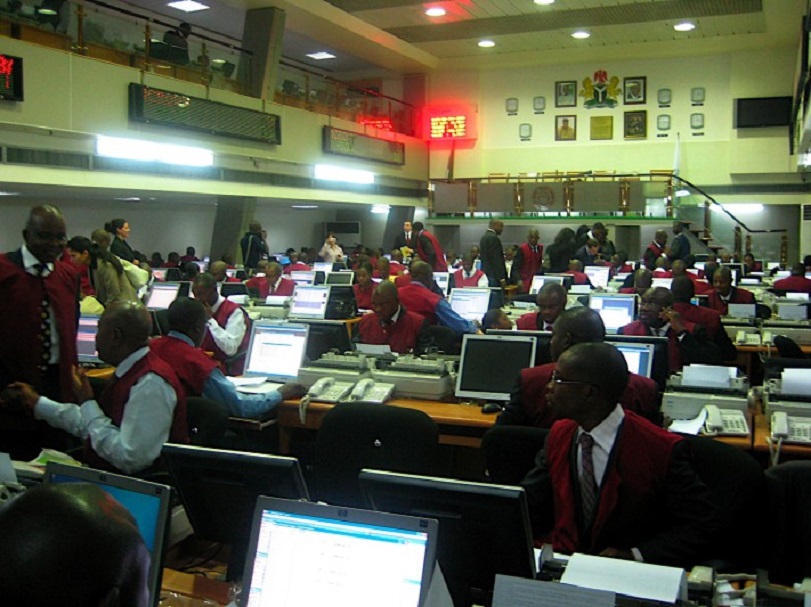
The Nigerian Exchange (NGX) Limited remained in the green territory on Wednesday after further appreciating by 0.11 per cent, driven by gains in bellwethers like MTN Nigeria, GTCO, and others.
Data from Customs Street showed that the insurance and the consumer goods sectors went up by 0.76 per cent and 0.42 per cent apiece, offsetting the 0.98 per cent loss posted by the banking index and the 0.11 per cent decline suffered by the industrial goods counter. The energy sector closed flat at the close of transactions.
When the closing gong was beaten at midweek, the All-Share Index (ASI) increased by 219.87 points to 200,925.75 points from 200,705.88 points, and the market capitalisation went up by N141 billion to N128.977 trillion from N128.836 trillion.
Investor sentiment remained strong yesterday after the bourse recorded 36 price gainers and 33 price losers, representing a positive market breadth index.
Legend Internet grew by 10.00 per cent to N7.26, Zichis gained 9.93 per cent to settle at N11.40, Premier Paints expanded by 9.93 per cent to N31.00, John Holt improved by 9.79 per cent to N15.70, and Consolidated Hallmark advanced by 6.26 per cent to N5.26.
On the flip side, Fidson declined by 9.97 per cent to N94.85, Austin Laz lost 9.89 per cent to quote at N4.01, Living Trust Mortgage Bank shrank by 7.08 per cent to N4.46, Secure Electronic Technology slumped by 7.04 per cent to N1.32, and Sterling Holdco depreciated by 5.56 per cent to N7.65.
The busiest equity for the day was Wema Bank, which transacted 104.3 million units worth N2.8 billion. Access Holdings traded 42.8 million units valued at N1.1 billion, Zenith Bank exchanged 33.9 million units for N3.6 billion, Zichis sold 26.6 million units worth N221.2 million, and GTCO recorded a turnover of 25.6 million units valued at N2.9 billion.
In all, investors bought and sold 538.0 million units for N25.4 billion in 45,641 deals on Wednesday compared with the 1.3 billion units worth N65.3 billion traded in 89,949 deals on Tuesday, implying a decrease in the trading volume, value, and number of deals by 58.62 per cent, 61.10 per cent, and 49.26 per cent apiece.

By Aduragbemi Omiyale
The federal government, through the Minister of Women Affairs and Social Development, is working together with the Nigerian Exchange (NGX) Group Plc to deepen the participation of women in capital markets.
The Minister of Women Affairs and Social Development, Ms Imaan Sulaiman-Ibrahim, underscored the urgency of inclusion in achieving national economic ambitions.
“The capital market reflects our collective choices, who participates, who has access, and who benefits. Women remain underrepresented in formal finance despite their critical role in Nigeria’s productivity.
“Through strategic partnerships and targeted interventions, we are working to change this narrative and expand opportunities for women across the economy.
“Achieving a one-trillion-dollar economy requires the full participation of Nigerian women,” she said at the closing gong ceremony at the NGX on Tuesday in Lagos.
She said the government was ready to partner with capital market stakeholders to expand financial access and unlock opportunities for women across the country.
Welcoming the Minister, the chairman of NGX Group, Mr Umaru Kwairanga, commended the Ministry’s leadership in promoting women’s development and economic participation.
“Women are central to Nigeria’s economic progress. As we work towards a more inclusive and resilient economy, the capital market remains a vital platform for expanding access to finance, supporting women-led enterprises, and enabling broader participation in wealth creation.
“NGX Group remains committed to partnering with the Ministry to drive sustainable impact and empower the next generation of women leaders,” he stated.
Also speaking, the Director General of the Securities and Exchange Commission (SEC), Mr Emomotimi Agama, emphasised the importance of deliberate inclusion.
“Behind every successful market are women. For Nigeria’s capital market to reach its full potential, we must be intentional about empowering women as active participants.
“Current participation levels do not yet reflect our population or potential. Collaborations like this send a strong call to action for more women across Nigeria to engage with the market and contribute to national growth,” the SEC chief stated.
On his part, the chief executive of NGX Group, Mr Temi Popoola, said, “At NGX Group, we are building a dynamic and inclusive market ecosystem that expands access to investment opportunities and supports diverse participants. Through partnerships such as this, we are unlocking new pathways for women to participate as investors, entrepreneurs, and wealth creators.”












-
 Feature/OPED6 years ago
Davos was Different this year
-
Travel/Tourism10 years ago
Lagos Seals Western Lodge Hotel In Ikorodu
-

 Showbiz3 years ago
Estranged Lover Releases Videos of Empress Njamah Bathing
-
 Banking8 years ago
Sort Codes of GTBank Branches in Nigeria
-

 Economy3 years ago
Subsidy Removal: CNG at N130 Per Litre Cheaper Than Petrol—IPMAN
-

 Banking3 years ago
Sort Codes of UBA Branches in Nigeria
-

 Banking3 years ago
First Bank Announces Planned Downtime
-

 Sports3 years ago
Highest Paid Nigerian Footballer – How Much Do Nigerian Footballers Earn