Economy
Stamp Duty Different From Postage Stamp—Akande Clarifies
By Aduragbemi Omiyale
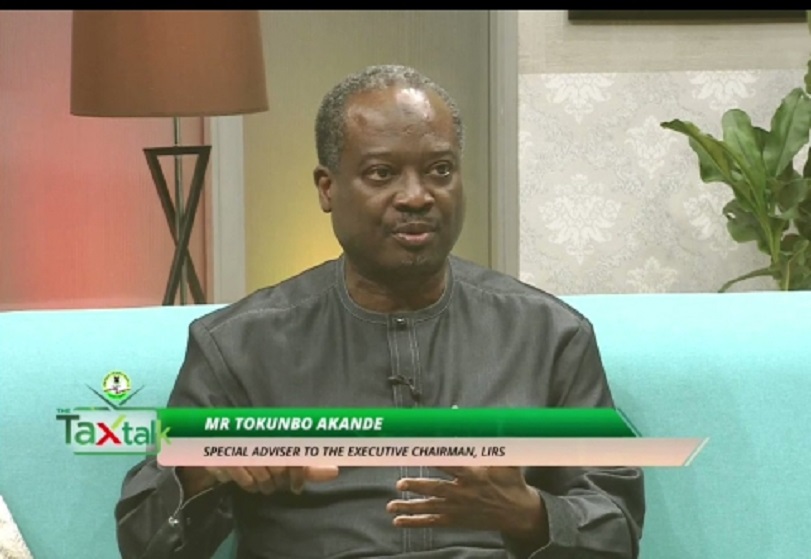
Mr Tokunbo Akande, the Special Adviser to the Executive Chairman of the Lagos State Internal Revenue Service (LIRS), Mr Ayodele Subair, has waded into the controversies surrounding stamp duty.
The Federal Inland Revenue Service (FIRS) and the Nigerian Postal Service (NIPOST) have been at loggerheads at to which of them should collect the revenue charged on financial transactions in the country.
Mr Akande, while commenting on the matter, described stamp duty as ‘a revenue stamp and not a postage stamp.’
While featuring as a guest on The Tax Talk programme on Channels Television recently, he emphasised that contrary to public opinion, stamp is not just for courier services as it is meant to certify the underlying transaction between two entities, whether they are corporate entities or individuals, thus, the framework for stamp duty is to verify the documents for underlying transactions and ensure that they are admissible in court in case any disputes arise.
“It’s interesting to note that stamp duty, a tax law that dates back to 1939, is still in effect today. Although it was re-enacted in 2004 and has been updated over time through the finance act, the basic premise remains the same.
“Stamp duty places the responsibility on those involved in certain transactions to provide documentation that explains the details of the transaction.
“For example, if someone purchases an item from another person, a receipt is given to show the transaction. This receipt must be stamped to be considered admissible evidence in court in case any disputes arise. In the past, the postal stamp was used to denote the stamp duty,” he noted.
Mr Akande, who said stamp duty has contributed significantly to revenue generation in Lagos State, as the state has generated over N5 million from stamp duty over the past few years, said the agency believes there is still room for improvement.
While stating that the agency is considering the introduction of revenue stamps for wholesalers and distributors for receipts over N10,000 in the state, he disclosed that, “This approach was previously utilized in the 1970s, and we are eager to revitalize it. We are fully committed to engagement and process improvement.”
He said the agency has taken the step of digitizing its stamp duty operation by transitioning from manual to electronic processes.
“The Joint Tax Board (JTB), which oversees all Internal Revenue Services (IRSs), the Federal Inland Revenue Service (FIRS), customs, immigration, and other related bodies, has been at the forefront of promoting awareness about stamp duty in general.
“LIRS (Lagos State Internal Revenue Service) has also made significant efforts in this area by holding town hall meetings, issuing public notices and guidance notes, and engaging with professional bodies. However, despite these efforts, the message has not been fully received.
“It is important to note that the law requires that all transactions between two entities must be stamped, and even items such as cheques have a small stamp on them. This is because they may be admissible in court. Therefore, it is your responsibility to ensure that any documents related to transactions above a certain level of expenses are properly stamped, as failure to do so renders them as ordinary paper,” he said.
Mr Akande said LIRS has expanded its presence across various states, with offices conveniently located to better serve taxpayers as its officials are proud to offer assistance with legal proceedings and have desks located in all the courts of Lagos.
“Our team of experts ensures that all necessary documents are properly stamped and verified by the commissioner for stamp duty. We take record-keeping seriously, as it helps to ensure the authenticity of all documents that pass through our hands. Proper stamping of documents is essential, whether you’re borrowing money from a bank or renting a property.
“Failure to do so could render them inadmissible in court. We are here to help certify your documents and ensure they have the necessary stamps to make them legally binding,” he submitted.
Economy
BNB Price Reflects Changing Dynamics in the Digital Asset Market
Economy
NASD Unlisted Security Index Crosses 4,000-point Benchmark Again
By Adedapo Adesanya
The NASD Over-the-Counter (OTC) Securities Exchange achieved a milestone on Friday, April 24, 2026, after five securities on the platform helped with a 1.85 per cent growth.
Data showed that the NASD Unlisted Security Index (NSI) again crossed the 4,000-point benchmark yesterday.
The index chalked up 73.64 points during the trading day to close at 4,052.59 points compared with the preceding session’s 3,978.95 points, while the market capitalisation added N5.38 billion to finish at N2.424 trillion versus Thursday’s closing value of N2.380 trillion.
The price gainers were led by Okitipupa Plc, which grew by N25.00 to sell at N305.00 per share compared with the previous price of N280.00 per share. Central Securities Clearing System (CSCS) Plc gained N6.92 to close at N76.26 per unit versus N69.34 per unit, Afriland Properties Plc appreciated by N1.00 to N17.00 per share from N18.00 per share, FrieslandCampina Wamco Nigeria Plc improved by 55 Kobo to N99.55 per unit from N99.00 per unit, and Food Concepts Plc increased by 5 Kobo to N2.70 per share from N2.65 per share.
However, there was a price loser, MRS Oil, which dipped by N21.75 to N195.75 per unit from N217.50 per unit.
During the final session of the week, the value of securities jumped 75.2 per cent to N41.3 million from N23.6 million units, and the number of deals expanded by 62.9 per cent to 44 deals from 27 deals, while the volume of securities declined marginally by 0.9 per cent to 447,403 units from 451,522 units.
At the close of trades, Great Nigeria Insurance (GNI) Plc was the most traded stock by volume (year-to-date) with 3.4 billion units worth N8.4 billion, trailed by Resourcery Plc with 1.1 billion units valued at N415.7 million, and Infrastructure Guarantee Credit Plc with 400 million units traded for N1.2 billion.
GNI was also the most active stock by value (year-to-date) with 3.4 billion units sold for N8.4 billion, followed by CSCS Plc with 59.6 million units transacted for N4.0 billion, and Okitipupa Plc with 27.8 million units exchanged for N1.9 billion.
Economy
Naira Slips to N1,358/$1 as FX Reserves, Policy Uncertainty Concerns
By Adedapo Adesanya
It was not a good day for the Nigerian Naira in the currency market on Friday, April 24, as its value depreciated against the major foreign currencies at the close of transactions.
In the Nigerian Autonomous Foreign Exchange Market (NAFEX), it lost N4.53 or 0.33 per cent against the United States Dollar yesterday to trade at N1,358.44/$1, in contrast to the N1,353.91/$1 it was exchanged on Thursday.
Equally, the domestic currency slipped against the Pound Sterling in the official market during the session by N8.14 to close at N1,834.02/£1, compared with the previous rate of N1,825.88/£1 and dropped N8.01 against the Euro to sell at N1,590.73/€1 versus N1,582.72/€1.
Also, the Naira depreciated against the US Dollar at the GTBank FX desk on Friday by N4 to quote at N1,370/$1 compared with the previous session’s N1,366/$1, and at the parallel market, it depleted by N5 to settle at N1,380/$1 versus the preceding day’s N1,375/$1.
Data published by the Central Bank of Nigeria (CBN) indicated that NFEM interbank turnover surged to N43.562 million across 68 deals, up from N28.117 million the previous day.
Despite the CBN’s reassurance that the recent drop in external reserves is not worrisome, the market remains unsettled by persistent concerns over liquidity constraints, policy transparency, and weakening confidence in Nigeria’s FX market as gross reserves continue to decline to $48.4 billion.
The outlook for the Dollar appears supported by broader macro risks, including elevated oil prices tied to the tanker traffic disruptions in the Strait of Hormuz and a continued US-Iran standoff over ceasefire negotiations.
A look at the digital currency market showed that investors are sitting on the edge as the US Dollar rebounded amid geopolitical and inflation risks despite continued inflows into US spot bitcoin Exchange Traded Funds (ETFs).
Solana (SOL) rose by 1.2 per cent to sell $86.45, Cardano (ADA) appreciated by 1.1 per cent to $0.2517, Dogecoin (DOGE) grew by 0.9 per cent to $0.0989, Ripple (XRP) improved by 0.3 per cent to $1.43, Ethereum (ETH) soared by 0.2 per cent to $2,316.83, and Binance Coin (BNB) chalked up 0.1 per cent to sell for $637.44.
However, TRON (TRX) depreciated by 1.3 per cent to $0.3235, and Bitcoin (BTC) lost 0.2 per cent to close at $77,562.27, while the US Dollar Tether (USDT) and the US Dollar Coin (USDC) closed flat at $1.00 each.
-
Feature/OPED6 years agoDavos was Different this year
-
Travel/Tourism10 years ago
Lagos Seals Western Lodge Hotel In Ikorodu
-
Showbiz3 years agoEstranged Lover Releases Videos of Empress Njamah Bathing
-
Banking8 years agoSort Codes of GTBank Branches in Nigeria
-
Economy3 years agoSubsidy Removal: CNG at N130 Per Litre Cheaper Than Petrol—IPMAN
-
Banking3 years agoSort Codes of UBA Branches in Nigeria
-
Banking3 years agoFirst Bank Announces Planned Downtime
-
Sports3 years agoHighest Paid Nigerian Footballer – How Much Do Nigerian Footballers Earn