Economy
Stocks Gain N70bn on Positive Investor Sentiment
By Dipo Olowookere
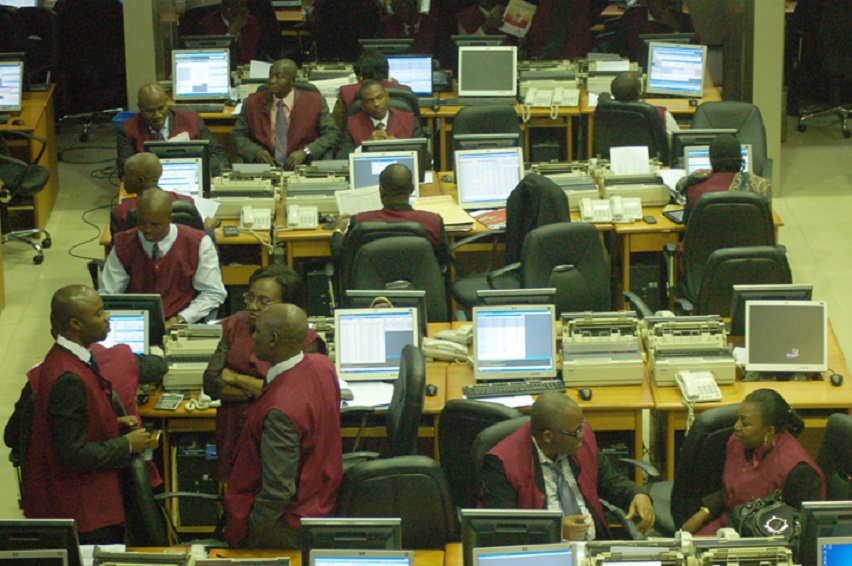
It was a positive start for Nigerian stocks on Monday as they appreciated by 0.37 per cent after enduring a string of losses in the past trading sessions.
The Nigerian Stock Exchange (NSE) recorded this growth on the back of renewed bargain hunting in value equities as well as positive investor sentiment. This reflected in the market breadth, which had 31 price gainers and 13 price losers.
According to the price movement chart, Seplat was the best-performing stock as it appreciated by 10 per cent to close at N544.50 per unit.
Japaul improved by 9.86 per cent to trade at 78 kobo per share, Mutual Benefits Assurance gained 9.52 per cent to sell for 46 kobo per unit, AIICO Insurance grew by 9.26 per cent to settle at N1.18 per share, while Multiverse rose by 9.09 per cent to quote at 24 kobo per unit.
For the worst-performing stocks on Monday, Royal Exchange and Conoil topped the table with a 10 per cent decline each to quote at 27 kobo per share and N18.90 per unit respectively.
RT Briscoe depreciated by 9.09 per cent to trade at 20 kobo per share, CHI lost 8.70 per cent to finish at 42 kobo per unit, while Sovereign Trust Insurance fell by 7.69 per cent to 24 kobo per share.
Analysis of the performance of the sectors of the market indicated that only the consumer goods counter recorded a loss as it deflated by 0.03 per cent.
The energy space gained 5.35 per cent, the banking sector appreciated by 1.81 per cent, the insurance industry improved by 1.38 per cent, while the industrial goods index chalked up 0.35 per cent.
Business Post reports that when trading activities were paused for the day at 2:30 pm, the All-Share Index (ASI) increased by 133.46 points to 40,573.31 points from 40,439.85 points, while the market capitalisation expanded by N70 billion to N21.226 trillion from N21.156 trillion.
It was keenly observed that despite the growth achieved by the market yesterday, the level of activity reduced as investors traded 206.2 million stocks worth N2.2 billion in 4,264 deals compared with the 395.6 million equities worth N5.2 billion transacted last Friday in 5,321 deals.
This signified that the trading volume slipped by 47.87 per cent, the trading value decreased by 58.31 per cent and the number of deals dropped 19.86 per cent.
Zenith Bank dominated the activity chart for trading 21.5 million shares valued at N539.6 million, with Mutual Benefits Assurance trailing after selling 15.0 million units for N6.8 million.
UAC Property transacted 14.8 million stocks worth N12.1 million, Fidelity Bank exchanged 14.7 million shares for N35.9 million, while United Capital exchanged 13.1 million equities valued at N77.8 million.
Economy
Pathway Advisors Champions Pivot Energy’s N300bn Commercial Paper for Downstream Expansion
By Adedapo Adesanya
Pathway Advisors Limited has announced its role as Lead Issuing House to a N300 billion Commercial Paper Programme for Pivot Integrated Energy Services Limited, reinforcing its leadership in capital market advisory and energy sector finance.
The transaction was formally concluded with the execution of programme documentation at Capital Club, Victoria Island, Lagos, following the completion of all regulatory and programme clearances. The signing ceremony marked a defining milestone in mobilising large-scale short-term capital for Nigeria’s downstream petroleum sector.
Speaking at the event, the chief executive of Pathway Advisors Limited, Mr Adekunle Alade, emphasised the strategic significance of the Commercial Paper issuance in financing working capital, thereby enabling high-growth energy businesses to scale efficiently and sustainably.
“Nigeria’s downstream energy sector is undergoing a profound transformation, accelerated by the removal of fuel subsidies, the emergence of domestic refining capacity, and rising demand for reliable product supply across the country and the broader West African region.
“Companies like Pivot Integrated Energy Services Limited with a vertically integrated model, a strong track record, and a clear growth mandate are exactly the kind of issuers that the capital markets should be financing,” Mr Alade stated.
“Commercial paper, when structured appropriately, gives operationally strong businesses access to a deep and diverse pool of institutional investors, at tenors and costs that support the working capital intensity of petroleum trading and distribution. This transaction is a testament to what is achievable when credible issuers partner with experienced advisers to access the markets,” he added.
“The successful execution of this programme further affirms Pathway Advisors’ position as a trusted financial advisory and investment banking firm in complex, large-scale capital market transactions,” he stated.
In his comments, the chief executive of Pivot Integrated Energy Services Limited, Mr Babajide Babatope, described the commercial paper programme as a pivotal step in the company’s strategy to expand its supply capacity and strengthen its position as a leading integrated energy provider in Nigeria and West Africa.
“Nigeria’s downstream energy market demands scale, speed, and the right capital structure to compete effectively. This commercial paper programme gives us the financial firepower to support our growing volumes, reinforce our supply chain, and serve our customers with greater reliability across the regions we operate in,” Mr Babatope disclosed.
He noted that Pivot is one of the 20 approved off-takers in the Dangote Refinery PMS Consortium, with a target volume of 300 million litres per quarter, a position that underscores the company’s standing in Nigeria’s post-subsidy energy supply architecture. He added that the CP Programme would also support the company’s accelerating regional push, including active operations in Ghana, where Pivot has delivered over 100,000 MT since April 2025, and a planned entry into Tanzania with deliveries targeted in Q3 of 2026.
Mr Babatope further expressed appreciation to Pathway Advisors and other transaction parties for their professionalism, rigour, and commitment throughout the programme’s execution, and signalled his intention to continue deepening these partnerships as Pivot advances to subsequent phases of growth and financing.
Economy
South Korea Commits $12bn to SMEDAN’s Entrepreneurship Drive
By Adedapo Adesanya
The Small and Medium Enterprises Development Agency of Nigeria (SMEDAN) has secured a $12 billion commitment from South Korea to establish a Skills Acquisition Centre in Abuja, as part of efforts to strengthen entrepreneurship and boost small businesses across Nigeria.
The chief executive of SMEDAN, Mr Charles Odii, disclosed this over the weekend during a road walk and sensitisation campaign at Utako Market in Abuja to commemorate the 2026 World MSME Day.
According to Mr Odii, the proposed facility will provide vocational and entrepreneurial training to young Nigerians and enhance the capacity of Micro, Small and Medium Enterprises (MSMEs).
He said the agency is awaiting the allocation of land by the Federal Capital Territory (FCT) Administration for the project.
“We need land in the FCT to build the Skills Acquisition Centre. If the FCT Administration is unable to provide one, we will use our office premises in Idu, Abuja, because we do not want Nigeria to miss this opportunity offered by the Korean Government to support skills and vocational training,” he said.
As part of activities marking the World MSME Day, Mr Odii also announced the launch of SMEDAN’s N500 million GROW Fund, a zero-interest financing intervention designed to support small businesses across the country.
He explained that the fund would be disbursed to members of registered cooperative societies and business associations to strengthen their enterprises.
According to him, beneficiaries are expected to utilise the funds strictly for business purposes, including expanding working capital, acquiring workspaces and purchasing equipment.
“The funding is meant to support and improve their businesses. It should be used for working capital, workspaces, tools and other productive business needs. Any use outside these objectives will not be encouraged,” he said.
Mr Odii further disclosed that entrepreneurs trained by SMEDAN in Abuja would receive vocational equipment, including washing machines, barbing kits, shoemaking tools and sewing machines, to enable them to become self-reliant.
“We have identified these tools as essential to the businesses of our trainees based on the skills programmes they have undergone,” he added.
The SMEDAN boss stressed that the agency’s interventions are driven by the critical role MSMEs play in Nigeria’s economy.
“Small businesses are the heartbeat of Nigeria’s economy. By providing infrastructure, skills and financing, we are creating an enabling environment for them to grow, thrive and contribute meaningfully to national development,” he said.
Odii also revealed that the National MSME Policy would be reviewed and relaunched in November 2026 to strengthen the sector and improve its contribution to economic growth.
He called on state governments to collaborate with SMEDAN in expanding skills acquisition programmes, creating jobs, reducing poverty and supporting the economic development agenda of President Bola Tinubu’s administration.
Economy
Dangote Refinery Broadens Feedstock Base With UAE Crude Purchase
By Adedapo Adesanya
The Dangote Petroleum Refinery has purchased two cargoes of crude oil from the United Arab Emirates (UAE), marking its first-ever procurement of Middle Eastern crude as it diversifies its feedstock sources ahead of continuous expansion.
According to a report by S&P Global Commodity Insights, the two cargoes will be the first sourced by the 700,000-barrels-per-day refinery from any Middle Eastern supplier, signalling a shift from its traditional reliance on Nigerian, African, and United States crude grades.
The report said the purchases followed the resumption of oil exports from the Middle East after the United States and Iran reached an interim peace agreement that restored confidence in shipping through the Strait of Hormuz.
The refinery, designed primarily to process Nigeria’s light sweet crude, has increasingly diversified its crude slate as operations ramp up. The company sources crude from Brazil, Equatorial Guinea, Angola, Algeria, and the US, among others.
The refinery and the Nigerian National Petroleum Company (NNPC) Plc had agreed on the supply of between 13 and 15 cargoes of Nigerian crude monthly in Naira, but the volumes often fluctuate. In May, the state oil company allocated seven cargoes to the plant, up from five in previous months.
The chief executive of the Dangote Refinery, Mr David Bird, had previously disclosed that these constraints had compelled the company to seek additional crude sources outside Nigeria.
According to S&P Global, the refinery has been broadening the range of crude grades it processes as part of its ambition to operate as a fully merchant refinery. The report noted that in 2025, about 70 per cent of the refinery’s crude imports came from Nigeria, while 24 per cent originated from the United States.
The report added that the refinery’s expansion plans would further increase its crude requirements. Dangote plans to double the refinery’s processing capacity to 1.4 million barrels per day by the end of 2028, a level that would enable it to process about 80 per cent of Nigeria’s recent crude oil production in a single day.
Business Post understands that since NNPC cargoes are cheaper for the refinery because of lower shipping costs, importation of crude could translate to higher fuel prices, with Nigerians possibly buying as high as N1,300 – N1,400 at the pump.
-
Feature/OPED6 years agoDavos was Different this year
-
Travel/Tourism10 years ago
Lagos Seals Western Lodge Hotel In Ikorodu
-
Showbiz3 years agoEstranged Lover Releases Videos of Empress Njamah Bathing
-
Banking8 years agoSort Codes of GTBank Branches in Nigeria
-
Economy3 years agoSubsidy Removal: CNG at N130 Per Litre Cheaper Than Petrol—IPMAN
-
Banking3 years agoSort Codes of UBA Branches in Nigeria
-
Banking3 years agoFirst Bank Announces Planned Downtime
-
Sports3 years agoHighest Paid Nigerian Footballer – How Much Do Nigerian Footballers Earn