Economy
Strong Yield Increases Excite Senegalese Farmers

By Modupe Gbadeyanka
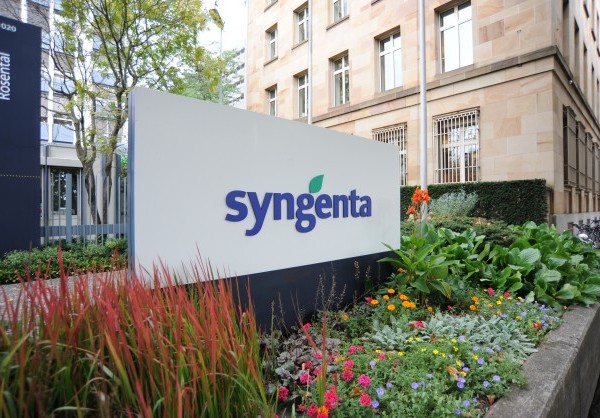
Syngenta Seedcare program for smallholder farmers in Senegal has led to impressive yield increases for pearl millet (1.2 t/ha, +40%), sorghum (1.1 t/ha, +86%), maize (2.7 t/ha, +101%), irrigated rice (9.4 t/ha, +11%) and rain-fed rice (2.0 t/ha, +33%).
The achievements from year one of the APRON®Star project in Senegal are one of the focus of Syngenta’s participation in the African Seed Trade Association (AFSTA) Congress 2017, taking place this week in Dakar, Senegal.
At the AFSTA Congress, Syngenta will be showcasing results and learnings from its partnership with the Scaling Seeds and Technologies Partnership, funded by the U.S. Agency for International Development (USAID), being implemented by the Alliance for a Green Revolution in Africa (AGRA) to help strengthen food security and farmer livelihoods in Senegal. The company will also host a Seedcare workshop with one of the sessions dedicated to how to grow more food using fewer resources.
As one of the world’s top food importers, rising food prices are a central issue in Senegal. According to the United Nations World Food Programme, 50% of the Senegalese population are food insecure. Smallholder farmers in Senegal face periodic drought and flooding, which have, over time, degraded and eroded soil, making it challenging to meet domestic food demand and safeguard the livelihoods of Senegalese people. Improved access to quality seeds and inputs, and complementary technologies such as seed treatment, is seen as an important accelerator to increase smallholders’ productivity and improve the livelihood for rural communities in Senegal.
In early 2016, Syngenta launched the APRON®Star seed treatment project in Senegal, as part of its Good Growth Plan commitment to sustainable agriculture. The two-year project is supported by SSTP and aims to improve access to high quality seed and seed treatment technology, training on most effective and safe uses and raising awareness of benefits for yield increase.
“We believe a thriving agriculture sector is vital to empower smallholders and foster vibrant rural communities in Senegal – and beyond,” said Thomas Peyrachon, Head of Business Development for Global Seedcare at Syngenta. “Syngenta is committed to helping transform the yields of smallholder farmers at scale in a way that creates value for all in a sustainable way. The APRON®Star project is just one example of our commitment to improving farmers’ productivity and income across the region”.
To date, Syngenta and its local distribution partner RMG Concept Limited have jointly conducted pilot programmes for key crops, including maize, millet, rice, peanut and sorghum, and reached more than 15,000 farmers, a third of which are women, with training on seed treatment and the safe use of crop protection products.
The results have been extremely encouraging, leading to significant yield increases for farmers.
Additionally, the project has sponsored the development of a Center of Excellence (CoE) in Matam to ensure better access to treated seeds through local seed companies and new retailer network.
Having piloted the model in Senegal with promising results, Syngenta and its partners are focusing on increasing the distribution of APRON®Star and making treated seeds available to more farmers in Senegal and other countries.
Economy
FrieslandCampina, Nitrox, Others Further Weaken NASD Index by 0.48%
By Adedapo Adesanya
Six securities led by FrieslandCampina Wamco Nigeria Plc further weakened the NASD Over-the-Counter (OTC) Securities Exchange by 0.48 per cent on Tuesday, June 9.
The notable dairy firm lost N7.87 during the trading day to close at N173.81 per unit compared with the previous session’s N181.68 per unit, Nitrox Industrial Gases Plc depreciated by N2.42 to N21.88 per share from N24.30 per share, Afriland Properties Plc dipped by N1.25 to N15.55 per unit from N16.80 per unit, Food Concepts Plc stumbled by 27 Kobo to N2.48 per share from N2.75 per share, UBN Property Plc dropped 9 Kobo to settle at N2.11 per unit versus N2.20 per unit, and Industrial and General Insurance (IGI) Plc crashed by 4 Kobo to 50 Kobo per share from 54 Kobo per share.
As a result of these losses, the market capitalisation went down by N12.50 billion to N2.593 trillion from N2.606 trillion, and the NASD Unlisted Security Index (NSI) declined by 20.89 points to 4,335.31 points from 4,356.20 points.
Business Post reports that there was a price gainer yesterday, and this was Central Securities Clearing System (CSCS) Plc, which improved its value by N2.65 to N81.13 per unit from N78.48 per unit.
The volume of transactions soared on Tuesday by 644.3 per cent to 1.6 million units from 213,188 units, the value of trades increased by 208.6 per cent to N62.3 million from N20.2 million, and the number of deals surged by 64 per cent to 41 deals from 25 deals.
The most active stock by value on a year-to-date basis remained Great Nigeria Insurance (GNI) Plc, with 3.4 billion units worth N8.4 billion, trailed by Infrastructure Credit Guarantee (Infracredit) Plc with 2.3 billion units transacted for N6.5 billion, and CSCS Plc with 65.1 million units sold for N4.4 billion.
GNI Plc was also the most traded stock by volume on a year-to-date basis, with 3.4 billion units valued at N8.4 billion, followed by Infracredit Plc with 2.3 billion units exchanged for N6.5 billion, and Resourcery Plc with 1.1 billion units traded for N415.7 million.
Economy
Naira Appreciates to N1,360.55/$1 at Official Market
By Adedapo Adesanya
The Naira was exchanged at N1,360.55/$1 in the Nigerian Autonomous Foreign Exchange Market (NAFEX) on Tuesday, June 9, compared with the N1,362.84/$1 it was exchanged a day earlier, indicating an appreciation of N2.29 or 0.17 per cent against the United States Dollar.
It also gained 74 Kobo against the Euro in the same market segment to quote at N1,573.61/€1, in contrast to Monday’s closing price of N1,574.35/€1, but lost N1.71 against the Pound Sterling to trade at N1,823.00/£1 versus the preceding day’s N1,821.29/£1.
At the black market window, the Nigerian currency maintained stability against the greenback during the session at N1,380/$1, and also traded flat at the GTBank FX counter at N1,373/$1.
Market analysts say the ongoing implementation of the fourth edition of the Foreign Exchange Manual by the Central Bank of Nigeria (CBN) since June 1 has strengthened the Naira and the country’s foreign reserves, bolstering confidence in the market.
The new manual is expected to deepen FX transparency, improve liquidity and strengthen market confidence and liquidity, as it aligns with the apex bank’s broader vision of ensuring that businesses and individuals have equal access to FX in a transparent and liquid market.
The gross external reserves have climbed to a record $50.04 billion, reinforcing investor confidence and boosting the CBN’s capacity to support the local currency.
As for the cryptocurrency market, expectations for higher interest rates sapped demand for non-yielding assets. The latest crypto pullback appears driven by a short squeeze rather than fresh buying, as more than $500 million in bearish bets were liquidated and spot demand.
Cardano (ADA) depreciated by 5.5 per cent to $0.1603, Ripple (XRP) declined by 5.2 per cent to $1.11, Solana (SOL) fell by 4.6 per cent to $64.05, Ethereum (ETH) tumbled by 3.5 per cent to $1,626.51, Dogecoin (DOGE) crashed by 3.6 per cent to $0.0835, Bitcoin (BTC) dropped 3.2 per cent to trade at $61,292.98, Binance Coin (BNB) slumped by 2.9 per cent to $585.26, and TRON (TRX) slipped by 0.9 per cent to $0.3220, while the US Dollar Tether (USDT) and the US Dollar Coin (USDC) remained unchanged at $0.9997 and $0.9998, respectively.
Economy
Bill to Regulate Crypto Market in Nigeria Scales Second Reading
By Aduragbemi Omiyale
A bill to regulate the cryptocurrency ecosystem in Nigeria passed second reading at the Senate during a plenary on Tuesday presided over by the Deputy Senate President, Mr Jibrin Barau.
Mr Barau, who sponsored the bill titled Virtual Asset Service Providers Regulation Bill, 2026, said that when passed into law, the piece of legislation would protect stakeholders from exploitation and promote confidence.
According to him, it will also place Nigeria among African countries such as Kenya, South Africa and Ghana that have adopted formal regulatory frameworks for cryptocurrency and digital asset transactions, while empowering regulators to license operators and combat fraud, money laundering and terrorism financing.
The Kano lawmaker noted that he pushed for this because of the absence of a comprehensive regulatory and supervisory framework for virtual assets, digital assets and Virtual Asset Service Providers (VASPs) in the country.
But he said that with this, the nation’s digital economy would become robust, with investors having the confidence to explore opportunities in the market.
One of the Senators who spoke on the bill, Mrs Natasha Akpoti-Uduaghan, threw her weight behind it, noting that her son, who operates a gaming platform with a large global user base, is having a tough time getting partners to set up operations in Nigeria due to the lack of a robust regulatory environment.
She stated that billions of dollars in potential investments and job opportunities could be lost if the country fails to create the necessary legal framework for emerging digital industries.
According to her, many young innovators are being forced to take their businesses abroad, lauding the sponsor of the bill.
Others who commented on the bill emphasised that virtual assets remain an inevitable feature of the modern global economy, warning that continued regulatory gaps could drive investments and business activities into unregulated channels.
They argued that effective regulation would protect millions of Nigerians, particularly young entrepreneurs and traders, who depend on cryptocurrency and related technologies for employment and income.
After deliberations, the lawmakers passed the bill for second reading and referred it to the Senate Committee on Capital Market for further legislative scrutiny. The team is expected to submit its report within four weeks.
-
Feature/OPED6 years agoDavos was Different this year
-
Travel/Tourism10 years ago
Lagos Seals Western Lodge Hotel In Ikorodu
-
Showbiz3 years agoEstranged Lover Releases Videos of Empress Njamah Bathing
-
Banking8 years agoSort Codes of GTBank Branches in Nigeria
-
Economy3 years agoSubsidy Removal: CNG at N130 Per Litre Cheaper Than Petrol—IPMAN
-
Banking3 years agoSort Codes of UBA Branches in Nigeria
-
Banking3 years agoFirst Bank Announces Planned Downtime
-
Sports3 years agoHighest Paid Nigerian Footballer – How Much Do Nigerian Footballers Earn