
Economy
The Happiness Budget: Why Spending Less on Things Can Buy You More Joy

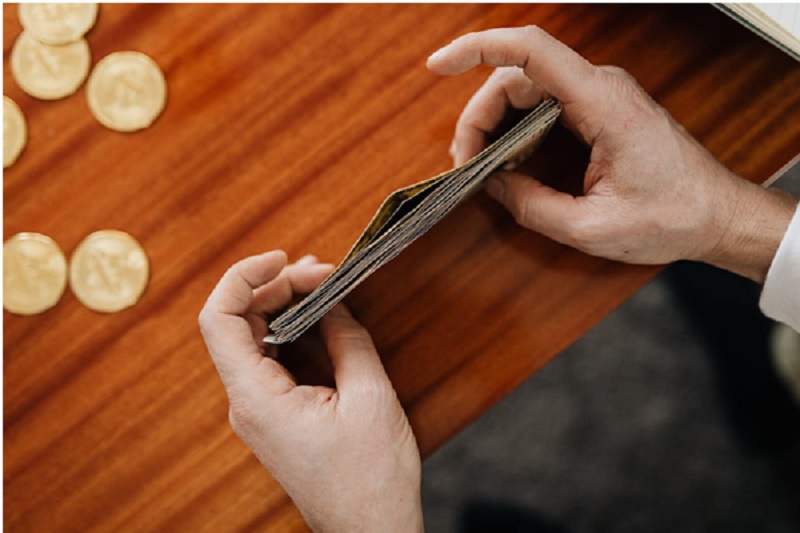
We live in a world where happiness is often sold to us with a price tag. A new phone, a bigger car, a better wardrobe—advertisers make us believe these things will make us feel complete. But here’s the twist: the less you spend on “stuff,” the happier you might actually be.
It’s not about being cheap; it’s about being intentional. Creating what I like to call a “Happiness Budget” can change how you see money, helping you buy fewer things and get more joy from life.
Why getting more stuff won’t make you happier
When was the last time you really spent a lot of cash? Who knows, maybe it felt great at first, but for how long? This is known to psychologists as the “hedonic adaptation.” We quickly get used to new things, and the way they make us feel soon goes away.
You might want to spend your money on something more important instead of the next thing you want. That’s where making smart money choices comes in. For example, people who focus on learning how to grow and manage their money—like those exploring trading crypto—often feel more secure and free to spend on experiences that genuinely matter.
A report from Futurity supports this idea: people who spend less on material goods and more on meaningful activities report higher long-term happiness.
The Happiness Budget: What It Really Means
The Happiness Budget isn’t a strict rule—it’s a mindset. You’re not cutting spending just to save money; you’re choosing to spend on things that bring lasting satisfaction. Here’s how it works:
- Cut spending on status purchases. Buying to impress others gives you short-term excitement but little long-term joy.
- Redirect money to experiences. Buying a new device doesn’t always make you as happy as going on a trip, doing a hobby, or learning something new.
- Put money into freedom in the future. Put money away or invest in ways that will make you less stressed about money later. Having peace of mind is worth more than anything else.
- Get fewer things, but make sure they are better. Choose quality over quantity when you do buy anything. It feels better and lasts longer.
It’s not about denying yourself – it’s about being careful with every dollar.
Why Less Feels Like More
You have to appreciate what you already have when you spend less. It also makes room for thankfulness. You like a simple cup of coffee with a friend more when you’re not trying to find the next big thing in fashion.
The trick to happiness is to stop comparing yourself to other people. When you’re not trying to “keep up” with the latest fashion, car, or tech, you feel lighter. You stop working just to buy things you don’t need, and that frees time and money for what truly matters.
Building Your Own Happiness Budget
If you’re ready to try this, start small:
- For a week, write down everything you spend. Pay attention to how much you spend on things you don’t need.
- Go out to eat or buying things on a whim less often. Then, spend that money on something important, like a weekend trip or learning a skill you’ve always wanted to get better at.
- Ask yourself, “Will this make me happy next year or just this week?” before you buy something.
Last Thought
Making better choices with your money might make you happier, but having more money doesn’t mean you’ll be happier. It’s not about giving up things; it’s about being free. You spend less on things that don’t matter and more on the things and people that really make life great.
No one will remember the fancy shoes you bought two years ago, in the end. The walk with friends, the new skill you picked up, or the peace of mind you felt when you knew you had enough money are things you’ll always remember.


By Dipo Olowookere
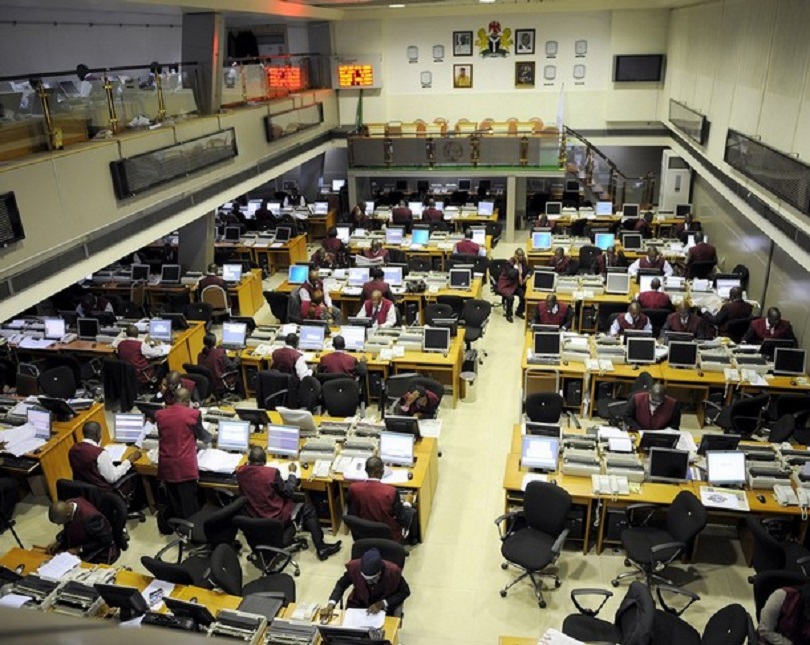
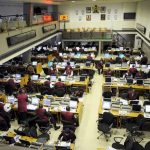
Nigerian stocks shrank by 0.02 per cent as a result of renewed selling pressure, after the consumer goods index crumbled by 0.89 per cent, and the banking space contracted by 0.23 per cent.
Business Post reports that the Nigerian Exchange (NGX) Limited weakened yesterday despite the energy sector closing 1.78 per cent higher, the insurance segment increasing by 0.31 per cent, and the industrial goods counter closing flat.
The All-Share Index (ASI) eased by 44.83 points to 200,913.06 points from 200,957.89 points, and the market capitalisation decreased by N29 billion to N128.969 trillion from N128.998 trillion.
eTranzact lost 10.00 per cent to trade at N20.70, Abbey Mortgage Bank declined by 10.00 per cent to N9.90, Cadbury Nigeria retreated by 10.00 per cent to N63.00, Eterna also fell by 10.00 per cent to N33.75, and DAAR Communications dipped by 9.50 per cent to N1.81.
Conversely, Premier Paints appreciated by 9.97 per cent to N37.50, Zichis gained 9.97 per cent to trade at N13.79, McNichols improved by 9.93 per cent to N7.42, John Holt chalked up 9.86 per cent to close at N18.95, and Trans Nationwide Express went up by 9.75 per cent to N2.59.
On the last day of the week, 595.2 million equities valued at N24.5 billion were transacted in 43,440 deals versus the 678.1 million equities worth N33.1 billion traded in 42,222 deals in the previous session.
This showed an improvement in the number of deals by 2.89 per cent, and a cut in the trading volume and value by 12.22 per cent and 25.98 per cent, respectively.
Wema Bank ended the day as the busiest stock after a turnover of 131.5 million units worth N3.5 billion, Legend Internet traded 41.6 million units valued at N339.2 million, Zichis sold 35.2 million units for N485.6 million, Access Holdings exchanged 29.4 million units worth N764.8 million, and Japaul transacted 21.5 million units valued at N74.6 million.


By Adedapo Adesanya
A loss recorded by market bellwether, Central Securities Clearing System (CSCS) Plc, outweighed the presence of three price gainers, weakening the NASD Over-the-Counter (OTC) Securities Exchange by 0.73 per cent on Friday, March 27.
The Nigerian securities depository firm lost N6.27 during the session to close at N80.10 per share compared with the previous day’s N86.37 per share.
As a result, the market capitalisation shrank by N18.41 billion to N2.512 trillion from the previous session’s N2.531 trillion, and the NASD Unlisted Security Index (NSI) declined by 30.77 points to 4,199.69 points from 4,230.46 points.
The green side of the price movement log showed 11 Plc appreciating by N31.92 to N351.17 per unit from N319.25 per unit, Nigeria Mortgage Refinance Company Plc (NMRC) rose by 55 Kobo to sell at N6.05 per share compared with Thursday’s closing price of N5.50 per share, and IPWA Plc recorded a 50 Kobo growth to end at N5.51per unit, in contrast to the preceding day’s N5.01 per unit.
When the bourse closed for the day, there was a 17,067.5 per cent surge in the voluime of transactions to 58.6 million units from 342,825 units, the value of trades increased by 6,895.4 per cent in the value of securities traded as it closed at N1.6 billion compared to N23.0 million, and the number of deals executed at the session rose 85.2 per cent to 50 deals compared to the preceding session’s 27 deals.
CSCS Plc remained the most active stock by value on a year-to-date basis with 56.2 million units exchanged for N3.8 billion, Infrastructure Guarantee Credit Plc followed with 400 million units valued at N1.2 billion, and Okitipupa Plc came next with 6.5 million units traded at N1.2 billion.
Resourcery Plc closed the trading session as the most traded stock by volume on a year-to-date basis with 1.1 billion units sold for N415.7 million, followed by Infrastructure Credit Plc with 400 million units sold for N1.2 billion, and Geo-Fluids Plc with 133.0 million units at N511.1 million.
By Adedapo Adesanya
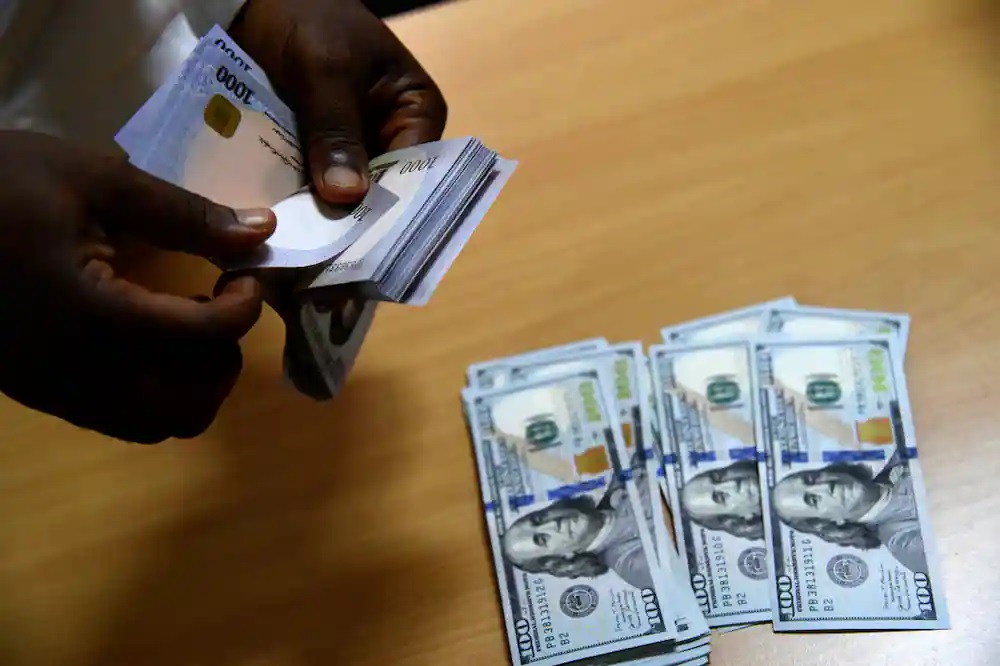
The Naira maintained stability against the United States Dollar in the black market segment of the foreign exchange (FX) market on Friday, March 27, data obtained by Business Post showed. It also remained unchanged at the GTBank FX counter at N1,401/$1.
However, it further appreciated in the Nigerian Autonomous Foreign Exchange Market (NAFEX) during the session by N3.30 or 0.2 per cent to N1,380.58/$1 from the previous day’s rate of N1,383.88/$1.
In the same vein, the domestic currency improved its value against the Pound Sterling in the spot market yesterday by N10.77 to trade at N1,836.99/$1 compared with the preceding session’s N1,847.76/£1, and gained N5.06 against the Euro to sell at N1,592.08/€1 versus N1,597.14/€1.
The Naira remains under pressure, but the current range indicates a form of stability as the Central Bank of Nigeria (CBN) reiterated its promise to anchor reforms around FX rate stability and stronger reserves to support financial markets.
Amid the currency pressures, the apex bank introduced a series of measures aimed at improving liquidity and strengthening the FX market. In a key move, the apex bank removed the cash pooling requirement for International Oil Companies (IOCs), allowing them full access to their repatriated export proceeds from the previous 50 per cent.
However, the country could see less short-term Dollar supply staying in the country and may invite pressure on the Naira if outflows exceed inflows.
The pressure on the currency comes amid a sustained decline in Nigeria’s external reserves, which provide the central bank with the buffer to support the naira. The reserves fell for the ninth consecutive day to $49.48 billion as of March 26, 2026, marking a decline of $540 million, or 1.08 per cent, from $50.02 billion recorded on March 11.
Meanwhile, the cryptocurrency market tumbled on Friday due to a broader sell-off in US equities, which recorded a $17 trillion loss. The Friday plunge fits into a pattern since the war in Iran broke out, with gains on Monday turning into losses by the end of the week.
Ethereum (ETH) depreciated by 3.2 per cent to $2,003.73, Bitcoin (BTC) fell by 3.1 per cent to $66,439.48, Solana (SOL) dropped by 2.9 per cent to $83.44, Cardano (ADA) crashed to $0.2474, Binance Coin (BNB) went down by 2.4 per cent to $613.17, TRON (TRX) dipped 1.5 per cent to $0.3113, Dogecoin (DOGE) declined by 1.4 per cent to $0.0908, and Ripple (XRP) slumped 1.4 per cent to sell at $1.33, while the US Dollar Tether (USDT) and the US Dollar Coin (USDC) closed flat at $1.00 each.










-
 Feature/OPED6 years ago
Davos was Different this year
-
Travel/Tourism10 years ago
Lagos Seals Western Lodge Hotel In Ikorodu
-

 Showbiz3 years ago
Estranged Lover Releases Videos of Empress Njamah Bathing
-
 Banking8 years ago
Sort Codes of GTBank Branches in Nigeria
-

 Economy3 years ago
Subsidy Removal: CNG at N130 Per Litre Cheaper Than Petrol—IPMAN
-

 Banking3 years ago
Sort Codes of UBA Branches in Nigeria
-

 Banking3 years ago
First Bank Announces Planned Downtime
-

 Sports3 years ago
Highest Paid Nigerian Footballer – How Much Do Nigerian Footballers Earn
Pingback: The Happiness Budget: Why Spending Less on Things Can Buy You More Joy – PRIMA NEWS