Connect with us

Economy

Trade the Other Way Around: Why Mobile Apps Are Lagging Behind Desktop Terminals in Nigeria

Published

on

download mt4 for pc

Today, Nigeria’s economic landscape is sparking a revolution in the digital sphere, unfolding right before our eyes. Candidly, without seeing a bigger picture or grasping technical intricacies, even experienced Nigerian traders may get nowhere, lost in the jungle of algorithms. Thus, old-school investment methods are slowly giving way to progressive patterns, with leading-edge trading tools along the way.

Amidst macroeconomic reforms by the Central Bank, skyrocketing volatility of the national currency, and structural changes in the corporate sector, the local financial community is actively pursuing different possibilities to diversify and secure capital. In the sea of choices, retail algorithmic trading has become a leading option across Nigeria. To guarantee peace of mind, download mt4 for pc to lock in profits on your trade.

Mobile Trading in Nigeria: When Accessibility Harms Efficiency

For decades, the market was dominated by the trend of widespread financial “mobilization” on the go. Smartphones opened the windows to the world of trade, offering free access to international markets to new participants across Africa. Despite this fact, Nigeria’s professional community is facing another unforeseeable storm, as hardware restrictions in mobile infrastructure are directly diminishing profitability of retail investors.

In pursuit of milliseconds, accuracy, and stability, Nigerian traders are returning en masse to habitual computer architecture. Of course, smartphones are still a good option for passive investing, long-term planning, or periodic portfolio monitoring, but when it comes to active intraday trading or running automated trading advisors (EAs), mobile operating systems exhibit critical shortcomings. Let’s check the reasons for that.

First and foremost, phones are always about limited multithreading. The thing is, mobile processors are optimized for energy conservation and overheating prevention, but not for the arduous mathematical calculations to process a dense data stream.  The second weakness is signal latency. Wireless networks, despite their continuing development of infrastructure in major hubs like Lagos and Abuja, are massively prone to packet loss and ping instability during peak periods, making them a poor choice for high-frequency trading.

For a trader dealing with the dynamic Nigerian market, even a millisecond of delay in order execution can turn into a lost opportunity. This is why true experts go for installing specialized software on their PCs, choosing a classic desktop terminal over a laptop or a smartphone.

Dominance of PC Platforms in the Age of Automation

Many perceive the transition to the desktop version of the trading platforms as a throwback to the past. To avoid confusion, a comprehensive analysis is required to professionalize the regional market. Nowadays, a PC running a reliable software system offers perks like system resource updates and a heightened level of interaction, among others.

The main advantage for traders in Nigeria lies in the possibility of backtesting and optimization. Backtesting a strategy on extensive historical data, taking into account floating spreads and real tick volume, requires colossal computing power. A desktop platform fully utilizes all the cores of a PC’s processor, allowing it to process thousands of parameter combinations within minutes—a feature impossible on a mobile device.

Another critical aspect for the Nigerian region is the unbroken connectivity via virtual private servers (VPSs). Even expert traders prove powerless when having to cope with power supply problems and internet service outages. Working on the desktop version, on the contrary,  allows for seamless integration of the trading terminal with a remote server in proximity to liquidity providers’ data centers in London or Frankfurt. This way, traders can manage the process from their home workstations, but the trades themselves are executed remotely with minimal latency.
trading platforms nigeria

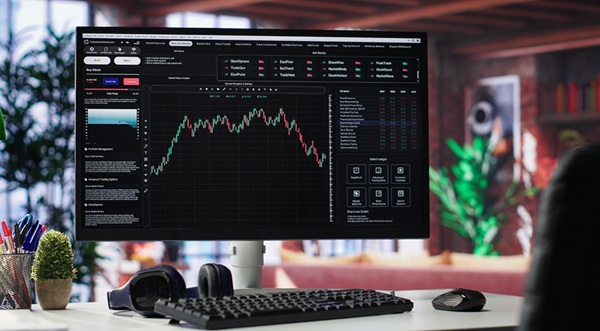
Finally, ergonomics and visual control can’t be dismissed. Technical market analysis is supposed to simultaneously monitor multiple timeframes and correlated instruments, such as the dollar index, commodity prices, and gold. Desktop platforms are robust enough to deploy complex workspaces across disparate monitors, with each chart equipped with dozens of indicators, analytical panels, and graphical elements. As well, this feature is physically impossible to accommodate comfortably on a standard smartphone screen.

A New Paradigm for Nigerian Investors 

Nigeria’s contemporary financial sector is in anticipation of maturity and a systematic approach from its participants. The era when trading was perceived solely as an effortless way to make cash with a single click is irrevocably gone. Trading in Nigeria has established itself as a full-fledged technology-driven business in search of a trustworthy and fault-tolerant infrastructure.

Ultimately, the integration of automated scripts, thorough analysis of market microstructure, and rigorous risk management is possible only with desktop computing power. For traders seeking to safeguard their capital amid sweeping changes, top-notch PC software is becoming a competitive edge. Building a profound foundation, going with a reputable broker, and deploying a professional terminal on your computer, allows you to control your trading operations with absolute precision.


Dipo Olowookere is a journalist based in Nigeria that has passion for reporting business news stories. At his leisure time, he watches football and supports 3SC of Ibadan. Mr Olowookere can be reached via [email protected]

Click to comment

Leave a Reply

Your email address will not be published. Required fields are marked *

Economy

Nigeria Records Higher Crude Oil Production in May, June

Published

on

crude oil 1.27 million barrels per day

By Adedapo Adesanya

Nigeria’s crude oil production increased in May and June, according to data published by the Organisation of the Petroleum Exporting Countries (OPEC).

The country’s output increased by 42,000 barrels per day to 1,530 million barrels in May, from 1,489 million barrels in April.

According to Reuters, Nigeria, whose shipments were not affected by the Iran war, also pumped ⁠more in June, based on flow data from financial group LSEG, information from other companies that track flows, such as ⁠Kpler, and data provided by sources at oil companies, OPEC, and consultants.

Output from the OPEC rose by 2.34 million barrels a day to 18.75 million a day, with the gains driven by Kuwait, Saudi Arabia and Iran, the survey showed. The rebound still leaves production considerably below prewar levels.

Kuwait posted the biggest increase among OPEC’s 11 members last month, boosting output by 870,000 barrels a day to 1.36 million a day followed by Saudi Arabia, which raised output by 550,000 barrels a day to an average of 7.2 million a day. That was followed by Iran, which hiked by 510,000 a day to pump 2.85 million a day, and has accumulated a hoard of supply on tankers at sea as it struggles to find buyers.

In the wider alliance, Russia has bolstered crude exports to record levels following Ukrainian strikes on its refineries, potentially diverting volumes that can’t be processed at home.

Even before the peace deal, Persian Gulf producers had found ways to sneak cargoes out through the strait, which was largely shuttered in the early stages of the conflict.

The uptick in supply is creating a surplus in parts of the market, erasing crude’s wartime rally and raising the question of whether OPEC nations will need to compete for customers.

The group’s June production was still 7.3 million barrels a day, or 28 per cent, below February levels, when adjusted for exit by the United Arab Emirates (UAE).

The UAE quit OPEC in May, giving it the freedom to pump at will once the strait fully stabilises. Iraq also briefly threatened it could exit unless eventually given a higher output quota by the organisation.

On Sunday, a subgroup of seven OPEC+ nations announced a 188,000 barrels a day boost in August continuing the series of small and symbolic production hikes during the war to continue a process of restoring output halted a few years ago.

Continue Reading

Economy

Shareholders Clear Path for Dangote Cement’s London Secondary Listing

Published

on

Dangote Cement AGM social investments

By Adedapo Adesanya

Shareholders of Dangote Cement Plc have approved plans that could pave the way for the company’s secondary listing on the London Stock Exchange (LSE) while also endorsing a final dividend of N45.00 per ordinary share for the 2025 financial year.

The resolutions were passed at the company’s 17th Annual General Meeting (AGM) held on Thursday at Eko Hotels & Suites in Lagos, where shareholders also approved the audited financial statements for the year ended December 31, 2025.

The approval for an international secondary listing marks a significant step in Dangote Cement’s plans to broaden its access to global capital markets and enhance its international investor base.

In May, the company’s founder Mr Aliko Dangote said the cement subsidiary was planning a London listing to sell 10 per cent stake, sixteen years after debuting on the Nigerian Exchange (NGX) Limited. This would provide the company with the much-needed boost to compete in the United Kingdom market.

Shareholders also ratified the payment of a final dividend of N45.00 per ordinary share from the company’s retained earnings as of December 31, 2025. The dividend was paid on Thursday, July 2, 2026.

At the meeting, shareholders approved the appointment of Ms Mariya Aliko-Dangote to the company’s board of directors. In recent months, the eldest daughter of the billionaire as well as her sisters Halima and Fatima, have been strategically positioned across their father’s empire in what has been touted as succession plans.

They also re-elected four directors retiring by rotation: Mr Emmanuel Ikazoboh, an Independent Non-Executive Director; Mr Olakunle Alake, a Non-Executive Director; Ms Berlina Moroole, a Non-Executive Director; and Mr Alvaro Poncioni Merian, an Independent Non-Executive Director.

In addition, shareholders authorised the board to determine the remuneration of the company’s external auditors for the 2026 financial year.

The AGM also noted the disclosure of managers’ remuneration in compliance with the provisions of the Companies and Allied Matters Act (CAMA) 2020.

Shareholders further approved the election of Mr Robert Ade-Odiachi, Mr Sheriff Yussuf Mojirola and Mr Nicholas Nyamali as shareholders’ representatives on the Statutory Audit Committee. They will serve alongside the company’s representatives, Mr Ernest Ebi and Mr Olakunle Alake, until the next AGM.

They also approved annual remuneration of N20 million for the chairman and N15 million each for the non-executive directors for the financial year ending December 31, 2026.

Continue Reading

Economy

Market Participants Trade 3.821 billion Stocks Worth N154.393bn in One Week

Published

on

global stocks

By Dipo Olowookere

The activity level on the Nigerian Exchange (NGX) Limited improved last week after market participants traded 3.821 billion stocks worth N154.393 billion in 258,567 deals compared with the 2.324 billion stocks valued at N134.486 billion transacted in 249,328 deals in the preceding week.

Analysis showed that financial equities dominated with 2.330 billion units sold for N54.606 billion in 108,978 deals, accounting for 60.99 per cent and 35.37 per cent of the total trading volume and value, respectively.

Services stocks recorded a turnover of 509.473 million units worth N16.353 billion in 16,527 deals, and consumer goods shares recorded 216.344 million units valued at N8.057 billion in 25,963 deals.

Sterling Holdings, Access Holdings, and Ikeja Hotel were the busiest stocks, accounting for 1.405 billion units worth N28.370 billion in 12,898 deals, contributing 36.78 per cent and 18.37 per cent to the total trading volume and value, respectively.

The best-performing equity for the week was Airtel Africa, which gained 21.00 per cent to sell for N5,274.00. Regency Assurance grew by 20.25 per cent to 95 Kobo, UPDC expanded by 12.31 per cent to N3.65, DAAR Communications rose by 7.84 per cent to N1.65, and SUNU Assurances increased by 7.50 per cent to N3.87.

The worst-performing equity was International Energy Insurance, which fell by 18.83 per cent to N4.70, McNichols slumped by 18.60 per cent to N7.00, University Press crashed by 17.54 per cent to N4.70, RT Briscoe dipped by 13.98 per cent to N10.15, and UPDC REIT moderated by 13.00 per cent to N8.70.

Business Post reports that 22 shares appreciated during the week, the same as the previous week, and 57 equities depreciated, the same as a week earlier, while 67 stocks remained unchanged, the same as the preceding week.

The All-Share Index (ASI) and the market capitalisation closed lower by 1.21 per cent in the five-day trading week to 229,240.34 points and N147.103 trillion, respectively.

Similarly, all other indices finished lower apart from the main board, which chalked up 2.27 per cent.

Continue Reading

Trending