Connect with us

Economy

Traders Increase Investment in Nigerian Stocks by 16.6% in One Week

Published

on

Nigerian Stocks

By Dipo Olowookere

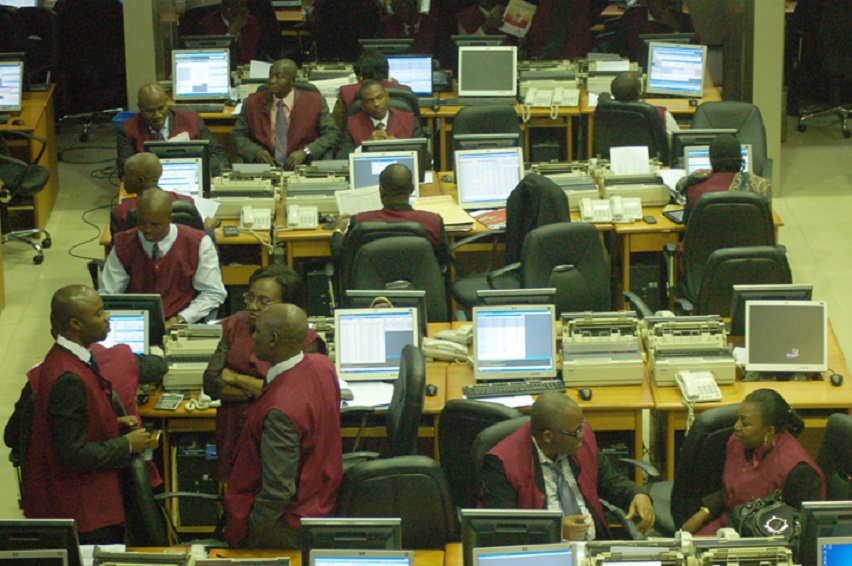
Nigerian stocks attracted more investments last week than the preceding week as a result of renewed confidence in the market, as traders quickly take a position, especially in large-cap equities, ahead of the release of financial results in the coming months.

The Nigerian Exchange (NGX) Limited has been impressive in 2023, and there are indications that next year will be better. Those who have missed out on the goodies this year are already positioning themselves for 2024 so as not to be left behind again.

Consequently, the bourse witnessed an improvement in the value of transactions by 16.6 per cent to N45.070 billion from the N38.644 billion recorded a week earlier.

However, the volume of transactions went down to 2.423 billion shares from 2.543 billion shares, and the number of deals decreased to 34,704 deals from 36,138 deals.

Universal Insurance, UBA and GTCO topped the activity chart after trading 543.315 million shares worth N10.577 billion in 3,860 deals, contributing 22.43 per cent and 23.47 per cent to the total trading volume and value, respectively.

Financial stocks were the most active in the week, selling 1.726 billion units worth N22.760 billion in 18,190 deals, contributing 71.23 per cent and 50.50 per cent to the total trading volume and value apiece.

Conglomerates shares trailed with 201.478 million units valued at N2.350 billion in 1,533 deals, as consumer goods equities posted a turnover of 127.468 million units worth N3.671 billion in 4,113 deals.

Business Post reports that 49 shares gained weight in the week versus 32 shares in the preceding week, 33 stocks lost weight versus 49 stocks in the previous week, and 73 equities closed flat, the same as the earlier week.

Multiverse topped the advancers’ log after growing by 57.02 per cent to N9.39, Thomas Wyatt rose by 32.80 per cent to N3.32, Infinity Trust Mortgage Bank appreciated by 32.09 per cent to N1.77, Ecobank jumped by 21.35 per cent to N20.75, and Secure Electronic Technology soared by 17.19 per cent to 75 Kobo.

On the flip side, Consolidated Hallmark lost 12.70 per cent to settle at N1.10, Oando slumped by 12.29 per cent to N10.35, Abbey Mortgage Bank weakened by 10.47 per cent to N1.54, MRS Oil deflated by 9.96 per cent to N99.00, and Tantalizers fell by 9.62 per cent to 47 Kobo.

On a week-on-week basis, the All-Share Index (ASI) and the market capitalisation appreciated by 0.17 per cent to 71,541.74 points and N39.149 trillion, respectively.

Similarly, all other indices finished higher except for NGX Main Board, insurance, ASeM, energy, Lotus II and industrial goods, which went down by 0.54 per cent, 1.44 per cent, 1.03 per cent, 0.58 per cent, 0.22 per cent and 3.03 per cent, respectively while the sovereign bond index closed flat.


Dipo Olowookere is a journalist based in Nigeria that has passion for reporting business news stories. At his leisure time, he watches football and supports 3SC of Ibadan. Mr Olowookere can be reached via [email protected]

Click to comment

Leave a Reply

Your email address will not be published. Required fields are marked *

Economy

OPEC Crude Output Falls to 37-Year Low Amid Iran Disruptions

Published

on

OPEC output cut

By Adedapo Adesanya

Crude production under the collective Organisation of the Petroleum Exporting Countries (OPEC ) fell in May to its lowest level in at least 37 years as the blockade of Iran by the United States and disruptions in the Persian Gulf, continued to limit output.

According to a Bloomberg survey released on Friday, output from the organisation’s 11 current members, including Nigeria, dropped by 1.22 million barrels per day to 16.33 million barrels per day last month.

Iran accounted for more than half of the decline. The data excludes the United Arab Emirates (UAE), which departed the cartel last month after six decades of membership.

War between a US-Israeli alliance and Iran has reduced oil supplies from the Middle East, largely closing the Strait of Hormuz waterway. Saudi Arabia, Iraq, the UAE and Kuwait have been forced to cut crude production. Iranian shipments face additional pressure following a US blockade of its ports imposed in mid-April.

Iranian output fell by 710,000 barrels per day to a five-year low of 2.34 million barrels per day in May, the survey showed. Central Command reported that US forces have redirected 127 commercial vessels to enforce the blockade of all maritime traffic entering and exiting Iranian ports.

Kuwait recorded the second-largest decline last month, with production falling by 310,000 barrels per day to 490,000 barrels per day, less than one-fifth of pre-war levels. Saudi Arabia, the group’s leader, saw output decrease by 240,000 barrels per day to 6.57 million barrels per day.

The production reductions have not prevented OPEC and its allies from raising quotas over recent months, continuing a year-long process of restoring output halted several years ago.

This comes ahead of a meeting scheduled to be held on Sunday, June 7, where a sub-group of seven members is expected to increase targets by 188,000 barrels again in July. The session is one of four online meetings OPEC and its partners plan to hold that day.

Delegates indicated the alliance has plans for two additional monthly quota increases in August and September. UAE output rose by 300,000 barrels per day to 2.44 million barrels per day in May, according to the survey.

Continue Reading

Economy

Debt Repayments: FG Overshoots Budget Allocation by 18%

Published

on

total debt stock

By Aduragbemi Omiyale

The 2025 third quarter Budget Implementation Report from the Budget Office of the Federation has shown that the federal government exceeded the funds allocation for repayment of debts for the first nine months of the fiscal year by about 18 per cent.

In a report by Punch, the sum of N10.74 trillion was budgeted for debt servicing between January and September 2025, but the government used N12.63 trillion for the purpose, N1.90 trillion or 17.65 per cent more than the allocation for the year.

The funds were spent on domestic debts, foreign debts and sinking fund by the central government in nine months.

Business Post reports that for the whole year, the amount approved by the National Assembly and signed by President Bola Tinubu for debt repayments was N14.31 trillion.

Looking at the nine-month figures, domestic debt service gulped N6.23 trillion, exceeding its N5.39 trillion provision, while foreign debt service was N6.30 trillion versus the budget provision of N5.06 trillion.

According to the report, the figures indicated that 67.2 per cent of the federal government’s retained revenue of N18.63 trillion was spent on debt service in the first nine months of 2025. When the sinking fund is included, debt-related payments consumed about 67.8 per cent of revenue.

It was also observed that aggregate federal government revenue underperformed the budget by N12.03 trillion or 39.24 per cent, as actual revenue of N18.63 trillion fell short of the N30.67 trillion projected for the first three quarters.

In the third quarter alone, the government generated N7.70 trillion versus the quarterly target of N10.22 trillion as a result of persistent oil revenue shortfalls, despite stronger non-oil collections.

The debt burden also crowded out capital spending, as total capital expenditure was N3.10 trillion in the first nine months compared with the N17.58 trillion budgeted for the period, indicating that actual debt-related payments were more than four times capital expenditure.

Continue Reading

Economy

Unlisted Stock Investors’ Wealth Shrinks N30bn

Published

on

unlisted stock investors

By Adedapo Adesanya

The NASD Over-the-Counter (OTC) Securities Exchange recorded a loss of 1.13 per cent on Thursday, June 4, shrinking the market capitalisation by N30.03 billion to N2.630 trillion from N2.660 trillion on Wednesday.

Similarly, this brought down the NASD Unlisted Security Index (NSI) by 50.19 points to 4,396.08 points from the 4,446.27 points recorded a day earlier.

The loss was influenced by the overpowering of the bulls by the bears, after the bourse closed with two price gainers and three price losers, led by FrieslandCampina Wamco Nigeria Plc, which slumped by N20.03 to sell at N190.38 per unit compared with midweek’s N210.41 per unit. Food Concepts Plc declined by 25 Kobo to trade at N2.50 per share versus the previous day’s N3.00 per share, and Acorn Petroleum Plc crumbled by 2 Kobo to end at N1.32 per unit, in contrast to the preceding session’s N1.34 per unit.

For the gainers, Central Securities Clearing System (CSCS) Plc added N2.93 to close at N78.34 per share compared with the previous price of N75.41 per share, and Afriland Properties Plc gained 80 Kobo to settle at N16.80 per unit versus N16.00 per unit.

There was a slip in the volume of transactions yesterday by 46.8 per cent to 280,714 units from 527,221 units, as the value of trades dropped 66.5 per cent to N21.8 million from the preceding session’s N64.2 million, and the number of deals fell by 8.7 per cent to 42 deals from 46 deals.

Great Nigeria Insurance (GNI) Plc ended the session as the most traded stock by value on a year-to-date basis with 3.4 billion units worth N8.4 billion, followed by Infrastructure Credit Guarantee (Infracredit) Plc with 2.3 billion units sold for N6.5 billion, and CSCS Plc with 64.7 million units traded for N4.4 billion.

GNI Plc also finished the day as the most traded stock by volume on a year-to-date basis with 3.4 billion units valued at N8.4 billion, followed by Infracredit Plc with 2.3 billion units exchanged for N6.5 billion, and Resourcery Plc with 1.1 billion units transacted for N415.7 million.

Continue Reading

Trending