
Economy
Traders Union Experts Have Selected the Best 5 Minute Binary Options Strategy

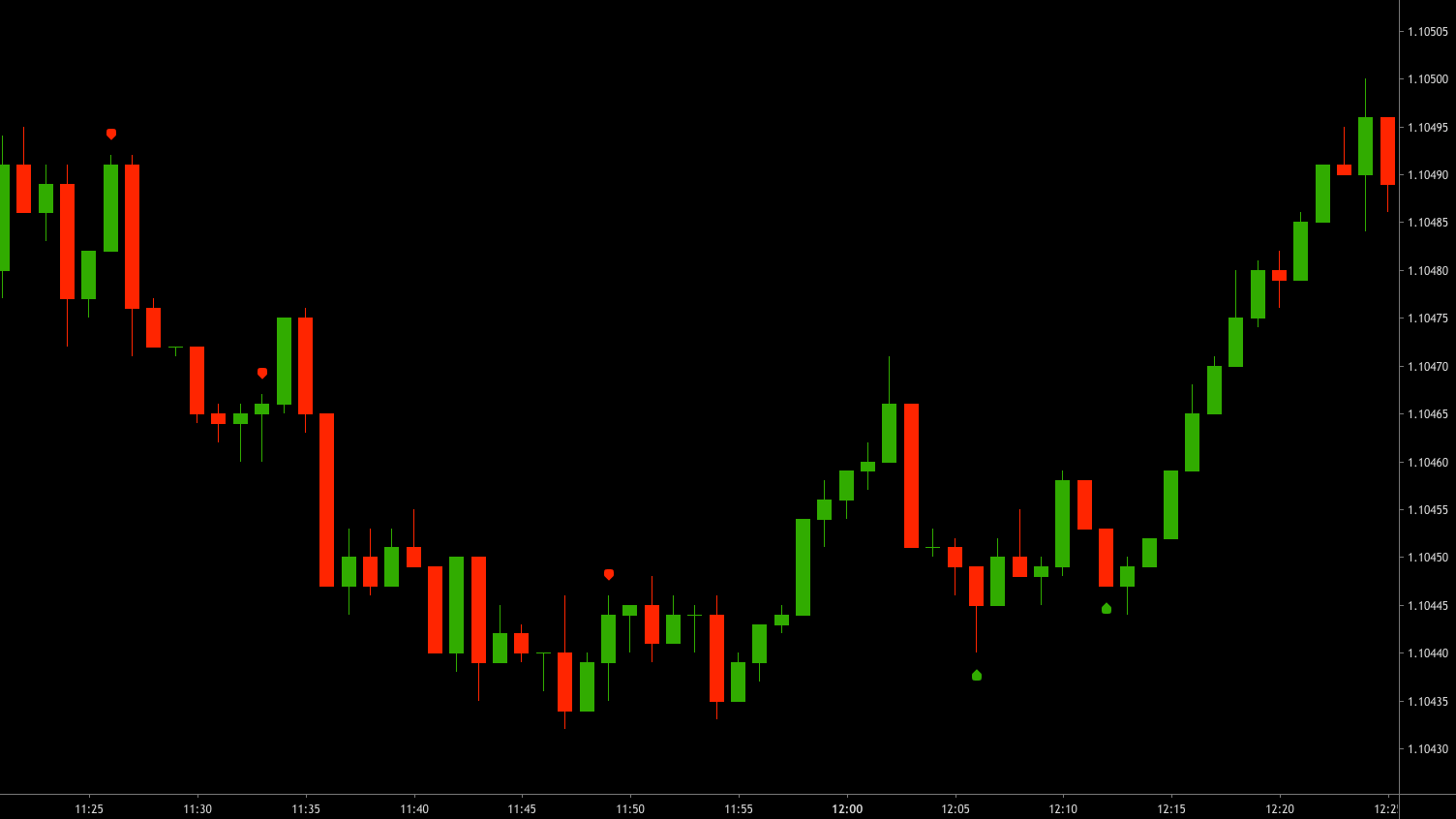
Imagine a trading approach that doesn’t tie you down for long periods but still reaps profits from the market. Welcome to the world of binary options, where simplicity meets potential gains. Among various strategies, the 5-minute binary options strategy stands out, beloved by traders of all kinds. It’s a way to maximize returns swiftly, catering to your trading goals. With the guidance of Traders Union experts, you can tap into this strategy’s potential and navigate the dynamic market with precision. Discover how this 5 minute binary options strategy can elevate your trading experience and lead you towards profitability, in a mere 5 minutes.
How do binary options work?
A binary options strategy is a crucial approach used in the trading of binary options, a financial instrument that allows traders to speculate on the direction of asset commodities or market conditions. As TU analysts emphasize, binary options trading offers a straightforward risk/reward profile with clear outcomes based on “yes or no” predictions. This simplicity, coupled with the flexibility to profit from various market situations, makes binary options strategies essential. They cater to short-term trades due to their hourly contract expirations, providing opportunities to profit from directional bets, sideways markets, or volatility. Unlike traditional options, binary options have distinct payout structures, fees, and risks, necessitating unique strategies for success. With the guidance of Traders Union experts, traders can navigate this volatile market with proven strategies, minimizing losses and increasing their chances of success.
Mastering 5-Minute Binary Options Strategies
A 5-minute binary options strategy can empower you to trade with confidence within a short timeframe. To effectively employ this approach, you’ll need a broker or trading platform that provides the necessary tools. Leading brokers offer the flexibility to integrate essential indicators into your charts, allowing you to tailor your strategy to match your trading plan and preference. While Forex stands out, according to analysts at TU, you can also trade stocks, precious metals, energies, and cryptocurrencies using 5-minute binary options contracts. Here are key 5-minute binary options strategies to consider:
- Signals Strategy: Employing signals is a simple and effective approach. This strategy guides traders in making affirmative binary options trades based on signals generated by humans, algorithms, or bots. While no strategy guarantees 100% trade accuracy, combining signals with chart analysis and news updates enhances decision-making.
- Momentum Strategy: Momentum strategy caters to both long-term investors and day traders. Simply trade in the direction of momentum. Strong momentum indicates entering the market while avoiding setups with low probability. This approach helps anticipate market reversals and informs decision-making for 5-minute binary options contracts.
- Trend Following Strategy: A trend-following strategy is user-friendly and effective. Binary options trading thrives on traders’ speculations, driving asset price fluctuations. Recognizing and trading with trends, studying charts, and monitoring trend lines can enhance success rates.
- Candlesticks Strategy: Japanese candlesticks simplify market assessment by visualizing price movements. Understanding candle colors, shapes, and heights aids in grasping market dynamics. Incorporating candlestick charts with Bollinger Bands offers insights into short-term trends and volatility, supporting accurate price predictions.
- Bollinger Bands Strategy: Bollinger Bands, along with candlestick charts, prove effective for trading 5-minute binary options. These bands identify upper and lower levels based on recent price movements, indicating trends and market volatility. Wider bands imply heightened market activity.
Conclusion
In conclusion, remember that becoming a successful trader requires careful planning and a strategy that fits your chosen market. Whether you use technical or fundamental analysis, your strategy is crucial for managing risks. No matter the time frame you choose, adopting the right strategy is key to succeeding in binary options trading. Take the five-minute binary options strategy, for instance – it offers various trading opportunities. This strategy capitalizes on the natural ups and downs of five-minute options, allowing for profitable trends within a reasonable time. With Traders Union’s expert guidance, you can craft your strategy thoughtfully to enhance your success in the dynamic world of trading.










By Adedapo Adesanya
There are indications of a possible fuel shortage in Nigeria as the 650,000 barrels per day Dangote Refinery and Petrochemicals, which is responsible for over 60 per cent of domestic supply, is now getting only about 40 per cent of local feedstock.
According to the chief executive of Dangote Refinery and Petrochemicals, Mr David Bird, the refinery currently gets only about five cargoes of crude monthly, against an expected 13 to 15 cargoes.
He explained that this was below its agreed crude oil supply under the Federal Government’s crude-for-Naira arrangement.
According to him, the shortfall has affected the refinery’s ability to optimise local crude supply despite existing agreements being fully met.
“What we see under that agreement, we should be getting about 13 to 15 cargoes a month. And that’s what we could process to meet the domestic fuel requirements of Nigeria.
“Currently, we’re only getting five. So, that’s an underperformance against that pre-agreed volume contract.”
Mr Bird stated that the crude-for-Naira policy was designed to stabilise Nigeria’s foreign exchange market rather than provide financial advantages to the refinery, adding that the company still purchases crude at international benchmark prices.
He explained that the shortfall had caused the refinery to source preferred Nigerian crude grades from the international market at higher costs.
“And that value between the purchase price and the premium that we’re now seeing is money that Nigeria is leaking to the international trading community,” he said.
Last year alone, Dangote Petroleum Refinery imported a total of $3.74 billion worth of crude oil to make up for shortfalls
The Nigerian National Petroleum Company (NNPC), which is the refinery’s main trade partner and minority stakeholder, has been plagued by challenges that restrict optimal crude supply, so the Lagos-based company has to get feedstock from alternative supply links. This led to the importation of crude from Brazil, Equatorial Guinea, Angola, Algeria, and the US, among others.
For instance, in March 2025, the company said it now counts Brazil and Equatorial Guinea among its global oil suppliers, receiving up to 1 million barrels of the medium-sweet grade Tupi crude at the refinery on March 26 from Brazil’s Petrobras.
While Nigeria has so far been insulated from shortages that have plagued countries in South Asia and some parts of Europe, disruptions to trade triggered by the Middle East war may constrain flows, leading to higher prices, even for countries not directly affected.
By Adedapo Adesanya
The NASD Over-the-Counter (OTC) Securities Exchange rallied by 1.41 per cent on Wednesday, March 25, with the market capitalisation adding N35.04 billion to close at N2.512 trillion versus the previous session’s N2.477 trillion, and the Unlisted Security Index (NSI) expanding by 58.55 points to 4,198.85 points from 4,140.30 points.
The growth came amid a weak investor sentiment, as the OTC securities exchange recorded two price gainers and three price losers.
The advancers were led by Okitipupa Plc, which chalked up N25 to sell at N275.00 per share compared with the previous day’s N250.00 per share, and Central Securities Clearing System (CSCS) Plc grew by N7.43 to N86.37 per unit from N78.94 per unit.
On the flip side, FrieslandCampina Wamco Nigeria Plc lost N7.04 to sell at N101.13 per share versus Tuesday’s closing price of N108.73 per share, Geo-Fluids Plc went down by 9 Kobo to N2.89 per unit from N2.98 per unit, and Industrial and General Insurance (IGI) Plc dipped 3 Kobo to 50 Kobo per share from 53 Kobo per share.
Yesterday, the volume of securities rose by 135.6 per cent to 2.2 million units from 933,125 units, the value of securities increased by 2.4 per cent to N46.7 million from N45.6 million, and the number of deals grew by 27.6 per cent to 37 deals from 29 deals.
The most active stock by value on a year-to-date basis was CSCS Plc with 39.1 million units exchanged for N2.4 billion, followed by Infrastructure Guarantee Credit Plc with 400 million units valued at N1.2 billion, and Okitipupa Plc with 6.5 million units traded for N1.2 billion.
The most traded stock by volume on a year-to-date basis was Resourcery Plc with 1.1 billion units worth N415.7 million, followed by Infrastructure Credit Plc with 400 million units sold for N1.2 billion, and Geo-Fluids Plc with 132.9 million units transacted for N510.7 million.
By Adedap0 Adesanya
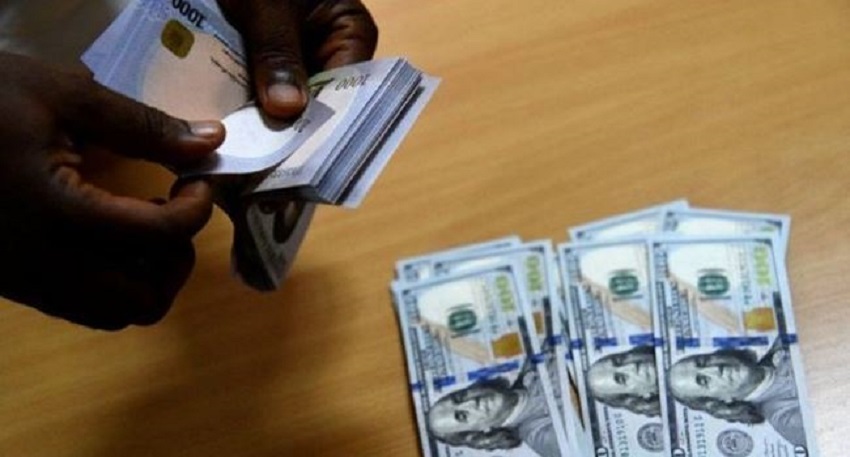
The value of the Naira fell against the Dollar in the Nigerian Autonomous Foreign Exchange Market (NAFEX) on Wednesday, March 25, by N4.07 or 0.29 to N1,386.70/$1 compared with Tuesday’s closing price of N1,382.63/$1.
This was due to forex demand pressure without substantial supply from the Central Bank of Nigeria (CBN) and other sources. Lately, the central bank has not conducted any FX sales to eligible financial institutions, where Bureaux de Change (BDC) operators are allowed to access $150,000 weekly.
Also, in the official market, the Nigerian Naira depreciated against the Pound Sterling at midweek by N7.52 to close at N1,856.38/£1 versus the previous day’s N1,848.86/£1, and retreated against the Euro by N5.82 to trade at N1,605.80/€1 versus N1,599.98/€1.
The domestic currency further lost N3 against the greenback at the GTBank FX desk yesterday to sell for N1,391/$1, in contrast to the preceding session’s N1,388/$1, and at the black market, it depreciated by N5 to quote at N1,405/$1 compared with the N1,400/$1 it was exchanged a day earlier.
The prolonged conflict in the Middle East continues to heighten risk aversion, reducing appetite for emerging-market assets despite Nigeria’s attractive yield environment, which could help sustain offshore inflows and support the local currency in the near term, though structural challenges remain.
The country is making efforts that could help shield it further, including reviewing timelines for approval of resuscitation of moribund oil wells and boosting production, which accounts for over 60 per cent of FX earnings.
As for the cryptocurrency market, it was under pressure on Wednesday, as implied volatility and weakening suggest geopolitical risk concerns remain as macro headlines remain in focus.
Dogecoin (DOGE) depleted by 3.8 per cent to $0.0937, Solana (SOL) depreciated by 3.5 per cent to $89.10, Cardano (ADA) dipped 2.4 per cent to $0.2621, Ethereum (ETH) went down by 2.2 per cent to $2,117.47, Ripple (XRP) slumped 1.9 per cent to $1.38, Bitcoin shrank by 1.5 per cent to $70,012.58, and Binance Coin (BNB) dropped 1.4 per cent to sell for $634.82.
However, TRON (TRX) appreciated by 2.3 per cent to $0.3144, while the US Dollar Tether (USDT) and the US Dollar Coin (USDC) traded flat at $1.00 apiece.












-
 Feature/OPED6 years ago
Davos was Different this year
-
Travel/Tourism10 years ago
Lagos Seals Western Lodge Hotel In Ikorodu
-

 Showbiz3 years ago
Estranged Lover Releases Videos of Empress Njamah Bathing
-
 Banking8 years ago
Sort Codes of GTBank Branches in Nigeria
-

 Economy3 years ago
Subsidy Removal: CNG at N130 Per Litre Cheaper Than Petrol—IPMAN
-

 Banking3 years ago
Sort Codes of UBA Branches in Nigeria
-

 Banking3 years ago
First Bank Announces Planned Downtime
-

 Sports3 years ago
Highest Paid Nigerian Footballer – How Much Do Nigerian Footballers Earn