Economy
Upbeat Earnings News May Help Stocks Extend Winning Streak

The major U.S. index futures are pointing to a higher opening on Thursday, with stocks looking to extend the upward trend seen over the past several sessions.
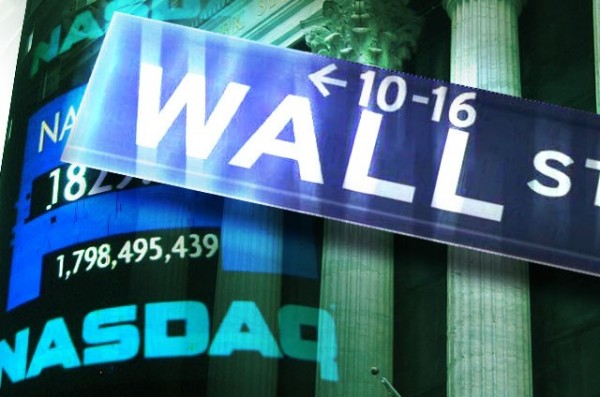
Upbeat earnings news from some big-name retailers may generate early buying interest on Wall Street, as the major averages seek to extend their five-session winning streak.
Traders also continue to respond to the minutes of the Federal Reserve’s latest monetary policy meeting, which included an outline of a plan to trim its $4.5 trillion balance sheet.
Stocks moved mostly higher over the course of the trading session on Wednesday, extending their recent winning streak to five sessions. With the continued advance on the day, the S&P 500 reached a new record closing high.
The major averages ended the day just off their highs of the session. The Dow climbed 74.51 points or 0.4 percent to 21,012.42, the Nasdaq advanced 24.31 points or 0.4 percent to 6,163.02 and the S&P 500 rose 5.97 points or 0.3 percent to 2,404.39.
The continued strength on Wall Street came following the release of the minutes of the Federal Reserve’s latest monetary policy meeting.
The minutes of the meeting noted that growth in economic activity had slowed, although the Fed members agreed that the slower growth during the first quarter was likely to be transitory.
Most participants subsequently said it would soon be appropriate for the Fed to take another step in removing some policy accommodation.
The Fed is widely expected to raise interest rates at its next meeting in mid-June, with CME Group’s FedWatch tool indicating an 83.1 percent chance of a quarter-point rate hike.
However, the minutes said members generally judged it would be prudent to await additional evidence indicating that the recent slowing in the pace of economic activity had been transitory before raising rates.
The comment may increase the focus on the economic data due to be released in the weeks leading up to the June meeting.
The Fed minutes also said staff offered a briefing on a possible approach to winding down the central bank’s $4.5 trillion balance sheet.
Nearly all policymakers expressed a favorable view of the approach, which was seen as consistent with the intention to reduce the Fed’s securities holdings in a gradual and predictable manner.
Under the proposed approach, the Fed would announce a set of gradually increasing caps on the dollar amounts of Treasury and agency securities that would be allowed to run off each month.
Only the amounts of securities repayments that exceeded the caps would be reinvested each month, the minutes said.
Meanwhile, traders largely shrugged off a report from the National Association of Realtors showing a bigger than expected pullback in existing home sales in the month of April.
NAR said existing home sales fell by 2.3 percent to an annual rate of 5.57 million in April after jumping by 4.2 percent to a ten-year high of 5.70 million in March. Economists had expected sales to drop to a rate of 5.65 million.
Gold stocks showed a significant turnaround over the course of the session after coming under pressure in morning trading. Reflecting the strength that emerged in the sector, the NYSE Arca Gold Bugs Index climbed by 1.1 percent.
The rebound by gold stocks came as the price of the precious metal moved higher in electronic trading after ending the regular session lower.
Electronic storage, commercial real estate, and chemical stocks also saw some strength on the day, although buying interest was relatively subdued.
On the other hand, steel stocks saw significant weakness on the day, giving back ground after moving notably higher in the previous session. After surging up by 2.1 percent on Tuesday, the NYSE Arca Steel Index dropped by 1.5 percent
Considerable weakness was also visible among energy stocks, with the Philadelphia Oil Service Index and the NYSE Arca Natural Gas Index sliding by 1.3 percent and 1.2 percent, respectively.
Economy
APM Terminals to Invest $600m in Nigeria’s Maritime Sector
By Modupe Gbadeyanka
The Nigerian maritime sector may soon witness the inflow of $600 million in investment from APM Terminals.
On the sidelines of the ongoing Africa CEO Forum in Kigali, Rwanda, the Regional President of APM Terminals for Africa-Europe, Mr Igor van den Essen, informed President Bola Tinubu that his company was interested in deepening its investment in Nigeria.
According to a statement issued by the Special Adviser to the President of Information and Strategy, Mr Bayo Onanuga, the investment would be deployed in Apapa port modernisation, logistics infrastructure, and long-term private-sector investment in Nigeria’s maritime sector.
President Tinubu welcomed the investments, emphasising that Nigeria is repositioning itself for greater competitiveness through ongoing economic reforms and infrastructure modernisation.
He said the country is determined to move beyond structural bottlenecks and outdated systems, stressing the need for advanced technology, faster cargo processing, and improved operational efficiency across the nation’s ports.
He emphasised that Nigeria possesses the market scale, talent base, and economic potential to support globally competitive maritime and logistics infrastructure investments and called on other investors to take advantage of Nigeria’s reform outcomes.
Earlier, Mr Igor van den Essen lauded President Tinubu’s reform agenda and policy direction, which had strengthened investor confidence and created renewed momentum for long-term infrastructure investments.
He described Nigeria as a strategic stronghold within its African operations, referencing over 20 years of collaboration and substantial existing investments in the country’s port ecosystem.
He reaffirmed his company’s commitment to expanding investments in Nigeria and disclosed plans to support the development of world-class terminal infrastructure and technology-driven port operations.
He also commended Mr Tinubu for establishing the National Single Window (NSW), which has streamlined trade procedures, improved Customs coordination, and reduced delays in cargo clearance.
Economy
Dangote Sues FG Over Fuel Import Licences
By Adedapo Adesanya
Dangote Petroleum Refinery has filed a new lawsuit against the federal government over the fuel import licences issued to marketers and the Nigerian National Petroleum Company (NNPC) Limited.
Last week, the Nigerian Midstream and Downstream Petroleum Regulatory Authority (NMDPRA) issued licences to six marketers for the importation of 720,000 metric tonnes of Premium Motor Spirit, known as petrol.
The marketers are NIPCO, AA Rano, Matrix, Shafa, Pinnacle, and Bono. The development comes amid claims by the NMDPRA that the Dangote Petroleum Refinery now supplies over 90 per cent of Nigeria’s daily petrol consumption.
Dangote said in the filing that the licences issued undermine its operations and contravene the law, which it argues allows imports only when domestic supply falls short.
Named in the suit against the country is the Attorney General and Minister of Justice, Mr Lateef Fagbemi. The federal government can only be sued via his office.
The case signals renewed tensions almost a year after Dangote withdrew an earlier lawsuit challenging similar licences. That case sought to nullify import permits issued to the NNPC and several traders.
The new filing asks the Federal High Court in Lagos to set aside import permits issued or renewed by the NMDPRA, arguing they breach an earlier order to maintain the status quo.
Dangote ended the earlier lawsuit in July 2025 without explanation, leaving unresolved questions over competition and supply in one of Africa’s largest fuel markets.
Nigeria has long relied on petrol imports due to underperforming state refineries. However, Dangote’s 650,000 barrels per day capacity refinery was touted to end that dependence.
Despite the presence of the facility, imports have continued to cover supply gaps as the refinery ramps up output.
The NMDPRA did not issue a single import licence in the first quarter of 2026 because the Dangote refinery had the capacity to meet Nigeria’s petrol demand.
Business Post gathered that only upon intervention by President Bola Tinubu were the licenses granted for the second quarter by the NMDPRA.
Economy
Nigeria’s Inflation Rises to 15.69% in April as Middle East Crisis Persists
By Adedapo Adesanya
The Nigeria Bureau of Statistics (NBS) has revealed that Nigeria’s headline inflation rate in April 2026 rose to 15.69 per cent, beating analysts’ expectations of 15.95 per cent, as the fallout from the Iran war continued to affect the global economy.
The statistical office on Friday showed the headline inflation rate for April on a month-on-month basis was 2.13 per cent, while the food inflation rate in the review month was 16.06 per cent on a year-on-year basis.
The rise in prices comes as an energy price shock stemming from the continued conflict in the Middle East, which stoked food prices and affected relative exchange rate stability.
According to the NBS, “this can be attributed to the rate of change in the average prices of the following products: Millet whole grain, yam flour, ginger (Fresh), beef, garri, tam tuber, pepper (Fresh), cray fish, cassava tuber, Beans, Irish Potatoes, tomatoes (fresh), wheat grain (Sold loose), soya beans, guinea corn, plantain, carrots (Fresh) etc.”
“The average annual rate of food inflation for the twelve months ending April 2026, relative to the previous twelve-month average, was 17.55%, which was 17.05% points lower than the average annual rate of change recorded in April 2025 (34.60%),” the NBS said.
Analysts at Coronation Research had earlier projected that the inflation rate in Nigeria would be at 15.95 per cent on a year-on-year basis in April 2026. It added that the expected inflation rate signals a return toward the underlying disinflation trajectory and could be a pivotal data point in shaping Monetary Policy Committee (MPC) deliberations at the next policy meeting.
It also expects food inflation to further ease, as food and non-alcoholic beverages remain the dominant contributor to headline CPI, accounting for about 40 per cent of the Consumer Price Index (CPI) basket.
The MPC of the Central Bank of Nigeria (CBN) will meet this month, the first since the Iran War started in late February, to review core monetary policies and possibly make adjustments.
The committee reduced the Monetary Policy Rate (MPR) by 50 basis points from 27.0 per cent to 26.5 per cent at its 304th Monetary Policy Committee (MPC) meeting in February.
-
Feature/OPED6 years agoDavos was Different this year
-
Travel/Tourism10 years ago
Lagos Seals Western Lodge Hotel In Ikorodu
-
Showbiz3 years agoEstranged Lover Releases Videos of Empress Njamah Bathing
-
Banking8 years agoSort Codes of GTBank Branches in Nigeria
-
Economy3 years agoSubsidy Removal: CNG at N130 Per Litre Cheaper Than Petrol—IPMAN
-
Banking3 years agoSort Codes of UBA Branches in Nigeria
-
Banking3 years agoFirst Bank Announces Planned Downtime
-
Sports3 years agoHighest Paid Nigerian Footballer – How Much Do Nigerian Footballers Earn