

Economy
What You Need to Know About Online Trading Scams

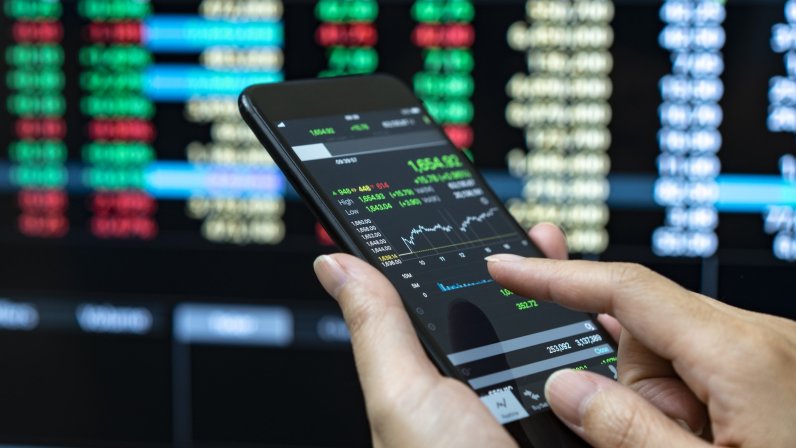
Even before the advent of the internet, traders were getting scammed. Today, these scammers reach a wider audience because of the internet and do so with more anonymity.
Nigeria is witnessing an upsurge in online payment usage, and according to CBN e-Payment Statistics, Nigerians executed about 16 billion online transactions in 2021, and it increased to 22 billion in 2022.
As more Nigerians embrace online trading and use e-payments as ways to fund their trading accounts; scammers are also perpetrating scams online which target these traders relying on the speed & anonymity of the internet; where they can pose as a fake brokerage company or an expert trader using a fake social media persona, professional looking website & email to take away money using fast & anonymous online payment methods.
Unregulated Entities and Scammers Posing as Brokers
Among the most common trading scams is the unregulated persons and entities posing as brokers. The legality of a broker is based on its regulatory status with the appropriate government authorities.
In Nigeria, the Securities and Exchange Commission (SEC) is responsible for registering and regulating capital market operators, which includes online brokers and securities and commodity exchanges.
You can confirm whether an investment provider is registered by SEC by visiting the SEC website and clicking on “Capital Market Operator Search”. Additionally, for stockbrokers, you can visit the NGX stock exchange website and click on ‘Find a Broker’.
An online broker that is not registered by SEC or is not a member of the SEC-authorized exchange is most likely a scam or is unregulated or unsafe.
Reports have shown that many Nigerians still engage in alternative and unconventional investments such as cryptocurrency, CFDs forex trading, which are still unregulated, leaving a grey area to be exploited by bad players.
Cryptocurrency investments had recently been banned in Nigeria while Forex trading is still unregulated by SEC but is not illegal; this poses investment risks for traders as these instruments lack regulatory oversight.
SEC had issued a Public Warning on Retail Online Forex Trading in Nigeria, saying forex trading is not regulated by them, and you do so at your own risk.
Due to this absence of regulation in CFD and Forex Trading space, Nigerian traders need to ensure that the foreign forex brokers they deal with are under relevant regulations in their home countries.
When dealing with foreign brokers, it is important to note that not all foreign regulators are of the same calibre. The regulators in developed economies, such as the Financial Conduct Authority (FCA) of the UK, and ASIC of Australia, are often regarded as Tier-1; and are considered safest due to their strong investor protection, regulation and oversight. Many brokers have faced harsh penalties from FCA and ASIC for not following rules. So, traders can be sure that the tier-1 regulated broker will not engage in bad practices and will offer services as per the directives of the regulators.
But if you see brokers regulated in Island nations like the Bahamas, Saint Vincent & The Grenadines, Mauritius, etc. You need to beware as these countries have weaker regulatory laws and are not Tier-1 or Tier-2 regulators. So, there is a high possibility brokers under these regulations will likely engage in fraudulent activities flouting rules, and you would have no regulatory discourse or action to recover your funds in case of wrongdoing by the broker. So, any broker below tier-1 or tier-2 regulation must be avoided.
Africa too has reputed tier-2 regulators like FCSA of South Africa and CMA of Kenya that offer similar investor protection, regulations at par with FCA, ASIC to CFD & Forex Traders. According to this research into forex brokers in South Africa, there are 8 forex brokers that accept traders from the African continent and hold multiple regulatory licenses, including Tier-1 & Tier-2 licenses.
These days foreign brokers get multiple regulators across the globe to license them, and the more regulators, the safer these brokers are.
You still need to confirm their regulatory status by visiting the foreign regulators’ website and viewing the list of licensed financial service providers.
In summary, a broker that is not registered by the Nigerian SEC or is not a member of an authorized exchange like NGX and also is not registered by multiple international regulators is operating illegally and is most likely a scam. You should avoid trading with such online brokers.
Many Scams Originate from Social Media & Dating Sites
Online trading scams through social media take different forms. Fraudsters can impersonate legitimate brokers or pose as legitimate investment advisors and create a fake profile and webpage to accompany it.
They then convince unsuspecting online traders to trade via their platforms or invest in markets via them; if you send money to them, it is gone.
Sometimes, you can be asked to keep sending money to them until you realize it is a scam. You can prevent this by only following verified company handles on social media and carrying out proper background checks on the website before investing. You can also verify Broker’s genuine website from Regulator or Exchange’s website. Most regulators and exchanges list the official websites and contact details of their licensed brokers.
Trading scams on social media can also take the form of romance. Here, the scammer creates a fake profile on dating apps, seeking a romantic relationship with you.
At some point in the relationship, you are introduced to a fake investment scheme with the promise of high returns. It could be forex, stocks, crypto, etc.
You will be encouraged to keep investing funds, but when you ask to withdraw your winnings, you will be met with excuses such as you need to pay taxes, you need to invest for a certain number of years before you can withdraw, etc. This goes on till you give up trying.
Online trading scams via social media can also take the form of a pump and dump scheme, where the scammers create a social media frenzy on platforms like Twitter, Facebook, Youtube, ticktok or Reddit about a particular stock (usually penny stock), falsely claiming its price is about to explode. A scammer would usually pose as a market expert offering legitimate research, investment calls, insight or some insider information, causing mass sharing viral effects on social media.
This frenzy makes a lot of people buy the stock, thereby increasing its price. The scammers would then immediately sell off huge volumes of the stock, causing its price to fall and leaving other buyers with worthless stock.
You can prevent this by avoiding securities with unusual social media buzz.
Scams Can Hide Behind Celebrity Endorsements
Celebrities, community leaders, influencers, or even religious leaders can unknowingly promote online trading scams.
Scammers understand that you hold these figures in high esteem, and most likely believe any information from them.
Today with the trend of brand ambassadors, some online influencers promote suspicious brands in order to get a paycheck. Celebrities, influencers, & skit makers are not qualified to give investment advice. Always confirm all investment offers from the SEC website before you deal.
Scammers May Pay You Initial Returns to Win Your Trust
Scammers sometimes pay your profits for your first investment. This gives you the illusion that they are legit and prompts you to commit more funds.
This is the classic Ponzi scheme style where the earlier investors get paid with the money of the later investors. Once you commit substantial funds, you are blocked from withdrawing any more money, and when you insist, the scammers cut off communication.
Scams Downplay Risks and Emphasize High Rewards
Online trading comes with risks of losing, and no matter how knowledgeable you are, you cannot avoid them. Even the best traders in the world only have a 6 out of 10 win rate. It is, therefore, important that your broker keeps you informed of the risks in online trading.
If your broker sugarcoats online trading and downplays or completely ignores the risks, you should be suspicious.
Also, if a broker lays great emphasis on huge returns to be made via online trading, he is likely to be a scam too.
Scams May Send You Malicious Links to Download Trading Apps
You risk downloading the fake version of a trading app if you download it from unknown sources.
Google Play Store and Apple Store are the safest places to download because they scrutinize the apps for any malware and carry out regular scans to ensure the apps are not infected.
A reputable online broker will host his trading app on either the Google Play store or the iOS app store. This is not to say Google Play store or the iOS app store are immune to fake apps, but the chances are lower.
Scammers may also send you Android Package Kit (APK) executable files to download the app, and this too is dangerous as it can contain hidden malware.
Request to Deposit Funds Via Malicious Payment Links
A payment link enables the creator to receive payments from others without the hassle of building a website and integrating a payment gateway.
They usually exist as URLs, QR codes, etc. It is common for businesses to send payment links via apps and SMS.
Scammers could impersonate a legitimate broker, but at the point of payment, a link is sent to you, and the money goes to the scammer instead.
Things to Remember
Online scammers can be very professional and build good-looking websites. They are part of a global organized crime ring, hence their sophistication.
They have even gone as far as using deep fake technology for video calls so that they can impersonate even people close to you.
They target everyone, even you in Nigeria, as far as there are gains to be made. This is why you must ensure you carry out a background check on the broker and ensure there is no red flag before trading with an online broker.






By Dipo Olowookere
The local stock market firmed up by 1.13 per cent on Friday as appetite for Nigerian stocks remained strong.
Investors reacted well to the 2026 budget presentation of President Bola Tinubu to the National Assembly yesterday, especially because of the more realistic crude oil benchmark of $64 per barrel compared with the ambitious $75 per barrel for 2025. This year, prices have been between $60 and $65 per barrel.
Business Post observed profit-taking in the commodity and energy sectors as they respectively shed 0.14 per cent and 0.03 per cent.
But, bargain-hunting in the others sustained the positive run, with the consumer goods index up by 3.82 per cent.
Further, the industrial goods space appreciated by 1.46 per cent, the banking counter improved by 0.08 per cent, and the insurance industry gained 0.04 per cent.
As a result, the All-Share Index (ASI) increased by 1,694.33 points to 152,057.38 points from 150,363.05 points and the market capitalisation chalked up N1.080 trillion to finish at N96.937 trillion compared with Thursday’s closing value of N95.857 trillion.
A total of 34 shares ended on the advancers’ chart, while 24 were on the laggards’ log, representing a positive market breadth index and bullish investor sentiment.
Austin Laz gained 10.00 per cent to close at N2.42, Union Dicon also jumped 10.00 per cent to N6.60, Tantalizers increased by 9.80 per cent to N2.69, Aluminium Extrusion improved by 9.78 per cent to N12.35, and Champion Breweries grew by 9.71 per cent to N16.95.
Conversely, Sovereign Trust Insurance dipped by 7.42 per cent to N3.87, Royal Exchange lost 6.84 per cent to trade at N1.77, Omatek slipped by 6.84 per cent to N1.09, Eunisell depreciated by 5.88 per cent to N80.00, and Eterna dropped 5.63 per cent to close at N28.50.
Yesterday, traders transacted 1.5 billion units worth N21.8 billion in 25,667 deals compared with the 839.8 million units sold for N32.8 billion in 23,211 deals in the preceding session, showing a surge in the trading volume by 76.61 per cent, an uptick in the number of deals by 10.58 per cent, and a shrink in the trading value by 33.54 per cent.


By Adedapo Adesanya
Three stocks stretched the bearish run of the NASD Over-the-Counter (OTC) Securities Exchange by 1.21 per cent on Friday, December 19, with the market capitalisation giving up N26.01 billion to close at N2.121 billion compared with the N2.147 trillion it ended a day earlier, and the NASD Unlisted Security Index (NSI) dropping 43.47 points to 3,546.41 points from 3,589.88 points.
The trio of FrieslandCampina Wamco Nigeria Plc, Central Securities Clearing System (CSCS) Plc, and NASD Plc overpowered the gains printed by four other securities.
FrieslandCampina Wamco Nigeria Plc lost N6.00 to sell at N54.00 per unit versus N60.00 per unit, NASD Plc shrank by N3.50 to N58.50 per share from N55.00 per share, and CSCS Plc depleted by N2.91 to N33.87 per unit from N36.78 per unit.
On the flip side, Air Liquide Plc gained N1.01 to close at N13.00 per share versus N11.99 per share, Golden Capital Plc appreciated by 70 Kobo to N7.68 per unit from N6.98 per unit, Geo-Fluids Plc added 39 Kobo to sell at N5.50 per share versus N5.11 per share, and IPWA Plc rose by 8 Kobo to 85 Kobo per unit from 77 Kobo per unit.
During the trading day, market participants traded 1.9 million securities versus the previous day’s 30.5 million securities showing a decline of 49.3 per cent. The value of trades went down by 64.3 per cent to N80.3 million from N225.1 million, but the number of deals jumped by 32.1 per cent to 37 deals from 28 deals.
Infrastructure Credit Guarantee Company (InfraCredit) Plc finished the session as the most active stock by value on a year-to-date basis with 5.8 billion units valued at N16.4 billion, followed by Okitipupa Plc with 178.9 million units transacted for N9.5 billion, and MRS Oil Plc with 36.1 million units traded for N4.9 billion.
The most active stock by volume on a year-to-date basis was still InfraCredit Plc with 5.8 billion units worth N16.4 billion, trailed by Industrial and General Insurance (IGI) Plc with 1.2 billion units sold for N420.7 million, and Impresit Bakolori Plc with 536.9 million units traded for N524.9 million.
By Adedapo Adesanya
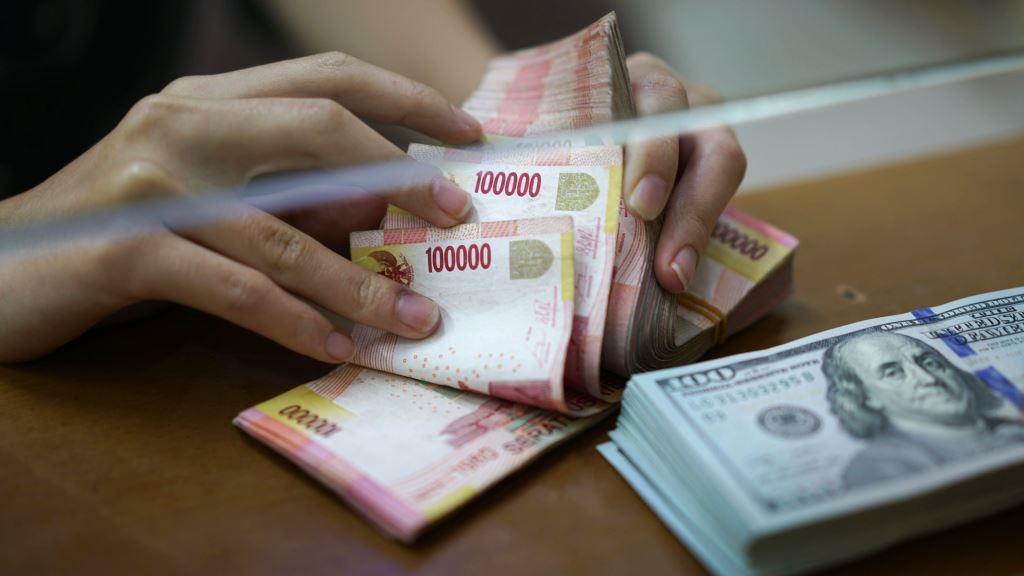
It was not a good day for the Nigerian Naira at the two major foreign exchange (FX) market on Friday as it suffered a heavy loss against the United States Dollar at the close of transactions.
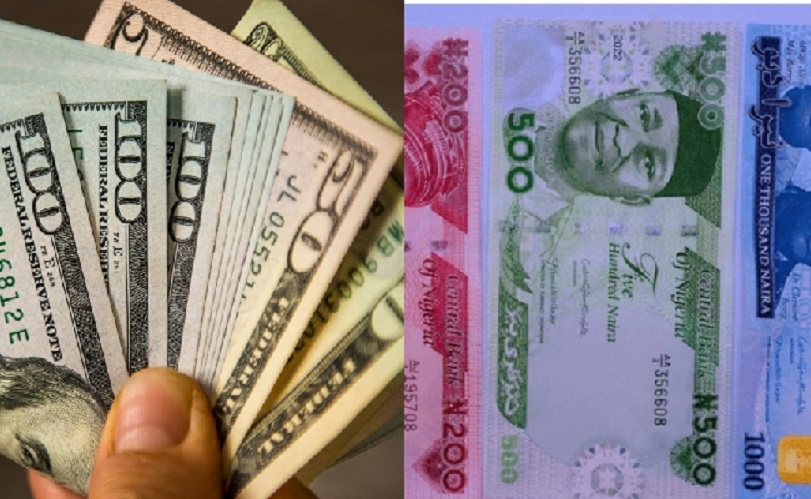
In the black market segment, the Naira weakened against its American counterpart yesterday by N10 to quote at N1,485/$1, in contrast to the N1,475/$1 it was traded a day earlier, and at the GTBank forex counter, it depreciated by N2 to settle at N1,467/$1 versus Thursday’s closing price of N1,465/$1.
In the Nigerian Autonomous Foreign Exchange Market (NAFEX) window, which is also the official market, the nation’s legal tender crashed against the greenback by N6.65 or 0.46 per cent to close at N1,464.49/$1 compared with the preceding session’s rate of N1,457.84/$1.
In the same vein, the local currency tumbled against the Euro in the spot market by N2.25 to sell for N1,714.63/€1 compared with the previous day’s N1,712.38/€1, but appreciated against the Pound Sterling by 73 Kobo to finish at N1,957.30/£1 compared with the N1,958.03/£1 it was traded in the preceding session.
The market continues to face seasonal pressure even as the Central Bank of Nigeria (CBN) is still conducting FX intervention sales, which have significantly reduced but not remove pressure from the Naira. Also, there seems to be reduced supply from exporters, foreign portfolio investors and non-bank corporate inflows.
President Bola Tinubu on Friday presented the government’s N58.47 trillion budget plan aimed at consolidating economic reforms and boosting growth.
The budget is based on a projected crude oil price of $64.85 a barrel and includes a target oil output of 1.84 million barrels a day. It also projects an exchange rate of N1,400 to the Dollar.
President Tinubu said inflation had plunged to an annual rate of 14.45 per cent in November from 24.23 per cent in March, while foreign reserves had surged to a seven-year high of $47 billion.
Meanwhile, the cryptocurrency market was dominated by the bulls but it continues to face increased pressure after million in liquidations in previous session over accelerating declines, with Dogecoin (DOGE) recovering 4.2 per cent to trade at $0.1309.
Further, Ripple (XRP) appreciated by 3.9 per cent to $1.90, Cardano (ADA) rose by 3.5 per cent to $0.3728, Solana (SOL) jumped by 3.4 per cent to $126.23, Ethereum (ETH) climbed by 2.9 per cent to $2,982.42, Binance Coin (BNB) gained 2.0 per cent to sell for $853.06, Bitcoin (BTC) improved by 1.7 per cent to $88,281.21, and Litecoin (LTC) soared by 1.2 per cent to $76.50, while the US Dollar Tether (USDT) and the US Dollar Coin (USDC) traded flat at $1.00 each.







-
 Feature/OPED6 years ago
Davos was Different this year
-
Travel/Tourism9 years ago
Lagos Seals Western Lodge Hotel In Ikorodu
-

 Showbiz3 years ago
Estranged Lover Releases Videos of Empress Njamah Bathing
-
 Banking7 years ago
Sort Codes of GTBank Branches in Nigeria
-

 Economy3 years ago
Subsidy Removal: CNG at N130 Per Litre Cheaper Than Petrol—IPMAN
-

 Banking3 years ago
First Bank Announces Planned Downtime
-

 Banking3 years ago
Sort Codes of UBA Branches in Nigeria
-

 Sports3 years ago
Highest Paid Nigerian Footballer – How Much Do Nigerian Footballers Earn
1 Comment