Economy
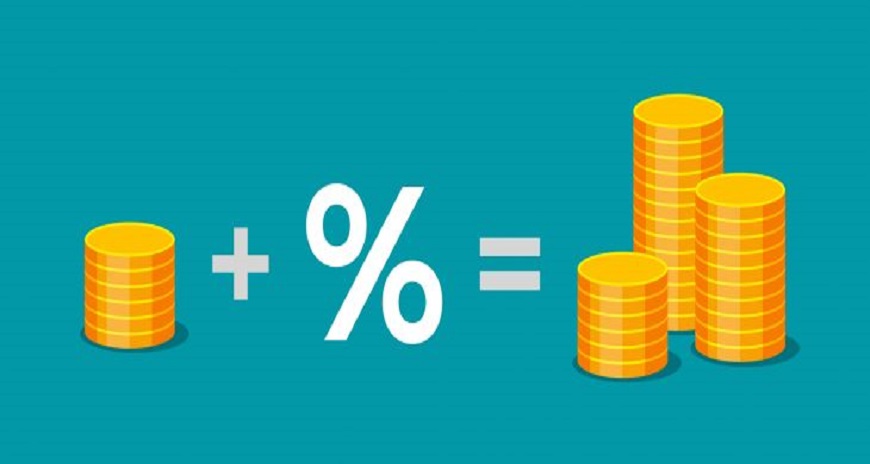
Why Interest Rate on Savings Deposit Was Cut to 1.25%—CBN
By Dipo Olowookere
On September 1, 2020, the Central Bank of Nigeria (CBN) in a circular signed by its Director of Banking Supervision, Mr Bello Hassan, said the interest rate on savings deposit in banks will be 1.25 per cent.
The rate was chopped to the level from the previous 3.9 per cent and this was greeted with criticisms from various sections, including the Nigerian Economic Summit Group (NESG), which questioned the rationale behind this policy.
The issue generated such reactions because it was at the same time the federal government approved the raising of electricity tariff in the country and a few days later, the pump price of fuel jumped to N160 per litre from N145 per litre.
One of the major reasons for the grumbling was that these policies were coming when residents of the country were just reopening their businesses. They have not been economically active for months because of the closure of their means of survival by the government due to the COVID-19 pandemic.
But the CBN, while reacting to the comments made by NESG, questioned the group’s credibility, especially under its current leadership, saying it “has fallen short of its own standards and become a shadow of its old self.”
The apex bank explained that it reduced the interest rate on savings deposit in the country for the good of the economy, noting that it noticed that some big companies, instead of expanding their operations so as to hire more workers, were putting the funds in the banks to generate more money.
Recently, the National Bureau of Statistics (NBS) said that over 27 million Nigerians were jobless in the country.
The apex bank said in order to address this unemployment issue, it had to discourage the dumping of funds in the banks to yield interest rather than pumping them into the economy to improve economic activities, which will then make the nation’s Gross Domestic Product (GDP) grow positively.
Business Post reports that at the second quarter of 2020, Nigeria recorded a negative GDP growth of 6.1 per cent and this was attributed to the global health crisis, which brought the economy almost to a standstill.
In the CBN’s response to NESG’s allegation of “price fixing” for savings deposit in the country, the banking industry watchdog said in an “ideal economic textbook/theory, saving should be equal to investment, we expected total deposits should closely mirror total loans.”
The central bank, in the response signed by its spokesman, Mr Isaac Okorafor, said it observed “an increasingly large gap between total deposits in the banking system and total credit to the economy” which necessitated the 1.25 per cent interest rate benchmark.
According to the bank, while total deposits stood at about N25 trillion in January 2020, total loans stood at N17 trillion and as of August 2020, the total deposits jumped to N29.7 trillion, while the total loans were only N19 trillion.
“Many rich cooperates have simply been content with saving their cash balances and collecting huge interest payments, rather than expanding their investment, which should lead to hiring more people and producing more goods.
“In other to forestall a continuation of this trend, the CBN had to act to discourage these practices for the good of the economy.
“In other words, the rationale for moving to reduce the saving rates by banks is actually to encourage more lending,” the CBN said in the statement.
Economy
NGX Key Performance Indicators Rebound 0.04%
By Dipo Olowookere
About 0.04 per cent was recovered on Friday from the loss recorded by the Nigerian Exchange (NGX) the previous due to profit-taking.
Yesterday, investors were in the market with renewed vigour, mopping up stocks trading at relatively cheaper prices.
According to data, the insurance counter gained 0.41 per cent, the banking sector appreciated by 0.38 per cent, and the consumer goods index grew by 0.14 per cent.
The gains achieved by these three sectors were enough to lift Customs Street at the close of business despite the 0.26 per cent decline printed by the industrial goods segment and the 0.14 per cent loss suffered by the energy industry. The commodity counter was flat during the session.
A total of 43 equities gained weight on the last trading day of this week, while 26 equities shed weight, indicating a positive market breadth index and strong investor sentiment.
Red Star Express increased its share price by 10.00 per cent to N13.20, NCR Nigeria grew by 9.97 per cent to N128.55, SCOA Nigeria inflated by 9.96 per cent to N14.90, Omatek appreciated by 9.94 per cent to N1.77, and Deap Capital expanded by 9.85 per cent to N4.46.
On the flip side, McNichols decreased by 8.81 per cent to N6.00, Legend Internet crumbled by 7.56 per cent to N5.50, Cornerstone Insurance crashed by 6.48 per cent to N6.35, C&I Leasing contracted by 6.29 per cent to N8.20, and Austin Laz slipped by 5.78 per cent to N3.75.
Yesterday, 539.9 million shares valued at N16.7 billion were transacted in 48,023 deals versus the 1.0 billion shares worth N31.6 billion executed in 51,227 deals in the preceding day, implying a shrink in the trading volume, value, and number of deals by 46.01 per cent, 47.15 per cent, and 6.26 per cent apiece.
Zenith Bank was the most active for the day with 54.6 million stocks sold for N3.8 billion, Jaiz Bank traded 41.5 million units worth N359.4 million, Secure Electronic Technology transacted 37.7 million units valued at N39.2 million, Access Holdings exchanged 30.5 million units for N699.2 million, and Lasaco Assurance transacted 27.2 million units worth N68.3 million.
When the market closed for the day, the All-Share Index (ASI) went up by 72.21 points to 166,129.50 points from 166,057.29 points and the market capitalisation gained N31 billion to N106.354 trillion from N106.323 trillion.
Economy
Naira Trades N1,417/$1 at Official Market, N1,485/$1 at Black Market
By Adedapo Adesanya
It was a positive ending for the Naira this week after it further appreciated against the US Dollar in the Nigerian Autonomous Foreign Exchange Market (NAFEX) on Friday, January 16 by N1.33 or 0.09 per cent to sell for N1,417.95/$1 compared with the previous day’s N1,419.28/$1.
The domestic currency also gained N2.41 against the Euro in the official market to close at N1,647.51/€1 versus the preceding session’s closing price of N1,649.92/€1, however, it suffered a N7.97 loss against the Pound Sterling in the same market window to trade at N1,901.32/£1, in contrast to Thursday’s closing price of N1,893.35/£1.
In the same vein, the Nigerian Naira depleted against the Dollar at the GTBank FX counter by N2 to quote at N1,427/$1 compared with the previous day’s N1,425/$1, but strengthened against the greenback at the black market yesterday by N5 to settle at N1,485/$1 versus the N1,490/$1 it was exchanged a day earlier.
Improved supply conditions helped keep the market within range as exporters’ and importers’ inflows in addition to non-bank corporate supply enhanced liquidity as the Central Bank of Nigeria (CBN) made no visible intervention.
Stronger external inflows from foreign portfolio investors (FPIs) and improving current account dynamics, continue to align with structural support in the wider economy.
Nigeria has seen projections of a stronger economic or gross domestic product (GDP) growth and lower inflation in 2026, with these forecasts citing improved macroeconomic fundamentals and reform impacts.
As for the cryptocurrency market, it was mixed following selloff in precious metals and lower US stocks appeared to be denting crypto sentiment.
Gold and silver, both of which also enjoyed big rallies earlier this week, tumbled 1.2 per cent and 5 per cent, respectively while key US stock indexes — the Nasdaq, S&P 500 and Dow Jones Industrial Average — all reversed from early gains to modest losses in Friday trade.
Dogecoin (DOGE) shrank by 2.2 per cent to $0.1370, Ripple (XRP) slipped by 0.8 per cent to $2.05, Ethereum (ETH) went down by 0.7 per cent to $3,228.56, and Bitcoin (BTC) slumped by 0.6 per cent to $95,086.80.
Conversely, Litecoin (LTC) appreciated by 3.2 per cent to $74.48, Solana (SOL) rose by 0.4 per cent to $143.70, Cardano (ADA) jumped by 0.2 per cent to $0.3942, and Binance Coin (BNB) increased by 0.1 per cent to $935.88, while the US Dollar Tether (USDT) and the US Dollar Coin (USDC) remained unchanged at $1.00 each.
Economy
Oil Prices Rise Amid Lingering Iran Worries
By Adedapo Adesanya
Oil prices settled higher amid lingering worries about a possible US military strike against Iran, a decision that may still occur over the weekend.
Brent crude settled at $64.13 a barrel after going up by 37 cents or 0.58 per cent and the US West Texas Intermediate (WTI) crude finished at $59.44 a barrel after it gained 25 cents or 0.42 per cent.
The US Navy’s aircraft carrier USS Abraham Lincoln was expected to arrive in the Persian Gulf next week after operating in the South China Sea.
Market analysts noted that it doesn’t seem likely anything will happen soon. However, the weekends have become the perfect time for actions so as not offset the markets.
The market had risen after protests flared up in Iran and US President Donald Trump signalled the potential for military strikes, but lost over 4 per cent on Thursday as the American president said Iran’s crackdown on the protesters was easing, allaying concerns of possible military action that could disrupt oil supplies.
Iran produces approximately 3.2 million barrels per day, accounting for roughly 4 per cent of global crude production, so it was not a coincidence that markets rallied sharply through Tuesday and Wednesday as President Trump canceled meetings with Iranian officials and posted that “help is on its way” to Iranian protesters, raising fears of potential US military strikes that sent prices surging toward multi-month highs.
Weighing against those fears are potential supply increases from Venezuela.
The Trump administration is exploring plans to swap heavy Venezuelan crude for US medium sour barrels that can actually go straight into Strategic Petroleum Reserve (SPR) caverns, since not all all oil belongs in the reserve.
According to Reuters, the Department of Energy is considering moving Venezuelan heavy crude into commercial storage at the Louisiana Offshore Oil Port, while US producers deliver medium sour crude into the SPR in exchange.
Analysts expect higher supply this year, potentially creating a ceiling for the geopolitical risk premium on prices.
Some investors covered short positions ahead of the three-day Martin Luther King holiday weekend in the US.
-
Feature/OPED6 years agoDavos was Different this year
-
Travel/Tourism9 years ago
Lagos Seals Western Lodge Hotel In Ikorodu
-
Showbiz3 years agoEstranged Lover Releases Videos of Empress Njamah Bathing
-
Banking8 years agoSort Codes of GTBank Branches in Nigeria
-
Economy3 years agoSubsidy Removal: CNG at N130 Per Litre Cheaper Than Petrol—IPMAN
-
Banking3 years agoFirst Bank Announces Planned Downtime
-
Banking3 years agoSort Codes of UBA Branches in Nigeria
-
Sports3 years agoHighest Paid Nigerian Footballer – How Much Do Nigerian Footballers Earn