Economy
Youtap, MatchMove Unite to Ease Mobile Transactions in Africa

By Modupe Gbadeyanka
Global provider of contactless mobile money payments and financial services software, Youtap, has announced a partnership with MatchMove to provide Youtap’s customers in Africa and Asia with an off-the-shelf open-loop payment acceptance solution for closed-loop wallets.
Youtap has worked closely with MatchMove to provide integration to Youtap Pay, Youtap’s mobile money payment processing platform.
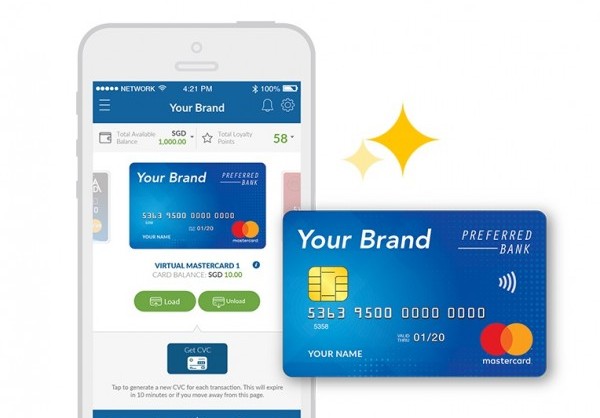
The combined solution will enable mobile operators to issue MasterCard companion cards to their mobile money customers. Cards can be branded and integrated with an operator’s current mobile wallet app.
This partnership is in response to the growing demand for MasterCard companion cards connected with mobile money accounts globally. It provides for tight integration for the acquiring, processing and settlement of credit, debit and prepaid cards linked to a mobile money wallet.
CEO and founder of Youtap, Mr Chris Jones, commented that, “Our partnership with MatchMove is yet another disrupter for cash transactions in growth markets. It makes it possible for customers without credit cards to buy products online and in stores with mobile money.”
His MatchMove counterpart, Shailesh Naik, stated that, “MatchMove is committed to accelerating financial inclusion for the millions of people worldwide who are now connected digitally via their smartphones but remain unbanked and uncarded.
“Our partnership with Youtap will expand the availability of our secure cashless solutions for mobile operators around the world, thus creating a new channel to bridge the gap between mobile money and end users.”
Youtap’s mobile payments platforms are operating in multiple countries in Africa and Asia with various payment service providers and mobile network operators.
Economy
Naira Opens Week Stronger at N1,374/1$ in Official Market
By Adedapo Adesanya
The Naira appreciated against the US Dollar in the Nigerian Autonomous Foreign Exchange Market (NAFEX) by 54 Kobo or 0.04 per cent on Monday, May 25, to trade at N1,374.92/$1 compared to last Friday’s value of N1,375.46/$1.
However, it further depreciated against the Pound Sterling in the official market during the session by N6.01 to sell for N1,855.73/£1 versus the preceding session’s N1,849.72/£1 and lost N158.02 against the Euro to close at N1,755.06/€1, in contrast to the N1,590.04/€1 it was traded last Friday.
In the same vein, the Nigerian Naira weakened against the United States Dollar at the GTBank FX counter yesterday by N2 to quote at N1,383/$1 versus N1,381/$1, and gained N5 in the parallel market to settle at N1,385/$1 compared with the previous rate of N1,390/$1.
The performance of the domestic currency comes as the external reserves inched higher to $48.72 billion, indicating a complex mix of sustained FX demand pressures and modest reserve accretion.
The movement in the FX market underscores the continued tension between demand-side pressure and policy-driven attempts to stabilise the naira.
While recent monetary tightening measures by the Central Bank of Nigeria (CBN) have helped to moderate extreme volatility, market participants are struggling to navigate a landscape shaped by intermittent dollar inflows, import-related demand and shifting investor sentiment.
As for the cryptocurrency market, most tokens were up amid optimism of a near-term US-Iran peace deal, as Iranian negotiators arrived in Doha, Qatar, for talks.
The Strait of Hormuz has been largely blockaded since the US and Israel struck Iran on February 28, though traffic has partially resumed in recent days. The agenda would include the reopening as well as uranium control.
TRON (TRX) rose by 1.8 per cent to $0.3714, Cardano (ADA) added 1.2 per cent to trade at $0.2444, Bitcoin (BTC) improved by 0.9 per cent to $77,283.62, Binance Coin (BNB) jumped 0.8 per cent to $661.30, and Ripple (XRP) increased by 0.8 per cent to $1.35.
Further, Ethereum (ETH) grew by 0.7 per cent to $2,018.82, Solana (SOL) expanded by 0.6 per cent to $85.37, and Dogecoin (DOGE) appreciated by 0.6 per cent to $0.1001, while the US Dollar Tether (USDT) and the US Dollar Coin (USDC) remained unchanged at $1.00 apiece.
Economy
Oil Prices Crash 7% on Hopes of US-Iran Peace Deal
By Adedapo Adesanya
Oil prices fell nearly 7 per cent on Monday as optimism grew that the United States and Iran were moving closer to a peace deal that would reopen the Strait of Hormuz.
Brent crude futures were down by $7.24 or almost 7 per cent to $96.30 a barrel, and the US West Texas Intermediate (WTI) crude futures decreased by $6.30 or 6.5 per cent to trade at $90.88 per barrel.
Comments by President Donald Trump that diplomatic negotiations with Iran are advancing eased market fears of severe energy supply disruptions due to the Middle East conflict.
This is as a top negotiator of Iran, and its foreign minister was in Doha for talks with Qatar’s prime minister on a potential deal with the US to end the three-month-old war
Recently, both countries have downplayed expectations for an immediate peace agreement to end their three-month-old war, backing away from claims of an imminent breakthrough.
President Trump later revealed that he has instructed negotiators not to rush the process, asserting that the US naval blockade on Iranian ports will remain in full effect until a finalised accord is certified and signed.
Also, the US Secretary of State Marco Rubio has affirmed that the US government will exhaust diplomatic channels, also warning that it will handle Iran in “another way” if a good agreement cannot be secured, hinting at a potential return to active war.
The deal outlines a process to fully reopen the vital global shipping lane without tolls, resolving the global energy crunch. Iran would receive targeted sanctions relief and the gradual unfreezing of up to $20 billion to $25 billion in assets currently held in foreign banks.
Even if a peace deal is reached, analysts expect a return to normal oil flows through the strait will take months, while damaged oil and gas facilities are repaired. There is currently a supply shortfall of up to 11 million barrels per day of crude oil that does not go away immediately, even if a deal is reached soon.
Ship-tracking data showed three Liquefied Natural Gas (LNG) tankers passed through the strait in recent days, heading to Pakistan, China and India, as well as a supertanker with Iraqi crude for China after being stranded for nearly three months.
Economy
Nigeria Records 3.89% GDP Growth in Q1 2026
By Adedapo Adesanya
Nigeria’s economic growth rate eased in the first quarter of 2026 to 3.89 per cent year-on-year, as a slowdown in the oil sector offset gains recorded in the non-oil sector.
The economy, measured by Gross Domestic Product (GDP), slowed in the first three months of this year from the 4.07 per cent recorded in the previous quarter (Q4 2025), according to data released by the National Bureau of Statistics (NBS) on Monday. However, it was higher than the 3.13 per cent recorded in the first quarter of 2025.
In the first quarter of 2026, Nigeria recorded an average daily oil production of 1.55 million barrels per day, lower than 1.62 million barrels per day in the same quarter of 2025 and lower than the 1.58 million barrels per day in the fourth quarter of 2025.
The real growth of the oil sector was 2.57 (year-on-year) in Q1 2026, indicating an increase of 0.70 per cent compared with the 1.87 per cent in the corresponding quarter of 2025.
However, growth decreased by 4.22 per cent compared to 6.79 per cent in Q4 2025, and on a quarter-on-quarter basis, the oil sector recorded a growth rate of 9.31 per cent.
For the non-oil sector, it contributed 96.08 per cent to the nation’s GDP between January and March 2026, versus 96.03 per cent in the same period of last year and lower than 97.13 per cent in the fourth quarter of last year.
During the quarter under review, agriculture grew by 3.15 per cent. The growth of the industry sector stood at 3.50 per cent versus 3.42 per cent in the first quarter of last year, while the services sector recorded a growth of 4.31 per cent, in contrast to 4.33 per cent in the same quarter of 2025.
In terms of share of the GDP, the services sector contributed 57.73 per cent compared to 57.50 per cent in the first quarter of 2025.
In the quarter under review, aggregate GDP at basic price stood at N110.79 trillion in nominal terms, higher than N94.1 trillion in the first quarter of 2025 by 17.79 per cent.
-
Feature/OPED6 years agoDavos was Different this year
-
Travel/Tourism10 years ago
Lagos Seals Western Lodge Hotel In Ikorodu
-
Showbiz3 years agoEstranged Lover Releases Videos of Empress Njamah Bathing
-
Banking8 years agoSort Codes of GTBank Branches in Nigeria
-
Economy3 years agoSubsidy Removal: CNG at N130 Per Litre Cheaper Than Petrol—IPMAN
-
Banking3 years agoSort Codes of UBA Branches in Nigeria
-
Banking3 years agoFirst Bank Announces Planned Downtime
-
Sports3 years agoHighest Paid Nigerian Footballer – How Much Do Nigerian Footballers Earn