
Education
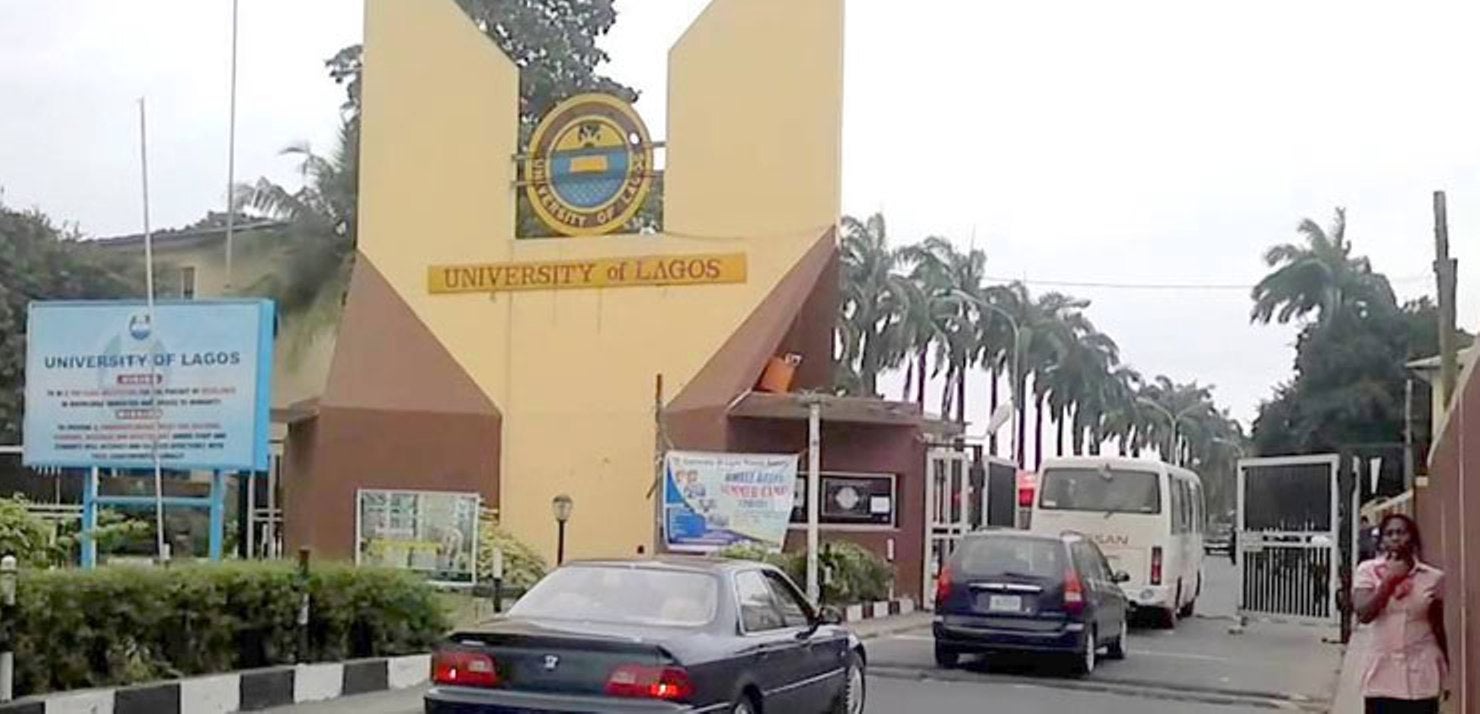
UNILAG Students Lament as Virtual Classes Suffer Glitches

By Ahmed Rahma
Academic activities fully resumed at the University of Lagos (UNILAG) after several months of being away from the classrooms as a result of the strike action embarked upon by the Academic Staff Union of Universities (ASUU).
However, many students alleged that they could not have access to the website designed to allow virtual learning because it crashed ostensibly due to traffic to the platform.
UNILAG adopted online teaching due to the COVID-19 crisis in the country and the world.
As a result of the glitch witnessed today, some students of the institution took to social media platforms, especially Twitter, to voice their frustrations.
They blamed the management of UNILAG of not planning it through despite having 10 months to prepare for virtual learning especially when they knew the virus had change the way of life.
“If UNILAG that’s the nation’s pride failed to create a site that will make her students get the online lectures without hitches, then it will be difficult for other schools to do online lectures,” @Segzybi tweeted.
Another user of the app by the name Sucrose Papito said, “This same UNILAG plans to do Post-UTME online. Father Lord innocent Jambites as scapegoats.”
Business Post had earlier reported that the management of the institution has fixed Monday, January 25, 2021, for the resumption of classes.
According to a statement issued by the school’s Registrar, Mr Azeez Oladejo, academic activities for the completion of the first semester of 2019/2020 academic session for both undergraduate and post-graduate programmes was scheduled to begin today through the University Learning Management System (Lagonline).
The Registrar had said due to the second wave of COVID-19, all lectures, continuous assessments and examinations for the first semester would be held virtually as students cannot be accommodated on campus at this time for safety reasons.
Although today’s classes didn’t hold, some student still agreed that this is the safest option for them as the population of the institution will not encourage physical classes.
Meanwhile, the Vice-Chancellor of UNILAG, Prof. Oluwatoyin Ogundipe, has shared some details of this year’s post-UTME examinations.
According to Mr Ogundipe, the university is getting set for a non-physical post-UTME test.
Speaking with the News Agency of Nigeria (NAN), he disclosed that the exams would be conducted from February 15 to 23, 2021.
The VC also noted that candidates would need tablets not just for the post-UTME test but also to facilitate other e-learning processes.
He disclosed that over 50,000 candidates applied for admission in the 2020/2021 academic session, out of which about 22,000 scored 200 marks and above.
According to him, 21,955 candidates have so far paid to write the post-UTME test.
Mr Ogundipe added that, “We looked at the issue of indigent candidates; we then decided to see how we can carry them along.
“Right now, we have started talking to some friends of the university and alumni to see how we can get tablets that we can give them.”




By Adedapo Adesanya
The Nigerian Education Loan Fund (NELFUND) has granted another extension for its Student Loan Application Portal to accommodate institutions that requested additional time for the 2025/2026 academic session.
According to the statement signed by NELFUND’s Director of Strategic Communications, Ms Oseyemi Oluwatuyi, on Thursday, the extension applies only to institutions that submitted formal requests, allowing eligible students extra time to complete their applications.
“The Nigerian Education Loan Fund has approved an extension of its Student Loan Application Portal for institutions that have formally requested additional time for the 2025/2026 academic session,” the statement read.
Business Post reports that at the beginning of March, NELFUND announced an extension to the deadline by a week for its student loan application portal following a notable rise in nationwide interest driven by ongoing awareness campaigns.
Speaking on the development, NELFUND Managing Director and Chief Executive Officer, Mr Akintunde Sawyerr, reiterated the Fund’s commitment to ensuring that eligible students at participating institutions can access the student loan programme.
“NELFUND remains committed to ensuring that eligible students across participating institutions have the opportunity to access the student loan programme,” he said.
The Fund urges students in affected institutions to take advantage of the extension and submit their applications through the official portal.
It also emphasised its dedication to transparency, accountability, and providing sustainable financing solutions to remove financial barriers to higher education in Nigeria.
Established to administer the Nigeria Student Loan Scheme, NELFUND was enacted into law by President Bola Tinubu in April 2024.
The initiative provides interest-free loans to students in public tertiary institutions to cover tuition and living expenses.
Beneficiaries are required to repay the loans after completing their education and securing employment, aiming to increase access to higher education for students from low-income backgrounds.

By Adedapo Adesanya
The Nigeria Revenue Service (NRS) has inaugurated a Curriculum Review Committee aimed at strengthening taxation education in Nigerian academic institutions and improving the country’s tax administration system.
According to a statement, the committee was inaugurated on February 24, at the NRS Academy in Durumi as part of the agency’s broader efforts to modernise tax education and align academic training with the evolving demands of contemporary tax administration.
Speaking during the inauguration, the Director of the NRS Academy, Mr Adeolu Akinyemi, said the review exercise would involve collaboration with the Chartered Institute of Taxation of Nigeria (CITN) to develop a more structured and relevant curriculum for the academy.
He emphasised that the initiative seeks to ensure that taxation programmes taught in Nigerian institutions reflect current developments in tax policy and practice, while also equipping students with the practical knowledge required in today’s tax administration environment.
The committee has been tasked with examining existing taxation curricula across Nigerian institutions and proposing updates that incorporate modern tax policies, recent legislative changes, and emerging areas such as digital taxation and global tax practices.
Officials say the review is also designed to close the gap between theoretical classroom instruction and the practical realities of tax administration.
By strengthening the link between academic learning and professional practice, the revised curriculum is expected to better prepare graduates for careers in the tax sector.
The effort is further expected to enhance tax awareness among citizens, encourage voluntary tax compliance, and support the development of skilled tax professionals who can contribute to national revenue generation and economic growth.
The committee is chaired by Mrs Aisha Hamman Mahmoud, Special Adviser to the Executive Chairman of the NRS on Research and Statistics. Its membership includes representatives from the service as well as academic experts in taxation and fiscal policy, alongside professionals with experience in tax administration, policy formulation, and tax education.
The committee will work with relevant educational regulatory agencies and professional bodies to ensure that the proposed curriculum aligns with national academic standards while addressing the practical needs of Nigeria’s tax system.
The NRS stated that the initiative forms part of its ongoing commitment to expanding tax knowledge, strengthening professional capacity, and promoting responsible tax practices across the country.
The curriculum review exercise is expected to be completed within 60 days, after which the Service plans to provide further updates on the implementation of the revised programme.

By Modupe Gbadeyanka
The first batch of Nigerian undergraduates to enjoy fully paid scholarships for studying science, technology, engineering and mathematics (STEM) courses across the continent has been chosen by Airtel Africa Foundation.
Business Post gathered that 70 students from universities across Nigeria were selected from thousands of applicants through an independently managed process, which took nearly six months.
It was learned that most of the undergraduates were from the University of Lagos (UNILAG), Obafemi Awolowo University (OAU) Ile-Ife, the University of Benin (UNIBEN), Tai Solarin University of Education (TASUED), the University of Ilorin, Ahmadu Bello University (ABU Zaria), and the University of Nigeria (UNN).
The scholarship covers tuition, laptop computers, living expenses, and essential learning resources, a statement from Airtel Africa Foundation disclosed.
The chairman of the foundation, Mr Segun Ogunsanya, speaking at the presentation of the scholarships to the beneficiaries at the Lagos headquarters of Airtel Nigeria, emphasised the need for initiatives such as the Airtel Africa Foundation’s undergraduate tech scholarship for the future of the continent.
“True legacy is not measured by the awards we win or the volume of SIM cards we sell; it is measured by the lives we save, the people we feed, and the students we support when the line between success and failure is at its thinnest.
“At the Airtel Africa Foundation, we believe that lifting people out of poverty is the ultimate benchmark of a great company. Today, we are writing that legacy by tilting the balance in favour of the brilliant but underserved, ensuring that the fourth industrial revolution, driven by AI and Data Science, is built by African talent for the African continent,” he stated.
Mr Ogunsanya further revealed that this fellowship, executed through Airtel Nigeria, is designed to bridge the gap where funding, skills, and opportunity often fail to meet.
In addition to the N500,000 yearly budget for the fellows’ four-year or five-year courses, each fellow would be integrated into a structured support system for academic guidance and career mentorship, intended to ultimately transition students from the classroom to the global tech workforce.
Addressing the students, the chief executive of Airtel Nigeria, Mr Dinesh Balsingh, stressed that youth development is a strategic imperative for Airtel.
“At Airtel Nigeria, we view youth development as essential nation-building. When young people succeed, innovation accelerates, and social stability improves.
“By connecting these brilliant scholars to knowledge, skills, and confidence, we are fulfilling our core mission to connect people to opportunity. To our recipients: you earned your place here through merit and discipline. You are now ambassadors of excellence, and we expect your leadership to be defined by your conduct as you help shape a more inclusive digital future for Nigeria,” the Airtel Nigeria chief said.
The Nigerian cohort joins a prestigious network of Airtel Africa Foundation fellows currently studying in Tanzania, the Democratic Republic of Congo (DRC), Uganda, and India.
The initiative underscores a broader commitment to technology education, youth development, and Nigeria’s digital economy.












-
 Feature/OPED6 years ago
Davos was Different this year
-
Travel/Tourism10 years ago
Lagos Seals Western Lodge Hotel In Ikorodu
-

 Showbiz3 years ago
Estranged Lover Releases Videos of Empress Njamah Bathing
-
 Banking8 years ago
Sort Codes of GTBank Branches in Nigeria
-

 Economy3 years ago
Subsidy Removal: CNG at N130 Per Litre Cheaper Than Petrol—IPMAN
-

 Banking3 years ago
Sort Codes of UBA Branches in Nigeria
-

 Banking3 years ago
First Bank Announces Planned Downtime
-

 Sports3 years ago
Highest Paid Nigerian Footballer – How Much Do Nigerian Footballers Earn