Connect with us

Feature/OPED

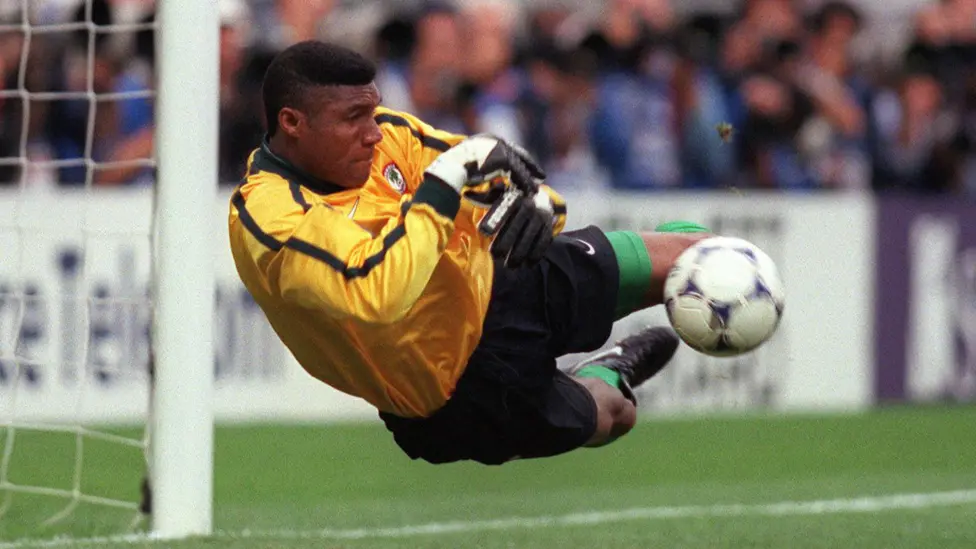
Beyond the Final Whistle: Peter Rufai and the Cost of Being a Legend

Published

on

Beyond the Final Whistle: Peter Rufai

By Timi Olubiyi, PhD

The retirement from professional football, frequently glorified with illusions of legendary status and awards, reveals a contrasting reality upon closer examination, particularly in Nigeria.

Amidst the exciting goals and passionate stadium cheers exists a worrisome reality: numerous Nigerian footballers conclude their careers insufficiently prepared, financially insecure, physically impaired, and mentally overlooked.

Many retired Nigerian footballers, despite having earned significant sums of money during their careers, find themselves struggling financially soon after retirement. This is largely due to a lack of proper financial planning, poor investments, and the mismanagement of their earnings.

This post-retirement crisis of depression has affected even some of the nation’s most renowned figures, including Peter Rufai, the former Super Eagles custodian who once captivated spectators with his talent and tenacity.

Despite representing Nigeria internationally, and at the World Cup, notably and more recently Peter Rufai, has encountered the harsh reality of neglect following his retirement, and this has been the prevailing trend amongst football retirees.

Peter Rufai’s narrative resonates with the experiences of many former footballers who once bore the aspirations of a nation but now endure hardship, grappling with health complications and minimal assistance. The typical Nigerian player, throughout his career, frequently encounters a combination of inadequate money management, insufficient education, lack of appropriate legal guidance, and absence of long-term strategic planning.

Many of the players enter the illusion that they will leverage their talents, huge savings appear to be significant amounts, but fail to secure the stability of their retirement, despite all. In my opinion, these retirement failures are due to a lack of financial education and investment literacy, which leads to eventual poor retirement.

Nigerian footballers, in contrast to their colleagues in more developed footballing nations who enjoy strong player unions, pension schemes, and financial consulting services, frequently find themselves unsupported. Even injuries suffered over their career years often resurface later in life, accompanied by costly therapies that become unaffordable.  The abrupt shift from fame and significance to anonymity and irrelevance imposes a psychological burden that few individuals are equipped to confront.

Numerous accounts also exist of former celebrities in the Nollywood and music industry. After retirement, they reside in deteriorated circumstances, soliciting public aid, or passing away discreetly without access to fundamental healthcare. This condition is rooted in a structural issue, originating from a football administration that favours immediate success over the long-term well-being of its sportsmen.

Moreover, the absence of organised retirement planning or transitional programs for footballers by the Nigeria Football Federation (NFF) and the Ministry of Sports signifies a neglect of the persons who have elevated Nigerian football’s prominence.

In simple terms, many retired Nigerian footballers do not benefit or have pension schemes or long-term financial plans after their playing careers end.

In contrast, football associations in countries like England or Spain provide players with comprehensive retirement programs and pension plans to ensure they remain financially stable even after they retire.

The harsh reality of retirement for Nigerian footballers is a growing concern that demands immediate attention. Therefore, a multifaceted strategy is urgently required to halt this slide.

Initially, financial education should be integrated into player development programs at the grassroots level, instructing young players on the significance of budgeting, investing, and saving.More so, mental health programs and education must be introduced to help retired footballers cope with the psychological challenges of retirement.

Secondly, the NFF should formalise retirement savings programs, pension schemes, and compulsory health insurance for all players representing clubs and the national team.  Furthermore, a welfare department inside the NFF must be formed to monitor and assist retiring athletes, guaranteeing they are not left to manage alone.  The government should enact legislation mandating retirement benefits and post-career healthcare access for national legislators, acknowledging their contribution to the country as a national duty.

Public-private partnerships may be utilised to establish a Footballers’ Retirement Fund, financed through endorsements, league earnings, and sponsorships.  Former athletes may transition into coaching, mentoring, or ambassadorial positions, so as to ensure both financial compensation and continued significance.

Corporate entities and NGOs should participate by establishing post-career training programs in entrepreneurship, coaching, and sports management.

Peter Rufai, who previously endeavoured to promote fitness and youth development during his lifetime, could have received enhanced support to establish a legacy of mentorship programmes if the appropriate structures had been implemented.

In conclusion, without implementing systemic reforms, Nigerian football will continue to celebrate stars on the pitch but neglect them after they retire. Therefore, the government, the NFF, football clubs, and other sports federations must collaborate to establish a sustainable support system for sportspeople, ensuring they are financially secure, emotionally supported, and equipped with the skills needed to succeed after their sporting careers. Without these reforms, many Nigerian sports icons will persist in facing a bleak reality as they transition from playing to retirement.

The call for reform is not just about securing the future of Nigerian athletes; it is about recognising their contributions and making sure that their lives after sport are as dignified and fulfilling as their careers. Rest in peace, Peter Rufai, the legend!

How may you obtain advice or further information on the article? 

Dr Timi Olubiyi is an Entrepreneurship and Business Management expert with a PhD in Business Administration from Babcock University, Nigeria. A prolific investment coach, columnist, author, adviser, seasoned scholar, Chartered Member of the Chartered Institute for Securities & Investment (CISI), Member of the Institute of Directors, and Securities & Exchange Commission (SEC) registered capital market operator. He can be reached on the Twitter handle @drtimiolubiyi and via email: dr***********@***il.com, for any questions, reactions, and comments.

The opinions expressed in this article are those of the author,Dr Timi Olubiyi and do not necessarily reflect the opinions of others.


Click to comment

Leave a Reply

Your email address will not be published. Required fields are marked *

Feature/OPED

Preparing Bank Security Operations for Scale, Change, and Long-Term Resilience

Published

on

bank security operations Quintin Roberts

By Quintin Roberts

When banks and financial institutions upgrade their physical security systems, they are making decisions that will affect operations for years. Branch formats are changing, cyber risks are increasing, and security teams are being asked to support more sites, more data, and more business functions. The challenge is keeping pace with change in a way that holds up over time.

A modern physical security strategy needs to go beyond protection. It needs to give teams a clearer view across branches, support consistent governance, and provide the flexibility to adapt as technology and operational needs change. The following considerations focus on foundational choices that help banks build security operations that are resilient and can grow with the business.

Choose open architecture to preserve long-term flexibility

Banks and financial institutions often manage a mix of legacy systems, newer technologies, and location-specific requirements. A proprietary system can limit scalability, options for devices, and which systems can connect across the organisation. Over time, this can increase costs and make it harder to modernise without replacing infrastructure that still has value.

Open architecture gives decision-makers more choice and preserves flexibility. It allows financial institutions to select the cameras, access control devices, sensors, analytics, and other technologies that best fit each location and adapt them as their needs change.

This allows teams to modernise in phases. For example, an institution may standardise video management across many sites while keeping existing cameras in place, then replace hardware over time.

Decide how to deploy your security system

Some banks want to keep core systems on-premises at major sites. Others prefer cloud-managed services for smaller branches, remote locations, or new sites that need faster deployment and less local infrastructure. Many need a mix of both. Deployment flexibility gives them the freedom to choose where systems run, how data is stored, and how services are managed.

This is especially important for institutions with different regulatory requirements, bandwidth limitations, and internal IT policies. A flexible deployment model helps banks modernise at their own pace while maintaining control over performance, cybersecurity, compliance, and cost.

Unify operations to improve visibility across branches

Managing video surveillance, access control, intrusion, and other systems separately slows down response time and makes investigations harder. Operators may need to sign into different applications, search through data in different ways, and manually piece together what happened. Across hundreds of branches, these inefficiencies can add up quickly.

A unified security platform gives teams one operating picture across systems and sites. A local team can respond faster to an incident at a single location, while a central security operations centre can monitor trends, support remote sites, and apply consistent procedures across the network.

A unified system that creates a shared context makes incorporating analytics or AI-driven capabilities more effective, further accelerating searches, identifying patterns, and reducing overall investigation time.

Put cybersecurity and governance at the forefront

Physical security systems are connected to the broader IT environment. Devices all need to be managed as part of the bank’s cyber risk profile. If systems are outdated or inconsistently configured across branches, they can create unnecessary exposure and make long-term management harder. When cybersecurity and governance are a foundational part of the system, encryption, authentication, user permissions, system updates, audit trails, retention policies, and privacy controls are applied consistently across locations.

A centralised approach makes this consistency sustainable. It provides accountability for banks, helping teams keep track of who accessed which systems, who changed permissions, how long video is retained, and how evidence is shared. This is important for meeting regulatory expectations and adapting security operations over time. Further, consistent policies make organisational risk management more effective by standardising how risk is handled across the organisation, adding to future resilience.

Automate workflows for better risk mitigation and investigations

Investigations often involve information from several systems and locations. A suspicious ATM transaction may need to be matched with video, or an access event may need to be reviewed alongside intrusion activity. If that information sits in separate systems, investigations take longer and are harder to document.

Unified systems connect the relevant context across video, access control, license plate recognition, and other systems. This supports faster investigations and helps teams share evidence internally or with law enforcement while maintaining the chain of custody.

Improve business operations using physical security data

Physical security systems collect valuable operational data every day, from occupancy levels to device health. A unified platform can turn this data into useful insights, helping security teams identify recurring issues and improve resource planning. Other departments can use the same information to improve customer experience, branch operations, and facility management.

For example, occupancy and queue data help banks understand when branches are busiest. Device health monitoring enables teams to identify maintenance needs before systems fail. And with centralised reporting, leadership can see patterns across the full branch network rather than relying on isolated site-level reports.

Making the right choices for the long term

As banks modernise their physical security infrastructure, long-term resilience will depend on foundational choices. Strategies based on open architecture, deployment flexibility, unification, cybersecurity, governance, and data all help financial institutions build systems that can adapt well into the future.

Quintin Roberts is the Regional Sales Manager for Genetec Africa

Continue Reading

Feature/OPED

Strengthening Partnerships Through Dialogue: Okomu’s Engagement with Extension 1 Communities

Published

on

Okomu Oil community

Corporate organisations have been described as an Open Social System wherein the input of the organisations comes from the environment and the output goes back to the environment. In this equation, therefore, proactive and socially responsible organisations must constantly interface with its environment where the surrounding communities are significant stakeholders.

In line with this thought, Okomu Oil Palm Company constantly engages with all its neighbouring communities on a quarterly basis to discuss issues of mutual concern and to resolve any issues that may degenerate into grievances. Through regular stakeholder meetings, the company continues to foster open communication, address concerns, and strengthen relationships with communities within the company’s concessions. Recently, the company engaged communities around its Extension 1 plantation, including Okomu village, Udo, Madagbayo, Safarogbo, Gbelebu, Inikorogha, and Ofunama, Gbole-Uba.

These engagement meetings serve as an important platform for community leaders, youth representatives, women’s groups, and company representatives to discuss matters affecting the well-being and development of the communities. The sessions reflect Okomu’s commitment to maintaining a transparent and mutually beneficial relationship with its host communities.

During the meetings, representatives from the various communities highlighted issues of importance to residents, including infrastructure needs, educational support, employment opportunities, environmental concerns, and community welfare. Company representatives listened attentively to these concerns, provided updates on ongoing initiatives, and outlined measures being taken to address identified challenges.

A key feature of the engagements was the emphasis on collaboration. Community leaders acknowledged the importance of maintaining open channels of communication and working closely with the company to achieve shared development goals. Discussions focused not only on challenges but also on opportunities for greater partnership and community participation in development initiatives.

One of the key highlights of the meetings was the discussion surrounding Okomu’s collaboration with the Foundation for Partnership Initiatives in the Niger Delta (PIND) an NGO that is focused on human capital development Community members were briefed again on the objectives of the partnership, and the areas of PIND intervention and its potential to create meaningful opportunities for economic empowerment, skills development, and improved livelihoods within host communities.

Health, Safety and Environment (HSE) awareness sessions were also conducted during the meetings. Community members received valuable information on safety practices, environmental stewardship, and measures aimed at promoting healthier and safer communities. The sessions encouraged residents to play an active role in maintaining a safe environment while supporting sustainable practices within their communities.

The meetings also provided an opportunity for the company to share updates on ongoing projects and interventions designed to improve the quality of life within the host communities. Through these engagements, Okomu reaffirmed its dedication to responsible corporate citizenship and its long-standing commitment to supporting the growth and development of neighbouring communities.

As the discussions concluded, participants expressed appreciation for the opportunity to engage directly with company representatives and contribute to conversations that impact their communities. The meetings reinforced the value of dialogue, mutual respect, and partnership in building stronger and more resilient communities.

Okomu remains committed to sustaining these engagements and working alongside its neighbouring communities to create lasting social and economic value. By listening, responding, and collaborating, the company continues to strengthen the bonds that support shared progress and sustainable development across the Extension 1 communities.

Continue Reading

Feature/OPED

The Almajiri Question: A Stream Now Watering Northern Nigeria’s Insecurity

Published

on

almajiri system

By Sani Abdulrazak, PhD

Every civilisation carries within it traditions that define its identity and shape its collective memory. Some traditions withstand the test of time because they continue to serve the purpose for which they were conceived. Others gradually lose their essence, becoming shadows of their original intent, until they begin to produce consequences diametrically opposed to the ideals they once espoused. Wisdom therefore demands that societies periodically interrogate their customs, not with the intention of erasing them, but of preserving their virtues while courageously confronting their deficiencies. Few institutions in Northern Nigeria embody this paradox more markedly than the almajiri system.

For centuries, the system represented discipline, scholarship and spiritual refinement. Young boys travelled from distant communities in pursuit of Islamic knowledge under the tutelage of learned scholars whose influence extended beyond religious instruction to moral formation. Communities embraced the responsibility of caring for these pupils, while the teachers regarded them as their children rather than burdens to be managed. The almajiri system, in its pristine form, produced jurists, judges, administrators, scholars and community leaders whose intellectual contributions shaped the social and religious landscape of Northern Nigeria. What confronts us today, however, is scarcely a reflection of that noble heritage.

It is germane to aver that what many now defend in the name of tradition is, in reality, a tragic mutation of the original institution. Thousands of children roam our streets barefoot, hungry and vulnerable, not because Islam prescribes destitution as a pathway to knowledge, but because decades of poverty, rapid population growth, weak public institutions and societal neglect have gradually transformed an educational model into a humanitarian crisis. We have retained the name but abandoned the substance. We celebrate the tradition while ignoring the conditions that have stripped it of its dignity. The consequences have become too glaring to ignore. Across Northern Nigeria, one encounters children of school age at traffic intersections, markets, motor parks and major highways, stretching out tiny hands for alms instead of reaching for books. Their classrooms have become the streets. Their libraries are the pavements. Their lessons are often dictated not by teachers but by the harsh realities of survival. Every help dropped into their bowls may momentarily satisfy hunger, but it does little to nourish the mind that should ultimately liberate them from the cycle of dependence.

Perhaps the gravest implication of this unfortunate reality lies in its intersection with the insecurity that has continued to plague the region. It would be intellectually dishonest to suggest that every almajiri becomes a criminal. Such a proposition would be unfair, insensitive and patently false. Many have risen from humble beginnings to become respected scholars, professionals and public servants. Yet it would be equally dishonest to deny that large populations of abandoned, uneducated and economically vulnerable children provide fertile ground for recruitment into criminal enterprises. Bandits, terrorists, kidnappers and violent extremists rarely manufacture vulnerability; they exploit it. A hungry child is easier to manipulate than a satisfied one. An ignorant youth is easier to deceive than an educated one. A boy who has never experienced the dignity of opportunity may readily embrace the illusion of belonging offered by criminal networks. This is the painful arithmetic confronting Northern Nigeria today. The stream that once irrigated scholarship is gradually watering insecurity, not because its foundation was defective, but because society abandoned its responsibility to sustain it. The security crisis engulfing Arewa cannot therefore be divorced from the educational crisis confronting the region. Every out-of-school child represents not merely a statistic but a potential casualty of failed governance, economic deprivation and collective negligence. The region has the highest number of out of school children in the world. This frightening population of children outside formal education should disturb every parent, every traditional ruler, every religious leader and every public office holder. It is not simply an educational emergency; it is a national security emergency disguised as a social challenge.

Poverty compounds this tragedy in alarming proportions. Families struggling to secure their next meal often perceive education as a luxury rather than a necessity. Parents burdened by economic hardship relinquish responsibilities they are ill-equipped to shoulder, while many Qur’anic teachers themselves grapple with inadequate resources. The result is a vicious cycle in which deprivation reproduces deprivation across generations. Children born into poverty frequently inherit not only economic disadvantage but educational exclusion, creating an endless conveyor belt of vulnerability.

Culture, too, demands honest interrogation: Respect for tradition is a virtue, but no culture should become impervious to reform when overwhelming evidence demonstrates that its present manifestation inflicts avoidable suffering upon those it was originally designed to uplift. Our forefathers were products of wisdom, not rigidity. They adapted to changing realities without compromising their fundamental values. We dishonour their legacy when we mistake resistance to reform for fidelity to tradition.

The path forward therefore lies neither in abolishing Qur’anic education nor in preserving the status quo. Both extremes are fundamentally flawed. What Northern Nigeria requires is thoughtful integration; an educational model that harmonises religious scholarship with modern knowledge, allowing children to acquire sound Islamic education alongside literacy, numeracy, science, technology and vocational skills. Faith and formal education are not adversaries. They are complementary instruments for developing complete human beings capable of contributing meaningfully to society.

The responsibility for rescuing the North from this precipice cannot be placed upon government alone, though government undoubtedly bears the greatest burden. Parents must reclaim their primary role as the first custodians of their children’s future. No society can outsource parental responsibility indefinitely without paying a devastating price. Bringing children into the world is not merely a biological accomplishment; it is a lifelong commitment to nurturing them intellectually, morally and emotionally. Every father who abandons that sacred obligation contributes, however unintentionally, to the reservoir from which insecurity continually draws its recruits. Religious scholars equally occupy a position of profound influence. The reverence they command across Northern Nigeria places upon them an enormous moral responsibility to champion reforms capable of restoring the dignity of Qur’anic education. There is nothing inherently contradictory about a child memorising the Qur’an while simultaneously learning mathematics, science, languages and digital literacy. Indeed, the earliest Muslim civilisations flourished because they pursued revealed knowledge alongside intellectual inquiry, producing physicians, mathematicians, astronomers, philosophers and jurists whose contributions transformed human civilisation. The false dichotomy between religious and western education has inflicted immeasurable damage upon our society and deserves to be discarded with urgency.

Traditional institutions must also become active participants in this transformation. Emirs, district heads, village chiefs and community leaders remain the custodians of values and possess the moral authority to mobilise their people in ways government policies alone cannot achieve. Throughout history, the North has relied upon these institutions to preserve peace, resolve disputes and safeguard communal interests. The educational future of our children should command the same level of commitment.

Government, on its part, must continue to expand access to free, compulsory and qualitative basic education. Building schools alone will not suffice. Schools must be adequately staffed, properly equipped and strategically located to ensure that no child is denied education simply because of geography or poverty. Teachers must receive continuous professional development and appropriate welfare, for no educational reform can surpass the competence and motivation of those entrusted with delivering it. Beyond infrastructure lies the equally important responsibility of making education attractive enough for parents to embrace and accessible enough for every child to benefit from. Poverty alleviation must accompany educational reforms if lasting success is to be achieved. It is unrealistic to expect families struggling to provide a single daily meal to prioritise education without meaningful economic support. Social investment programmes, school feeding initiatives, conditional cash transfers and vocational empowerment schemes all possess the capacity to reduce the economic pressures that often compel parents to withdraw children from school. The fight against insecurity is therefore inseparable from the fight against poverty. One reinforces the other, just as their solutions complement one another.

Equally imperative is the need for governments at all levels to treat the alarming number of out-of-school children as a national emergency rather than an inconvenient statistic recited during conferences. Every child roaming the streets today represents a future that remains unwritten. Within that child may reside an accomplished surgeon, an innovative engineer, an exceptional teacher or a visionary leader whose potential may never find expression if society continues to look away. Nations are diminished not only by the talents they fail to produce but by the opportunities they fail to provide. Technology, too, offers unprecedented opportunities to bridge educational inequalities. Digital learning platforms, community learning centres and innovative teaching methods can complement conventional classrooms, particularly in underserved rural communities. While technology cannot replace teachers, it can significantly expand access to knowledge and reduce educational disparities if deployed thoughtfully and equitably.

Perhaps the greatest obstacle confronting meaningful reform is neither finance nor policy but our collective reluctance to confront uncomfortable truths. For too long, conversations surrounding the almajiri system have oscillated between sentimental nostalgia and political correctness. We have feared that honest criticism may be interpreted as hostility towards religion or Arewa culture. It is neither. On the contrary, the greatest expression of love for any tradition is the courage to preserve its strengths while correcting its weaknesses. A physician who diagnoses an illness does not hate the patient; he seeks to save him.

Northern Nigeria now stands at a defining moment in its history. The region can continue to watch generations of children drift through lives circumscribed by ignorance, poverty and vulnerability, or it can summon the courage to embrace reforms that reconcile faith with modern education, tradition with progress and cultural identity with contemporary realities. Neutrality is no longer an option. Every year of hesitation condemns another generation to circumstances they did not choose. History is replete with societies that transformed themselves through education. They discovered that classrooms are stronger than prisons, that books are cheaper than bullets and that teachers often accomplish what soldiers cannot. Security agencies can arrest criminals, but only education can reduce the number of those willing to become criminals. Military victories may restore temporary peace, yet enduring peace is cultivated in schools where children are taught not merely to read and write but to think, innovate and hope.

Northern Nigeria has produced some of Africa’s finest scholars, administrators and statesmen. It possesses an enviable intellectual heritage that should inspire confidence rather than despair. Our challenge is therefore not one of capacity but of commitment. We must refuse to surrender our future to a cycle that has already extracted too heavy a toll on our people. We owe our children more than sympathy; we owe them opportunity. We owe them more than charity; we owe them dignity. Above all, we owe them an education capable of liberating both their minds and their circumstances. The almajiri question is not fundamentally about children begging on our streets; it is about the future of Northern Nigeria itself. Every neglected child diminishes our collective tomorrow, while every educated child expands it. The choice before us is remarkably simple, though decisively consequential. We may continue to irrigate the fertile fields of insecurity through neglect, or we may redirect that same stream towards the cultivation of knowledge, productivity and hope. Posterity will judge us not by how passionately we defended inherited systems, but by how courageously we reformed them for the benefit of generations yet unborn.

Long Live Northern Nigeria, Long Live the Federal Republic of Nigeria.

Sani Abdulrazak, PhD, is a researcher, writer and public commentator based in Zaria, Kaduna State.

Continue Reading

Trending