Connect with us

Feature/OPED

Christianity: Possible Contributions of Solomon to Greek Sophists, Philosophy

Published

on

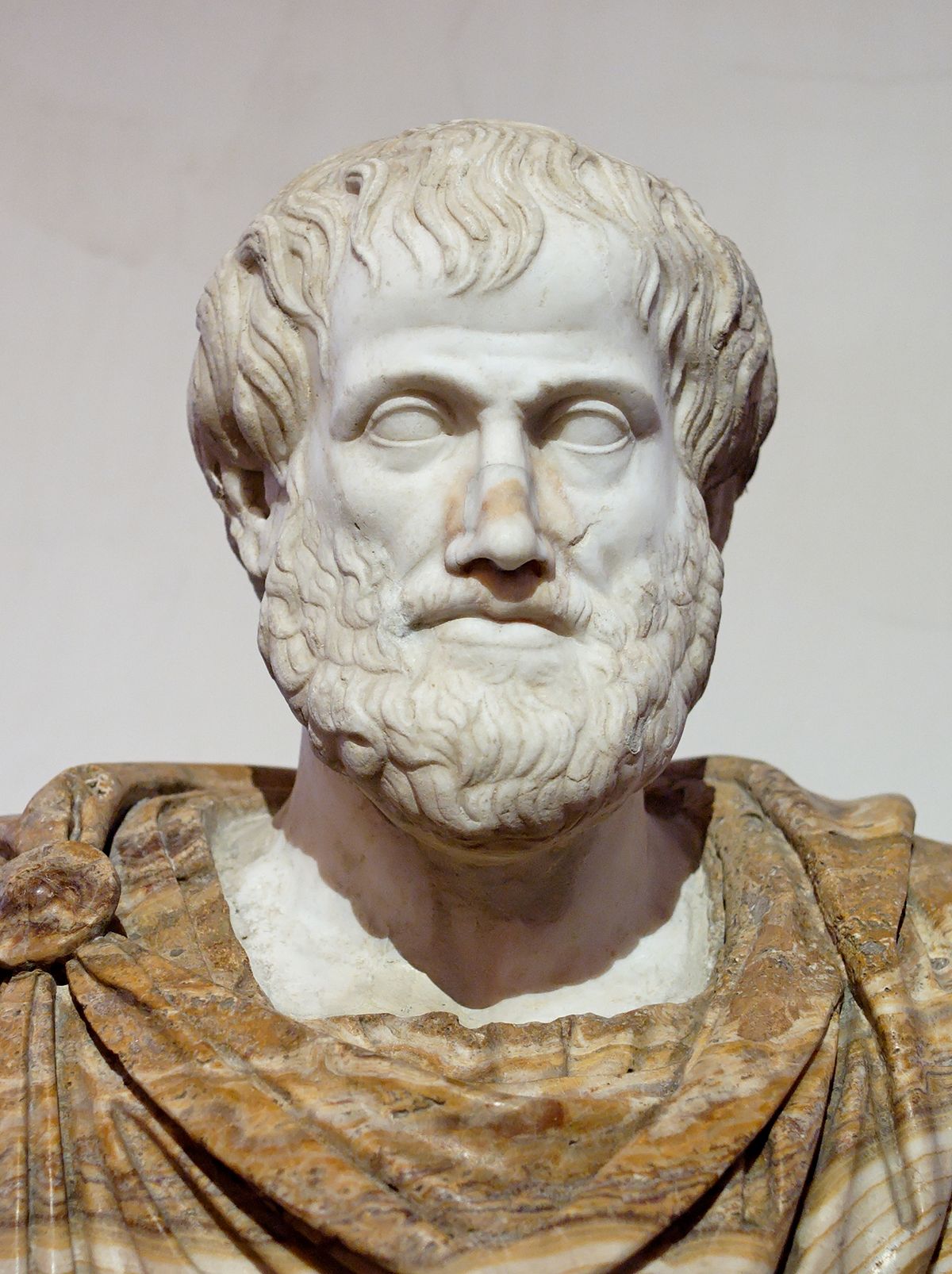
bust of Aristotle

By Nneka Okumazie

There have been all kinds of kingdoms and empires through history. They had their languages, architecture, education, entertainment, wise men, gods, magicians, etc.

Some prominent ones were ancient Egypt, Babylon, Persia, Greek and Roman. There were others around them that got to the peak of power – at some point.

Different kingdoms represent different strides to history. But the Greeks seem to be the most prominent in terms of knowledge – diverging towards science, math, philosophy, astronomy, etc.

The Greeks were so influential that it took many centuries to match and exceed their prowess.

But the Greeks had help, and historical advantage.

It is unlikely that all the knowledge put forth by them were originally conceptualized. There were lots of direct and indirect contributions to what they did. There were loose references as well as lost ones.

It was said that some of the math and astronomy [knowledge] of the Greeks came from Babylon and ancient Egypt. Some also said it could have come from other kingdoms, near or far, before their time.

However, one of the major philosophers, Socrates was thought to be a sophist, but he refuted.

Sophists were more or less itinerant teachers of wisdom, excellence, possibly motivational speakers, etc.

They would have used logic, metaphors, observations, etc. in showing their value. Some taught math, other subjects, but wisdom – was their flashpoint.

It is possible to separate sophistry from mainline philosophy, but the eminence of philosophy in that era would probably not have been possible without [several disguised] additions from sophistry.

Sophists liked to charge fees. The philosopher hated them for it. They liked to advice leaders. It is possible some liked pomp, bombast and were ostentatious.

Maybe the philosophers didn’t follow their style, but there are links between many of the schools of thought in those early philosophy and Greek sophistry.

But where did their sophistry come from?

King Solomon of the United Kingdom of Israel reportedly died around 500 years before the prominence of leading Greek sophist, Protagoras.

There were reports of sophists two hundred years before that time in Greece.

But before that time too, where could their sophistry have come from?

King Solomon was an extraordinary class wise man. He taught. He probably wrote much. He displayed wisdom and had rare intellect.

He received gifts. He had visitors. He had all kind of wives and concubines from all kinds of cultures and worship.

The Book of Proverbs has lots of wisdom, lots of philosophy, lots of psychology, sociology, metaphor, superior logic, etc.

There would have been other biographers of Solomon among his women, or their relatives who came from other places.

There would also have been lots of frequent trips between Israel and other places, for people who wanted their people or place to emulate that kind of diverse success.

Some of the wisdom would have been adapted to take advantage, or for other unintended purposes.

The mention of God in his sayings may have been changed to gods – or one of, when taken to other places.

But it is very likely that Greece from, or after the time of King Solomon benefitted greatly from his knowledge.

Assuming Israel remained together after his death, or assuming he died much later without turning away from the Lord, there probably would have been external kings after him to refer to his greatness.

Scholarship would probably have made references to him – saying the Great King Solomon, of Israel.

But he didn’t end so great [in perfect heart with the Lord] neither did the Kingdom stand subsequently, so there were probably no incentives to give him credit, outside of Jewish – and Christianity history.

Alexander the Great tutored [from age 13 – 16] by Aristotle, conquered Israel during his reign, many centuries after King Solomon, when sophistry, philosophy, science, etc. were already established in Greece.

It is unlikely [the rulers] would not have known or heard about King Solomon or Israel, even if wars or conflicts of that era may be direct, indirect, strategic or stochastic.

Sophists – in general – were so similar to Solomon that it would have been impossible for them to succeed without the influence of Solomon.

A few hundred years between existences interlinks knowledge beyond any doubts. There so many contemporaneous knowledge that were established from actions or writing five centuries ago.

Those saying it now may not know, or acknowledge, or somethings may be lost from the recent people they read or heard, but knowledge gets passed on, even faster, especially one that strikes certain people of certain interest in a society.

So, if Greek sophistry – and by extension, their philosophy came from Solomon, or Israel, isn’t that additional evidence that God, a spirit, exists?

Ancient Greeks are highly regarded in modern science, but maybe they were also deficient in major citations, outside their people.

Maybe they were so interested in their individual or group influence that they needed to be seen as starters, or obsessed with delivering new and original knowledge.

There were lots of ancient Greek historians referenced and famous at that time, but they mostly wrote about wars, their gods, and other places like Egypt – with story in the scriptures. It doesn’t seem their historians sought the [source of knowledge] for Greek philosophy or sophistry, outside Greece.

There were lots of Roman era writings that referenced the Greeks properly.

What else could the Greeks have benefited for advantage to their civilization that we may never know?

It is important to also see how the world works, or has been from the Greeks.

Same way certain prominent scientists – of recent centuries, would have been inspired by the church, the sparks of wisdom and magnificence of heaven but turned against as they started achieving glory.

There were some Greek sophists that were atheists – probably to their own gods, or maybe to Jehovah.

It was also said that some Greek playwrights or poets mocked the gods of the Greeks, so Plato wanted, or wished they’d be banished, or censored.

So, scholars or people of knowledge have direct and indirect sources they respect, or were inspired by or from, or sources they also come to hate, or antagonize.

And just like science has succeeded for years in criticizing Christianity, conspiracy theory has come against science and technology to bring down its progress faster than can be anticipated.

Conspiracy theories and propaganda are common everywhere, but with advances, there are now many credible conspiracy theories, showing reports, evidence, of people or places in a situation that seem convincing and believable, but are an absolute sham – able to inflict unprecedented damage.

Science has evidence that the world existed outside Bible history, but modern science was inspired by the Greeks whose philosophy and sophistry was far inspired by King Solomon, son of another King, a man after God, the creator’s, heart.

Science and technology people around the world are yet to understand the problem they have with conspiracy theories. It may seem like nothing, but the wave of conspiracy theories that is ahead is more dangerous than any witnessed disasters or diseases in history.

Already, there’s a pandemic, some people and leaders saying it’s a hoax are instigating rebellion against caution. The consequences cannot be estimated for now. Still, worse conspiracy theories are ahead.

There are all kinds of psychology problems around the world, and people who need Christianity are against it because of what some atheist said. Atheist, atheists, limited by what they can see, think, understand or how long they can live, said God, the King of kings, did not create this world.

The greatest philosophy is likely the philosophy of death – which everyone or anything ends.

Jesus, the Saviour, already conquered – death and hell.

Everything may seem important, but the valuable treasures are true love, joy, peace, patience, kindness, goodness, faith, gentleness, self-control.

[Isaiah 40:28, Hast thou not known? hast thou not heard, that the everlasting God, the Lord, the creator of the ends of the earth, fainteth not, neither is weary? there is no searching of His understanding.]


Click to comment

Leave a Reply

Your email address will not be published. Required fields are marked *

Feature/OPED

How Data Deconstructs the Myth of the ‘High-Risk’ Nigerian Borrower

Published

on

Winston Osuchukwu Mathesis Analytics

By Winston Osuchukwu

The average Nigerian borrower is widely considered high-risk – a claim repeated in credit committees, priced into retail loans, and largely treated as settled fact. Every credit market accepts that an individual loan may not be repaid; this is ordinary, priced risk. The high-risk claim, however, is applied to whole segments – the informal trader, the gig economy earner whose income is steady but split across several accounts, the remote worker paid by an overseas client into a fintech FX wallet. What the assessment establishes is not whether they are likely to repay, but how they fit into an arbitrary segment. Having spent years building decisioning systems for this market, my thesis is a specific one: “high-risk” does not mean “no credit” – it simply requires that the lender embrace alternative datasets to price the risk appropriately.

This is not a criticism of the institutions that built their frameworks around collateral and documentation; those were rational responses to the tools available at the time. When data is scarce, prudence means defaulting to the status quo. The limitation is not that this approach is wrong, but that it leaves a blind spot – excluding fundamentally sound borrowers whose economic lives simply are not captured on the bank’s ledger. A market trader who has moved consistent, growing volumes of cash through mobile money for three years is not, in any meaningful sense, unknowable. Their financial behaviour is observable and patterned; it simply occurs outside the traditional banking system, rendering it invisible to conventional underwriting.

This is the gap technology is now positioned to close – not by replacing institutional judgment, but by augmenting it. When AI-driven analysis is applied rigorously to the financial behaviour these borrowers generate, a far more complete picture of their repayment ability emerges – and a meaningful share presents a risk profile that compares favourably with segments the traditional system has long considered safe. The “high-risk” label, applied broadly to an entire category of borrower, was never a risk pricing tool so much as the limit of what the available tools could see.

For banks, this is the opportunity to extend capital with confidence beyond the borrowers who fit their stringent criteria. Nigerian banks are highly liquid; the constraint on credit growth has rarely been capital, but the ability to assess and price the borrowers who sit outside the traditional file. Close that gap, and the whole ecosystem strengthens: banks grow their loan books into segments they have long wanted to serve, and the real economy gets the capital it needs to expand.

This is precisely what we focus on at Mathesis Analytics: building AI-powered credit decisioning that gives lenders a fuller, more defensible picture of the individuals long excluded as high-risk when they were simply misjudged. The Nigerian credit gap has never been a non-lendable population problem, but one of incomplete visibility. By unifying varied data sources and partnering with the institutions that hold the capital and scale to move the market, we translate out-of-ecosystem behaviour into reliable, bank-grade risk scores. Closing this gap is one of the clearest, highest-leverage opportunities in Nigerian financial services today.

Winston Osuchukwu is the founder & CEO of Mathesis Analytics

Continue Reading

Feature/OPED

Second Home, Second Mother: Life Inside an Early Years Classroom

Published

on

Ohore Emmanuel Ufuoma

By Ohore Emmanuel Ufuoma

The Early Years classrooms have effectively become surrogate homes where educators now tie shoelaces, calm separation anxiety, supervise naps, enforce discipline, and provide comfort after minor injuries, which ought to be duties that should be performed by parents.

The extended work hours from 8 a.m. to 6 p.m. for six days a week, economic realities, and the proliferation of all-day, weekend-inclusive early learning programs have repositioned schools as the primary environment for early childhood development.

For a typical four-year-old, 9.5 hours in school account for about 75% of waking weekday time. With Saturday sessions added, the home is reduced to a space for meals, sleep, and brief routines.

The mandate of Early Years teachers has expanded far beyond academics. Current practice requires them to handle physical care, emotional regulation, and behavioural guidance concurrently.

Daily responsibilities include toileting assistance, feeding, conflict mediation, fatigue monitoring, and maintaining individual routines for 15–20 pupils.

The parent-child dynamic shifts when parents deliberately delegate care of the child, and even punishment, to educators. While parents set apart evenings and weekends for practical tasks, like food, homework, and bathing.

Psychologists term it “contact without connection.” Although parents are physically present, time is divided and focused on tasks.

Children are more obedient and organised in class than they are at home, according to teachers. Parents describe the contrary. The pattern shows an expected result: the parent becomes the outlet for exhaustion, while the educator becomes the authority figure.

The labour market triggered the transfer of responsibilities between parents and educators.

Dual-income households are now the norm in major cities, and flexible work remains limited outside tech and finance.

Child caregiver costs compound the issue. Full-time caregiver care often costs almost half of a salary. Parents opt for schools with extended hours in order to kill two birds with one stone.

For educational centres, extended-day programs create parent-like responsibilities, and staffing, training, and compensation should reflect that. In leading centres, professional development in attachment theory and stress management is becoming standard.

For parents, the emphasis should be on quality rather than quantity.

Policymakers are beginning to prioritise employment rules that permit parental presence during early childhood and accessible, flexible daycare. Strong early attachment is associated with higher scholastic success and fewer behavioural problems in later life.

The Early Years teacher and the parents have not replaced each other. Both parties are only responding to a system that demands more hours in the workplace with fewer hours at home.

There has been a paradigm shift in the upbringing of children. The teachers now perform functions once meant for the family unit.

Intentional parenting inside the small windows has been left in the hands of caregivers.

Instead of the classroom remaining a place of learning, it has become the only home children know.

Ohore Emmanuel Ufuoma is an MBA student at Tokat Gaziosmanpaşa University, Turkey

Continue Reading

Feature/OPED

Preparing Bank Security Operations for Scale, Change, and Long-Term Resilience

Published

on

bank security operations Quintin Roberts

By Quintin Roberts

When banks and financial institutions upgrade their physical security systems, they are making decisions that will affect operations for years. Branch formats are changing, cyber risks are increasing, and security teams are being asked to support more sites, more data, and more business functions. The challenge is keeping pace with change in a way that holds up over time.

A modern physical security strategy needs to go beyond protection. It needs to give teams a clearer view across branches, support consistent governance, and provide the flexibility to adapt as technology and operational needs change. The following considerations focus on foundational choices that help banks build security operations that are resilient and can grow with the business.

Choose open architecture to preserve long-term flexibility

Banks and financial institutions often manage a mix of legacy systems, newer technologies, and location-specific requirements. A proprietary system can limit scalability, options for devices, and which systems can connect across the organisation. Over time, this can increase costs and make it harder to modernise without replacing infrastructure that still has value.

Open architecture gives decision-makers more choice and preserves flexibility. It allows financial institutions to select the cameras, access control devices, sensors, analytics, and other technologies that best fit each location and adapt them as their needs change.

This allows teams to modernise in phases. For example, an institution may standardise video management across many sites while keeping existing cameras in place, then replace hardware over time.

Decide how to deploy your security system

Some banks want to keep core systems on-premises at major sites. Others prefer cloud-managed services for smaller branches, remote locations, or new sites that need faster deployment and less local infrastructure. Many need a mix of both. Deployment flexibility gives them the freedom to choose where systems run, how data is stored, and how services are managed.

This is especially important for institutions with different regulatory requirements, bandwidth limitations, and internal IT policies. A flexible deployment model helps banks modernise at their own pace while maintaining control over performance, cybersecurity, compliance, and cost.

Unify operations to improve visibility across branches

Managing video surveillance, access control, intrusion, and other systems separately slows down response time and makes investigations harder. Operators may need to sign into different applications, search through data in different ways, and manually piece together what happened. Across hundreds of branches, these inefficiencies can add up quickly.

A unified security platform gives teams one operating picture across systems and sites. A local team can respond faster to an incident at a single location, while a central security operations centre can monitor trends, support remote sites, and apply consistent procedures across the network.

A unified system that creates a shared context makes incorporating analytics or AI-driven capabilities more effective, further accelerating searches, identifying patterns, and reducing overall investigation time.

Put cybersecurity and governance at the forefront

Physical security systems are connected to the broader IT environment. Devices all need to be managed as part of the bank’s cyber risk profile. If systems are outdated or inconsistently configured across branches, they can create unnecessary exposure and make long-term management harder. When cybersecurity and governance are a foundational part of the system, encryption, authentication, user permissions, system updates, audit trails, retention policies, and privacy controls are applied consistently across locations.

A centralised approach makes this consistency sustainable. It provides accountability for banks, helping teams keep track of who accessed which systems, who changed permissions, how long video is retained, and how evidence is shared. This is important for meeting regulatory expectations and adapting security operations over time. Further, consistent policies make organisational risk management more effective by standardising how risk is handled across the organisation, adding to future resilience.

Automate workflows for better risk mitigation and investigations

Investigations often involve information from several systems and locations. A suspicious ATM transaction may need to be matched with video, or an access event may need to be reviewed alongside intrusion activity. If that information sits in separate systems, investigations take longer and are harder to document.

Unified systems connect the relevant context across video, access control, license plate recognition, and other systems. This supports faster investigations and helps teams share evidence internally or with law enforcement while maintaining the chain of custody.

Improve business operations using physical security data

Physical security systems collect valuable operational data every day, from occupancy levels to device health. A unified platform can turn this data into useful insights, helping security teams identify recurring issues and improve resource planning. Other departments can use the same information to improve customer experience, branch operations, and facility management.

For example, occupancy and queue data help banks understand when branches are busiest. Device health monitoring enables teams to identify maintenance needs before systems fail. And with centralised reporting, leadership can see patterns across the full branch network rather than relying on isolated site-level reports.

Making the right choices for the long term

As banks modernise their physical security infrastructure, long-term resilience will depend on foundational choices. Strategies based on open architecture, deployment flexibility, unification, cybersecurity, governance, and data all help financial institutions build systems that can adapt well into the future.

Quintin Roberts is the Regional Sales Manager for Genetec Africa

Continue Reading