
Feature/OPED
Coup d’état in Africa: A Legal and Moral Implication of Nigeria’s Damning Ironies


By Benson Uche Egbuchiwe
Incidences of coup d’état within the West African subregion have yet again brought a new dimension to the question of democratic stability on the African continent. Recently, I had the opportunity to participate in a Zoom debate organized by my Law school classmates and the topic of discussion was coup d’états in Africa and its impact on democracy within Africa. Participants took turns to share opinions on this worrisome issue of military incursions and the obvious consequences.
Interestingly, this topic aligned perfectly with my university project from over 25 years ago. For my undergraduate studies at the university, I delved into different legal and theoretical foundations of military governments that were established through coups, and my research was aptly titled Law and Revolutions: An X-ray of the Nigerian Experience. To provide depth, I was fortunate to have Prof. Akin Oyebode, a distinguished academic of the University of Lagos, a Harvard and Cambridge University trained professor of Law as my supervisor, also being a topic in Jurisprudence of Law, which is his area of expertise.
Legal Foundations of Coups:
The legal and conceptual basis for coup d’etats stems from the espousals of the positivist school of thought led by Hans Kelsen, which posits that successful coups are lawful. They contend that the legitimacy of coup d’etats is a political and moral issue that has to be resolved through the political processes of society where they occur and that the validity of a successful coup d’etat is a legal question that belongs to the province of legal theory. They characterized the efficacy and legitimacy of coup d’etats from the adoption of the propositions that the efficacy of coups bestows validity on them by the deployment and consideration of other validating and extenuating doctrines such as the doctrines of necessity, implied mandate, and public policy exceptions and such others by coup plotters.
Judicial Orientation to Coups in Nigeria:
In a perverse sense, Nigeria’s Judiciary, in the course of six (6) successive and successful coups, had gravitated toward Kelsen’s theory in interpreting coup d’etats to date. The courts have always expressly refused or shied away from declaring military governments and laws that emerged from coups as illegal. The only lame attempt by our judiciary was when they declared the National Interim Government of Ernest Shonekan as illegitimate. In other instances, the participants, laws, and policies of successful coups and military government have all been legally and judicially sanctioned as legitimate, either expressly or impliedly.
Nigeria’s Moral Examples to other Africa countries on coups:
As I contended in both instances, that is in my research work and in the debate with classmates, Nigeria has set a disturbing example for other African nations by failing to hold accountable successive coup plotters and failure to put them through the rigours of our criminal justice system, especially when in our jurisdiction the prosecution of criminals and criminal perpetrators who, having toppled democratic governments with guns, and in some instances, occasioned deaths of people and bloodbaths, are not statue barred.
By condoning and not taking firm actions against coupists, Nigeria missed the rare opportunities to establish a strong deterrent against coups in other African countries that have recently embraced this undemocratic practice. Furthermore, the failure to disavow actions taken during illegal military regimes, accompanied by the ironic practice of rewarding successful coup participants with political positions in the civilian space, only serves to inspire aspiring coup plotters in Nigeria and across Africa.
Sadly, in the case of Nigeria, there is a disturbing situation where coup plotters are rewarded afterwards with high-ranking positions such as ‘juicy’ ministerial portfolios, and in some cases, they have even ascended to the presidency while receiving the highest honours in the country. This continuous endorsement sends a dangerous message that participating in coups can lead to personal gain and political advancement rather than facing the appropriate consequences for their actions after successful coups.
It is my considered thought that had Nigeria taken a different approach by prosecuting both military and civilian accomplices involved in previous coup plots within the country; we could have established a precedent that might have discouraged similar attempts in the future in Nigeria and other African countries. This perverse reward practice in Nigeria has served as a dangerous example to neighbouring African countries, particularly those grappling with bad governance systems. Instead of providing a platform for denouncing such actions, Nigeria has inadvertently reinforced the notion that success in a coup can lead to power and prestige.
The Socio-Economic Predispositions to Coup in Africa
While the legal foundations of coups, as proposed by Hans Kelsen, may have influenced the acceptance of such actions in Africa, there have been research studies that highlight other underlying socioeconomic factors contributing to successful coup d’états. The African Union’s Peace and Security Council, in a 2014 report, summarily stated that unconstitutional changes of government through coups in Africa often arise and are successful in socio-political contexts characterized by governance deficiencies, rampant corruption, greed, and selfishness.
To avert coups, Africa as a continent must address these underlying issues and work towards strengthening governance, combating corruption, and promoting a culture that deepens democratic ethos and the rule of law. By doing so, we can discourage the occurrence of coups and create a more stable and prosperous future for the continent. Other foreign research and reports have identified several socioeconomic contexts that contribute to successful coup d’états in Africa, and these include the mismanagement of diversity, mismanagement of economic opportunities, marginalization of groups, and human rights abuse, amongst several other factors including especially the manipulation of the constitution.
Above all, poverty has been identified as a significant precursor to coup attempts. Countries that are economically poorer and have less stable democracies have historically been more susceptible to coups. In fact, according to a report, out of the 54 countries on the African continent, 45 have experienced at least one coup attempt since 1950. It further indicated that countries with higher levels of poverty and less stable democratic systems have been more prone to such takeovers. The report further highlighted a significant correlation between the high poverty index in many African countries and the prevalence of coup d’états in the region. It revealed that out of all successful coups worldwide since 1950, 214 of them took place in Africa, with 106 of them being successful. This represents the highest number compared to other continents.
Solutions to Coups:
On what should be the solutions, firstly, there must be deliberate and concerted efforts to tackle these underlying issues, including promoting inclusive governance, combating corruption, protecting human rights, and ensuring fair electoral processes, which is vital to reducing the occurrence of coups and fostering stable and prosperous democracies in Africa-more than the platitudes of economic sanctions and military invasions. Given these stark data and considering the historical and judicial perspectives on coup d’états from a Nigerian standpoint, our government needs to engage in introspection and be sombre in engaging with the government of Niger.
While ECOWAS may have displayed a sense of bravado in their declaration, it is crucial to consider the broader context and historical precedents when approaching the situation. Jettisoning this knee-jerk reaction and taking a more measured approach based on comprehensive analysis is warranted. The call for a war on poverty, corruption, government wastage, and hunger by the African governments is what is needed now and not war with one another.
Nigeria’s Damning Ironies:
In conclusion, one couldn’t but note the irony in Nigeria’s leadership roles in handling a military expedition in Niger; considering this context, first Major General Muhammadu Buhari, who shares ancestry with Niger, was involved in a notorious coup that disrupted Nigeria’s democratic process in 1983. He was subsequently rewarded with two terms as president of Nigeria, totaling eight years, and was bestowed with Nigeria’s highest honour, the GCFR (Grand Commander of the Federal Republic). The second irony is that Gen. Abdulsalami Abubakar (GCFR), who became a benefactor of Nigeria’s highest seat of power-the presidency from the legacy of prominent coupists in Nigeria, was sent as an elder statesman to mediate and truncate the ambitions of young military Nigeriens who perceive him and his other Nigerian military statement and heads of state as models of citizens’ engagement and aspiration in governance through coup d’etats. This irony raises questions about the consistency and sincerity of Nigeria’s approach to addressing these issues.
Benson Uche Egbuchiwe (BUE) is a lawyer and public policy analyst based in Abuja



Technology leaders operate at the intersection of innovation, risk, and long-term strategy. As organisations rely more heavily on proprietary platforms, custom software, and licensed technologies, intellectual property contracts become critical business instruments rather than routine legal documents. The strength of these contracts often determines how well a company can protect its innovations, maintain leverage in vendor relationships, and respond to unexpected disruptions.
Strong IP contracts do more than define ownership. They shape accountability, continuity, and trust between parties. For executives and decision makers, understanding what makes an IP agreement resilient is essential to safeguarding both current operations and future growth. Without careful attention, even advanced technology investments can become sources of vulnerability rather than competitive advantage.
Understanding the Role of Intellectual Property in Technology Strategy
Intellectual property sits at the core of most modern technology initiatives. Whether software is developed in-house, licensed from a third party, or built collaboratively, the associated IP defines who controls usage, modification, and distribution. Contracts must clearly reflect how this property aligns with broader business objectives rather than treating IP as a secondary concern.
Tech leaders should evaluate how critical a given technology is to daily operations and customer delivery. The more central the system, the stronger and more precise the IP protections must be. Ambiguous ownership language or overly restrictive licensing terms can limit scalability and innovation. When contracts mirror strategic priorities, they support flexibility rather than constrain it.
Clarity in Ownership and Licensing Provisions
One of the most common weaknesses in IP contracts is unclear ownership language. Agreements should explicitly define which party owns the underlying code, derivative works, and future enhancements. This clarity becomes especially important in custom development arrangements where responsibilities and contributions may overlap.
Licensing provisions must also specify scope, duration, and permitted use. Vague language around usage rights can lead to disputes or unexpected limitations as a business grows or enters new markets. Strong contracts anticipate change and outline how rights evolve alongside business expansion. This level of detail helps prevent costly renegotiations later.
Protecting Access and Continuity Rights
Beyond ownership, access to technology assets is a major concern for leadership teams. If a vendor relationship ends abruptly or a provider becomes unable to perform, access restrictions can disrupt operations. IP contracts should address these risks through well-defined continuity provisions.
In some cases, software escrow services are incorporated to support access to essential materials under specific conditions. While not required in every agreement, mechanisms like this reflect a broader principle of resilience. Tech leaders should ensure that contracts account for worst-case scenarios without undermining productive partnerships. Protection and collaboration are not mutually exclusive when agreements are thoughtfully structured.
Aligning IP Protections with Compliance and Governance
Regulatory compliance and internal governance standards increasingly influence how IP contracts are drafted and enforced. Industries subject to strict data, security, or operational requirements cannot rely on generic contract templates. IP provisions must align with regulatory obligations and internal risk management frameworks.
Leadership teams should collaborate with legal, compliance, and security stakeholders to ensure contracts reflect current standards. This includes addressing data handling, audit rights, and reporting obligations tied to intellectual property usage. When IP contracts support governance objectives, they reduce exposure and demonstrate due diligence to regulators and investors alike.
Managing Disputes and Enforcement Effectively
Even the strongest contracts cannot eliminate the possibility of disagreement. What distinguishes effective IP agreements is how disputes are managed when they arise. Clear dispute resolution clauses provide predictable processes that minimise disruption and preserve working relationships when possible.
Contracts should outline jurisdiction, governing law, and escalation procedures in plain language. Overly complex enforcement mechanisms can delay resolution and increase costs. For tech leaders, the goal is not to prepare for conflict but to ensure that disagreements do not derail core business functions. Well-designed enforcement terms contribute to operational stability.
Planning for Evolution and Innovation
Technology rarely remains static, and IP contracts must evolve accordingly. Agreements should address how updates, integrations, and new use cases are handled over time. Without these provisions, innovation may be slowed by uncertainty or restrictive terms.
Forward-looking contracts recognise that today’s solution may serve tomorrow’s expanded role. By defining how enhancements are owned, licensed, and shared, organisations encourage innovation while preserving control. Tech leaders who prioritise adaptability in IP agreements position their companies to respond confidently to change.
Conclusion
IP contract strength is a strategic concern that extends far beyond legal formalities. For technology leaders, these agreements influence resilience, innovation, and long-term value creation. By focusing on clarity, continuity, compliance, and adaptability, organisations can transform IP contracts into tools that support growth rather than obstacles that limit it. Strong agreements reflect thoughtful leadership and a clear vision for how technology powers the business forward.
By Blaise Udunze
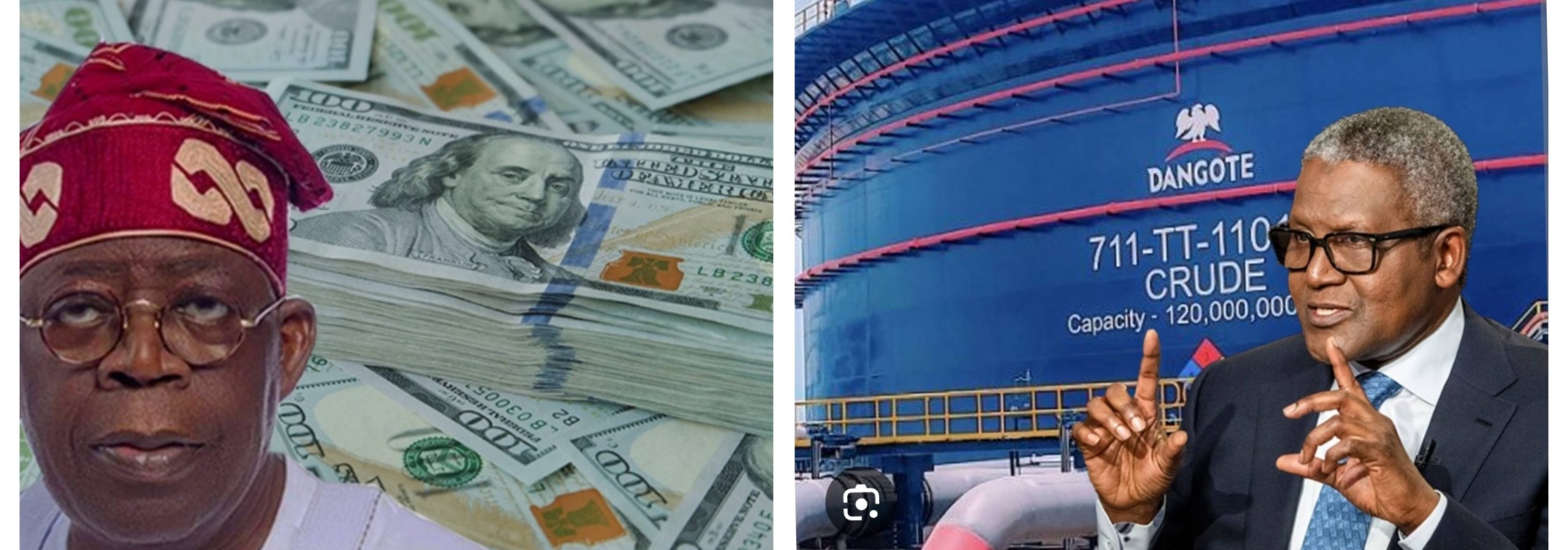
For months, Nigerians have argued in circles. Aliko Dangote has been blamed by default. They have accused his refinery of monopoly power, of greed, of manipulation. They have pointed out the rising price of petrol and demanded a villain.
When examined closely, the truth is uncomfortable, layered, and deeply geopolitical because the real story is not at the fuel pump, and this is what Nigerians have been missing unknowingly. The truth is that the real story is happening behind closed doors, across continents, inside financial systems most citizens never see, and the actors will prefer that the people are kept in the dark. And once you see it, the outrage shifts. The questions deepen. The implications expand far beyond Nigeria.
In October 2024, it was obvious that the world would have noticed that Nigeria made a move that should have dominated global headlines, but didn’t. Clearly, this was when the government of President Bola Tinubu introduced a quiet but radical policy, which is the Naira-for-Crude. The idea was simple and revolutionary. Nigeria, Africa’s largest oil producer, would allow domestic refineries to purchase crude oil in naira instead of U.S. dollars. On the surface, it looked like economic reform. In reality, it was something far more consequential. It was a challenge to the global financial order.
For decades, oil has been traded almost exclusively in dollars, reinforcing the dominance of the United States in global finance. By attempting to refine its own oil using its own currency, Nigeria was not just making a policy adjustment. It was testing the boundaries of economic sovereignty. And in today’s world, sovereignty, especially when it touches money, debt, and energy, comes with consequences.
What followed was not loud. There were no emergency broadcasts or dramatic policy reversals. Instead, the response was quiet, bureaucratic, and devastatingly effective just to undermine the processes. Nigeria produces over 1.5 million barrels of crude oil per day, though pushing for 3 million by 20230, yet when the Dangote Refinery requested 15 cargoes of crude for September 2024, what it received was only six from the Nigerian National Petroleum Company Ltd (NNPC), which means its yield for a refinery with such capacity will be low if nothing is done. Come to think of it, between January and August 2025, Nigerian refineries collectively requested 123 million barrels of domestic crude but received just 67 million, which by all indications showed a huge gap. It is a contradiction and at the same time, laughable that an oil-producing nation could not supply its own refinery with its own oil.
So, where was the crude going? The answer exposes a deeper, more uncomfortable truth about Nigeria’s economic reality. The crude was being sold on the international market for dollars. Those dollars were then used, almost immediately, to service Nigeria’s growing mountain of external debt. Loans owed to the same institutions, like the International Monetary Fund (IMF) and the World Bank, had to be paid, which are the same institutions applauding this government. Nigeria was not prioritising domestic industrialisation; it was prioritising debt repayment.
And the scale of that debt is no longer abstract. Nigeria’s total debt stock is now projected to rise from N155.1 trillion to N200 trillion, following an additional $6 billion loan request by President Tinubu, hurriedly approved by the Senate. At an exchange rate of N1,400 to the dollar, that single loan adds N8.4 trillion to a debt stock that already stood at N146.69 trillion at the end of 2025. This is not just a fiscal statistic. It is the central pressure shaping every major economic decision in the country.
On paper, the government can point to rising revenue, improving foreign exchange inflows, and stronger fiscal discipline as witnessed when the governor of the Central Bank of Nigeria, Olayemi Cardoso, always touted the foreign reserves growth. But a closer review of those numbers reveals a harsher reality. Nigeria is exporting its most valuable resource, converting it into dollars, and sending those dollars straight back out to creditors. The crude leaves. The dollars come in. The dollars leave again. And the cycle repeats.
This is not growth. This is a treadmill powered by debt. Let us not forget that in the middle of that treadmill sits a $20 billion refinery, built to solve Nigeria’s energy dependence, now trapped within the very system it was meant to escape.
By 2025, the contradiction had become impossible to ignore, which is a fact. This is because how can this be explained that the Dangote Refinery, designed to reduce reliance on imports, was increasingly dependent on them. The narrative is that in 2024, Nigeria imported 15 million barrels of crude from America, which is disheartening to mention the least. More troubling is that by 2025, that number surged to 41 million barrels, a 161 per cent increase. By mid-2025, approximately 60 per cent of the refinery’s feedstock was coming from American crude. As of early 2026, Nigerian crude accounted for only about 30 to 35 per cent, which was actually confirmed by Aliko Dangote.
The visible contradiction in this situation is that the refinery built to free Nigeria from dollar dependence was running largely on dollar-denominated imports. Not because the oil did not exist locally, but because the system, shaped by debt obligations and global financial structures, made it more practical to export crude for dollars than to refine it domestically, which leads us to several other covert concerns.
Faced with this troubling reality, there is one major issue that still needs to be answered. This is why Dangote pushed back by filing a N100 billion lawsuit against the NNPC and major oil marketers. He further accused the parties involved of failing to prioritise domestic refining. For a brief moment, one will think that the confrontation, as it appeared, was underway is one that could redefine the balance between state control and private industrial ambition, but these expectations never saw the light of day.
Yes, it never saw the light of day because on July 28, 2025, the lawsuit was quietly withdrawn. No press conferences. No public explanation. No confirmed settlement. Just silence.
There are only a few plausible or credible explanations. As a practice and well-known in the country, institutional pressure may have made continued confrontation untenable. A strategic compromise may have been reached behind closed doors. Or the realities of the system itself may have made victory impossible, regardless of the merits of the case. None of these scenarios suggests a system operating with full autonomy or aligned national interest. All of them point to constraints, political, economic, or structural, that extend far beyond a single company.
Then came the shock that changed everything.
On February 28, 2026, Iran closed the Strait of Hormuz, disrupting a channel through which roughly 20 per cent of the world’s oil supply flows. Prices surged past $100 per barrel. Global markets entered crisis mode. Supply chains are fractured. Countries dependent on Middle Eastern fuel suddenly had nowhere to turn.
And they turned to Nigeria. Nations like South Africa, Ghana, and Kenya began seeking fuel supplies from the Dangote Refinery. The same refinery that had been starved of crude, forced into dollar-denominated imports, and entangled in domestic disputes suddenly became the most strategically important energy asset on the African continent.
Nigeria did not plan for this. It did not negotiate for this. With this development, the world had no choice but to simply run out of options, and Lagos became the fallback.
And then, almost immediately, attention shifted. This swiftly prompted, in early 2026, a United States congressional report to recommend applying pressure on Nigeria’s trade relationships within Africa. Shortly after, on March 16, 2026, the United States launched a Section 301 trade investigation into multiple economies, including Nigeria. This is not a sanction, but it is the legal foundation for one. At the same time, the African Growth and Opportunity Act, which had provided duty-free access to U.S. markets for decades, was allowed to expire in 2025 without renewal.
The sequence is difficult to ignore. As Nigeria’s strategic importance rose, so did external scrutiny. As its potential for regional energy leadership increased, so did the instruments of economic pressure.
To understand why, you must look at the system itself. The global economy runs on the U.S. dollar, which the Iranian government tried to scuttle by implementing a policy that requires oil cargo tankers being transported via the Strait of Hormuz to be paid in Yuan. Most countries need dollars to trade, to import essential goods, and to access global markets. The infrastructure that enforces this is the SWIFT financial network, which connects banks across the world. Control over this system confers enormous power. Countries that step too far outside it risk exclusion, and exclusion, in modern terms, means economic paralysis.
Nigeria’s attempt to trade crude in naira was not just a policy experiment. It was a subtle deviation from a system that rewards compliance and punishes independence. The response was not military. It did not need to be. It was structural. Limit domestic supply. Reinforce dollar dependence. Ensure that even attempts at independence remain tethered to the existing order.
And all the while, the debt clock continues to tick. N155.1 trillion.
That number is not just a fiscal burden. It is leverage. It shapes policy. It influences decisions, and it also determines priorities, which tells you that when a nation is deeply indebted, its room to manoeuvre shrinks. In all of this, one thing that must be understood is that choices that might favour long-term sovereignty are often sacrificed for short-term stability. Debt does not just demand repayment. It demands alignment.
Back home, Nigerians remain focused on the most visible symptom, which is fuel prices. Unbeknownst to most Nigerians, they argue, protest, and assign blame while the forces shaping those prices include global currency systems, sovereign debt obligations, trade pressures, and geopolitical realignments. The price at the pump is not the cause. It is the consequence.
Nigeria now stands at an intersection defined not by scarcity, but by contradiction. What is more alarming is that it produces vast amounts of crude oil, yet struggles to supply its own refinery. It earns more in dollar terms, yet its citizens feel poorer. It builds infrastructure meant to ensure independence, yet operates within constraints that reinforce dependence. This is not a failure of resources, and this is because there is a conflict or tension between what Nigeria wants, which reflects its ambition and structure, and between sovereignty and obligation.
And so the questions remain, growing louder with each passing month and might force Nigerians, when pushed to the wall, to begin demanding answers. If Nigeria has the oil, why is it importing crude? Further to this dismay, more questions arise, such as, why is the refinery paying in dollars if Naira-for-crude exists? One will also be forced to ask if the lawsuit had merit, why was it withdrawn without explanation? If revenues are rising, why is hardship deepening? And if Nigeria is merely a developing economy with limited influence, why is it attracting this level of global attention?
These are not abstract questions. They are the pressure points of a system that extends far beyond Nigeria’s borders.
Because this story is no longer just about one country. The reality is that, perhaps unbeknownst to many, it is about the future of African economic independence. It is about the structure of global energy markets, the dominance of the dollar and the role of debt in shaping national destiny. Honestly, the question that comes to bear is that if Nigeria, with all its resources and scale, cannot fully align its production with its domestic needs, what does that imply for the rest of the continent?
The next time the conversation turns to petrol prices, something must shift. Because the number on the pump is not where this battle is being fought. It is being fought in allocation decisions, in debt negotiations, in regulatory frameworks, in international financial systems, and in quiet policy moves that rarely make headlines.
The Dangote Refinery is not just an industrial project. It is a test case. A test of whether a nation can truly control its own resources in a world where power is rarely exercised loudly, but always effectively. And right now, that test is still unfolding.
Blaise, a journalist and PR professional, writes from Lagos and can be reached via: [email protected]
Feature/OPED
2027: The Unabating Insecurity and the US Directive to Embassy, is History About to Repeat Itself?

By Obiaruko Christie Ndukwe
We can’t be acting like nothing is happening. The US orders its Embassy Staff and family in the US to leave Nigeria immediately based on security concerns.
Same yesterday, President Donald J. Trump posted on his Truth Social that Nigeria was behind the fake news on his comments on Iran.
Some people believe it was the same way the Obama Government came against President Goodluck Jonathan before he lost out in the election that removed him from Aso Rock. They say it’s about the same thing for President Asiwaju Bola Ahmed Tinubu.
But I wonder if the real voting is done by external forces or the Nigerian electorate. Or could it be that the external influence swings the voting pattern?
In the middle of escalating security issues, the opposition is gaining more prominence in the media, occasioned by the ‘controversial’ action of the INEC Chairman in delisting the names of the leaders of ADC, the new ‘organised’ opposition party.
But the Federal Government seems undeterred by the flurry of crises, viewing it as an era that will soon fizzle out. Those on the side of the Tinubu Government believe that the President is smarter than Jonathan and would navigate the crisis as well as Trump’s perceived opposition.
Recall that in the heat of the CPC designation and the allegations of a Christian Genocide by the POTUS, the FG was able to send a delegation led by the NSA, Mallam Nuhu Ribadu, to interface with the US Government and some level of calm was restored.
With the renewed call by the US Government for its people to leave Nigeria, with 23 states classified as “dangerous”, where does this place the government?
Can Tinubu manoeuvre what many say is history about to repeat itself, especially with the renewed call for Jonathan to throw his hat into the ring?
Let’s wait and see how it goes.
Chief Christie Obiaruko Ndukwe is a Public Affairs Analyst, Investigative Journalist and the National President of Citizens Quest for Truth Initiative
-
 Feature/OPED6 years ago
Davos was Different this year
-
Travel/Tourism10 years ago
Lagos Seals Western Lodge Hotel In Ikorodu
-

 Showbiz3 years ago
Estranged Lover Releases Videos of Empress Njamah Bathing
-
 Banking8 years ago
Sort Codes of GTBank Branches in Nigeria
-

 Economy3 years ago
Subsidy Removal: CNG at N130 Per Litre Cheaper Than Petrol—IPMAN
-

 Banking3 years ago
Sort Codes of UBA Branches in Nigeria
-

 Banking3 years ago
First Bank Announces Planned Downtime
-

 Sports3 years ago
Highest Paid Nigerian Footballer – How Much Do Nigerian Footballers Earn