
Feature/OPED
FG’s Assurance on Generation of 25,000MW Electricity

By Jerome-Mario Chijioke Utomi
Understandably, the major factor, says a report, that daily abbreviates the seriousness with which communication from public officials/offices are taken by the people is that generality of such information often makes the grade of ‘self-undermining’.
They are recurrently reputed for encouraging complacency as constituents perceive issues raised by the government has already been handled or the priority often always not in conformity with the will/opinion of the people on the action later taken.
As expected, similar feelings greeted the recent reassurance by the Minister of Power, Mr Abubakar Aliyu, that the federal government was ready to generate 25,000 megawatts of electricity in the country.
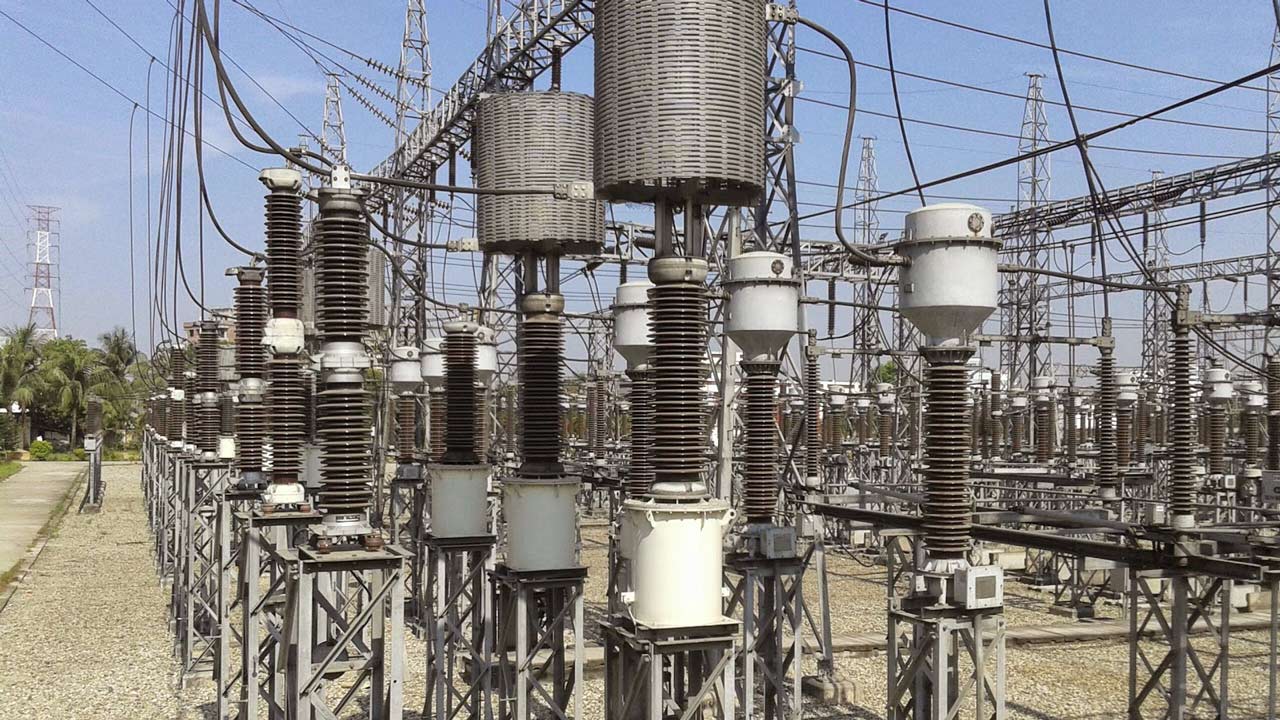
The Minister disclosed this in Katsina State recently during his inspection of several power transmission substation projects, including the ongoing windmill project located at Lambar Rimi in Charanchi Local Government Area of the state as part of efforts to enhance power-related businesses and other economic activities in the country.
Without any shadow of the doubt, the assurance by the Minister is by no means political and would have, for obvious reasons elicited some level of excitement among Nigerians. If not for any other reason, the power sector as we all know remains very critical to meeting our industrial development aspirations and power is especially important because many artisans have been thrown out of work while many manufacturing and textile companies closed shop due to epileptic power supply.
It affects the survival of humanity, our nation. After all, any nation, according to Barack Obama, former United States of America (USA) that cannot control its energy sources can’t control its future.
The validity of the above statements and the strategic role that electricity plays in the socio-economic development of any nation notwithstanding, Nigerians are no longer moved by such promise/assurance coming from the federal government in this direction.
What they anticipate from the government is no longer assurance but action, progress and result. In fact, in the estimation of many, the challenge of epileptic power supply in Nigeria can easily be likened to the proverbial cat with nine lives that have survived different administrations.
Nigerians are particularly not happy that instead of generating megawatts of electricity, successive administrations, including the present federal government, have become reputed for generating megawatts of assurances devoid of process and outcome fairness.
They (Nigerians) are now in agreement that the culture of promises when it comes to electricity generation and improvement by successive administrations now qualifies as a familiar music hall act.
This challenge is by no means President Buhari’s administration-specific. Rather, for those that followed the trend since 1999 when democracy re-emerged on the political geography called Nigeria.
Let’s cast a glance at some of these past developments/promises.
In 2005, the government of former President Olusegun Obasanjo, going by media reports, attempted to solve the power problem with the Power Reform Act which provided for the privatization of the power sector.
As part of that reform, the then National Electric Power Authority (NEPA), which was renamed Power Holding Company of Nigeria (PHCN), was to be unbundled for privatization. But the reform did not go far before Obasanjo left office in 2007. But before then, a report observed that he had sunk $16 billion into the NIPP without anything to show for it
Before the dust raised by such colossal waste and phantom promise could settle, President Goodluck Ebele Jonathan (GEJ) in 2010 came up with a similar roadmap for electricity reform in the country.
During the launch of the programme, Mr Jonathan even boasted saying; “As President and Commander-in-Chief of the Armed Forces, I and my Vice President, Arc. Namadi Sambo, GCON, is conscious that what we do with the Nigerian electricity supply industry will go a long way in determining whether Nigeria remains in darkness or joins the rest of the world in the race for development.
“Our commitment is to bring an end to our nation’s stunted growth and usher in the fresh air of prosperity by pursuing a new era of sector-wide reform which is driven by improved service delivery to every class of customers in the Nigerian electricity sector. Promising that with diligent implementation and meticulous application of what this Roadmap provides, we will see an end to the chronic electrical power supply shortages.”
Again, to lend credence that Jonathan’s electricity roadmap was on course, Professor Chinedu Nebo, the then Minister of Power, in 2013 told Nigerians and the entire world that President Jonathan’s power sector privatization process was on and already.
Successful bidders, he said, had paid 25 per cent of the bid-offer. They are expected to pay the remaining 75 per cent in less than 90 days after which they would take possession of the distribution companies. Also, Nebo going by reports had said that the handing over of the national integrated power projects, NIPP, would make power supply more stable soon.
Regrettably, as at the time of his departure from office in May 2015, there were neither traces of appreciable increase in power generation or the promised fresh air of prosperity.
In 2015, the All Progressives Congress (APC) led the federal government emerged.
The party had in the previous year, as part of its draft manifesto, promised to revitalize the nation’s power/energy sector. According to the party, its power supply programme would vigorously pursue the expansion of electricity generation and distribution up to 40,000 megawatts in four to eight years. The party would also work assiduously at making available power from renewable energy sources such as coal solar, wind and biomass for domestic and industrial use, wherever they are visible.
In the year 2020, President Muhammadu Buhari led federal government, sequentially launched a roadmap for the nation’s power sector.
Without going into specific concepts or approaches contained in that move, the roadmap which according to government sources form a part of the outcome of meeting President Muhammadu Buhari held with a German Chancellor, Angela Merkel on August 31, 2018, will have Nigeria partner with the German government and Siemens, in implementing projects geared towards resolving challenges in the sector, expand capacity for future power needs and supply in Nigeria.
To continue with the season/culture of promise/excuses that have in the past ‘produced monument of nothingness’, President Buhari during a nationwide broadcast on June 12, 2020, among other things stated; “The power sector remains very critical to meeting our industrial development aspirations and we are tackling the challenges that still exist in the delivery of power through different strategies.
“We are executing some critical projects through the Transmission Rehabilitation and Expansion Programme including the: Alaoji to Onitsha, Delta Power Station to Benin and Kaduna to Kano, 330KV DC 62KM line between Birnin Kebbi and Kamba, Lagos/Ogun Transmission Infrastructure Project, Abuja Transmission Ring Scheme, and Northern Corridor Transmission Project. Our agreement with Siemens will transmit and distribute a total of 11,000 Megawatts by 2023, to serve our electricity needs.”
Today, both the nation and the administration are yet to depart that season of promise/reassurance.
Certainly, while I believed and still believe in the FG’s effort to ensure stable electricity in the country, the truth must be told to the effect that the whole gamut of failures is standing on the tripod of corruption, policy summersault and lack of sincere political will/desire by the nation’s handlers to engage best minds to help get the answers and deploy the resources we need to move the sector in the right direction while achieving the result we need as a nation.
This piece further holds the opinion that at the most basic level, it is evident that what Nigerians need is the result, not assurance or reassurance; they want to see and enjoy stable electricity supplied at a very reasonable tariff regime. Outside this, this season of doubt will continue.
Jerome-Mario Chijioke Utomi is the Programme Coordinator (Media and Public Policy), Social and Economic Justice Advocacy (SEJA), Lagos. He could be reached via [email protected]/08032725374.




By Professor Myriam Sidíbe
Awards season this year was a celebration of Black creativity and cinema. Sinners directed by Ryan Coogler, garnered a historic 16 nominations, ultimately winning four Oscars. This is a film critics said would never land, which narrates an episode of Black history that had previously been diminished and, at some points, erased.
Watching the celebration of this film, following a legacy of storytelling dominated by the global north and leading to protests like #OscarsSoWhite, I felt a shift. A movement, growing louder each day and nowhere more evident than on the African continent. Here, an energetic youth—representing one-quarter of the world’s population—are using creativity to renegotiate their relationship with the rest of the world and challenge the social norms affecting their communities.
The Academy Awards held last month saw African cinema represented in the International Feature Film category by entries including South Africa’s The Heart Is a Muscle, Morocco’s Calle Málaga, Egypt’s Happy Birthday, Senegal’s Demba, and Tunisia’s The Voice of Hind Rajab.
Despite its subject matter, Wanuri Kahiu’s Rafiki, broke the silence and secrecy around LGBTQ love stories. In Kenya, where same sex relationships are illegal and loudly abhorred, Rafiki played to sold-out cinemas in the country’s capital, Nairobi, showing an appetite for home-grown creative content that challenges the status quo.
This was well exemplified at this year’s World Economic Forum in Davos when alcoholic beverages firm, AB InBev convened a group of creative changemakers and unlikely allies from the private sector to explore new ways to collaborate and apply creativity to issues of social justice and the environment.
In South Africa, AB inBev promotes moderation and addresses alcohol-related gender-based violence by partnering with filmmakers to create content depicting positive behaviours around alcohol. This strategy is revolutionising the way brands create social value and serve society.
For brands, the African creative economy represents a significant opportunity. By 2030, 10 per cent of global creative goods are predicted to come from Africa. By 2050, one in four people globally will be African, and one in three of the world’s youth will be from the continent.
Valued at over USD4 trillion globally (with significant growth in Africa), these industries—spanning music, film, fashion, and digital arts—offer vital opportunities for youth, surpassing traditional sectors in youth engagement.
Already, cultural and creative industries employ more 19–29-year-olds than any other sector globally. This collection of allies in Davos understood that “business as usual” is not enough to succeed in Africa; it must be on terms set by young African creatives with societal and economic benefits.
The key question for brands is: how do we work together to harness and support this potential? The answer is simple. Brands need courage to invest in possibilities where others see risk; wisdom to partner with those others overlook; and finally, tenacity – to match an African youth that is not waiting but forging its own path.
As the energy of the creative sector continues to gain momentum, I am left wondering: which brands will be smart enough to get involved in our movement, and who has what it takes to thrive in this new world?
Professor Sidíbe, who lives in Nairobi, is the Chief Mission Officer of Brands on a Mission and Author of Brands on a Mission: How to Achieve Social Impact and Business Growth Through Purpose.
Feature/OPED
Why President Tinubu Must End Retirement Age Disparity Between Medical and Veterinary Doctors Now
By James Ezema
To argue that Nigeria cannot afford policy inconsistencies that weaken its already fragile public health architecture is not an exaggeration. The current disparity in retirement age between medical doctors and veterinary professionals is one such inconsistency—one that demands urgent correction, not bureaucratic delay.
The Federal Government’s decision to approve a 65-year retirement age for selected health professionals was, in principle, commendable. It acknowledged the need to retain scarce expertise within a critical sector. However, by excluding veterinary doctors and veterinary para-professionals—whether explicitly or by omission—the policy has created a dangerous gap that undermines both equity and national health security.
This is not merely a professional grievance; it is a structural flaw with far-reaching consequences.
At the heart of the issue lies a contradiction the government cannot ignore. For decades, Nigeria has maintained a parity framework that places medical and veterinary doctors on equivalent footing in terms of salary structures and conditions of service. The Consolidated Medical Salary Structure (CONMESS) framework recognizes both professions as integral components of the broader health ecosystem. Yet, when it comes to retirement policy, that parity has been abruptly set aside.
This inconsistency is indefensible.
Veterinary professionals are not peripheral actors in the health sector—they are central to it. In an era defined by zoonotic threats, where the majority of emerging infectious diseases originate from animals, excluding veterinarians from extended service retention is not only unfair but strategically reckless.
Nigeria has formally embraced the One Health approach, which integrates human, animal, and environmental health systems. But policy must align with principle. It is contradictory to adopt One Health in theory while sidelining a core component of that framework in practice.
Veterinarians are at the frontline of disease surveillance, outbreak prevention, and biosecurity. They play critical roles in managing threats such as anthrax, rabies, avian influenza, Lassa fever, and other zoonotic diseases that pose direct risks to human populations. Their contribution to safeguarding the nation’s livestock—estimated in the hundreds of millions—is equally vital to food security and economic stability.
Yet, at a time when their relevance has never been greater, policy is forcing them out prematurely.
The workforce realities make this situation even more alarming. Nigeria is already grappling with a severe shortage of veterinary professionals. In some states, only a handful of veterinarians are available, while several local government areas have no veterinary presence at all. Compelling experienced professionals to retire at 60, while their medical counterparts remain in service until 65, will only deepen this crisis.
This is not a theoretical concern—it is an imminent risk.
The case for inclusion has already been made, clearly and responsibly, by the Nigerian Veterinary Medical Association and the Federal Ministry of Livestock Development. Their position is grounded in logic, policy precedent, and national interest. They are not seeking special treatment; they are demanding consistency.
The current circular, which limits the 65-year retirement age to clinical professionals in Federal Tertiary Hospitals and excludes those in mainstream civil service structures, is both administratively narrow and strategically flawed. It fails to account for the unique institutional placement of veterinary professionals, who operate largely outside hospital settings but are no less critical to national health outcomes.
Policy must reflect function, not merely location.
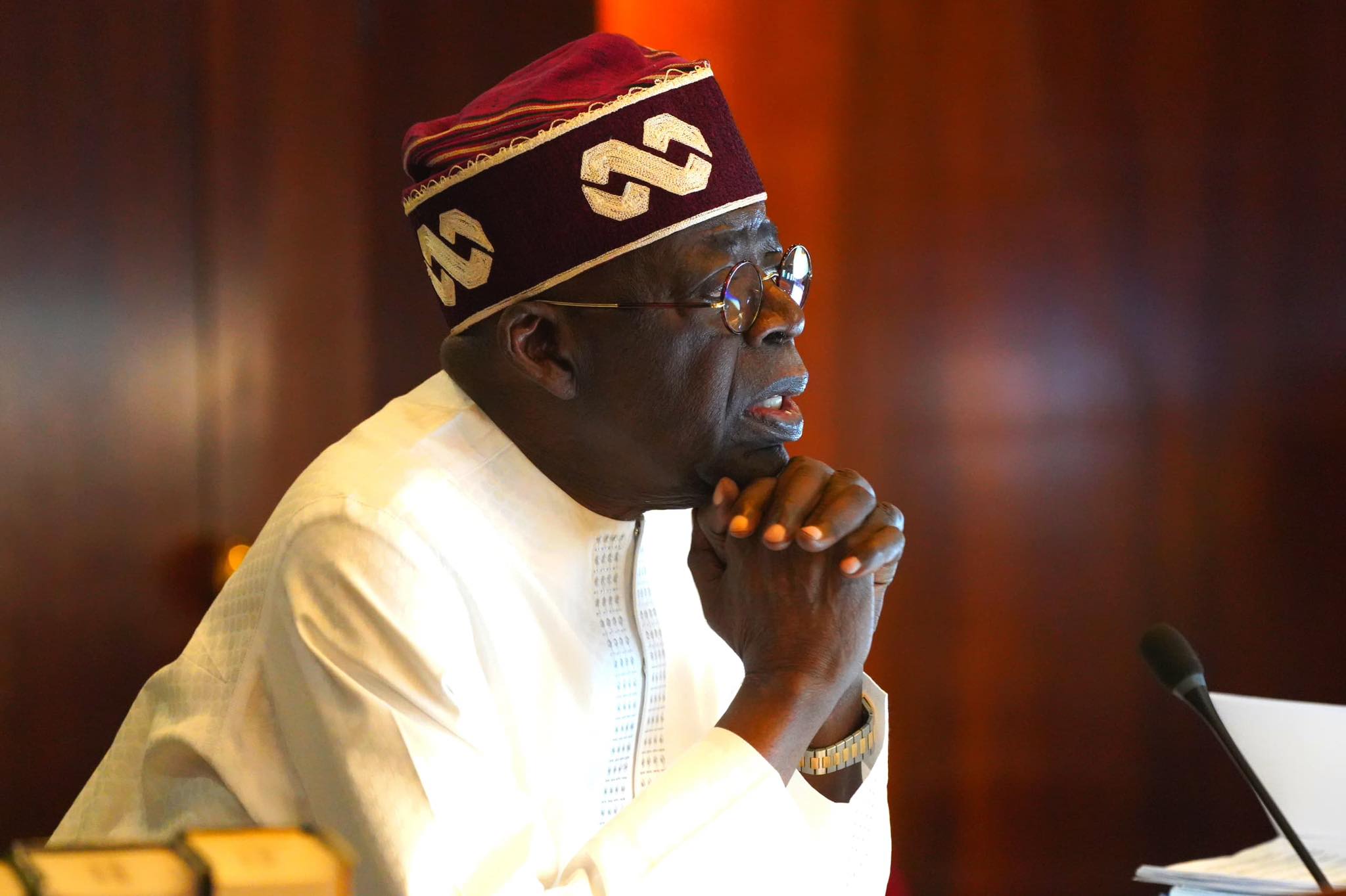
This is where decisive leadership becomes imperative. The responsibility now rests squarely with Bola Ahmed Tinubu to address this imbalance and restore coherence to Nigeria’s health and civil service policies.
A clear directive from the President to the Office of the Head of the Civil Service of the Federation can correct this anomaly. Such a directive should ensure that veterinary doctors and veterinary para-professionals are fully integrated into the 65-year retirement framework, in line with existing parity policies and the realities of modern public health.
Anything less would signal a troubling disregard for a sector that plays a quiet but indispensable role in national stability.
This is not just about fairness—it is about foresight. Public health security is interconnected, and weakening one component inevitably weakens the entire system.
Nigeria stands at a critical juncture, confronted by complex health, food security, and economic challenges. Retaining experienced veterinary professionals is not optional; it is essential.
The disparity must end—and it must end now.
Comrade James Ezema is a journalist, political strategist, and public affairs analyst. He is the National President of the Association of Bloggers and Journalists Against Fake News (ABJFN), National Vice-President (Investigation) of the Nigerian Guild of Investigative Journalists (NGIJ), and President/National Coordinator of the Not Too Young To Perform (NTYTP), a national leadership development advocacy group. He can be reached via email: [email protected] or WhatsApp: +234 8035823617.

By Blaise Udunze
Following the successful conclusion of the banking sector recapitalisation programme initiated in March 2024 by the Central Bank of Nigeria, the industry has raised N4.65 trillion. No doubt, this marks a significant milestone for the nation’s financial system as the exercise attracted both domestic and foreign investors, strengthened capital buffers, and reinforced regulatory confidence in the banking sector. By all prudential measures, once again, it will be said without doubt that it is a success story.
Looking at this feat closely and when weighed more critically, a more consequential question emerges, one that will ultimately determine whether this achievement becomes a genuine turning point or merely another financial milestone. Will a stronger banking sector finally translate into a more productive Nigerian economy, or will it be locked out?
This question sits at the heart of Nigeria’s long-standing economic contradiction, seeing a relatively sophisticated financial system coexisting with weak industrial output, low productivity, and persistent dependence on imports truly reflects an ironic situation. The fact remains that recapitalisation, by design, is meant to strengthen banks, enhancing their ability to absorb shocks, manage risks and support economic growth. According to the apex bank, the programme has improved capital adequacy ratios, enhanced asset quality, and reinforced financial stability. Under the leadership of Olayemi Cardoso, there has also been a shift toward stricter risk-based supervision and a phased exit from regulatory forbearance.
These are necessary reforms. A stable banking system is a prerequisite for economic development. However, the truth be told, stability alone is not sufficient because the real test of recapitalisation lies not in stronger balance sheets, but in how effectively banks channel capital into productive economic activity, sectors that create jobs, expand output and drive exports. Without this transition, recapitalisation risks becoming an exercise in financial strengthening without economic transformation.
Encouragingly, early signals from industry experts suggest that the next phase of banking reform may begin to address this long-standing gap. Analysts and practitioners are increasingly pointing to small and medium-sized enterprises (SMEs) as a key destination for recapitalisation inflows, which is a fact beyond doubt. Given that SMEs account for over 70 per cent of registered businesses in Nigeria, the logic is compelling. With great expectation, as has been practicalised and established in other economies, a shift in credit allocation toward this segment could unlock job creation, stimulate domestic production, and deepen economic resilience. Yet, this expectation must be balanced with reality. Historically, and of huge concern, SMEs have received only a marginal share of total bank credit, often due to perceived risk, lack of collateral, and weak credit infrastructure.
Indeed, Nigeria’s broader financial intermediation challenge remains stark. Even as the giant of Africa, private sector credit stands at roughly 17 per cent of GDP, and this is far below the sub-Saharan African average, while SMEs receive barely 1 per cent of total bank lending despite contributing about half of GDP and the vast majority of employment. These figures underscore the structural disconnect between the banking system and the real economy. Recapitalisation, therefore, must be judged not only by the strength of banks but by whether it meaningfully improves this imbalance.
Nigeria’s economic challenge is not merely one of capital scarcity; it is fundamentally a problem of low productivity. Manufacturing continues to operate far below capacity, agriculture remains largely subsistence-driven, and industrial output contributes only modestly to GDP. Despite decades of banking sector expansion, credit to the real sector has remained limited relative to the size of the economy. Instead, banks have often gravitated toward safer and more profitable avenues such as government securities, treasury instruments, and short-term trading opportunities.
This is not irrational. It reflects a rational response to risk, policy signals, and market realities. However, it has created a structural imbalance in which capital circulates within the financial system without sufficiently reaching the productive economy. The result is a pattern where financial sector growth outpaces real sector development, a phenomenon widely described as financialisation without productivity gains.
At the centre of this challenge is the issue of credit allocation. A recapitalised banking sector, strengthened by new capital and improved buffers, should theoretically expand lending. But this is, contrarily, because the more important question is where that lending will go. Will Nigerian banks extend long-term credit to manufacturers, finance agro-processing and value chains, and support scalable SMEs, or will they continue to concentrate on low-risk government debt, prioritise foreign exchange-related gains, and maintain conservative lending practices in the face of macroeconomic uncertainty? Some of these structural questions call for immediate answers from policymakers.
Some industry voices are optimistic that the expanded capital base will translate into a broader loan book, increased investment in higher-risk sectors, and improved product offerings for depositors; this is not in doubt. There are also expectations that banks will scale operations across the continent, leveraging stronger balance sheets to expand their regional footprint. Yes, they are expected, but one thing that must be made known is that optimism alone does not guarantee transformation. The fact is that without deliberate incentives and structural reforms, capital may continue to flow toward low-risk assets rather than high-impact sectors.
Beyond lending, experts are also calling for a shift in how banking success is measured. The next phase of reform, according to the experts in their arguments, must move from capital thresholds to customer outcomes. This includes stronger consumer protection frameworks, real-time complaint management systems and more transparent regulatory oversight. A more technologically driven supervisory model, one that allows regulators to monitor customer experiences and detect systemic risks early, could play a critical role in strengthening trust and accountability within the system.
This dimension is often overlooked but deeply significant. A banking system that is well-capitalised but unresponsive to customer needs risks undermining public confidence. True financial development is not only about capital strength but also about accessibility, fairness, and service quality. Nigerians must feel the impact of recapitalisation not just in improved financial ratios, but in better banking experiences, more inclusive services, and greater economic opportunity.
The recapitalisation exercise has also attracted notable foreign participation, signalling confidence in Nigeria’s banking sector. However, confidence in banks does not necessarily translate into confidence in the broader economy. The truth is that foreign investors are typically drawn to strong regulatory frameworks, attractive returns, and market liquidity, though the facts are that these factors make Nigerian banks appealing financial assets; it must be made explicitly clear that they do not automatically reflect confidence in the country’s industrial base or productivity potential.
This distinction is critical. An economy can attract capital into its financial sector while still struggling to attract investment into productive sectors. When this happens, growth becomes financially driven rather than fundamentally anchored. The risk, therefore, is that recapitalisation could deepen Nigeria’s financial markets, but what benefits or gains when banks become stronger or liquid without addressing the structural weaknesses of the real economy.
It is clear and explicit that the current policy direction of the CBN reflects a strong emphasis on stability, with tightened supervision, improved transparency, and stricter prudential standards. These measures are necessary, particularly in a volatile global environment. However, there is an emerging concern that stability may be taking precedence over growth stimulation, which should also be a focal point for every economy, of which Nigeria should not be left out of the equation. Central banks in emerging markets often face a delicate balancing act, and this is putting too much focus on stability, which can constrain credit expansion, while too much emphasis on growth can undermine financial discipline, as this calls for a balance.
In Nigeria’s case, the question is whether sufficient mechanisms exist to align banking sector incentives with national productivity goals. Are there enough incentives to encourage long-term lending, sector-specific financing, and innovation in credit delivery? Or does the current framework inadvertently reward risk aversion and short-term profitability?
Over the past two decades, it has been a herculean experience as Nigeria’s economic trajectory suggests a growing disconnect between the financial sector and the real economy. Banks have become larger, more sophisticated and more profitable, yet the irony is that the broader economy continues to struggle with high unemployment, low industrial output, and limited export diversification. This divergence reflects the structural risk of financialization, a condition in which financial activities expand without a corresponding increase in real economic productivity.
If not carefully managed, recapitalisation could reinforce this trend. With more capital at their disposal, banks may simply scale existing business models, expanding financial activities that generate returns without contributing meaningfully to production. The point is that this is not solely a failure of the banking sector; it is a systemic issue shaped by policy design, regulatory priorities, and market incentives, which needs the urgent attention of policymakers.
Meanwhile, for recapitalisation to achieve its intended purpose and truly work, it must be accompanied by a deliberate shift or intentional policy change from capital accumulation to productivity enhancement and the economy to produce more goods and services efficiently. This begins with creating stronger incentives for real sector lending with differentiated capital requirements based on sector exposure, credit guarantees for high-impact industries, and interest rate support for priority sectors, which can encourage banks to channel funds into productive areas, and this must be driven and implemented by the apex bank to harness the gains of recapitalisation.
This transformative process is not only saddled with the CBN, but the Development finance institutions also have a critical role to play in de-risking long-term investments, making it easier for commercial banks to participate in financing projects that drive economic growth. At the same time, one of the missing pieces that must be taken into cognisance is that regulatory frameworks should discourage excessive concentration in risk-free assets. No doubt, banks thrive in profitability, as government securities remain important; overreliance on them can crowd out private sector credit and limit economic expansion.
Innovation in financial products is equally essential. Traditional lending models often fail to meet the needs of SMEs and emerging industries, as this has continued to hinder growth. Banks must explore new approaches, including digital lending platforms, supply chain financing, and blended finance solutions that can unlock new growth opportunities, while they extend their tentacles by saturating the retail space just like fintech.
Accountability must also be embedded in the system. One fact is that if recapitalisation is justified as a tool for economic growth, then its outcomes and gains must be measurable and not obscure. Increased credit to productive sectors, higher industrial output and job creation should serve as key indicators of success. Without such metrics, the exercise risks being judged solely by financial indicators rather than its real economic impact.
The completion of the recapitalisation programme represents more than a regulatory achievement; it is a defining moment for Nigeria’s economic future. The country now has a banking sector that is better capitalised, more resilient, and more attractive to investors. These are important gains, but they are not ends in themselves.
The ultimate objective is to build an economy that is productive, diversified, and inclusive. Achieving this requires more than strong banks; it requires banks that actively power economic transformation.
The N4.65 trillion recapitalisation is a significant step forward. It strengthens the foundation of Nigeria’s financial system and enhances its capacity to support growth. However, capacity alone is not enough and truly not enough if the gains of recapitalisation are to be harnessed to the latter. What matters now is how that capacity is deployed.
Some of the critical questions for urgent attention are as follows: Will banks rise to the challenge of financing Nigeria’s productive sectors, particularly SMEs that form the backbone of the economy? Will policymakers create the right incentives to ensure credit flows where it is most needed? Will the financial system evolve from a focus on profitability to a broader commitment to the economic purpose of fostering a more productive Nigerian economy and the $1 trillion target?
The above questions are relevant because they will determine whether recapitalisation becomes a catalyst for change or a missed opportunity if not taken into cognisance. A well-capitalised banking sector is not the destination; it is the starting point. The real journey lies in building an economy where capital works, productivity rises, and growth becomes both sustainable and inclusive.
Blaise, a journalist and PR professional, writes from Lagos and can be reached via: [email protected]
-
 Feature/OPED6 years ago
Davos was Different this year
-
Travel/Tourism10 years ago
Lagos Seals Western Lodge Hotel In Ikorodu
-

 Showbiz3 years ago
Estranged Lover Releases Videos of Empress Njamah Bathing
-
 Banking8 years ago
Sort Codes of GTBank Branches in Nigeria
-

 Economy3 years ago
Subsidy Removal: CNG at N130 Per Litre Cheaper Than Petrol—IPMAN
-

 Banking3 years ago
Sort Codes of UBA Branches in Nigeria
-

 Banking3 years ago
First Bank Announces Planned Downtime
-

 Sports3 years ago
Highest Paid Nigerian Footballer – How Much Do Nigerian Footballers Earn