
Feature/OPED
GOtv Stream vs. Traditional TV: Why Viewers Are Loving the Flexibility


In today’s fast-paced world, convenience is no longer a luxury; it’s an expectation. The way audiences consume content is shifting rapidly, and while traditional TV remains a trusted companion in Nigerian homes, streaming has emerged as the new frontier of entertainment. With GOtv Stream, MultiChoice has bridged the gap between the living room experience and on-the-go flexibility, giving subscribers the best of both worlds.
For decades, GOtv has been a household staple, offering affordable access to sports, movies, local dramas, and international programming. Traditional TV has always provided a sense of shared experience: families gathered in the living room to catch the latest Nollywood blockbuster, football fans crowded around the screen to cheer their favourite teams, and children tuned in for cartoons after school. This familiarity remains powerful as television is still the centrepiece of entertainment in millions of homes.
But lifestyles are changing. Between long commutes, unpredictable work hours, and the hustle of urban living, viewers increasingly want control over how and when they watch. That’s where GOtv Stream comes in.
GOtv Stream is more than just a streaming service; it’s an extension of the GOtv experience designed for modern living. Subscribers can watch live TV channels, catch up on missed episodes, and even download content for offline viewing. Whether you’re in traffic, at work during lunch, or winding down before bed, your entertainment travels with you.
Unlike traditional TV, which requires you to be in front of a set, GOtv Stream gives you flexibility across devices. With just a smartphone or tablet, subscribers can access the same rich library of content that GOtv has built over the years. It is freedom, affordability, and convenience rolled into one.
Why Viewers Love the Flexibility
-
Watch Anywhere, Anytime: Life doesn’t stop, and with GOtv Stream, neither does your access to entertainment. From watching Big Brother Naija while commuting to catching up on Close of Business before bed, subscribers never have to miss a moment.
-
Personalised Viewing: Traditional TV is largely shared viewing, but streaming allows each user to curate their own experience. One person can binge Nollywood dramas, while another keeps up with the English Premier League, all on separate devices, all at the same time.
-
Catch-Up and Replay: If you miss an episode because of work or school, GOtv Stream ensures you can watch at your own pace. This flexibility is particularly attractive to younger viewers who are used to on-demand content.
-
Affordable and Inclusive: Unlike global streaming platforms that often come with higher subscription fees, GOtv Stream is built into existing GOtv packages, making it accessible and cost-friendly for millions of Nigerians.
What sets GOtv apart is the balance it offers. Viewers don’t have to choose between traditional TV and streaming; they can enjoy both. In the evenings, families can still gather in the living room for a collective experience. During the day, individuals can turn to GOtv Stream for personalised, mobile entertainment. It is not about replacing one with the other but about enhancing choice.
GOtv Stream proves MultiChoice’s understanding of evolving viewer habits and its commitment to innovation. It is giving Nigerians exactly what they need: affordable, accessible, and adaptable entertainment. As technology continues to transform media consumption, GOtv is positioning itself not just as a content provider but as a lifestyle enabler, meeting audiences where they are, whenever they want.














By Chinwe Iwobi
In Nigeria, women are the backbone of our economy. Data from the National Bureau of Statistics shows that women own approximately 40% of small and medium-sized enterprises across the country (NBS Country Data Overview 2023). Yet despite their outsized contribution to GDP, women-led businesses continue to face systemic barriers to the capital and financial infrastructure needed to scale.
The cost of that gap is not abstract. When these entrepreneurs are held back, the ripple effect runs deep, from household stability to the education of the next generation. But the narrative is shifting. Nigerian women are proving, consistently, that they are not just resilient; they are sophisticated, high-earning innovators building businesses that deserve serious financial strategy.
Here are five foundational strategies every women-led business should be deploying to build lasting, generational wealth.
- Separate Business and Personal Finances Without Exception
Mixing personal funds with business cash is one of the most common and most damaging financial habits I see among growing entrepreneurs. It obscures your true profit margins, makes tax planning nearly impossible and, critically, disqualifies you from accessing formal credit when you need it most.
The discipline of separation is not just administrative. It is the first signal you send to the financial system that your business is serious. Open a dedicated business account, maintain clean transaction records, and treat your business finances with the same rigour you would expect from any enterprise operating at scale. Clarity on your numbers is the foundation on which every other strategy here depends.
- Build Both an Emergency Fund and an Opportunity Fund
Most financial advice stops at the emergency fund, which is three to six months of operating expenses set aside for lean periods. That is necessary, but insufficient. The entrepreneurs I have watched grow most aggressively also maintain what I call an opportunity fund: accessible liquidity specifically reserved to move fast when a prime supplier deal, an expansion location, or a bulk inventory discount appears.
In an unpredictable market like Nigeria’s, the businesses that scale are rarely the ones with the best products alone. They are the ones with the financial readiness to act decisively. Products like FairMoney’s FairSave are designed precisely for this, keeping your funds accessible while earning competitive daily interest so your idle cash is working even when you are not. Build both buffers, and build them before you think you need them.
- Invest Profits Back into Revenue-Generating Assets
Surplus cash sitting in a current account is a slow leak. Inflation erodes it, and opportunity costs compound quietly. The discipline here is to consistently channel profits back into assets that grow your revenue capacity, whether that is new equipment, improved technology, better inventory systems, or staff training.
For capital you do not need immediately, consider locking it into a fixed-term savings product that offers higher interest returns. The psychological benefit is as important as the financial one: ring-fencing that capital removes it from day-to-day spending temptation and ensures it is preserved and grown for a defined purpose. Discipline in capital allocation separates businesses that plateau from those that compound.
- Diversify Your Revenue Streams Intentionally
Single-stream businesses are inherently fragile. If your sole revenue source is disrupted by market shifts, a supply chain breakdown, or a change in consumer behaviour, your entire operation is exposed. Resilience is built by design, not by accident.
If you are in retail, consider adding a service-based arm. If you are service-led, explore whether digital products or training offerings could create passive income alongside your core work. Beyond product diversification, consider how you accept payments. Building a verified, diverse transaction history through formal payment channels also quietly strengthens your credit profile, an asset that pays dividends when you approach lenders for growth financing. FairMoney’s Business POS infrastructure, for instance, allows entrepreneurs to expand their payment reach while simultaneously building that financial track record.
- Invest Beyond the Business
This is the strategy most women entrepreneurs delay for too long, and it is the one I feel most strongly about. Relying entirely on your business for your net worth is a high-risk position, no matter how well that business is performing. Businesses face cycles; personal wealth should not.
As your business stabilises, begin systematically moving a portion of your profits into personal investment vehicles such as long-term savings accounts, money market funds, or other instruments that sit entirely outside the business cycle. Automate it if you can, so the decision is made once and executed consistently. The goal is to build a personal financial foundation that remains intact regardless of what your business goes through in any given quarter. True wealth is not what your business is worth on paper. It is what you own independently of it.
The Bigger Picture
For female entrepreneurs in Nigeria, wealth-building is not simply a personal ambition; it is an economic argument. When women-led businesses scale, communities stabilise, households invest in education, and local economies deepen. The strategies above are not complicated, but they require consistency and the right financial infrastructure to execute well.
The tools exist. The opportunity is real. What remains is the decision to treat your business, and your personal wealth, with the long-term seriousness both deserve.
Chinwe Iwobi is the Head of Wealth Management at FairMoney Microfinance Bank

By Nasiru Ibrahim
The Iran–USA–Israel conflict, now in its fourth week, continues to significantly impact the global economy. The war has taken a new dimension after the US President Donald Trump, on Saturday, gave Iran 48 hours to reopen the Strait of Hormuz to shipping or face the destruction of its energy infrastructure. Iran is set to impose a $2 million penalty per tanker passing through the strait, according to reports yesterday. This development is adding pressure to the global oil crisis and could potentially push the world toward a global recession, especially as many major economies are already experiencing slowing or contracting GDP growth.
This contraction happens through clear economic channels. First, higher oil prices increase production and transportation costs, which reduces business profits and discourages investment. Second, households face higher fuel and food prices, reducing their real income and consumption. Third, uncertainty from geopolitical tension discourages trade and capital flows. All these factors combine to slow economic activity and, in some cases, lead to negative GDP growth.
At the same time, the International Monetary Fund (IMF) has raised concerns about the impact of the Iran war on global inflation and output. The IMF said it is closely monitoring the situation and confirmed that no country has yet requested emergency financial assistance related to the conflict. The IMF chief spokesperson stated: “If prolonged, higher energy prices will lead to higher headline inflation.”
While much of the global analysis focuses on these macroeconomic shocks, a more insidious narrative has taken hold in policy circles: that Nigerians are somehow insulated from this crisis because they enjoy some of the cheapest petrol in the world. This article aims to debunk that misleading claim.
A proper analysis shows that low nominal petrol prices in Nigeria do not translate to affordability. Instead, they mask deep structural problems—low wages, high inflation, and cripplingly low purchasing power—that leave the average Nigerian more vulnerable to global oil shocks than citizens of countries paying far more at the pump.
Defining the Metrics That Matter
Before comparing petrol prices, it is essential to define the metrics that provide a true picture of the economic burden. A single price per litre is meaningless without context. The following metrics offer a more accurate reflection of a nation’s economic reality.
Minimum Wage and Income Levels
The minimum wage represents the legally mandated floor for earnings. It is a direct measure of the lowest-income worker’s capacity to purchase essentials. If a country’s minimum wage is low, even modestly priced goods become a significant financial burden. Nigeria’s monthly minimum wage stands at N70,000. At the prevailing exchange rate of N1,353.85 per US dollar, this translates to roughly $40 to $50 per month. This figure is the baseline for understanding affordability.
Purchasing Power Parity (via Time to Earn)
Purchasing power is best understood not by currency conversion, but by the time a worker must labour to earn a given sum. The time required to earn $2 is a critical metric because it strips away currency fluctuations and reveals the real labour cost of a transaction. For a Nigerian minimum-wage worker, earning $2 takes approximately 460 minutes, or nearly 7.7 hours. This contrasts starkly with developed economies. In the United States, where the federal minimum wage is $7.25 per hour, earning $2 takes about 16.5 minutes. In the United Kingdom, with a minimum wage of £12.21 per hour, it takes roughly 7 minutes. This metric directly links global commodity prices to the lived experience of the workforce.
Cost of Living (Meal Cost Proxy)
The cost of a meal at a local restaurant serves as a proxy for the general cost of living. It reflects the price of food, labour, and utilities in a given economy. When compared to income, it shows whether basic survival needs are affordable. For example, a meal in Nigeria costs between $2 and $4. While this appears low in absolute terms, it represents a significant portion of a daily wage for a minimum-wage earner.
Petrol Cost as a Percentage of Income
This is the most revealing metric. By calculating the cost of a fixed quantity of petrol—50 litres, a typical monthly consumption for an urban household—as a percentage of the monthly minimum wage, we see the true weight of energy costs on a family budget. This measure accounts for both nominal price and earnings, providing a direct comparison of energy poverty across nations.
The Data: A Country-by-Country Breakdown
Petrol Prices in US Dollars and Naira
A nominal comparison of petrol prices per litre shows Nigeria among the lowest globally, but this is where the myth begins:
▪︎ Nigeria: $0.88 (N1,191.39)
▪︎ United States: $1.075 (N1,455.39)
▪︎ India: $1.095 (N1,482.47)
▪︎ United Kingdom: $1.874 (N2,537.11)
▪︎ France: $2.152 (N2,913.49)
▪︎ Ghana: $1.240 (N1,678.77)
▪︎ Egypt: $0.45 (N609.20)
▪︎ Algeria: $0.35 (N473.80)
▪︎ Libya: $0.023 (N31.13)
At this level, Nigeria appears cheaper than the US, UK, and France. However, this is the point where the analysis must pivot from nominal prices to real-world economic factors.
Time Required to Earn $2
This metric reveals the true cost of labour and exposes the fragility of low-income households:
▪︎ Nigeria: 460 minutes (7.7 hours) — based on a monthly minimum wage of N70,000
▪︎ India: 340 to 400 minutes (5.7 to 6.7 hours) — based on a monthly wage of $60 to $70
▪︎ China: 50 to 80 minutes — based on a monthly wage of $250 to $380
▪︎ Japan: 15 to 18 minutes — based on an hourly wage of $6.80 to $8.10
▪︎ United States: 16.5 minutes — based on a federal minimum wage of $7.25 per hour
▪︎ United Kingdom: 7 minutes — based on a minimum wage of £12.21 per hour
▪︎ France: 8.9 minutes — based on a minimum wage of €11.65 per hour
▪︎ Ghana: 30 to 35 minutes — based on a daily base rate of GHS 21 to 22
The implication is stark. A Nigerian worker must labour for over seven hours to earn what a British worker earns in seven minutes. This is not an issue of currency; it is a fundamental difference in economic structure and productivity.
Average Meal Cost as a Cost-of-Living Proxy
The cost of a meal at an inexpensive local restaurant, converted to US dollars, shows the following:
▪︎ United Kingdom: $18 to $22
▪︎ United States: $15 to $20
▪︎ France: $15 to $18
▪︎ Japan: $6 to $12
▪︎ China: $3 to $6
▪︎ Ghana: $3 to $10
▪︎ India: $2 to $5
▪︎ Nigeria: $2 to $4
Again, Nigeria’s meal cost is at the lower end globally. However, when measured against the time required to earn that amount, the burden is disproportionate. A minimum-wage worker in Nigeria would need to work for several hours to afford a single $4 meal, whereas a worker in the US would need to work for less than 20 minutes to afford a $20 meal.
Petrol Cost as a Percentage of Monthly Minimum Wage
This is the most damning metric for the “cheap oil” narrative. Assuming a household consumes 50 litres of petrol per month, the cost as a percentage of the minimum wage reveals the true affordability crisis:
▪︎ Nigeria: 88% to 110% — The 50-litre cost of $44 can exceed the entire monthly minimum wage of $40 to $50.
▪︎ India: 78% to 91% — A similarly crushing burden, with 50 litres costing $54.75 against a wage of $60 to $70.
▪︎ China: 19% to 48% — A significant but manageable expense, with 50 litres costing $75 to $120 against a wage of $250 to $380.
▪︎ Japan: 34% to 40% — While petrol is expensive nominally, wages are high enough to absorb the cost.
▪︎ United States: 4.6% — A 50-litre cost of $53.75 is a minor expense against a monthly wage of $1,160.
▪︎ United Kingdom: 5.5% to 5.7% — $93.70 for 50 litres is a small fraction of a $1,650 to $1,700 monthly wage.
▪︎France: 8% — $107.60 for 50 litres is manageable against a $1,350 monthly wage.
▪︎Ghana: 52% to 59% — A heavy burden, with $62 for 50 litres against a wage of $105 to $120.
Debunking the Myth: Four Core Arguments
First, a low nominal petrol price does not equal affordability.
The raw price per litre in Nigeria ($0.88) is only one variable. The critical variable is the ratio of that price to income. Because Nigerian wages are so low, the effective cost of petrol is higher for a Nigerian worker than for a worker in any developed country, despite the latter paying more in absolute terms.
Second, purchasing power is the true measure of economic well-being.
The time-to-earn-$2 metric proves this. A Nigerian worker spends over seven hours to earn what a British worker earns in seven minutes. Any conversation about “cheap” goods must be framed within this reality. When petrol is measured in “hours of labour,” it is among the most expensive in the world for the Nigerian minimum-wage earner.
Third, the cost of living is a web of interconnected burdens.
The low cost of a meal in Nigeria ($2 to $4) is not a sign of a low cost of living; it is a sign of suppressed wages and a struggling informal economy. When combined with petrol costs that can consume an entire month’s wage, the composite burden on a Nigerian household is extreme. Inflation, currently high in Nigeria, further erodes any nominal advantage.
Fourth, exchange rate volatility distorts international comparisons.
The Naira price of petrol (N1,191.39 per litre) is the price Nigerians actually pay. Converting this to dollars creates a misleading sense of global parity. A more relevant comparison is the local currency price against local currency income. By this measure, Nigeria’s petrol is not cheap; it is a primary driver of economic hardship.
Structural Problems and a Path Forward
The narrative of “cheap oil” distracts from the structural problems that make Nigeria’s energy sector a source of economic fragility rather than strength. Decades of fuel subsidies, designed to keep prices low, have created a system of dependency. These subsidies strain government finances, crowd out investment in public goods like health and education, and create opportunities for rent-seeking and smuggling. The recent removal of subsidies, while economically necessary, has exposed the underlying vulnerability of a population that was never truly protected by low prices—only sheltered from their true cost.
To move forward, a multi-pronged strategy is required, one that acknowledges that energy policy is inseparable from poverty alleviation.
First, implement targeted subsidies rather than universal price controls.
Instead of subsidising petrol for all consumers, which disproportionately benefits higher-income households who consume more fuel, the government should implement direct cash transfers or vouchers for the most vulnerable populations. This approach, often called a “social safety net,” would protect the poor from price shocks while allowing market prices to reflect true supply and demand, discouraging waste and smuggling.
Second, accelerate the transition to compressed natural gas (CNG) for transportation.
Nigeria is a gas-rich nation that has historically flared its gas while importing refined petrol. A national programme to convert vehicles—particularly the mass transit buses, trucks, and tricycles used by low-income Nigerians—to CNG would provide a cheaper, domestically sourced alternative to petrol. CNG-powered trucks would reduce the cost of transporting goods across the country, directly lowering food prices. This would decouple the cost of transportation from the volatile global oil market and the geopolitical risks exemplified by the Iran–Israel conflict.
Third, invest in public transport and logistics infrastructure.
The heavy burden of petrol costs is amplified by poor infrastructure. Inefficient road networks, a lack of rail connectivity for freight, and an over-reliance on personal vehicles for commuting force households to consume more fuel than necessary. A strategic investment in urban mass transit systems and the rehabilitation of rail lines for cargo would reduce the demand for petrol at the household level, insulating citizens from price volatility.
Fourth, reform the domestic refining sector.
The perennial issue of importing refined petroleum products adds layers of cost, currency risk, and logistical inefficiency. While the Dangote Refinery represents a potential turning point, the broader policy must ensure that deregulation is paired with competition. A competitive, functional domestic refining industry would reduce the link between the Naira exchange rate and petrol prices, stabilising the energy market and allowing for more predictable pricing.
Conclusion
The claim that Nigerians benefit from “cheap oil” is a misleading narrative that ignores the fundamental economic reality of low wages, poor purchasing power, and a high cost of living relative to income. As the global economy faces renewed shocks from geopolitical conflict in the Middle East, it is more important than ever to base policy on accurate metrics. The data show that for the average Nigerian minimum-wage worker, petrol is not cheap; it is an expense that can consume more than an entire month’s income.
True economic relief will not come from maintaining the illusion of low prices, but from structural reforms that address the root causes of energy poverty. A strategy of targeted subsidies, a decisive shift to compressed natural gas for transport, investment in public infrastructure, and the development of domestic refining capacity would build a more resilient economy. Such reforms would decouple Nigerian livelihoods from the volatility of global geopolitics and finally deliver the energy security that low nominal prices have long promised but never provided.
Ibrahim is a graduate of Economics and an early-career Economist, Data Analyst, and Policy Analyst, presently working as an M&E and Research Assistant at Tazaar Management Consultants. He can be reached via na*********@***il.com or 08169677065
Feature/OPED
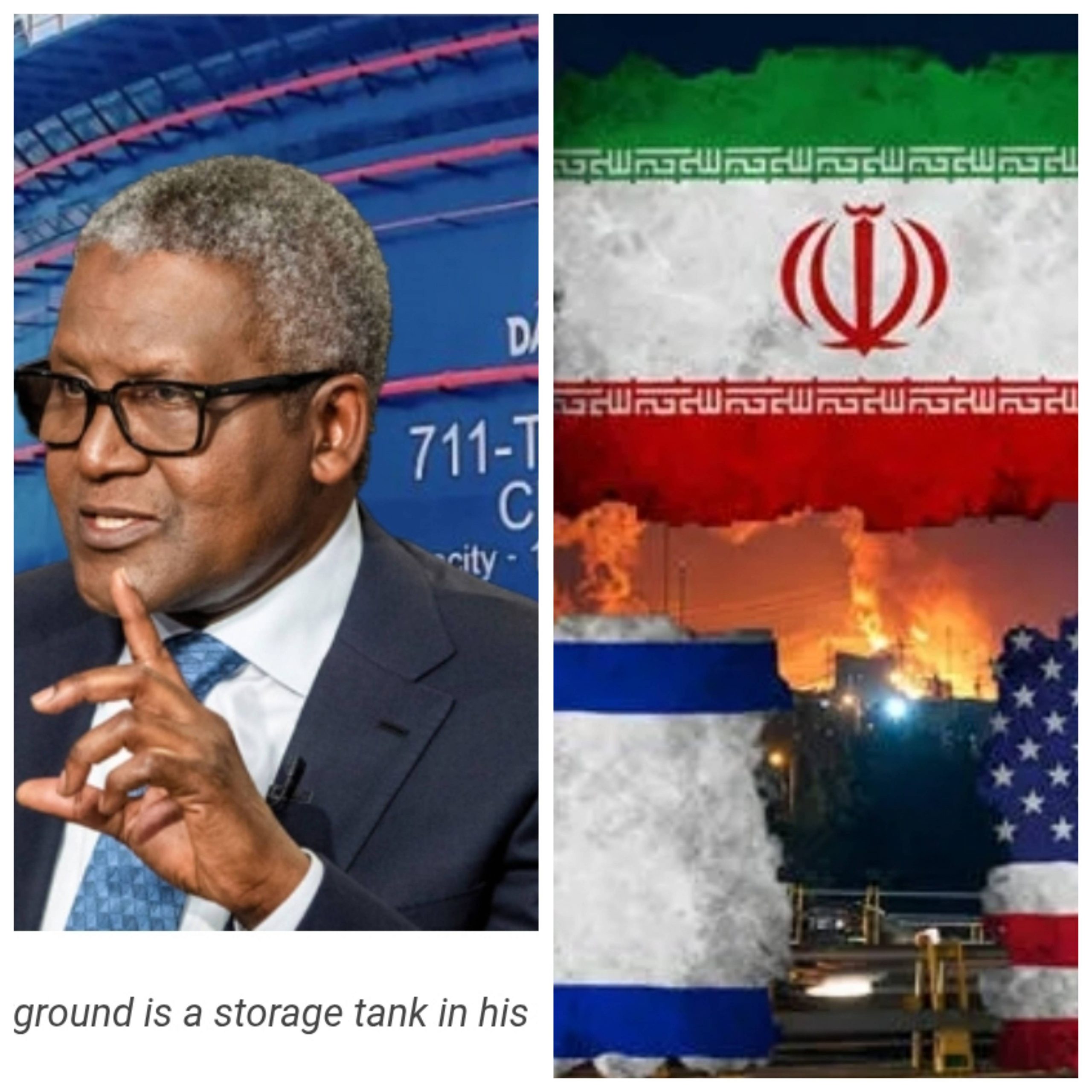
Refining Without Relief: How Global Oil Wars, Market Structure, and Monopoly Risks Still Drive Fuel Prices in Nigeria
By Blaise Udunze
The vision was bold. The expectation was clear. And the promise was powerful. When the Dangote Refinery began operations, it was hailed as Nigeria’s long-awaited escape from decades of energy contradiction, which involves exporting crude oil while importing refined fuel at high costs. It was meant to guarantee supply, stabilise prices, conserve foreign exchange, and most importantly, deliver relief to ordinary Nigerians.
What appears to be a distinct contradiction is that, despite months into its operation, a different reality is emerging, with fuel prices rising sharply. Inflationary pressures are intensifying. This occurrence has forced Nigerians to ask a difficult question once again, one that calls for an urgent answer. Why does a country that produces and refines crude oil still suffer the consequences of global oil shocks?
Looking at the trend, it is clear that the answer lies not just in geopolitics, but in the deeper structure of Nigeria’s oil economy, where global pricing, policy gaps, and now the looming risk of monopoly intersect.
With the recent development, the latest alarming surge in petrol prices has been driven largely by escalating tensions in the Middle East. This is particularly the U.S-Israel strikes on Iran and retaliatory measures from Tehran. A well-known fact is that at the centre of the crisis is the Strait of Hormuz, a vital oil transit route through which a significant portion of global supply flows. Any disruption, even a speculative one, triggers immediate spikes in crude prices.
Within a week, oil prices jumped from the mid-$60 range to nearly $120 per barrel. For global markets, this is expected. For Nigeria, it is devastatingly ironic. Because, despite having crude oil in abundance and despite refining it locally, Nigeria remains fully exposed, and this has continued to re-echo the same ironic question.
In a rare moment of corporate candour, the refinery’s leadership acknowledged this reality. The plant is deeply affected by global shocks. Crude oil, even when sourced locally, is priced at international benchmarks. Shipping costs have surged dramatically, from about $800,000 per tanker to as high as $3.5 million. Insurance premiums have climbed, and logistics have become significantly more expensive, with total costs further driving higher.
Even more revealing is the refinery’s sourcing structure. Only about 30 per cent – 35 per cent of crude comes from the Nigerian government supply under the crude-for-naira framework. A significant portion is still purchased in U.S. dollars on the open market, while another 30 per cent – 40 per cent is sourced internationally, including from the United States and other regions. This means the refinery is not insulated; it is integrated into the global oil system. The implication is unavoidable as local refining has not translated into local pricing control.
The impact on Nigerians has been immediate and severe, as petrol prices have surged from under N800 earlier in the year to over N1,200, and in some regions, it is even more alarming when the prices skyrocketed close to N1,400 per litre. Within weeks, multiple price increases have been recorded, driven largely by global crude price spikes and rising logistics costs. Doubtless, the country has witnessed the consequences ripple across the economy as transport fares rise, food prices increase, businesses struggle with higher operating costs, and inflation accelerates.
The development has attracted the attention of the labour unions and the organised private sector, prompting them to raise concerns and alarm about the consequences of job losses, business closures, and worsening hardship if the trend continues with each passing day, witnessing a daily increase and causing possible artificial scarcity.
Nigeria remains trapped in a painful contradiction. It produces crude oil. It refines crude oil. Yet it cannot protect its citizens from global oil volatility. As Aliko Dangote himself acknowledged, Nigeria has no direct role in the conflict driving these price increases, yet it bears the consequences due to global economic interdependence.
In a real sense, this is the deeper tragedy, as Nigeria has achieved capacity without control.
At the heart of the issue is a structural reality: crude oil is priced globally, not locally. Even under the crude-for-naira arrangement, pricing is benchmarked against international rates. This means refineries pay global crude prices, fuel prices reflect global market conditions, and domestic consumers absorb international shocks. In essence, Nigeria has moved refining home without bringing pricing sovereignty with it.
To be fair, the Dangote Refinery has played a stabilising role. Nigeria still enjoys relatively lower petrol prices compared to many global markets. In several countries, supply disruptions have led to panic buying and rationing, while Nigeria has maintained a consistent supply. As the refinery’s CEO aptly noted, what is worse than $120 oil is no oil. The refinery has prevented scarcity, but it has not prevented high prices. Availability, in this case, has not equated to affordability, which is the painful part for the citizens.
While much of the current debate focuses on pricing, another critical issue is quietly taking shape, which is the risk of market concentration. Dangote Refinery deserves credit for its scale and ambition, but scale brings power, and power demands oversight. If fuel importers are gradually pushed out and no competing refineries emerge at scale, Nigeria could find itself transitioning from a public sector monopoly to a private sector dominance led by a single player.
Nigeria has seen this pattern before. In the cement industry, increased domestic production did not necessarily translate into lower prices. Limited competition allowed prices to remain elevated despite local capacity. The same risk now looms in the downstream oil sector. Without competition, price-setting power becomes concentrated, supply risks increase, and consumer protection weakens. In a country with fragile regulatory institutions, this is not a theoretical concern; it is a real and present danger.
No one should perceive this wrongly, because it is important, however, not to misplace blame. It should be made known that the Dangote Refinery is not a charity; it is a private enterprise operating within market realities. It must recover its investment, manage costs, and deliver returns. Its exposure to global pricing is not a failure of intent but a function of the system within which it operates.
The real issue lies in the structure of the market and the absence of sufficient competition.
It is no longer news that Nigeria’s downstream sector is now largely deregulated following the removal of fuel subsidies. While deregulation has reduced government fiscal burden and encouraged private investment, it has also exposed consumers to price volatility and limited the scope for intervention, as this has continued to cause pain. Markets, in theory, deliver efficiency, but in practice, they require competition and effective regulation to function properly. Without these, deregulation can simply replace one form of inefficiency with another.
Nigeria does not need to weaken Dangote Refinery; it needs to multiply it. The goal should be to build a competitive refining ecosystem to replace one dominant structure with another. The truth is not far from this, as part of a lasting solution, it requires encouraging new refinery investments, removing bottlenecks for players such as BUA and modular refineries, ensuring transparent crude allocation, providing open access to pipelines and storage infrastructure, and enforcing strong antitrust regulations.
Competition remains the most effective regulator of price, which is sacrosanct, and it protects consumers, strengthens supply security, and reduces systemic risk.
This must also be perceived beyond competition, which calls for the government to act strategically. The fact is that when supplying crude to local refineries at discounted or stabilised rates, expanding naira-based transactions, and introducing temporary relief measures during global crises are all viable options that must be put into consideration. Energy is too critical to be left entirely to market forces, especially in a developing economy where millions are highly vulnerable to economic shocks.
It is time that Nigerians understood that the nation’s refining crisis has been decades in the making, and it cannot be solved by a single refinery, no matter how large. If asked, it will be said that this is a fact that can’t be argued. The Dangote Refinery is undoubtedly a turning point, but it will only remain so if it is embedded within broader systemic reform. Otherwise, Nigeria risks replacing one form of dependency with another, from import dependence to domestic concentration.
The question is no longer whether Nigeria can refine crude oil. It can. The real question is whether Nigeria can build a system that ensures fair pricing, competitive markets, consumer protection, and economic resilience, as these are exactly the core answers.
If global conflicts continue to dictate local fuel prices, if monopoly risks go unchecked, and if citizens remain vulnerable despite abundant resources, then the promise of local refining will remain unfulfilled, as it will bring no expected relief.
What is playing out is the well-known fact that in refining, as in democracy, concentration of power is dangerous. And in both, the strongest safeguard remains the same: competition, transparency, and institutions that serve the public interest.
Blaise, a journalist and PR professional, writes from Lagos and can be reached via: bl***********@***il.com








-
 Feature/OPED6 years ago
Davos was Different this year
-
Travel/Tourism10 years ago
Lagos Seals Western Lodge Hotel In Ikorodu
-

 Showbiz3 years ago
Estranged Lover Releases Videos of Empress Njamah Bathing
-
 Banking8 years ago
Sort Codes of GTBank Branches in Nigeria
-

 Economy3 years ago
Subsidy Removal: CNG at N130 Per Litre Cheaper Than Petrol—IPMAN
-

 Banking3 years ago
Sort Codes of UBA Branches in Nigeria
-

 Banking3 years ago
First Bank Announces Planned Downtime
-

 Sports3 years ago
Highest Paid Nigerian Footballer – How Much Do Nigerian Footballers Earn