
Feature/OPED
How Compliance through Technology among Banks can Promote Intra-Africa Trade

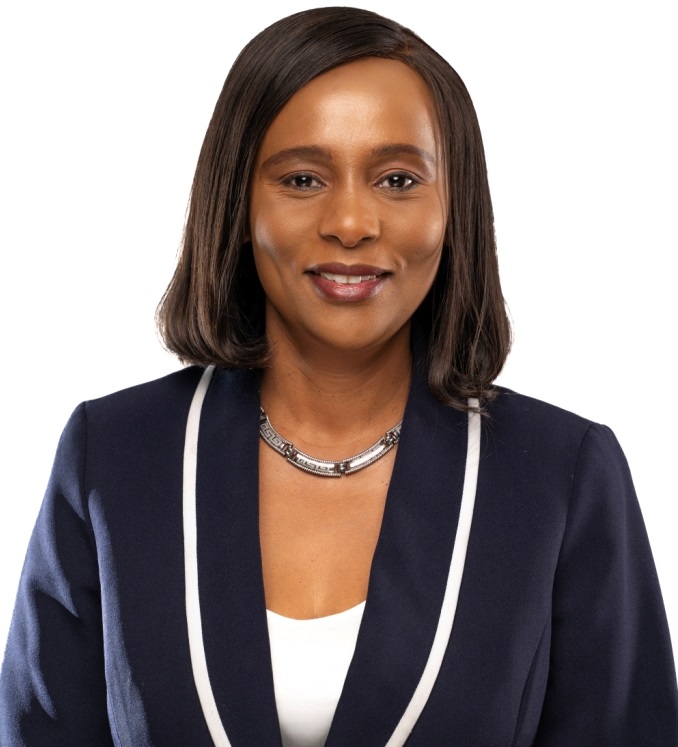
By Anne Mureithi
Provision of banking services in Africa continues to undergo profound digital transformation where most transactions are conducted virtually via digital devices and cash moved electronically. Mobile banking, fintech innovation, and cross-border digital payments have reshaped how individuals and businesses consume financial services.
In Nigeria and across the continent face, banks face sharp scrutiny from expanding regulatory landscape, including Anti-Money Laundering (AML), combating the financing of terrorism (CFT) and combating the financing of proliferation (CPF) that involves disrupting funds for weapons of mass destruction (WMD) through targeted financial sanctions.
With increased cross border trade, everyone including governments look upon banks to provide Know Your Customer (KYC) services, fraud risk management, and increasingly adhere to stringent data protection and privacy regulations as well as Environmental, Social, and Governance (ESG) reporting standards.
Compliance is no longer a back-office obligation, and this calls for increased investments in technology, particularly Artificial Intelligence (AI) and Machine Learning (ML) to enable banks to meet compliance requirements.
This is important as local traders want a banking partner who offers one-stop shop services on compliance matters. For banks, this is a competitive advantage, a core capability, and a source of differentiation. By embedding compliance into product and process design, banks can meet regulatory obligations efficiently while fostering innovation through a compliance-by-design approach.
In March 2025, the Central Bank of Kenya published the results of a survey on AI adoption in the banking sector, revealing moderate uptake, with 50% of respondents indicating some level of implementation. The survey found that among institutions that had adopted AI and machine learning, the leading applications were credit risk assessment (65%), cybersecurity (54%) and customer service (43%), followed by e-KYC (41%) and fraud risk management (40%).
These findings underscore significant untapped potential for AI to transform customer experience and strengthen risk management, particularly in AML and compliance monitoring. As intra-Africa trade continues to increase, compliance teams within banks must play a leading role in establishing strong governance, ensuring transparency, and preparing institutions for emerging regulatory expectations.
The Central Bank of Kenya has confirmed that it is in the final stages of developing a Guidance Note on Artificial Intelligence, with 95% of surveyed institutions having requested formal regulatory direction. The anticipated principles-based framework will focus on governance, risk management, transparency, and the ethical use of AI, laying the foundation for responsible innovation in the financial sector.
AI and ML models offer practical solutions to compliance challenges by learning and tracking typical behavioural patterns by customer, product, and corridor, flagging anomalies such as unusual counterparties, transaction values, or routing patterns in cross-border flows. These tools can also generate more accurate and complete assessments of ongoing customer due diligence and customer risk, which can be updated to account for new and emerging threats in real time.
By detecting potential violations of normal customer profiles in data or groups of customers with higher-risk characteristics, AI has streamlined priorities towards high-risk cases and reduced the time spent on false positives. This capability is increasingly critical as transaction volumes and complexity grow. Such technological advances transform compliance from a costly obligation into a strategic advantage.
Customers do not need to know one another to execute a transaction since AI-powered identity authenticates customer identity through document scanning, biometric verification and mobile-based identity solutions. These solutions have also enabled banks to onboard new customers remotely without the need to visit a physical bank to fill in registration details.
Accounts are fully secure and only users who pass the mobile-based identity verification are allowed access thereby preventing fraud. This also supports financial inclusion by enabling access to financial services for individuals who struggle to provide adequate identification documents for opening bank accounts.
In addition, Regulatory Technology (RegTech) solutions enable financial institutions to monitor regulatory developments, map obligations across their operations, conduct initial gap assessments, ensure that policies and procedures are always up to date and streamline regulatory reporting.
This capability is particularly valuable for pan-African institutions in ensuring agility while responding to regulatory changes across multiple jurisdictions. With its presence in 34 African countries, Ecobank advocates for harmonised payment systems and regulatory frameworks as a catalyst for accelerating intra-African trade.
Regional regulatory alignment further amplifies these gains. As African regulators work towards greater harmonisation of standards, banks with pan-African footprints are uniquely positioned to bridge local realities with global expectations, enabling smoother cross-border transactions and reducing friction for businesses operating across multiple markets.
The convergence of digital innovation and regulation presents an opportunity to support regional integration and strengthen public confidence. Banks that integrate compliance into their digital strategies, invest in ethical AI, enforce strong governance, and actively engage regulators will be best positioned to compete, facilitate trade, and protect financial integrity.
On an Africa-wide platform, traders from Nigeria want a synchronised platform that provides them with end-to-end solutions. Say Ecobank Group’s AML monitoring and sanctions screening capabilities within its SWIFT payment infrastructure ensure that all cross-border payment messages undergo real-time compliance checks prior to fund settlement.
With increased intra-Africa trade that rides on online platforms, accelerated digitalisation of cross-border transactions, timely, efficient, and secure payment processing is paramount. Real-time compliance monitoring is a non-negotiable cornerstone of safeguarding the integrity of international payment flows.
Ultimately, the future of banking in Africa will be defined by how institutions harness technology to meet regulatory obligations, deter financial crime, and foster trust among businesses, consumers, and public institutions alike. Compliance is no longer a constraint on growth; it is a foundation for sustainable innovation, regional integration, and long-term confidence in Africa’s financial system.
Ms Mureithi is a director in charge of compliance at Ecobank, Central, Eastern and Southern Africa (CESA)




By Blaise Udunze
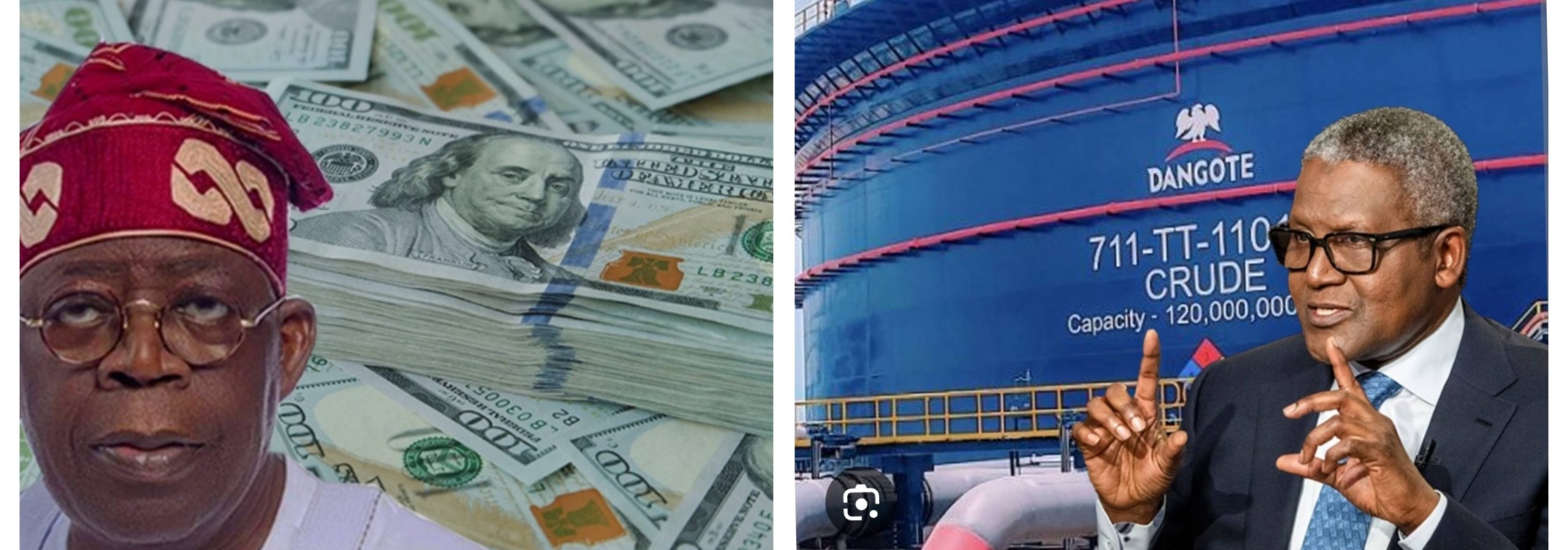
For months, Nigerians have argued in circles. Aliko Dangote has been blamed by default. They have accused his refinery of monopoly power, of greed, of manipulation. They have pointed out the rising price of petrol and demanded a villain.
When examined closely, the truth is uncomfortable, layered, and deeply geopolitical because the real story is not at the fuel pump, and this is what Nigerians have been missing unknowingly. The truth is that the real story is happening behind closed doors, across continents, inside financial systems most citizens never see, and the actors will prefer that the people are kept in the dark. And once you see it, the outrage shifts. The questions deepen. The implications expand far beyond Nigeria.
In October 2024, it was obvious that the world would have noticed that Nigeria made a move that should have dominated global headlines, but didn’t. Clearly, this was when the government of President Bola Tinubu introduced a quiet but radical policy, which is the Naira-for-Crude. The idea was simple and revolutionary. Nigeria, Africa’s largest oil producer, would allow domestic refineries to purchase crude oil in naira instead of U.S. dollars. On the surface, it looked like economic reform. In reality, it was something far more consequential. It was a challenge to the global financial order.
For decades, oil has been traded almost exclusively in dollars, reinforcing the dominance of the United States in global finance. By attempting to refine its own oil using its own currency, Nigeria was not just making a policy adjustment. It was testing the boundaries of economic sovereignty. And in today’s world, sovereignty, especially when it touches money, debt, and energy, comes with consequences.
What followed was not loud. There were no emergency broadcasts or dramatic policy reversals. Instead, the response was quiet, bureaucratic, and devastatingly effective just to undermine the processes. Nigeria produces over 1.5 million barrels of crude oil per day, though pushing for 3 million by 20230, yet when the Dangote Refinery requested 15 cargoes of crude for September 2024, what it received was only six from the Nigerian National Petroleum Company Ltd (NNPC), which means its yield for a refinery with such capacity will be low if nothing is done. Come to think of it, between January and August 2025, Nigerian refineries collectively requested 123 million barrels of domestic crude but received just 67 million, which by all indications showed a huge gap. It is a contradiction and at the same time, laughable that an oil-producing nation could not supply its own refinery with its own oil.
So, where was the crude going? The answer exposes a deeper, more uncomfortable truth about Nigeria’s economic reality. The crude was being sold on the international market for dollars. Those dollars were then used, almost immediately, to service Nigeria’s growing mountain of external debt. Loans owed to the same institutions, like the International Monetary Fund (IMF) and the World Bank, had to be paid, which are the same institutions applauding this government. Nigeria was not prioritising domestic industrialisation; it was prioritising debt repayment.
And the scale of that debt is no longer abstract. Nigeria’s total debt stock is now projected to rise from N155.1 trillion to N200 trillion, following an additional $6 billion loan request by President Tinubu, hurriedly approved by the Senate. At an exchange rate of N1,400 to the dollar, that single loan adds N8.4 trillion to a debt stock that already stood at N146.69 trillion at the end of 2025. This is not just a fiscal statistic. It is the central pressure shaping every major economic decision in the country.
On paper, the government can point to rising revenue, improving foreign exchange inflows, and stronger fiscal discipline as witnessed when the governor of the Central Bank of Nigeria, Olayemi Cardoso, always touted the foreign reserves growth. But a closer review of those numbers reveals a harsher reality. Nigeria is exporting its most valuable resource, converting it into dollars, and sending those dollars straight back out to creditors. The crude leaves. The dollars come in. The dollars leave again. And the cycle repeats.
This is not growth. This is a treadmill powered by debt. Let us not forget that in the middle of that treadmill sits a $20 billion refinery, built to solve Nigeria’s energy dependence, now trapped within the very system it was meant to escape.
By 2025, the contradiction had become impossible to ignore, which is a fact. This is because how can this be explained that the Dangote Refinery, designed to reduce reliance on imports, was increasingly dependent on them. The narrative is that in 2024, Nigeria imported 15 million barrels of crude from America, which is disheartening to mention the least. More troubling is that by 2025, that number surged to 41 million barrels, a 161 per cent increase. By mid-2025, approximately 60 per cent of the refinery’s feedstock was coming from American crude. As of early 2026, Nigerian crude accounted for only about 30 to 35 per cent, which was actually confirmed by Aliko Dangote.
The visible contradiction in this situation is that the refinery built to free Nigeria from dollar dependence was running largely on dollar-denominated imports. Not because the oil did not exist locally, but because the system, shaped by debt obligations and global financial structures, made it more practical to export crude for dollars than to refine it domestically, which leads us to several other covert concerns.
Faced with this troubling reality, there is one major issue that still needs to be answered. This is why Dangote pushed back by filing a N100 billion lawsuit against the NNPC and major oil marketers. He further accused the parties involved of failing to prioritise domestic refining. For a brief moment, one will think that the confrontation, as it appeared, was underway is one that could redefine the balance between state control and private industrial ambition, but these expectations never saw the light of day.
Yes, it never saw the light of day because on July 28, 2025, the lawsuit was quietly withdrawn. No press conferences. No public explanation. No confirmed settlement. Just silence.
There are only a few plausible or credible explanations. As a practice and well-known in the country, institutional pressure may have made continued confrontation untenable. A strategic compromise may have been reached behind closed doors. Or the realities of the system itself may have made victory impossible, regardless of the merits of the case. None of these scenarios suggests a system operating with full autonomy or aligned national interest. All of them point to constraints, political, economic, or structural, that extend far beyond a single company.
Then came the shock that changed everything.
On February 28, 2026, Iran closed the Strait of Hormuz, disrupting a channel through which roughly 20 per cent of the world’s oil supply flows. Prices surged past $100 per barrel. Global markets entered crisis mode. Supply chains are fractured. Countries dependent on Middle Eastern fuel suddenly had nowhere to turn.
And they turned to Nigeria. Nations like South Africa, Ghana, and Kenya began seeking fuel supplies from the Dangote Refinery. The same refinery that had been starved of crude, forced into dollar-denominated imports, and entangled in domestic disputes suddenly became the most strategically important energy asset on the African continent.
Nigeria did not plan for this. It did not negotiate for this. With this development, the world had no choice but to simply run out of options, and Lagos became the fallback.
And then, almost immediately, attention shifted. This swiftly prompted, in early 2026, a United States congressional report to recommend applying pressure on Nigeria’s trade relationships within Africa. Shortly after, on March 16, 2026, the United States launched a Section 301 trade investigation into multiple economies, including Nigeria. This is not a sanction, but it is the legal foundation for one. At the same time, the African Growth and Opportunity Act, which had provided duty-free access to U.S. markets for decades, was allowed to expire in 2025 without renewal.
The sequence is difficult to ignore. As Nigeria’s strategic importance rose, so did external scrutiny. As its potential for regional energy leadership increased, so did the instruments of economic pressure.
To understand why, you must look at the system itself. The global economy runs on the U.S. dollar, which the Iranian government tried to scuttle by implementing a policy that requires oil cargo tankers being transported via the Strait of Hormuz to be paid in Yuan. Most countries need dollars to trade, to import essential goods, and to access global markets. The infrastructure that enforces this is the SWIFT financial network, which connects banks across the world. Control over this system confers enormous power. Countries that step too far outside it risk exclusion, and exclusion, in modern terms, means economic paralysis.
Nigeria’s attempt to trade crude in naira was not just a policy experiment. It was a subtle deviation from a system that rewards compliance and punishes independence. The response was not military. It did not need to be. It was structural. Limit domestic supply. Reinforce dollar dependence. Ensure that even attempts at independence remain tethered to the existing order.
And all the while, the debt clock continues to tick. N155.1 trillion.
That number is not just a fiscal burden. It is leverage. It shapes policy. It influences decisions, and it also determines priorities, which tells you that when a nation is deeply indebted, its room to manoeuvre shrinks. In all of this, one thing that must be understood is that choices that might favour long-term sovereignty are often sacrificed for short-term stability. Debt does not just demand repayment. It demands alignment.
Back home, Nigerians remain focused on the most visible symptom, which is fuel prices. Unbeknownst to most Nigerians, they argue, protest, and assign blame while the forces shaping those prices include global currency systems, sovereign debt obligations, trade pressures, and geopolitical realignments. The price at the pump is not the cause. It is the consequence.
Nigeria now stands at an intersection defined not by scarcity, but by contradiction. What is more alarming is that it produces vast amounts of crude oil, yet struggles to supply its own refinery. It earns more in dollar terms, yet its citizens feel poorer. It builds infrastructure meant to ensure independence, yet operates within constraints that reinforce dependence. This is not a failure of resources, and this is because there is a conflict or tension between what Nigeria wants, which reflects its ambition and structure, and between sovereignty and obligation.
And so the questions remain, growing louder with each passing month and might force Nigerians, when pushed to the wall, to begin demanding answers. If Nigeria has the oil, why is it importing crude? Further to this dismay, more questions arise, such as, why is the refinery paying in dollars if Naira-for-crude exists? One will also be forced to ask if the lawsuit had merit, why was it withdrawn without explanation? If revenues are rising, why is hardship deepening? And if Nigeria is merely a developing economy with limited influence, why is it attracting this level of global attention?
These are not abstract questions. They are the pressure points of a system that extends far beyond Nigeria’s borders.
Because this story is no longer just about one country. The reality is that, perhaps unbeknownst to many, it is about the future of African economic independence. It is about the structure of global energy markets, the dominance of the dollar and the role of debt in shaping national destiny. Honestly, the question that comes to bear is that if Nigeria, with all its resources and scale, cannot fully align its production with its domestic needs, what does that imply for the rest of the continent?
The next time the conversation turns to petrol prices, something must shift. Because the number on the pump is not where this battle is being fought. It is being fought in allocation decisions, in debt negotiations, in regulatory frameworks, in international financial systems, and in quiet policy moves that rarely make headlines.
The Dangote Refinery is not just an industrial project. It is a test case. A test of whether a nation can truly control its own resources in a world where power is rarely exercised loudly, but always effectively. And right now, that test is still unfolding.
Blaise, a journalist and PR professional, writes from Lagos and can be reached via: [email protected]
Feature/OPED
2027: The Unabating Insecurity and the US Directive to Embassy, is History About to Repeat Itself?

By Obiaruko Christie Ndukwe
We can’t be acting like nothing is happening. The US orders its Embassy Staff and family in the US to leave Nigeria immediately based on security concerns.
Same yesterday, President Donald J. Trump posted on his Truth Social that Nigeria was behind the fake news on his comments on Iran.
Some people believe it was the same way the Obama Government came against President Goodluck Jonathan before he lost out in the election that removed him from Aso Rock. They say it’s about the same thing for President Asiwaju Bola Ahmed Tinubu.
But I wonder if the real voting is done by external forces or the Nigerian electorate. Or could it be that the external influence swings the voting pattern?
In the middle of escalating security issues, the opposition is gaining more prominence in the media, occasioned by the ‘controversial’ action of the INEC Chairman in delisting the names of the leaders of ADC, the new ‘organised’ opposition party.
But the Federal Government seems undeterred by the flurry of crises, viewing it as an era that will soon fizzle out. Those on the side of the Tinubu Government believe that the President is smarter than Jonathan and would navigate the crisis as well as Trump’s perceived opposition.
Recall that in the heat of the CPC designation and the allegations of a Christian Genocide by the POTUS, the FG was able to send a delegation led by the NSA, Mallam Nuhu Ribadu, to interface with the US Government and some level of calm was restored.
With the renewed call by the US Government for its people to leave Nigeria, with 23 states classified as “dangerous”, where does this place the government?
Can Tinubu manoeuvre what many say is history about to repeat itself, especially with the renewed call for Jonathan to throw his hat into the ring?
Let’s wait and see how it goes.
Chief Christie Obiaruko Ndukwe is a Public Affairs Analyst, Investigative Journalist and the National President of Citizens Quest for Truth Initiative
By Abiodun Alade
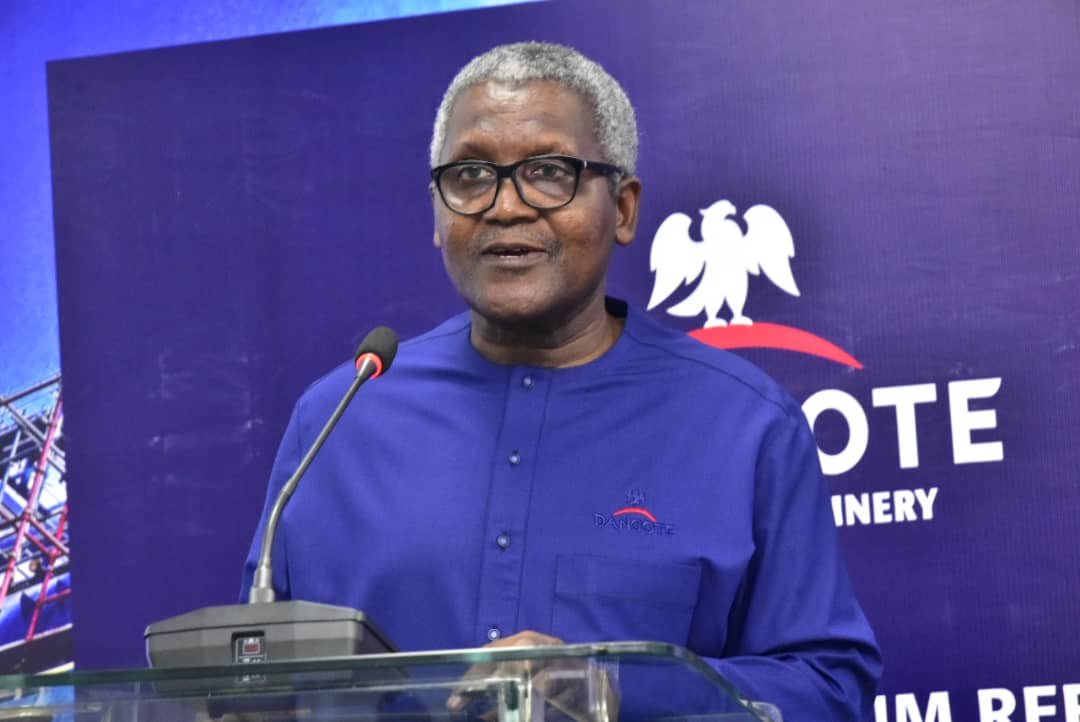
As Aliko Dangote turns 69, his story demands to be read not as a biography of wealth, but as a case study in Africa’s unfinished industrial argument.
For decades, the continent has lived with a structural contradiction. It exports raw materials and imports finished goods. It produces crude oil but imports refined fuel. It grows cotton but imports textiles. It produces cocoa but imports chocolate. It harvests timber yet imports something as basic as toothpicks. This imbalance has not merely defined Africa’s trade patterns; it has shaped its vulnerability.
Dangote’s career can be viewed as a sustained attempt to break that cycle.
What began as a trading enterprise has evolved into one of the most ambitious industrial platforms ever built on African soil. Cement, fertiliser, petrochemicals and now oil refining are not random ventures. They are deliberate interventions in sectors where Africa has historically ceded value to others.
This is what many entrepreneurs overlook. Not the opportunity to trade, but treading the harder, riskier path of building production capacity where none exists.
Recent analyses, including those from global business commentators, have framed Dangote’s model as a “billion-dollar path” hidden in plain sight: solving structural inefficiencies at scale rather than chasing fragmented market gains. It is a strategy that requires patience, capital and an unusual tolerance for long gestation periods.
Nowhere is this more evident than in the $20 billion Dangote Petroleum Refinery in Nigeria, a project that signals a shift not just for one country, but for an entire continent. With Africa importing the majority of its refined petroleum products, the refinery represents an attempt to anchor energy security within the continent.
Its timing is not incidental.
The global energy market has become increasingly volatile, particularly during geopolitical disruptions such as the recent crises in the Middle East. For African economies, which rely heavily on imported refined fuel, such shocks translate immediately into inflation, currency pressure, fiscal strain and higher poverty.
In those moments, domestic capacity ceases to be a matter of convenience and becomes one of sovereignty.
Dangote Petroleum refinery has already begun to play that role. By supplying refined products at scale, it reduces Africa’s exposure to external supply shocks and dampens the transmission of global price volatility into local economies. It is, in effect, a buffer against instability in a world where supply chains are no longer predictable. The refinery is not infrastructure. It is insurance against global instability.
But the ambition does not end there.
Dangote has articulated a vision to grow his business empire to $100 billion in value by 2030. This is not simply a statement of scale. It is a signal of intent to build globally competitive African industrial capacity.
When realised, such a platform would place an African conglomerate in a category historically dominated by firms from China, the United States and India—economies that have long leveraged industrial champions to drive national development.
The implications for Africa are significant.
Industrial scale matters. It lowers costs, improves competitiveness and attracts ecosystems of suppliers, logistics networks and skilled labour. Dangote’s cement operations across more than ten African countries have already demonstrated this multiplier effect, reducing import dependence while stabilising prices in local markets.
The same logic now extends to fertiliser, where Africa’s largest urea complex is helping to address agricultural productivity, and to refining, where fuel supply stability underpins virtually every sector of the economy.
Yet perhaps the most interesting shift in Dangote’s trajectory is philosophical.
In recent years, Dangote’s interventions have moved beyond industry into social infrastructure. A N1 trillion education commitment aimed at supporting over a million Nigerian students suggests an understanding that industrialisation without human capital is incomplete.
Factories can produce goods. Only education produces capability.
This dual focus—on both production and people—mirrors the development pathways of countries that successfully transitioned from low-income to industrial economies. In South Korea, for instance, industrial expansion was matched by aggressive investment in education and skills. The result was not just growth, but transformation.
Africa’s challenge has been the absence of such an alignment.
Dangote’s model, while privately driven, gestures toward that possibility: an ecosystem where energy, manufacturing and human capital evolve together.
Still, there are limits to what just one industrialist can achieve.
No matter how large, private capital cannot substitute for coherent policy, regulatory clarity and institutional strength. Industrialisation at scale requires coordination between state and market, not tension between them. This remains Africa’s unresolved question.
Beyond scale and industry, Aliko Dangote’s journey is anchored in faith—a belief that success is not merely achieved, but granted by God, and that wealth is a trust, not an end. His philanthropy reflects that conviction: that prosperity must serve a higher purpose. History suggests that, by divine providence, such figures appear sparingly—once in a generation—reminding societies that impact, at its highest level, is both economic and spiritual.
Dangote’s career offers both inspiration and caution. It shows that African industrialisation is possible, that scale can be achieved and that global competitiveness is within reach. But it also highlights how much of that progress still depends on singular vision rather than systemic design.
At 69, Dangote stands at a pivotal moment, not just personally, but historically.
He has built assets that did not previously exist. He has challenged economic assumptions that persisted for decades. And he has demonstrated that Africa can do more than export potential; it can manufacture reality. But the deeper test lies ahead.
Whether Africa transforms these isolated successes into a broader industrial awakening will determine whether Dangote’s legacy is remembered as exceptional—or foundational.
In a fragmented global economy, where supply chains are shifting and nations are turning inward, Africa has a unique opportunity to redefine its place.
Africa must now make a deliberate choice. For too long, its development path has been shaped by external prescriptions that prioritise consumption over production, imports over industry and short-term stability over long-term capacity. International institutions often speak the language of efficiency, yet the outcome has too frequently been a continent positioned as a market rather than a manufacturer—a destination for surplus goods rather than a source of value creation. This model has delivered dependency, not resilience. Industrialisation is not optional; it is the foundation of economic sovereignty. Africa cannot outsource its future. It must build it—by refining what it produces, manufacturing what it consumes and resisting the quiet drift towards becoming a permanent dumping ground in the global economy.
At 69, Aliko Dangote stands not at the end of a journey, but on the cusp of a larger question. His factories, refineries and investments are more than monuments of capital; they are proof that Africa can build, can produce and can compete. But no single individual can carry a continent across the threshold of industrialisation. The deeper test lies beyond him.
Whether Africa chooses to scale this vision or retreat into the familiar comfort of imports will define the decades ahead. Dangote has shown what is possible when ambition meets execution. The question now is whether others—governments, institutions, and investors—will match that courage with corresponding action.
History is rarely shaped by what is imagined. It is shaped by what is built.
Abiodun, a communications specialist, writes from Lagos
-
 Feature/OPED6 years ago
Davos was Different this year
-
Travel/Tourism10 years ago
Lagos Seals Western Lodge Hotel In Ikorodu
-

 Showbiz3 years ago
Estranged Lover Releases Videos of Empress Njamah Bathing
-
 Banking8 years ago
Sort Codes of GTBank Branches in Nigeria
-

 Economy3 years ago
Subsidy Removal: CNG at N130 Per Litre Cheaper Than Petrol—IPMAN
-

 Banking3 years ago
Sort Codes of UBA Branches in Nigeria
-

 Banking3 years ago
First Bank Announces Planned Downtime
-

 Sports3 years ago
Highest Paid Nigerian Footballer – How Much Do Nigerian Footballers Earn