Connect with us

Feature/OPED

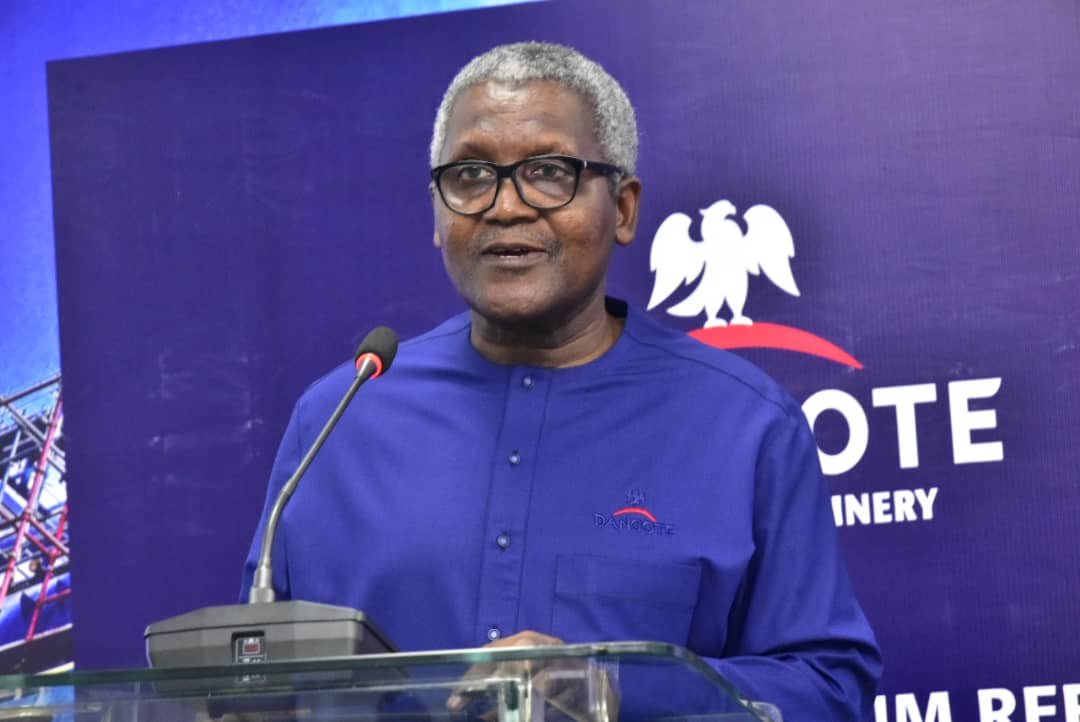
Dangote at 69: The Man Building Africa’s Industrial Backbone

Published

on

Dangote Steel Business

By Abiodun Alade

As Aliko Dangote turns 69, his story demands to be read not as a biography of wealth, but as a case study in Africa’s unfinished industrial argument.

For decades, the continent has lived with a structural contradiction. It exports raw materials and imports finished goods. It produces crude oil but imports refined fuel. It grows cotton but imports textiles. It produces cocoa but imports chocolate. It harvests timber yet imports something as basic as toothpicks. This imbalance has not merely defined Africa’s trade patterns; it has shaped its vulnerability.

Dangote’s career can be viewed as a sustained attempt to break that cycle.

What began as a trading enterprise has evolved into one of the most ambitious industrial platforms ever built on African soil. Cement, fertiliser, petrochemicals and now oil refining are not random ventures. They are deliberate interventions in sectors where Africa has historically ceded value to others.

This is what many entrepreneurs overlook. Not the opportunity to trade, but treading the harder, riskier path of building production capacity where none exists.

Recent analyses, including those from global business commentators, have framed Dangote’s model as a “billion-dollar path” hidden in plain sight: solving structural inefficiencies at scale rather than chasing fragmented market gains. It is a strategy that requires patience, capital and an unusual tolerance for long gestation periods.

Nowhere is this more evident than in the $20 billion Dangote Petroleum Refinery in Nigeria, a project that signals a shift not just for one country, but for an entire continent. With Africa importing the majority of its refined petroleum products, the refinery represents an attempt to anchor energy security within the continent.

Its timing is not incidental.

The global energy market has become increasingly volatile, particularly during geopolitical disruptions such as the recent crises in the Middle East. For African economies, which rely heavily on imported refined fuel, such shocks translate immediately into inflation, currency pressure, fiscal strain and higher poverty.

In those moments, domestic capacity ceases to be a matter of convenience and becomes one of sovereignty.

Dangote Petroleum refinery has already begun to play that role. By supplying refined products at scale, it reduces Africa’s exposure to external supply shocks and dampens the transmission of global price volatility into local economies. It is, in effect, a buffer against instability in a world where supply chains are no longer predictable. The refinery is not infrastructure. It is insurance against global instability.

But the ambition does not end there.

Dangote has articulated a vision to grow his business empire to $100 billion in value by 2030. This is not simply a statement of scale. It is a signal of intent to build globally competitive African industrial capacity.

When realised, such a platform would place an African conglomerate in a category historically dominated by firms from China, the United States and India—economies that have long leveraged industrial champions to drive national development.

The implications for Africa are significant.

Industrial scale matters. It lowers costs, improves competitiveness and attracts ecosystems of suppliers, logistics networks and skilled labour. Dangote’s cement operations across more than ten African countries have already demonstrated this multiplier effect, reducing import dependence while stabilising prices in local markets.

The same logic now extends to fertiliser, where Africa’s largest urea complex is helping to address agricultural productivity, and to refining, where fuel supply stability underpins virtually every sector of the economy.

Yet perhaps the most interesting shift in Dangote’s trajectory is philosophical.

In recent years, Dangote’s interventions have moved beyond industry into social infrastructure. A N1 trillion education commitment aimed at supporting over a million Nigerian students suggests an understanding that industrialisation without human capital is incomplete.

Factories can produce goods. Only education produces capability.

This dual focus—on both production and people—mirrors the development pathways of countries that successfully transitioned from low-income to industrial economies. In South Korea, for instance, industrial expansion was matched by aggressive investment in education and skills. The result was not just growth, but transformation.

Africa’s challenge has been the absence of such an alignment.

Dangote’s model, while privately driven, gestures toward that possibility: an ecosystem where energy, manufacturing and human capital evolve together.

Still, there are limits to what just one industrialist can achieve.

No matter how large, private capital cannot substitute for coherent policy, regulatory clarity and institutional strength. Industrialisation at scale requires coordination between state and market, not tension between them. This remains Africa’s unresolved question.

Beyond scale and industry, Aliko Dangote’s journey is anchored in faith—a belief that success is not merely achieved, but granted by God, and that wealth is a trust, not an end. His philanthropy reflects that conviction: that prosperity must serve a higher purpose. History suggests that, by divine providence, such figures appear sparingly—once in a generation—reminding societies that impact, at its highest level, is both economic and spiritual.

Dangote’s career offers both inspiration and caution. It shows that African industrialisation is possible, that scale can be achieved and that global competitiveness is within reach. But it also highlights how much of that progress still depends on singular vision rather than systemic design.

At 69, Dangote stands at a pivotal moment, not just personally, but historically.

He has built assets that did not previously exist. He has challenged economic assumptions that persisted for decades. And he has demonstrated that Africa can do more than export potential; it can manufacture reality. But the deeper test lies ahead.

Whether Africa transforms these isolated successes into a broader industrial awakening will determine whether Dangote’s legacy is remembered as exceptional—or foundational.

In a fragmented global economy, where supply chains are shifting and nations are turning inward, Africa has a unique opportunity to redefine its place.

Africa must now make a deliberate choice. For too long, its development path has been shaped by external prescriptions that prioritise consumption over production, imports over industry and short-term stability over long-term capacity. International institutions often speak the language of efficiency, yet the outcome has too frequently been a continent positioned as a market rather than a manufacturer—a destination for surplus goods rather than a source of value creation. This model has delivered dependency, not resilience. Industrialisation is not optional; it is the foundation of economic sovereignty. Africa cannot outsource its future. It must build it—by refining what it produces, manufacturing what it consumes and resisting the quiet drift towards becoming a permanent dumping ground in the global economy.

At 69, Aliko Dangote stands not at the end of a journey, but on the cusp of a larger question.  His factories, refineries and investments are more than monuments of capital; they are proof that Africa can build, can produce and can compete. But no single individual can carry a continent across the threshold of industrialisation. The deeper test lies beyond him.

Whether Africa chooses to scale this vision or retreat into the familiar comfort of imports will define the decades ahead. Dangote has shown what is possible when ambition meets execution. The question now is whether others—governments, institutions, and investors—will match that courage with corresponding action.

History is rarely shaped by what is imagined. It is shaped by what is built.

Abiodun, a communications specialist, writes from Lagos

Feature/OPED

Guide to Employee Training That Reinforces Workplace Safety Standards

Published

on

Workplace Safety Standards

Workplace safety is not sustained by policies alone. It is built through consistent training that shapes daily behaviour, decision-making, and accountability across every level of an organisation. When employees understand not only what safety rules exist but why they matter, they are far more likely to follow them and intervene when risks arise. Effective safety-focused training protects workers, strengthens operations, and reduces costly incidents that disrupt productivity and morale.

As industries evolve and workplaces become more complex, employee training must go beyond basic orientation sessions. Reinforcing safety standards requires an ongoing, structured approach that adapts to new risks, changing regulations, and real-world job demands. A thoughtful training strategy helps create a culture where safety is a shared responsibility rather than a checklist item.

Establishing a Foundation of Safety Awareness

The first purpose of workplace safety training is awareness. Employees cannot avoid hazards they do not understand. Comprehensive training introduces common workplace risks, clarifies acceptable behaviour, and sets expectations for personal responsibility. This foundational knowledge empowers employees to recognise unsafe conditions before incidents occur.

Safety awareness training should be tailored to the specific environment in which employees work. Office settings require education on ergonomics, electrical safety, and emergency evacuation procedures, while industrial workplaces demand detailed instruction on machinery risks, protective equipment, and material handling. When training reflects actual job conditions, employees are more engaged and better equipped to apply what they learn.

Clear communication is essential during this stage. Using plain language and real examples helps employees connect training concepts to daily tasks. When safety awareness becomes part of how employees think and talk about their work, it begins to shape behaviour consistently across the organisation.

Integrating Safety Training into Daily Operations

Safety training is most effective when it is integrated into everyday work rather than treated as a one-time event. Ongoing reinforcement ensures that safety standards remain top of mind as tasks, equipment, and responsibilities change. Regular training sessions create opportunities to refresh knowledge, address new risks, and correct unsafe habits before they lead to injury.

Incorporating short safety discussions into team meetings helps normalise these conversations. Supervisors play a critical role by modelling safe behaviour and reinforcing expectations during routine interactions. When employees see safety emphasised alongside productivity goals, it reinforces the message that both are equally important.

Hands-on training also strengthens retention. Demonstrations, practice scenarios, and real-time feedback allow employees to apply safety principles in controlled settings. This experiential approach builds confidence and reduces hesitation when employees encounter hazards in real situations.

Aligning Training with Regulatory Requirements

Workplace safety training must align with applicable regulations and industry standards to ensure legal compliance and worker protection. Laws and regulations change frequently, making it essential for organisations to keep training materials updated. Failure to do so can expose employees to unnecessary risk and organisations to legal consequences.

Training programs should clearly explain relevant safety regulations and how they apply to specific roles. Employees are more likely to comply when rules are presented as practical safeguards rather than abstract mandates. Documenting training completion and maintaining accurate records also demonstrates organisational commitment to compliance.

Many organisations rely on support from compliance training companies to navigate complex regulatory landscapes and design programs that meet both legal and operational needs. These partnerships can help ensure training remains accurate, consistent, and aligned with evolving requirements without overwhelming internal resources.

Encouraging Participation and Accountability

Effective safety training depends on active participation rather than passive attendance. Employees should be encouraged to ask questions, share concerns, and contribute insights based on their experiences. When workers feel heard, they become more invested in maintaining a safe environment.

Creating accountability is equally important. Training should clarify individual responsibilities and outline the consequences of ignoring safety standards. Employees need to understand that safety is not optional or secondary to performance goals. Reinforcement from leadership ensures that unsafe behaviour is addressed consistently and constructively.

Peer accountability also strengthens safety culture. When training emphasises teamwork and shared responsibility, employees are more likely to watch out for one another and intervene when they see risky behaviour. This collective approach reduces reliance on supervision alone and builds resilience across the workforce.

Adapting Training for Long-Term Effectiveness

Workplace safety training must evolve alongside organisational growth and workforce changes. New hires, role transitions, and technological updates introduce risks that require refreshed instruction. Periodic assessments help identify gaps in knowledge and opportunities for improvement.

Data from incident reports, near misses, and employee feedback provides valuable insight into training effectiveness. Adjusting content based on real outcomes ensures that training remains relevant and impactful. Organisations that treat training as a dynamic process are better equipped to respond to emerging risks.

Long-term effectiveness also depends on reinforcement beyond formal sessions. Visual reminders, updated procedures, and accessible reporting tools help sustain awareness. When safety standards are supported through multiple channels, employees receive consistent cues that reinforce training messages daily.

Conclusion

Reinforcing workplace safety standards through employee training requires intention, consistency, and adaptability. Training that builds awareness, integrates into daily operations, aligns with regulations, and encourages accountability creates a safer environment for everyone involved. When employees understand their role in maintaining safety, they are more confident, engaged, and prepared to prevent harm.

A strong training program is not simply a compliance exercise. It is an investment in people and performance. Organisations that prioritise meaningful safety training protect their workforce while fostering trust, stability, and long-term success.

Continue Reading

Feature/OPED

Debt is Dragging Nigeria’s Future Down

Published

on

more concessional debt

By Abba Dukawa 

A quiet fear is spreading across the hearts of Nigerians—one that grows heavier with every new headline about rising debt. It is no longer just numbers on paper; it feels like a shadow stretching over the nation’s future. The reality is stark and unsettling: nearly 50% of Nigeria’s revenue is now used to service debt. That is not just unsustainable—it is suffocating.

Behind these figures lies a deeper tragedy. Millions of Nigerians are trapped in what experts call “Multidimensional Poverty,” struggling daily for dignity and survival, while a privileged few continue to live in comfort, untouched by the hardship tightening around the nation. The contrast is painful, and the silence around it is even louder.

Since assuming office, Bola Ahmed Tinubu has embarked on an aggressive borrowing path, presenting it as a necessary step to revive the economy, rebuild infrastructure, and stabilise key sectors.

Between 2023 and 2026, billions of dollars have been secured or proposed in foreign loans. On paper, it is a strategy of hope. But in the hearts of many Nigerians, it feels like a gamble with consequences yet to unfold.

The numbers are staggering. A borrowing plan exceeding $21 billion, backed by the National Assembly, alongside additional billions in loans and grants, signals a government determined to keep spending and building. Another $6.9 billion facility follows closely behind. These are not just financial decisions; they are commitments that will echo into generations yet unborn.

And so, the questions refuse to go away. Who will bear this burden? Who will repay these debts when the time comes? Will it not fall on ordinary Nigerians already stretched thin to carry the weight of decisions they never made?

There is a growing fear that the nation may be walking into a future where its people become strangers in their own land, bound by obligations to distant creditors.

Even more troubling is the sense that something is not adding up. The removal of fuel subsidy was meant to free up resources, to create breathing room for meaningful development.

But where are the results? Why does it feel like sacrifice has not translated into relief? The silence surrounding these questions breeds suspicion, and suspicion slowly erodes trust.  As of December 31, 2025, Nigeria’s public debt has risen to N159.28 trillion, according to the Debt Management Office.

The numbers keep climbing, but for many citizens, life keeps declining. This disconnect is what hurts the most. Borrowing, in itself, is not the enemy. Nations borrow to grow, to build, to invest in their future. But borrowing without visible progress, without accountability, without compassion for the people, it begins to feel less like strategy and more like a slow descent.

If these borrowed funds are truly building roads, schools, hospitals, and opportunities, then Nigerians deserve to see it, to feel it, to live it. But if they are funding excess, waste, or luxury, then this path is not just dangerous—it is devastating.

Nigeria’s growing loan profile is a double-edged sword. It can either accelerate development or deepen economic challenges. The key issue is not just borrowing, but what the country does with the money. Strong governance, transparency, and investment in productive sectors will determine whether these loans become a foundation for growth or a long-term liability. Because in the end, debt is not just an economic issue. It is a moral one. And if care is not taken, the price Nigeria will pay may not just be financial—it may be the future of its people.

Dukawa writes from Kano and can be reached at [email protected]

Continue Reading

Feature/OPED

Nigeria’s Power Illusion: Why 6,000MW Is Not An Achievement

Published

on

Nigeria Electricity Act 2023

By Isah Kamisu Madachi

For decades, Nigeria has been called the Giant of Africa. The question no one in government wants to answer is why a giant cannot keep the lights on.

Nigeria sits on the largest proven oil reserves in Africa, holds the continent’s most populous nation at over 220 million people, and commands the fourth largest GDP on the continent at roughly $252 billion. It possesses vast deposits of solid minerals, a fintech ecosystem that accounts for 28% of all fintech companies on the African continent, and a diaspora that remits billions of dollars annually.

If potential were electricity, Nigeria would have been powering half the world. Instead, an immediate former minister is boasting about 6,000 megawatts.

Adebayo Adelabu resigned as Minister of Power on April 22, 2026, citing his ambition to contest the Oyo State governorship election. In his resignation letter, he listed among his achievements that peak generation had increased to over 6,000 megawatts during his tenure, supported by the integration of the Zungeru Hydropower Plant. It was presented as a great crowning legacy. The claim deserves scrutiny, and the numbers deserve context.

To begin with, the context. Ghana, Nigeria’s neighbour in West Africa, has a national electricity access rate of 85.9%, with 74% access in rural areas and 94% in urban areas. Kenya, with a 71.4% national electricity access rate, including 62.7% in rural areas, leads East Africa. Nigeria, by contrast, recorded an electricity access rate of just 61.2 per cent as of 2023, according to the World Bank. This is not a distant or poorer country outperforming Nigeria. Ghana’s GDP stands at approximately $113 billion, less than half of Nigeria’s. Kenya’s economy is around $141 billion. Ethiopia, which has invested massively in the Grand Ethiopian Renaissance Dam and is already exporting electricity to neighbouring countries, has a GDP of roughly $126 billion. All three are doing more with far less.

Now to examine the 6,000-megawatt, Daily Trust obtained electricity generation data from the Association of Power Generation Companies and the Nigerian Electricity Regulatory Commission, covering quarterly performance from 2023 to 2025 and monthly data from January to March 2026. The data shows that in 2023, peak generation was approximately 5,000 megawatts; in 2024, it reached approximately 5,528 megawatts; in 2025, it ranged between 5,300 and 5,801 megawatts; and by March 2026, available capacity had declined to approximately 4,089 megawatts. The grid never recorded a verified peak of 6,000 megawatts or higher. Adelabu had, in fact, set the 6,000-megawatt target publicly on at least three separate occasions, missing each deadline, and later admitted the target was not achieved, attributing the failure to vandalism of key transmission infrastructure.

In February 2026, Nigeria’s national grid produced an average available capacity of 4,384 megawatts, the lowest monthly average since June 2024. For a country with over 220 million people, this means electricity supply remains far below national demand, with the grid delivering only about 32 per cent of its theoretical installed capacity of approximately 13,000 megawatts. To put that in sharper comparison: in 2018, 48 sub-Saharan African countries, home to nearly one billion people, produced about the same amount of electricity as Spain, a country of 45 million. Nigeria, the continent’s most resource-rich large economy, is a significant part of that embarrassing equation.

The tragedy here is not just technical. It is a governance failure with compounding human costs. An economy that cannot provide reliable electricity cannot competitively manufacture goods, cannot industrialise at scale, cannot attract the volume of foreign direct investment its endowments warrant, and cannot build the digital infrastructure that would allow it to lead on artificial intelligence, data governance, and the emerging critical minerals economy where Africa’s next great opportunity lies. Countries with a fraction of Nigeria’s mineral wealth and human capital are already debating those frontiers. Nigeria is still campaigning on megawatts.

What a departing minister should be able to say, given Nigeria’s endowments, is not that peak generation touched 6,000 megawatts at some unverified moment. He should be saying that Nigeria now generates reliably above 15,000 megawatts, that rural electrification has crossed 70 per cent, and that the country is on a credible trajectory toward the kind of energy sufficiency that unlocks industrial growth. That is the standard Nigeria’s size and resources demand. Anything below it is not an achievement. It is an apology dressed in a press release.

The power sector has received billions of dollars in investment across multiple administrations. The 2013 privatisation exercise, the Presidential Power Initiative, the Electricity Act of 2023, and successive reform promises have produced a sector that still, in 2026, cannot guarantee eight hours of reliable supply to the average Nigerian household. That a minister exits that ministry citing a megawatt figure that fact-checkers have shown was never actually reached, and that even if reached would be unworthy of celebration given Nigeria’s potential, captures the full depth of the problem. The ambition is too small. The accountability is too thin. And the country deserves better from those who are privileged to manage its extraordinary, squandered potential.

Isah Kamisu Madachi is a policy analyst and development practitioner. He writes via [email protected]

Continue Reading

Trending