Connect with us

Feature/OPED

Niger Delta, Disillusionment and Transcendences of Impoverishment

Published

on

Niger Delta

By Jerome-Mario Chijioke Utomi

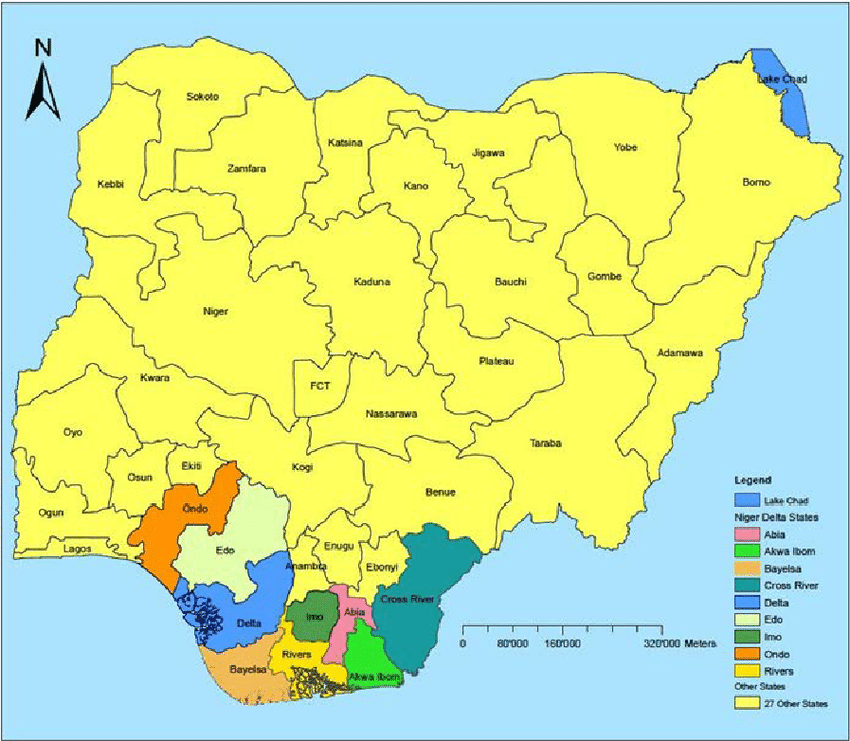
In recent times, precisely in the last one year, many events birthed in response to the various challenges plaguing the people of the Niger Delta region and aimed at ensuring that the people of the region benefit maximally from their wealth, through promoting infrastructural developments, environmental remediation and local content development has taken place.

Take, as an illustration, the Petroleum Industry Bill or PIB which had been under review in the National Assembly for nearly two decades, beset by disagreements, including over how much revenue should go to local communities in oil-producing regions was finally in 2021, passed and signed into law.

Within the same period also, Nigerians saw the federal government; among other things, declare that this administration is determined to see through the completion of all the critical projects that had been embarked upon in the region.

Despite this New Vision for the region that holds the energy resources that have powered our progress for six decades as well as holds the keys to an emergent gas economy, each passing day brings to mind that as a nation, we are yet to learn useful lessons about what set the stage for the Niger Delta ugly experience.

And now, evidence abounds that we are in the historians’ phrase doomed to repeat the mistakes that have already been made as the challenge in the troubled Niger Delta region is more of a man-made and leadership deficit than natural.

This latest awareness was recently brought to the fore by the Kogi State Governor, Alhaji Yahaya Bello during an interview with GbaramatuVoice, a Warri, Delta State-based newspaper.

While lamenting that what we are facing today in the Niger Delta are man-made problems, not natural, the Governor explained that we have seen our environment devastated, a lot of development that should come in are not coming in, people are poor and lots of issues, they are man-made, and it’s a leadership problem.

In his words; the Niger Deltans that I know are largely peaceful, they are resilient, they are accommodating, they are resourceful, and all require appropriate leaders. What we shall do first is to ensure that Niger Deltans come up with a leader that is patriotic, that is empathetic and sympathetic to their people who would understand what their people need and be ready to meet their needs; not leaders who will just enrich themselves and squander the resources, not leaders that will sell their people to the outside world, or to others.

So, once we have leaders who are ready to serve their people, we will recruit them and everything will flow down the line, a leader who will not convert the resources of the people. Remember, billions upon billions have been spent on both the NDDC, and the Ministry of Niger Delta, 13 per cent derivation and the rest, yet there is nothing to see on the ground, he concluded.

Though he said it in a different way, venue and time, in the real sense of it, Mr Governor may not have said something new or different from what Nigerians have been worried about all these years that billions upon billions have been spent on both the NDDC, and the Ministry of Niger Delta, 13 per cent derivation and the rest, yet there is nothing to see on the ground.

For instance, some months ago, during my interview with Comrade Joseph Angodeme Evah, Coordinator, Ijaw Monitoring Group, and one of the Ijaw leading names in the human rights crusade in Nigeria, he shared a similar line of argument.

For instance, on 13 per cent derivation, he captures it this way; we are not saying 100% as our expectation but because we are human beings, we will continue to talk to our leaders, let this thing be workable.

In 1999, I made a submission to Chief Olusegun Obasanjo, the former President of the Federal Republic of Nigeria, I remember telling him that the 13 per cent derivation should be changed, and should not be given to the Governor because the governors see the 13 per cent as a Christmas party.

Instead, he added, let us apply what Babangida did. Babangida used to trade by barter to build Abuja. He started the 13 per cent with Julius Berger because Julius Berger could not be corrupted. Julius Berger built the Aso Rock; Julius Berger built 90 per cent of all the facilities. It was Julius Berger that changed Abuja to London. So, if he gives part of that 13 per cent to Julius Berger Construction Company, you will see that Niger Delta will change to London.

Aside from Comrade Joseph, another illustrious son of the region/ public affairs commentator, in a similar style during a recent conversation queried; if the governors elected by the people of the region right from May 1999, were authentic leaders, if they had demonstrated a passion for their purpose, practised leadership values consistently, led with their hearts as well as their heads, established long term, meaningful relationships and have the self-discipline to get a result, by now, the region will not be waiting for the federal government to provide solutions to real and imagined woes of the people of the region.

Continuing, he said; what step or effort had the successive state governments made right from May 1999, when democracy re-emerged in the country, to improve the life chances of the people? Have the billions of naira collected by these governors been reflected in the infrastructural availability in the region? Or that of the human capital development of the people of the region? Who should be blamed more? State or the Federal Government? I know the argument about this. It is not the federal government but state governors in the region that are the real enemies of the people of Niger Delta, he submitted.

What does this all mean to us?

To change this narrative, these are what this piece proposes.

First, Deltans must recognize that public order, personal and national security, economic and social programmes, and prosperity is not the natural order of things but depends on the ceaseless efforts and attention from an honest and effective government that the people elect.

Governors on their part should not fail to remember that it takes a prolonged effort to administer a country well and change the backward habits of the people. They must be able to identify the problems and opportunities they face, evaluate the options they have for moving forward, and then make necessary trade-offs and decisions about how to proceed with the development of the region.

Niger Deltans urgently need to recognize that every society needs good people to have a good government. No matter how good the system of government is, bad leaders will bring harm to their people. On the other, evidence abounds that society could be well governed in spite of a poor system of government because good, strong leaders were in change’.

Utomi Jerome-Mario is the Programme Coordinator (Media and Public Policy), Social and Economic Justice Advocacy (SEJA), a Lagos-based Non-Governmental Organization (NGO) and can be reached via Je*********@***oo.com/08032725374

Click to comment

Leave a Reply

Your email address will not be published. Required fields are marked *

Feature/OPED

Nigeria’s Olodo Uprising: An Assault on Critical Thinking

Published

on

olodo uprising

By Prince Charles Dickson, PhD

A sheep was passing and saw a lion crying inside a cage, trapped and helpless. The lion begged the sheep to rescue him, promising not to kill or eat it. The sheep refused at first, knowing fully well that a lion does not become a vegetarian because of captivity. But after much persuasion, emotional blackmail, and the sheep’s own gullibility, it opened the cage.

Now the lion was very hungry, having stayed in the cage for days without food. It quickly pounced on the sheep and was about to kill and eat it, but the sheep reminded him of his promise.

They were still arguing when other animals came passing. They sought to know what had happened. Both the lion and the sheep narrated their sides of the story, but because of fear, convenience, and a desperate need to gain favour in the lion’s eyes, all the animals took sides with the lion, except the tortoise, who claimed not to understand the whole scenario.

The tortoise asked the lion to show them where exactly he was before the sheep rescued him. The lion pointed at the cage.

The tortoise asked again, “Were you inside or outside when the sheep arrived?”

The lion replied, “I was inside.”

The tortoise then said, “Okay, enter and let us see how difficult it could be inside, because I am not getting the whole scenario.”

The lion entered, and immediately, the tortoise locked the cage. The lion was trapped again.

That story is not just folklore. It is a national diagnosis.

Nigeria today is full of trapped lions, gullible sheep, frightened animals, and very few tortoises. We have many people with opinions, but few with discernment. Many with certificates, but few with comprehension. Many with titles, but few with thought. Many who can quote policy, scripture, law, and ideology, but cannot ask the simple question that prevents disaster: “Wait first, how did we get here?”

That question is the beginning of critical thinking. Sadly, it is becoming an endangered species.

The easiest and most attractive national pastime remains buck-passing, especially with the bunch of leaders we have, some of whom can hardly peel a banana or wash an already white handkerchief. Not many of us want to take responsibility for anything, from personal life to family life, from community life to national life. The blame is always on the system, as if the system descended from the sky and imposed itself on innocent citizens.

We do not need to create demons out of our leaders because, in too many instances, they have behaved like ready-made specimens of public demons. So, we hang our sins on them, sometimes appropriately, sometimes lazily. Unfortunately, their behaviour has made it easy for the critics to descend on them. They shout loudly, lie casually, perform empathy only when cameras are present, and govern as though the people are background noise in their private banquet.

But there is a deeper tragedy. The lion is not our only problem. The sheep, too, must be examined. The other animals must be questioned. Even the silence of the forest must stand trial.

This is where the Olodo Syndrome enters.

In Nigerian street language, “Olodo” is often used to describe a dull person, someone slow to understand, someone who fails where basic reasoning should have saved them. But in this essay, Olodo is not merely the person who did not go to school. No. Nigeria has produced a more sophisticated creature: the educated olodo. The certificated illiterate. The graduate who cannot reason beyond slogans. The public officer who mistakes grammar for intelligence. The citizen who forwards nonsense with confidence. The analyst who mistakes noise for insight. The leader who confuses movement with progress. The voter who sells tomorrow for rice today, then spends four years complaining that the pot is empty.

Olodo, therefore, is not the absence of schooling. It is the failure of judgment.

It is what happens when a nation rewards mediocrity and punishes thought. It is what happens when people who ask serious questions are labelled troublesome, while those who clap for madness are called loyal. It is what happens when dumb, crazy things move the needle, while wisdom is treated like an old man coughing in the corner. It is what happens when unintelligent people do not merely exist, but are celebrated, promoted, defended, and installed as gatekeepers over those who still dare to think.

This is Nigeria’s Olodo Uprising.

It is an uprising not of the poor against the rich, nor of the uneducated against the educated. It is an uprising of shallow thinking against depth. An assault on memory, logic, accountability, and consequence. It is the national habit of refusing to connect action to outcome. We open the cage, release the lion, and then begin a prayer meeting when the lion remembers its appetite.

We talk, write, and discuss the Nigerian myth with a sense of fatalism. “This is Nigeria,” we say, as if that phrase is both an explanation and an excuse. If everyone thought as much about justice and fairness, life would be better. I am a critic, yes, but I am also a critic’s critic. I remain an unrepentant believer that one of the ways to keep the government on its toes is to keep harping on its flaws so that it can improve. But criticism without self-examination becomes entertainment. It becomes pepper soup politics, the kind we enjoy at drinking joints, suya spots, WhatsApp groups, and television studios where every table has a parliament and every loud voice is mistaken for a constitution.

Often, I say I believe the things I write are important for our nation, as they are for other nations. But when it appears to me that Nigerians, especially those in authority, do not react to these issues as people in other lands do, I repeat them in new essays to remind old readers and recruit new ones to participate in the continuing dialogue.

Because repetition, sometimes, is not a lack of creativity. It is the burden of memory in a country addicted to forgetting.

Sadly, this is Nigeria, where nothing works, and no one cares. When it works, it is often because someone’s interest is about to be served or is already being served, not because the people’s interest has suddenly become sacred. We talk about our institutions despairingly. Our leaders do not watch network news except when their faces will appear at their sons’ or daughters’ weddings, birthdays, burials, thanksgiving services, or self-sponsored ceremonies of public praise. They do not need newspapers anymore because too many pages are already full of their lies, paid adverts, and noisy banters dressed as governance.

A country that destroys thinking will eventually be governed by instinct.

That is why the Olodo Syndrome is dangerous. It not only makes people ignorant. It makes them confidently ignorant. It gives stupidity a microphone and asks wisdom to apply for permission to speak. It converts public debate into shouting contests. It turns leadership recruitment into ethnic arithmetic, religious panic, stomach infrastructure, and emotional blackmail. It makes citizens defend their oppressors because the oppressor speaks their language, attends their church, worships in their mosque, comes from their zone, or once gave them transport money.

This is how the other animals sided with the lion.

Not because the lion was right. They knew he was wrong. But fear is a powerful editor of truth. Hunger is a wicked lawyer. Proximity to power is a dangerous intoxicant. In Nigeria, many people do not support injustice because they are confused. They support it because they are calculating. They are asking themselves, “What if the lion remembers me tomorrow? What if I need a favour? What if I condemn him now and he becomes minister, governor, chairman, commissioner, vice chancellor, senator, president?”

So, they betray the sheep.

Government bashing remains a national pastime, and every drinking joint and suya spot has a sitting parliament with an expert on every issue. But we forget that no matter the input, if the politicians and actors on our national scene have questionable lives both at personal and domestic levels, nothing will change. The best government policy cannot change the individual when the policies themselves are formulated on a bad foundation by people with warped thinking.

A corrupt mind cannot midwife a clean system.

When a witch proclaims her presence, and an invalid does not make away, he must have money for sacrifices at home. Nigeria has been warned too many times. We have seen the witch. We have heard the announcement. Yet we remain seated, arguing about who invited her, who offended her, which village she came from, and whether her witchcraft is constitutionally recognised.

This is not merely a leadership failure. It is civic laziness. It is moral cowardice. It is intellectual surrender.

The tortoise in the story represents the rare citizen who does not join the chorus. The one who pauses the noise. The one who asks for sequence, evidence, context, motive, and consequence. The tortoise is not the loudest animal. It is not the strongest. It does not roar. It does not bleat. It thinks.

That is what Nigeria needs now: more tortoises.

Not slow people, but thoughtful people. Not cowards hiding under shells, but citizens who understand that speed without thought is national self-harm. We need people who can ask leaders: Where were you before power? What did you promise? What have you done? Who benefits? Who pays? What happens tomorrow? We need teachers who teach children to question, not merely to cram. We need voters who examine character before currency. We need religious leaders who produce conscience, not crowds. We need journalists who investigate, not decorate. We need institutions that reward competence over loyalty, substance over noise, and courage over convenience.

Because the lion will always be hungry again.

That is the part Nigeria refuses to learn. Appeasing bad leadership does not end its appetite. Excusing mediocrity does not transform it into excellence. Rewarding foolishness does not make it wise. If we allow the lion to eat the sheep today because we are afraid, hungry, tribal, religiously sentimental, or politically invested, we have not solved the hunger problem. We have only postponed our own turn.

In amazement, the other animals asked the tortoise, “why” and the tortoise replied. “If we allow him to eat the sheep today, he will still go hungry tomorrow, and we don’t know what will be eaten tomorrow—May Nigeria win.

Continue Reading

Feature/OPED

Stocks vs Forex: Which is Better for Beginners in 2026?

Published

on

Stocks vs Forex

By Onah Ishioma Adaeze

As a beginner, choosing between stocks and forex for your investment goals in 2026 can feel overwhelming. Before investing your hard-earned money, it is important to understand how both markets work.

While both markets present investors with opportunities to grow their wealth, they also differ in terms of volatility, liquidity, market hours, and leverage. Stocks involve owning portions of a company, while forex has to do with trading a base currency against a quote currency.

In this article, we will be going through the basics of stocks and forex, pointing out their differences, and helping you decide which asset better suits your investment journey in 2026.

What is Stock Trading?

When it comes to stock trading, you are buying shares of a company, which makes you a shareholder of that company. As a shareholder, you may be entitled to receive dividends whenever the company decides to pay dividends.

As for those companies that do not pay dividends, there are other benefits a shareholder may enjoy, like being called upon to attend shareholder meetings and having voting rights on certain company matters.

On a global scale, over $100 trillion worth of shares are traded annually. Also, the rising popularity of AI companies and technological innovations continues to drive investor participation and market growth.

If you’re an investor looking to buy and hold capital assets, then stock trading is definitely for you, as it allows for short-term, medium-term and long-term investment goals.

When you buy shares of a company and the company performs well, your shares increase in value. Another benefit of stock trading is access to index funds and ETFs.

These funds consist of companies that are grouped under an index. They are carefully selected and monitored under the fund, sparing the investor the stress of actively tracking the fund.

They can be a way of building a long-term, diversified portfolio, and some of these funds may pay dividends.

What is Forex Trading?

Forex trading has to do with buying one currency and selling another. With a pair like USD/JPY, USD is the base currency being bought against JPY, which is the quote currency.

In order to execute a trade in the forex market, you have to analyse and make predictions based on price movement, as well as pay attention to what’s going on in the global news scene.

The forex market runs twenty-four hours every weekday, with over $9 trillion traded in the market every day. Being the largest financial market in the world, there is very high liquidity.

Forex trading involves buying one currency against another, making predictions based on price movements on the forex charts. Price moves based on the activities of large institutions like hedge funds, big banks, the government, etc.

The forex market runs 24 hours a day, every weekday, with global forex turnover reaching $9 trillion per day in the BIS 2025 survey. Being the largest financial market in the world, there is very high volatility and price fluctuations.

At the same time, there is high liquidity in the market, which means that currency pairs can easily be bought and sold without hassle. Highly liquid instruments that are traded regularly include: EUR/USD, USD/JPY, GBP/USD, and gold (XAU/USD).

As a retail trader, knowing when to enter and exit the market is important. As easy as it is to make profits from price fluctuations, it is also very easy to lose money if the market moves against you. This is why it is important to set stop losses and take profits. This helps manage your trading capital.

Major Differences Between Stocks and Forex

While investing in stocks and forex can yield great capital gains, there are lots of ways in which they differ.

As a beginner, stock trading provides opportunities for long-term investments, ensuring slow but consistent returns for wealth building. But if you are looking for an active, short-term style of investment, then forex trading is for you, as it allows you to enter and exit the market within a shorter time frame.

Which is Better in 2026?

Choosing an asset to invest in all boils down to personal preference. At the same time, if you are not averse to risk, nor opposed to asset diversification, then it’s okay to invest in both.

For beginner investors in 2026, stock trading is easier to understand and get into, especially because of mutual funds, index funds and ETFs. With those funds, you don’t have to be an expert to start investing. You can just buy a fund that suits your needs and hold it over a long period of time.

If you are an investor who enjoys technical analysis, highly volatile and liquid markets, as well as trading under short time frames, then forex trading is the right pick for you.

Conclusion 

You do not need to put all your eggs in one basket. There are investors who invest in both stocks and forex simultaneously. When starting out, you can start investing in stocks while learning forex. Take calculated risks and do not invest above your means. Diversify your investments and remember, when starting out, you should prioritise acquiring knowledge over profits.

Onah Ishioma Adaeze is a finance writer who is passionate about simplifying complex concepts into easily digestible pieces. Her hobbies are reading and watching anime

Continue Reading

Feature/OPED

Building 234 Solutions: A Response to Everyday Workforce Challenges

Published

on

Owoloye Emmanuel 234 Solutions

By Owoloye Emmanuel

Every business starts with a problem. For us, that problem was hiding in plain sight.

Across organisations, we kept seeing HR professionals, payroll teams, and business leaders spend significant time navigating processes that should be simpler. Employee records sat across multiple systems, payroll processes required manual intervention, and routine workforce tasks often became more complicated than they needed to be.

As businesses grow, workforce operations naturally become more complex. Yet many organisations still rely on disconnected tools and workflows that create unnecessary friction for both employers and employees.

The consequence is more than operational inefficiency. HR teams spend valuable time managing systems instead of supporting people. Business leaders struggle to access timely workforce insights, while employees experience delays in processes that should be seamless.

These weren’t isolated challenges. They were recurring realities across workplaces, regardless of industry or size.

That observation led us to a simple question: what if workforce management could be easier?

What if HR, payroll, and workforce operations could work together within a single, connected experience?

That question became the foundation for 234 Solutions.

We are building 234 Solutions with a clear belief that workplace technology should reduce complexity, not add to it. Our goal is to help organisations spend less time navigating processes and more time focusing on productivity, growth, and people.

As we prepare for launch, our focus remains simple: building practical solutions for real workplace challenges and helping organisations create better experiences for the people who power them every day.

Owoloye Emmanuel is the founder of 234 Solutions

Continue Reading

Trending