General
2019: My Plans for Delta South in Senate—Uduaghan
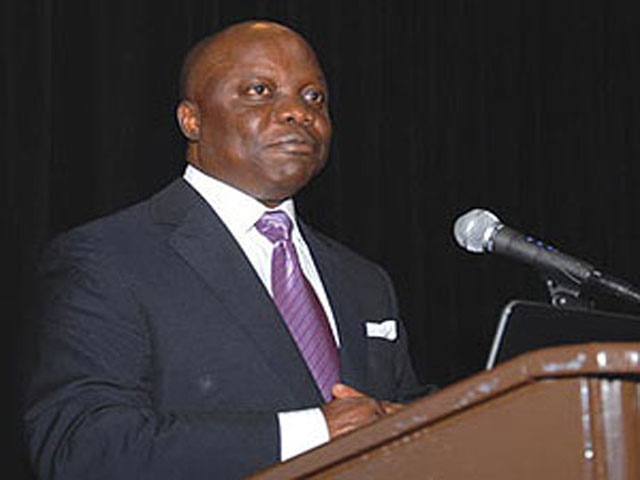
The All Progressives Congress (APC) 2019 Delta South senatorial candidate, Dr. Emmanuel Eweta Uduaghan has said he wants to represent Delta South at the Senate in 2019 because of his desire to pursue quality legislation that will lead to the development of the district and the Niger Delta region.
Releasing his manifesto in Warri, Delta State on Friday, Uduaghan, who is the immediate-past governor of Delta State said he hinged his manifesto on four pillars which he called the JEW+P (Jobs, Empowerment, Wealth plus Peace).
In his words: “I salute you, my good people of Delta South Senatorial District. I seek your mandate and support to represent you at the Senate.
“Over the years, I was actively part of and at a time, head of a team that managed the development of Delta State. In those years the Delta State government through its various organs embarked on projects and programs in the areas of peace, human capital and infrastructure development that will lead to job creation and poverty alleviation. In doing this, we faced a lot of constraints. These constraints were mainly in the areas of non-existent extant laws to control the various processes that were put in place to fast-track the development.
“Efforts to bring peace and security to the area were mainly through engagements at various levels and the use of force. Both methods have led to a temporary peaceful environment. However, to attain a level of job creation and alleviation of poverty in the region that will lead to permanent peace, prosperity and a sense of well-being, there must be laws enacted to fast-track the processes of industrialization, wealth creation and a peaceful environment. These are the laws I seek your mandate to bring up at the Senate.
MY MISSION
“My mission therefore at the Senate will be focused on four pillars which I call the JEW+P (Jobs, Empowerment, Wealth plus Peace).
JOBS
Poverty alleviation through the creation of Job Opportunities for the people of Delta South at all levels.
EMPOWERMENT
Creation of Industrial Empowerment for the people of Delta South through the promotion and encouragement of indigenous participation, as well as, the use of homegrown technology in the oil industry.
WEALTH
Championing the creation of Enduring Wealth for the people of Delta South through the promotion of Community part-ownership of major and minor oil companies.
PEACE
Promotion of Enduring Peace in Delta South through the involvement of local and community people in security and peacekeeping.
Do you know why the Jews prosper and flourish anywhere they are? They patronize their own. We can build a new Delta South Senatorial district by creating an environment that employs our talents and utilizes our God-given resources to flourish as a people.
As a former Secretary to the Delta State Government and a former two-term Executive Governor of the state, and also as I be Delta pikin, I know and understand your pains and your needs. You need room to express your God-given talents. As governor, there were a lot of things I wanted to do to open up opportunities and bring economic development to you that I could not do because I was constrained by the laws of our country. This was what fired my desire to represent you at the Senate. We come from a senatorial district that is massively endowed, and all we need to do is to use our imagination, and with the cooperation of our brothers and sisters from other parts of Nigeria, we will drive a New Vision for the people of Delta South Senatorial District. A New Vision that fully explores and exploits our strengths and endowments.
CREATION OF JOB OPPORTUNITIES
The unemployment level in Delta South Senatorial District is embarrassing, given that the region is the economic hub of Delta State hosting up to 72% of high impact industries, especially in the oil and gas sector. As a result of policy and security challenges which were beyond the state government, many of these industries were either shutdown or were operating way below capacity; therefore, many of the oil service companies in particular that used to give employment to a lot of our people, especially the youth were either shutdown or forced to relocate. For example, the major oil companies for so many years did not prospect for new oil fields and this caused a major disaster in the employment, economic and social life of the people of Delta South Senatorial District.
I believe that focused legislative interventions in the Senate can deal with these challenges and launch Delta South Senatorial District into a phase of development and expansion that will meet the demands of our people. Delta South Senatorial District can be galvanized and developed into the industrial base of the state by taking advantage of the oil and gas and the maritime sectors to create jobs for men, women and youths.
We are also endowed with arable lands that we can use to drive active investments and participation in agriculture and agro-processing. However, over the years, our lands, air and sea have been highly polluted by the activities of the oil industry, especially old pipes, sabotage and oil theft. The review of our extant laws to make them more effective and formulation of new laws in the areas of the environment to prevent further pollution of our air, lands and sea and also to clean up the already polluted environment will be needed to enable every relevant authority do the needful. This will encourage investments in agriculture and agro-processing.
ILLEGAL REFINERIES AND INDUSTRIAL EMPOWERMENT
I know that pragmatic legislation in the Senate can secure legality for the use of indigenous technology for small-scale oil refineries. Scattered all over the Delta South Senatorial District, as it is in many parts of the Niger Delta, are illegal refineries that make use of local technology that is damaging the environment, including soil, water and air pollution which has resulted in the soot crisis in our communities and cities. The legislation of laws in this area will guarantee best-practices and create jobs for men, women and youths in the region, directly and indirectly, in the value chain of crude procurement, refining, petrochemicals, product marketing, logistics, hospitality and other ancillary services.
About 6,000 illegal refineries were reportedly destroyed by the Joint Military Task Force (JTF) in 2015. Some of these “refineries” were actually rickety science projects that are over-glorified by calling them “oil refineries”. However, among the thousands of illegal refineries, there must be some that are well set-up. Should a country that cannot put its four “legal” refineries in full working order afford to destroy its own indigenous refineries? Illegal refineries should be done away with, but those youths and women should be engaged in better set-up refineries. The illegal refineries that are being destroyed offer a lot of employment for the youths and women, which in turn, relieve the government of the burden of providing jobs for them.
I believe that there has to be a rethink towards the concept of “illegal refineries”. The so-called “illegal refineries” are a testimony of the ingenuity of Nigerian youths and women in their ability to creatively innovate, driven by the daily challenges of their existence. The ingenuity that has been exhibited by the operators of the so-called “illegal refineries” should constitute the foundation of technological breakthrough.
As the Senator representing Delta South Senatorial District, I will push for the promotion and encouragement of indigenous technology in the oil industry and also legislative backing to recognize and reform non-conventional refineries.
EFFECTIVE DISPOSAL OF SEIZED CRUDE
It is no secret that there is a high level of illegal bunkering activities in the Delta South Senatorial District like it is in other parts of the Niger Delta. There has been a lot of government security measures to arrest the situation. These measures have led to the seizure of stolen crude in various vessels, especially the wooden Cotonou boats. The current practice is for security operatives to burn these boats with the confiscated crude or dispose of seized crude oil on the high seas and the creeks. This is assumed to be the best way to discourage crude oil theft in the Niger Delta. Sadly, the destruction of seized crude has not only failed to solve
the problem but has contributed immensely to the degradation of the environment. Destruction of seized crude by burning or disposal at sea pollutes the land, air and water. Furthermore, it is a colossal waste of the nation’s natural resource.
I believe that the nation needs to evolve an effective way to disposing of seized crude without destroying it. This will achieve a three-pronged benefit for: (1) the oil industry, (2) the Niger Delta environment, and (3) the nation’s revenue.
Seized crude would be more beneficial to all if it is effectively
channeled back into the oil industry. For instance, it can form part of the stock made available to registered non-conventional refineries or even sent to the nation’s conventional refineries for processing into petroleum products. This will help the country generate revenue from seized crude, service the oil industry and reduce environmental pollution.
I also believe that effectively disposing of seized crude without destroying it will:
1. Reduce pollution of the air, land and water in the Delta South Senatorial District;
2. Enhance the availability of crude oil to registered
non-conventional refineries operating in the Delta South Senatorial District;
3. and generate revenue for the country as a whole.
As the Senator Representing Delta South Senatorial District, I will push for legislative backing to evolve effective ways of disposing seized crude that will be beneficial to the community, the environment and the nation.
SECURITY ARCHITECTURE
I am certain that articulate legislative intervention in the Senate can accommodate the youths of Delta South Senatorial District within the security architecture of the region. Community-based policing which entails professional security operatives working hand-in-hand with indigenes of the area to solve problems of crime and disorder is a recognized strategy of keeping peace and order worldwide.
Professional security operatives are usually deployed from
the central commands at the national level to Delta South Senatorial District. Most times, this entails posting of people who know very little or nothing about the terrain, to manage the security of the area. The result, in many instances, is poor security in the creeks.
The terrain of the Niger Delta has always proven to be a great challenge to conventional security forces. This has made their operations quite difficult and sometimes frustrating. As a governor, I started the Delta Waterways Security Committee made up of many of our youths who understood the terrain and could guide the security forces through the creeks when the need arose. These youths who were part of the communities were able to gather intelligence which helped the security agencies preempt planned security breaches arising from community hostilities and sometimes criminalities.
I propose that the local youths and community people should be involved in securing the pipelines and the keeping of peace and order.
Involvement of the people of Delta South Senatorial District in security will:
1. provide employment and economic empowerment for the people;
2. enhance the operations of the Federal security agencies in Delta South Senatorial District as the professional security operatives would be helped to effectively gather intelligence and also to navigate the area by locals who are familiar with the people and the terrain;
3. reduce the level of crime and criminality in Delta South
Senatorial District of Nigeria; and
4. promote a conducive atmosphere for doing business in Delta South Senatorial District.
As the Senator representing Delta South Senatorial District, I will push for legislative backing for the inclusion of the youths of Delta South Senatorial District in the security architecture of the area.
CREATION OF ENDURING WEALTH AND INFRASTRUCTURE DEVELOPMENT: 5% COMMUNITY OWNERSHIP OF COMPANIES IN THEIR DOMAIN
The management of Nigeria’s oil industry will remain at the centre of the Niger Delta crises in the country, until the government evolves a realistic and permanent solution. This practical solution will be best premised on addressing the very heart of the matter. One of the reasons Nigeria’s Niger Delta crisis has persisted is related to disharmony between the oil companies and host communities. On the one hand, the host communities tend to make the operational environments of the firms in the oil industry hostile because of perceived or obvious unfriendly disposition of the oil companies to their host communities. While on the other hand, many of the oil companies are unhappy with their host communities on the ground that the host communities do not show understanding of the realities plaguing the oil companies. The above scenario is an indication that the problem in the Niger Delta, which significantly affects the Delta South Senatorial District, is an issue of mutual distrust and suspicion. By extension, therefore, if this mutual distrust and suspicion are addressed, there is hope for lasting peace and development in the oil industry and the host communities.
I firmly believe that one way to achieve lasting peace and development
in the Niger Delta is by community participation and ownership in Nigeria’s oil industry. When communities in the Niger Delta (including those in the Delta South Senatorial District) are allowed to be actively involved in the ownership and management of oil firms domiciled in their areas, they would have firsthand experience of the prospects and challenges in the oil industry and become more realistic in their expectations from them. This will STABILIZE the Niger Delta.
I believe that community participation and ownership in the oil industry will:
(1) enhance the security of infrastructure of the industry in the Delta South Senatorial District as the communities would not be hostile to their own economic interest; (2) create jobs for the people;
(3) benefit the participating communities and their environs by opening up opportunities for the establishment of service firms at second and third tier levels; and
(4) enhance effective management of the oil industry in the Delta South Senatorial District in particular and the Niger Delta, in general.
As the Senator representing Delta South Senatorial District, I will push for legislative backing to recognize community participation and ownership in the oil industry.
OTHER AREAS
In addition to the above, as Senator representing Delta South Senatorial District of Nigeria, I will push for:
1. Legislation on Constitutional role for Traditional Rulers.
2. A collective agenda in the Senate to review extant laws bordering on Peace, Security and Prosperity of the Delta South Senatorial District and
3. provide good and effective representation through a strategy of synergy and feedback with the people of Delta South Senatorial District. To achieve this, we shall hold town hall meetings every six months.
General
FG Boosts Civil Servants’ Pay with New Allowance Review
By Adedapo Adesanya
The federal government has approved a sweeping increase in peculiar allowances and other welfare benefits for civil servants, aimed at improving take-home pay and boosting morale across the public service.
The announcement was made on Friday by the Head of the Civil Service of the Federation, Mrs Didi Walson-Jack, during a press briefing in Abuja, where she outlined key reforms endorsed by the Federal Executive Council (FEC).
According to Mrs Walson-Jack, the review affects workers under both the Consolidated Public Service Salary Structure (CONPSS) and the Consolidated Research and Allied Institutions Salary Structure (CONRAISS), ensuring a broad-based impact across all cadres.
She said the revised peculiar allowances have been structured to reflect across all grade levels, resulting in a meaningful increase in earnings for both junior and senior officers.
In addition, the government approved an upward review of several key allowances, including duty tour allowance (DTA), estacode, and book allowance.
Mrs Walson-Jack noted that virtually all allowances listed under the Public Service Rules have now been revised.
A major highlight of the reform is the approval of 100 per cent Duty Tour Allowance for civil servants attending approved training programmes, regardless of whether travel is involved.
Beyond salary-related adjustments, the government also introduced a new exit benefit scheme for retiring civil servants under the Contributory Pension Scheme. The scheme provides 100 per cent of a retiree’s total annual emoluments as an exit package, in addition to their pension, effective January 1, 2026.
Mrs Walson-Jack described the move as a step toward ensuring dignity in retirement, stressing that no public servant should leave service without adequate financial support.
The government also confirmed the operationalisation of the Employee Compensation Scheme, designed to provide financial protection for workers who suffer job-related injuries or death.
The reforms come amid growing calls from labour unions for improved welfare, as rising living costs continue to put pressure on workers. Analysts say the combined measures could significantly enhance financial stability for civil servants and improve overall productivity in the public sector.
General
Surrogacy Laws in Ukraine: What Every International Parent Must Know Before Starting the Process
One of the primary reasons international couples choose surrogacy in Ukraine is the country’s clear and well-defined legal framework. Unlike many nations where surrogacy exists in a legal gray area or is outright prohibited, Ukraine has codified the rights of intended parents, the obligations of surrogate mothers, and the procedures for establishing legal parenthood.
Understanding these laws is not just advisable but essential. Proper legal preparation ensures that your parental rights are protected, that the process runs smoothly, and that your child’s citizenship and documentation are handled correctly from day one.
The Legal Foundation of Surrogacy in Ukraine
Surrogacy in Ukraine is primarily regulated by two pieces of legislation: the Family Code of Ukraine and the Civil Code of Ukraine. The most significant provision is Article 123, Paragraph 2 of the Family Code, which states that when an embryo conceived through assisted reproductive technologies is transferred to another woman’s body, the married couple who initiated the procedure are recognized as the parents of the child.
This provision is remarkably protective of intended parents. It means that from the moment of embryo transfer, the intended parents are considered the legal parents. The surrogate mother has no legal claim to the child, and there is no requirement for an adoption process or court hearing to establish parenthood.
Additionally, Article 139 of the Family Code reinforces the principle that the surrogate cannot contest the parentage of a child born through a surrogacy arrangement. This dual-layer legal protection is one of the strongest in the world and is a major reason why surrogacy in Ukraine is so attractive to international couples.
Who Is Eligible for Surrogacy in Ukraine?
Ukrainian law sets specific eligibility criteria for intended parents. To qualify for a surrogacy program, you must meet the following requirements:
Marital status: Both partners must be legally married. Ukraine requires a valid marriage certificate, which must be translated into Ukrainian and apostilled.
Medical indication: There must be a documented medical reason why the intended mother cannot carry a pregnancy. This could include uterine abnormalities, repeated IVF failures, recurrent pregnancy loss, or other reproductive health conditions.
Heterosexual couple: Under current Ukrainian legislation, surrogacy is available only to heterosexual married couples. Single parents and same-sex couples are not eligible at this time.
Genetic connection: At least one of the intended parents must have a genetic connection to the child. This means that either the eggs or the sperm (or both) must come from the intended parents. Donor gametes may be used for one component if medically necessary.
The Surrogacy Agreement: Legal Protection for All Parties
Before any medical procedures begin, a comprehensive surrogacy agreement must be executed between the intended parents and the surrogate mother. This legally binding contract is a cornerstone of the process and covers several critical areas.
The agreement defines the rights and obligations of both parties, the compensation structure for the surrogate, medical care provisions during pregnancy, conditions under which the agreement may be terminated, and the procedures for establishing parenthood after birth. Ukrainian law requires this agreement to be notarized, and experienced agencies ensure that all legal requirements are met.
Working with an agency that has in-house legal expertise is essential for ensuring the agreement complies with Ukrainian law and addresses the specific needs of the intended parents. Agencies like Militta provide dedicated legal teams that handle all documentation, from the initial surrogacy agreement to the final birth registration.
For more details about how the legal and medical process works, visit Militta’s comprehensive surrogacy guide.
Birth Registration and Documentation Process
One of the most important moments in a surrogacy journey is the birth of the child and the subsequent documentation process. In Ukraine, this is remarkably straightforward compared to many other countries.
Immediately after the birth, the child’s birth certificate is issued by the local civil registration office (known as RAGS in Ukraine). The certificate lists the intended parents as the mother and father, with no mention of surrogacy or the surrogate mother. The surrogate’s consent is not required for this registration because Ukrainian law already recognizes the intended parents’ rights from the moment of embryo transfer.
After obtaining the birth certificate, the intended parents must proceed with several additional steps. The birth certificate must be apostilled and translated for use in their home country. They must then visit their home country’s embassy or consulate in Ukraine to register the child’s birth, obtain citizenship documentation, and apply for a passport or travel document for the newborn.
The timeline for this post-birth documentation process typically ranges from two to six weeks, depending on the home country’s embassy processing times. During this period, intended parents usually stay in Ukraine, and their agency provides accommodation assistance and logistical support.
Country-Specific Considerations for International Parents
While Ukrainian law is clear and protective, intended parents must also consider the legal requirements of their home country. Different nations have varying approaches to recognizing children born through international surrogacy.
Parents from countries within the European Union, for example, may need to go through additional recognition procedures depending on their specific national laws. Some EU countries, such as Spain and France, have historically been more complex in recognizing surrogacy-born children, while others, like Portugal, have clearer pathways.
Parents from the United States, the United Kingdom, Australia, and China each face their own specific documentation requirements. A knowledgeable surrogacy agency will be familiar with the requirements of your home country and can guide you through the specific steps needed to bring your child home.
Surrogate Rights and Protections in Ukraine
Ukrainian surrogacy law also establishes protections for surrogate mothers. To be eligible, a surrogate must be between 18 and 35 years of age, have at least one healthy child of her own, and pass comprehensive medical and psychological evaluations. These requirements ensure that surrogates are making informed, voluntary decisions.
Surrogates in Ukraine receive compensation that is contractually guaranteed, along with full medical care throughout the pregnancy and a reasonable recovery period after birth. Reputable agencies ensure that surrogates are treated with dignity and that their health and wellbeing are prioritized throughout the process.
Surrogacy in Ukraine in 2026: Current Status and Safety
As of 2026, surrogacy programs in Ukraine continue to operate with full legal backing. The legal framework governing surrogacy has remained stable, and clinics in central and western Ukraine, particularly in Kyiv and Lviv, maintain their operational capacity.
Reputable agencies have implemented comprehensive safety protocols to protect all parties. This includes careful selection of medical facilities in secure locations, contingency planning for logistics, and continuous communication with intended parents throughout the process. International travel to Ukraine is facilitated through European transit routes, and agencies assist with all travel arrangements.
Frequently Asked Questions About Surrogacy Law in Ukraine
Can the surrogate mother change her mind and keep the baby?
No. Under Ukrainian law, the surrogate has no legal rights to the child. The intended parents are recognized as the legal parents from the moment of embryo transfer, and the birth certificate is issued in their names.
Do I need to go through an adoption process after the surrogate gives birth?
No. Unlike many other countries, Ukraine does not require any adoption proceedings for surrogacy-born children. The intended parents’ names appear directly on the birth certificate.
What documents do I need to start a surrogacy program in Ukraine?
You will typically need a valid marriage certificate (apostilled and translated), passports for both intended parents, medical documentation confirming the need for surrogacy, and a notarized surrogacy agreement. Your agency will provide a complete document checklist.
How do I bring my surrogacy-born child back to my home country?
After obtaining the Ukrainian birth certificate, you must register the birth at your home country’s embassy in Ukraine, obtain citizenship documentation, and apply for a passport or travel document for the child. This process typically takes two to six weeks.
Is surrogacy in Ukraine safe in 2026?
Yes. Surrogacy programs operate successfully in central and western Ukraine, with established safety protocols. Leading agencies like Militta have extensive experience managing programs for international clients and ensure the safety and wellbeing of all parties involved.
Ensuring a Legally Secure Surrogacy Journey
The legal landscape of surrogacy in Ukraine is one of the most favorable in the world for intended parents. With clear legislation that protects parental rights from the very beginning, a straightforward birth registration process, and no need for adoption proceedings, Ukraine provides a secure foundation for building your family.
The key to a successful surrogacy journey lies in thorough preparation and partnership with experienced professionals. By choosing a reputable agency with proven legal expertise, you can navigate the process with confidence, knowing that every step is handled in compliance with Ukrainian law and with your family’s best interests at heart.
General
ADC Lawmakers Oppose Tinubu’s $516m Loan Request for Highway
By Adedapo Adesanya
The African Democratic Congress (ADC) Legislators’ Forum has condemned the latest move by President Bola Tinubu to secure Senate approval for an additional external loan of $516,333,070 for the Sokoto–Badagry Super Highway project.
Mr Tinubu requested Senate approval for a $516.3 million syndicated loan to finance key sections of the Sokoto–Badagry Superhighway, a major infrastructure project under his administration’s Renewed Hope Agenda from Deutsche Bank.
The request, contained in a letter read during plenary on Thursday by the Senate President, Mr Godswill Akpabio, seeks legislative authorisation in line with Sections 16 and 21 of the Debt Management Office (Establishment) Act, 2011.
However, the opposition lawmakers said it is not only alarming but becoming of the Tinubu administration to make borrowing its default economic policy, with little regard for sustainability, accountability, or the well-being of future generations.
The forum, in a statement jointly signed by its chairman, Mr Uko Ndukwe Nkole, as well as leaders from each geopolitical zone, noted that while no responsible opposition undermines the importance of infrastructure development, the cost and conditions of such projects must be queried.
According to the ADC lawmakers, Mr Tinubu’s government has failed to convincingly demonstrate that its endless appetite for loans is guided by a coherent, transparent and economically viable repayment strategy.
“Instead, Nigerians are witnessing a troubling pattern; one where debt accumulation is prioritised over prudent fiscal management, innovation, and domestic resource mobilisation.
“Nigeria is already weighed down by a crushing debt burden, with debt servicing swallowing a staggering proportion of national revenue. Yet, rather than confronting this reality with discipline and reform, the Tinubu administration continues to plunge the country deeper into what can only be described as a looming debt catastrophe.
“Each new loan tightens the noose around the nation’s economic sovereignty, leaving future generations to pay for today’s lack of foresight.
“Even more disturbing is the timing of this request. As the nation inches closer to a major general election cycle, Nigerians are right to question the motives behind this borrowing spree.
“Is this truly about development, or is it another attempt to create avenues for political patronage and electoral advantage? History has taught us to be wary of last-minute, large-scale financial commitments made under the guise of national interest,” the statement read in part.
The ADC Legislators’ Forum insisted that the National Assembly must not act as a rubber stamp or a pro-group of President Tinubu in this matter.
It said the Senate, in particular, must rise to its constitutional responsibility by demanding full disclosure of the project’s financial details, procurement processes, cost-benefit analysis, and a credible repayment plan, as anything short of this would amount to a betrayal of public trust.
The lawmakers called on the administration to redirect its focus toward policies that can genuinely strengthen Nigeria’s economy; policies that promote productivity, industrial growth, job creation, and the plugging of revenue leakages.
“We must clearly state that governance is not a free ride without consequences. Those who make decisions today that endanger the economic future of millions of Nigerians must understand that a day of reckoning will inevitably come.
“The Nigerian people will demand answers, accountability, and justice for policies that have deepened hardship and mortgaged the nation’s destiny. Nigeria stands at a critical crossroads.
“We can either choose the path of responsibility, discipline, and sustainable growth, or continue down this perilous road of debt dependency and economic vulnerability,” the statement added.
-
Feature/OPED6 years agoDavos was Different this year
-
Travel/Tourism10 years ago
Lagos Seals Western Lodge Hotel In Ikorodu
-
Showbiz3 years agoEstranged Lover Releases Videos of Empress Njamah Bathing
-
Banking8 years agoSort Codes of GTBank Branches in Nigeria
-
Economy3 years agoSubsidy Removal: CNG at N130 Per Litre Cheaper Than Petrol—IPMAN
-
Banking3 years agoSort Codes of UBA Branches in Nigeria
-
Banking3 years agoFirst Bank Announces Planned Downtime
-
Sports3 years agoHighest Paid Nigerian Footballer – How Much Do Nigerian Footballers Earn