
General
Alake Seeks Regional Energy Hubs for Africa’s Mining Value Chain


By Adedapo Adesanya
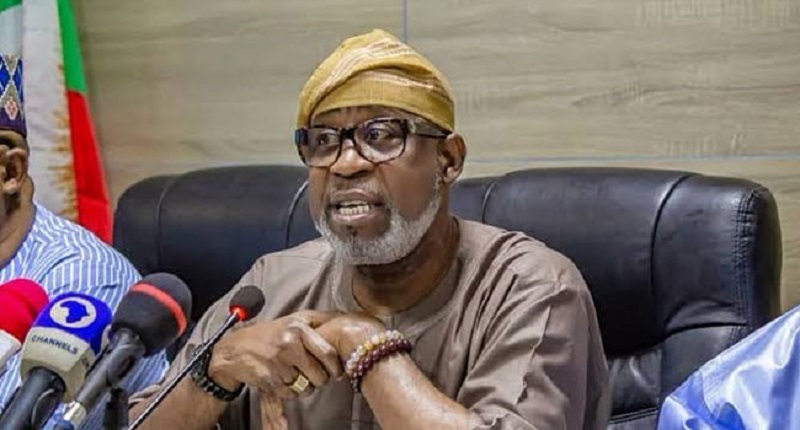
The Minister of Solid Minerals Development, Dele Alake, has called for the establishment of regional energy hubs as a strategic pathway to accelerate cross-border mining industrialisation and strengthen the supply chain of critical minerals essential for the global energy transition.
He called for the development of regional industrial corridors akin to the Lobito Corridor, noting that similar belts —such as the Lagos–Abidjan corridor, spanning Nigeria, Benin, Togo, Ghana, and Côte d’Ivoire, as well as the Walvis Bay Corridor linking Southern and Central Africa to global markets— could unlock vast mineral potential across the continent.
Speaking at a high-level panel themed: “Critical Minerals in Africa: Meeting Global Demand” at the ongoing Powering Africa Summit in Washington, D.C., United States, Mr Alake also said more investments had been attracted into Nigeria in the last two years.
The Minister emphasised that despite being open to investment, the country to prioritise strict compliance with local laws and regulations while outlining key investment incentives, including tax waivers on imported mining equipment and full repatriation of profits after due payment of royalties and taxes.
“We have successfully de-risked and sanitised the mining environment, making it conducive to Foreign Direct Investment (FDI). Within the last two and a half years, we have attracted over $2.6 billion in FDI into the sector,” he affirmed.
He stressed that sustainable partnerships with Africa remain the fastest route to meeting rising global demand for critical minerals.
According to the Minister, such corridors would serve as economic catalysts by driving infrastructure development, enhancing energy access, and promoting regional integration. “The development of nuclear power in one West African country, for instance, can service an entire corridor.
With that in place, local beneficiation, technology transfer, manufacturing, and cross-border industrialisation will naturally follow. If three to five such corridors are developed in Africa, we would significantly advance industrialisation across the continent, creating a win-win outcome for both Africa and the West,” he stated.
Mr Alake noted that under the administration of President Bola Ahmed Tinubu, the ministry has carried out some reforms, including strengthened governance structures, improved regulatory frameworks, digitisation of licensing processes, and enhanced ease of doing business, which have repositioned Nigeria’s mining sector as a key driver of economic diversification.





By Adedapo Adesanya
The Kebbi State Police Command says 44 people were killed following a coordinated attack on eight communities in Shanga Local Government Area of the North-Western state.
The affected villages include Gebe, Kalkami, Kawara, Kasoshi, Awaye, Tungar Rini, Binuwa, and Dabe.
In a statement issued on Friday, the Kebbi Police Command Public Relations Officer, Mr Bashir Usman, said it launched a statewide clearance operation.
Mr Usman said the operation followed the directive of the Inspector-General of Police (IGP) Olatunji Disu, aimed at preventing further banditry and violent crimes across the state.
The police stated that massive deployments of police personnel and other security agencies have been made to the affected communities, leading to the return of relative calm.
The command added that discreet investigations have commenced into the attack.
The ongoing clearance operation, according to the police, is targeting high-risk areas such as farmlands, forests, border communities, and remote settlements.
It also includes coordinated patrols, intelligence-led stop-and-search operations, and joint actions with other security agencies.
As part of the operation, the police said two AK-47 rifles were recovered along the Illo-Kamba axis, describing it as evidence of the effectiveness of intelligence-led policing.
The Commissioner of Police in the state, Mr Umar Hadejia, called on residents to remain vigilant and cooperate with security agencies by providing timely and credible information.
Mr Hadejia also urged traditional rulers, community leaders, religious bodies, and youth groups to support ongoing efforts to restore peace and strengthen security across the state.
Residents had reportedly appealed to President Bola Tinubu and Kebbi State Governor Nasir Idris to take decisive action to restore security in the area and enable displaced residents to safely return to their homes.

By Adedapo Adesanya
The Trade Union Congress (TUC) of Nigeria has proposed that the federal government deploy at least 60 per cent of excess crude oil revenue above the budget benchmark to subsidise feedstock for local refineries, including the Dangote Refinery.
The President of the group, Mr Festus Osifo, made the proposal in Abuja yesterday, warning that the rising cost of petrol has placed unbearable pressure on households and businesses and that such urgent measures remain necessary to ease economic hardship on Nigerian workers.
Mr Osifo explained that crude oil prices above the budget benchmark of $64.85 per barrel currently generate excess revenue shared among the three tiers of government.
He argued that redirecting a significant portion of this surplus into subsidising crude supply for domestic refining would reduce production costs and translate quickly into lower pump prices for petrol, diesel and aviation fuel.
The labour leader noted that the sharp increase in fuel prices, exacerbated by global supply disruptions linked to geopolitical tensions, has worsened transportation costs and manufacturing expenses, ultimately driving up the prices of goods and services.
According to him, the situation risks reversing the modest decline in inflation recorded in recent months.
He said, “We are seeing that the cost of petroleum is edging towards N2,000 per litre, and Nigerian workers are facing excruciating pain as we speak. What we are saying is that if crude oil prices exceed the budget benchmark, let the government take at least 60 per cent of that excess and use it to subsidise crude supplied to Dangote Refinery and other local refineries.
“When you subsidise production directly, it reduces the cost of feedstock, and that will translate immediately to a reduction in the pump price of petroleum products. When this is done, I can assure you that within one to two weeks, the prices of PMS, AGO, and jet fuel will go down, and Nigerians will begin to feel relief.”
Mr Osifo also stressed the need for immediate relief measures, alongside long-term investments in alternative energy such as compressed natural gas (CNG). While acknowledging government efforts to introduce CNG-powered buses, he said inadequate infrastructure remains a major challenge limiting their impact.
He also expressed concerns over the persistent insecurity across the country, urging the government to prioritise investment in modern security equipment and technology while commending security agencies for their ongoing efforts.
By Adedapo Adesanya
The Nigeria Immigration Service (NIS) has ordered the suspension of senior officers overseeing key commands along the Lagos-Seme corridor following allegations of extortion.
The suspension follows the circulation of online reports accusing immigration personnel at the busy border route of misconduct “bordering on extortion,” prompting immediate intervention from the agency’s leadership.
According to a spokesperson of the border controller, Akinsola Akinlabi, in a statement on Friday, April 10, the NIS Comptroller-General, Mrs Kemi Nandap, had “temporarily relieved the Comptrollers in charge of the affected Commands of their duties” pending the outcome of an ongoing investigation.
The service distanced itself from the alleged conduct, with Mrs Nandap condemning the actions in strong terms, describing the incidents as “unacceptable” and in “direct violation of the core values, ethics, and operational standards of the Service”.
According to the statement, a full-scale probe has been launched to uncover the extent of the нарушения, identify officers involved, and enforce sanctions without delay.
“The investigation will be comprehensive… ensuring appropriate disciplinary measures are applied with immediate effect,” the statement said.
While the probe continues, the Service sought to reassure the public of its commitment to professionalism at Nigeria’s borders.
“The service wishes to reassure the general public that it remains committed to delivering professional, transparent, and efficient services at all points of entry and exit,” it stated.
“It will not condone any act that undermines public trust or tarnishes the integrity of the service.”
The agency also called on Nigerians to report misconduct through its official complaint channels, including social media platforms and its 24-hour contact centre, noting that internal oversight mechanisms are being strengthened.
“The Nigeria Immigration Service remains resolute in its mission to serve with integrity, discipline, and professionalism while facilitating lawful migration,” the statement added.
-
 Feature/OPED6 years ago
Davos was Different this year
-
Travel/Tourism10 years ago
Lagos Seals Western Lodge Hotel In Ikorodu
-

 Showbiz3 years ago
Estranged Lover Releases Videos of Empress Njamah Bathing
-
 Banking8 years ago
Sort Codes of GTBank Branches in Nigeria
-

 Economy3 years ago
Subsidy Removal: CNG at N130 Per Litre Cheaper Than Petrol—IPMAN
-

 Banking3 years ago
Sort Codes of UBA Branches in Nigeria
-

 Banking3 years ago
First Bank Announces Planned Downtime
-

 Sports3 years ago
Highest Paid Nigerian Footballer – How Much Do Nigerian Footballers Earn