General
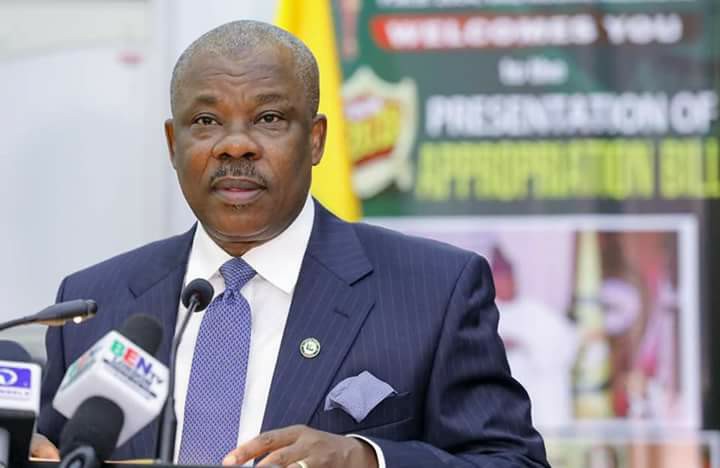
Amosun After my Life—Ogun APC Chieftain
By Dipo Olowookere
A chieftain of the ruling All Progressives Congress (APC) in Ogun State, Mr Oladunjoye Tunde, has accused governor of the state, Mr Ibikunle Amosun, of trying to eliminate him.
Mr Tunde, who is the spokesman of APC in Ogun State, alleged that Governor Amosun has been making efforts to kill him because he and other party members refused have refused to support Mr Amosun’s anointed candidate for the Oke-Mosan Government House job, Mr Akinlade.
When Mr Amosun could not secure the ticket of the APC for Mr Adekunle Akinlade in Ogun State, his preferred candidate moved to the Allied People’s Movement (APM) to achieve his dream.
The Governor, who picked the Senatorial ticket of the APC, is working against governorship candidate of the APC in the state, Mr Dapo Abiodun.
Mr Oladunjoye, while raising an alarm on an alleged attempt on his life, urged Nigerians to hold Mr Amosun responsible if anything happens to him.
“Please hold Governor Ibikunle Amosun of Ogun State responsible in case any harm comes to me.
“I just got an information from an anonymous caller now that a Private has been planted on the heads of many leaders of the All Progressives Congress (APC) in Ogun State.
“Though, this information was not getting it to us for the first time, however, the urgency and the intensity with which the latest alert was delivered, with a clear specification that the plan to strike against me is between now and Sunday, has left me with no option than to make it public.
“If anything happens to me, please hold Senator Ibikunle Amosun of Ogun State responsible.
“In my entire life, as a student leader, activist and politician, I have never used or advocated violence. I continue to demand and struggle for the betterment of my society fearlessly and non-violently.
“For those who intend to harm our body, or kill us, let them be told that our soul is definitely beyond their reach,” Mr Oladunjoye claimed.
General
CBN Urges States to Reduce Reliance On Overdrafts, Short-term Financing
By Adedapo Adesanya
The Central Bank of Nigeria (CBN) has called on state governments to cut down on overdrafts and short‑term financing.
According to a statement by the apex bank on Sunday, the advice was given by its Deputy Governor in charge of the Economic Policy Directorate, Mr Muhammad Abdullahi, during an engagement with sub‑national stakeholders, facilitated through the Nigerian Governors Forum Secretariat.
Mr Abdullahi advised them to ensure that borrowing decisions align with debt sustainability thresholds, improve budget realism and revenue forecasting, prioritise expenditure, and better synchronise fiscal calendars with prevailing macroeconomic conditions.
He emphasised the critical role of State Governments in ensuring a successful transition to an Inflation Targeting (IT) monetary policy framework, stressing that sustained price stability can be achieved only through coordinated fiscal discipline across all tiers of government.
Mr Abdullahi described the move toward inflation targeting as a shift to a more rule‑based, transparent, and forward‑looking monetary framework that demands close collaboration with state authorities.
According to him, while the CBN retains responsibility for deploying monetary policy tools to control inflation, fiscal actions, particularly at the sub-national level, play a significant role in shaping inflation outcomes within a federal system such as Nigeria’s.
Mr Abdullahi explained that inflation targeting is fundamentally about managing expectations, warning that uncoordinated or expansionary fiscal actions by State Governments could either reinforce or undermine monetary policy signals.
He noted that states influence inflation through multiple channels, including borrowing decisions, domestic debt accumulation, expenditure patterns, wage bills, capital project execution, salary arrears, overdrafts, contractor financing, and weak coordination on the Federation Account Allocation Committee (FAAC) receipts, cash management, and debt servicing.
“In an inflation‑targeting regime, persistent, unpredictable or expansionary fiscal behaviour at the sub‑national level can significantly undermine price stability,” he said.
The Deputy Governor emphasised that the absence of fiscal dominance, where government borrowing pressures compel the bank to monetise deficits, is a core prerequisite for successful inflation targeting.
He noted that this principle applies not only at the federal level but equally to State Governments.
He urged the states to reduce reliance on overdrafts and short‑term financing, ensure that borrowing decisions align with debt sustainability thresholds, improve budget realism and revenue forecasting, prioritise expenditure, and better synchronise fiscal calendars with prevailing macroeconomic conditions.
Under the inflation‑targeting framework, Mr Abdullahi outlined four key responsibilities for state governments: maintaining fiscal discipline and predictability; pursuing responsible borrowing aligned with medium‑term fiscal frameworks; strengthening coordination on cash and debt management; and enhancing internally generated revenue mobilisation.
He warned that unplanned expenditures, excessive supplementary budgets, and unsustainable debt accumulation could trigger liquidity shocks and elevate inflationary risks.
He reiterated that inflation targeting is a collective national commitment to stability, credibility, and long-term prosperity.
While the CBN remains accountable for delivering price stability, he said the framework’s success ultimately depends on disciplined fiscal behaviour across all tiers of government.
By strengthening coordination and embedding price stability as a shared objective, he added, state governments would support the new framework and lay firmer foundations for growth, job creation, and improved social welfare.
On his part, the Director-General of the NGF, Dr Abdullateef Shittu, represented by Mr Olalekan Yunusa, commended the Governor of the apex bank and the bank’s leadership for what he described as the strategic foresight behind the engagement, particularly the decision to involve sub‑national fiscal authorities at an early stage of the transition process.
He noted that the shift from a monetary-targeting framework to inflation targeting reflects a deliberate commitment to price stability as the central anchor of economic policy.
He added that sustainable macroeconomic stability cannot be achieved through monetary policy alone and requires disciplined coordination across all tiers of government.
General
Defence HQ Denies Civilian Casualties in Niger State Weekend Airstrikes
By Adedapo Adesanya
The Defence Headquarters on Monday denied reports of civilian deaths from airstrikes on suspected bandits in the Niger State over the weekend.
The Defence HQ said the strikes were intelligence-led and hit only militant targets in the state.
The Defence spokesperson, Major-General Michael Onoja, said drone strikes carried out overnight between May 9 and 10 targeted the villages of Katerma, Bokko, Kusasu and Kuduru in the Shiroro district after intelligence indicated that armed gangs, known locally as bandits, were gathering to plan attacks.
The denial came in response to reports in local media (excluding Business Post) alleging civilian casualties and reinforced longstanding concerns about the impact on local communities of airstrikes in Nigeria’s conflict zones.
The development comes as Nigeria continues to battle banditry and terrorism in the North, which is reportedly spreading southwards, as tensions in the Sahel continue.
Last month, around 200 people were killed after military jets struck a village market while pursuing Islamist militants in the North East.
In the latest airstrikes, Mr Onoja said at least 70 suspected bandits were killed in Kusasu alone.
He added that post-strike intelligence indicated that surviving fighters were regrouping, with more than 200 motorcycles moving toward nearby Zango village.
“The strikes were precisely targeted at identified terrorist enclaves and achieved their intended military objectives,” Mr Onoja said, adding that residents had relocated to another village beforehand, limiting the likelihood of civilian presence.
He, however, didn’t say whether civilians were given a warning of strikes.
The military has ordered field units to investigate any claims of civilian harm, Mr Onoja said.
General
SERAP Urges Tinubu to Probe Alleged Missing N26.9bn USPF Funds
By Adedapo Adesanya
The Socio-Economic Rights and Accountability Project (SERAP) has called on President Bola Tinubu to probe the alleged missing or diverted N26.9 billion of public funds from the Universal Service Provision Fund (USPF).
In a Sunday statement posted on its official website, the rights group asked President Tinubu to direct the Minister of Communications, Innovation and Digital Economy, Mr Bosun Tijani, and the Secretary of the USPF, Mr Yomi Arowosafe, to account for and explain the whereabouts of the missing funds.
In a letter signed by SERAP deputy director, Mr Kolawole Oluwadare, it was said that USPF is vital to expanding telecommunications access in underserved and rural communities, and any diversion of its funds directly undermines its mandate to bridge the digital divide, support infrastructure development, and promote inclusive connectivity.
SERAP demanded that President Tinubu should direct the Attorney General of the Federation and Minister of Justice Lateef Fagbemi, SAN to appropriate anti-corruption agencies to promptly and effectively investigate the allegations.
It said, “Anyone suspected to be responsible should face prosecution as appropriate, if there is sufficient admissible evidence, and any missing or diverted public funds should be fully recovered and remitted to the treasury.”
According to the statement, the allegations are documented in the latest annual report published by the Auditor-General of the Federation on 9 September 2025.
The organisation noted that, “These allegations, which include unaccounted expenditures, failure to remit public funds, irregular contract awards, and payments for services not rendered, point to serious breaches of public trust and raise concerns about systemic failures in financial accountability within the USPF.”
SERAP expressed that any failure to investigate the allegations and recover any missing or diverted public funds would not only deprive Nigerians of essential services but also frustrate national development objectives and efforts to achieve digital inclusion.
“The failure to ensure accountability for these funds also risks perpetuating inequality, particularly for marginalised and vulnerable groups who depend most on public interventions to access digital infrastructure,” it warned.
According to the letter, SERAP expressed that they would be grateful if the recommended measures were taken within seven days of the publication of this letter.
SERAP warned that if actions are not taken within seven days, it would consider appropriate legal actions to compel the government, Nigerian Communications Commission (NCC), and the USPF to comply with the request in the public interest.
Also in the letter, SERAP alleged that “According to the 2022 audited report by the Auditor-General of the Federation, which was published on 9 September 2025, the Universal Service Provision Fund (USPF) failed to disclose that it maintained a domiciliary (Dollar) account, and failed to grant the Auditor-General access to the books of the account.
“The USPF failed to remit over N13.8 billion [13,874,132.629.50] ‘being 25% annual operating surplus for four years, that is, between 2016 and 2019.’ The Auditor-General fears ‘the money may have been diverted.’ He wants the USPF to account for and remit the money.
“The USPF also ‘claimed to have spent over N11.7 million [N11,793,838.40] on international trainings in October 2020’, but ‘these claims were made without any documents.’ There were no documents, such as a letter of invitation for the programme, no receipt/invoice for registration, and no certificate of participation.”
The rights group further alleged that there was a total lockdown and restriction of movement out of Nigeria on foreign trips during the period (April to October 2020) due to the global COVID-19 pandemic. Yet, payments were made for these trips without any documents.
“The USPF also awarded contracts of over N2.8 billion [N2,853,052,005.90] but without any approval. The USPF failed to ‘provide the procurement procedures and processes adopted in awarding the contracts, including the contract files.’”
-
Feature/OPED6 years agoDavos was Different this year
-
Travel/Tourism10 years ago
Lagos Seals Western Lodge Hotel In Ikorodu
-
Showbiz3 years agoEstranged Lover Releases Videos of Empress Njamah Bathing
-
Banking8 years agoSort Codes of GTBank Branches in Nigeria
-
Economy3 years agoSubsidy Removal: CNG at N130 Per Litre Cheaper Than Petrol—IPMAN
-
Banking3 years agoSort Codes of UBA Branches in Nigeria
-
Banking3 years agoFirst Bank Announces Planned Downtime
-
Sports3 years agoHighest Paid Nigerian Footballer – How Much Do Nigerian Footballers Earn